
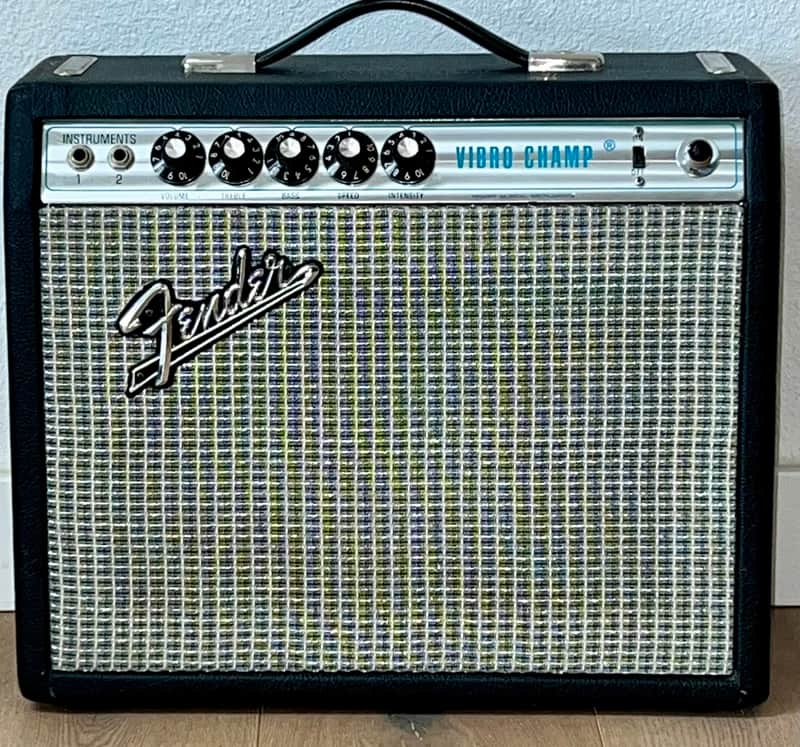
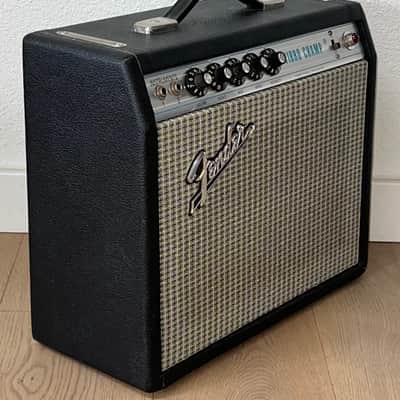
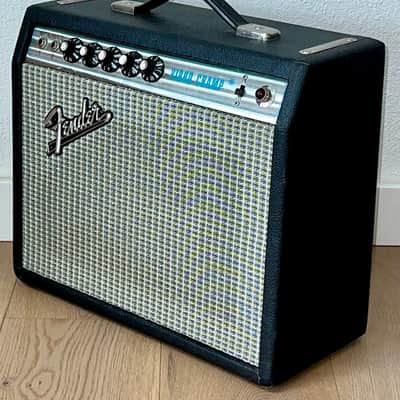
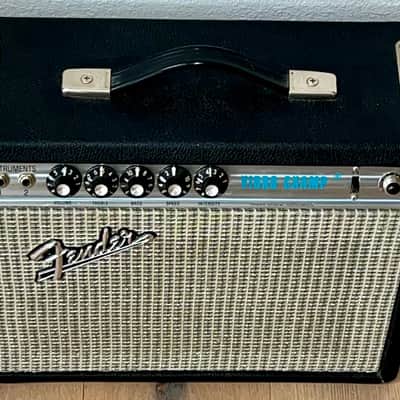
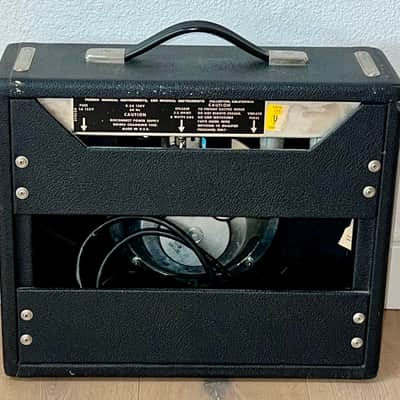
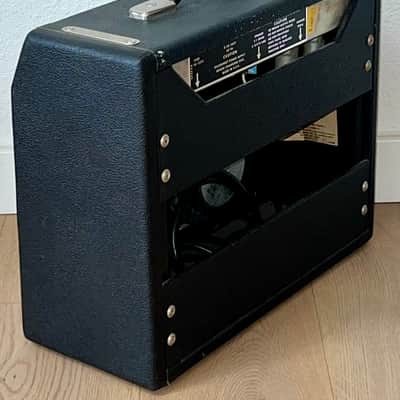
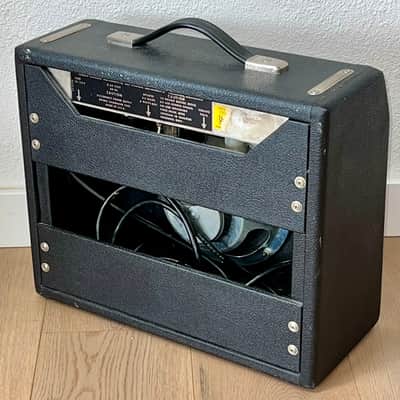
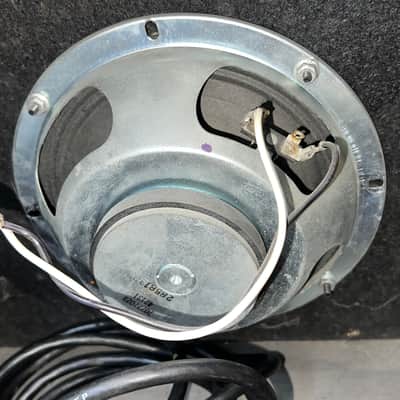
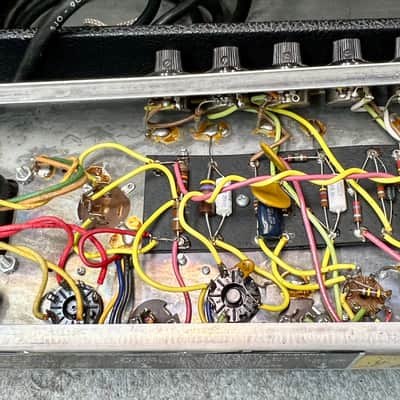
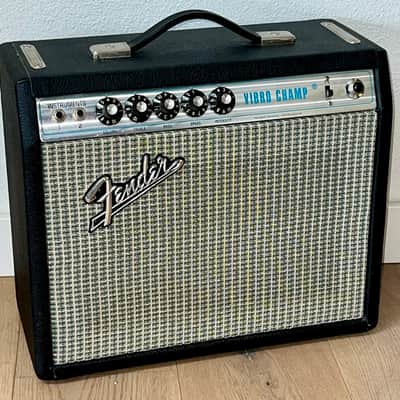
Super Clean 1978 Fender Vibro Champ 6-Watt 1x8" Guitar Combo Silverface, Completely Serviced, Amazing Condition !


Our users rate Reverb
1978 Fender Vibro Champ Silverface Guitar Amp Combo
Serial number: A37008, Very Clean.
You would be hard pressed to find another 1978 this clean !
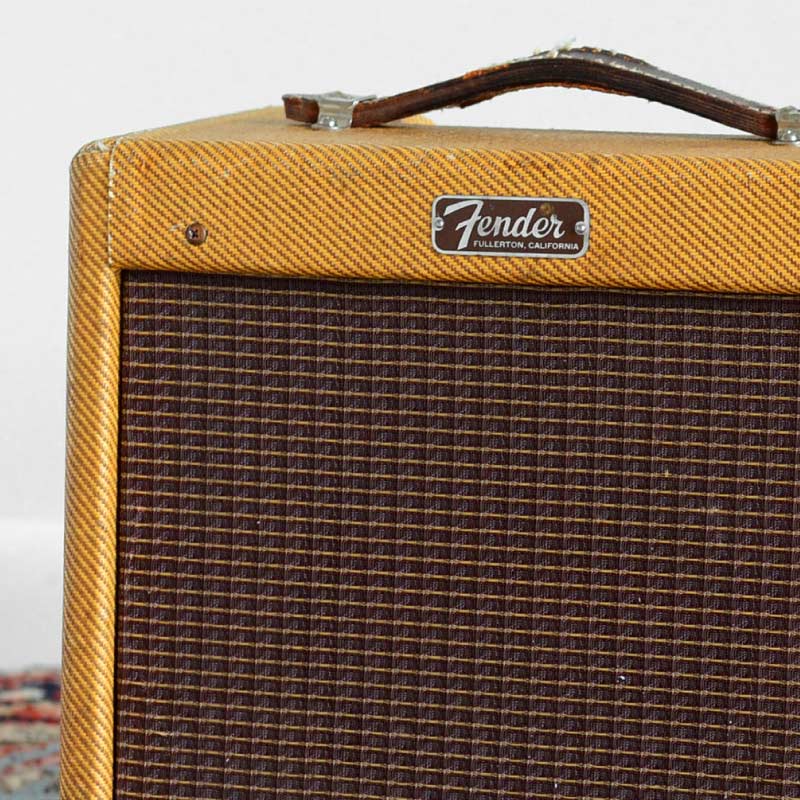
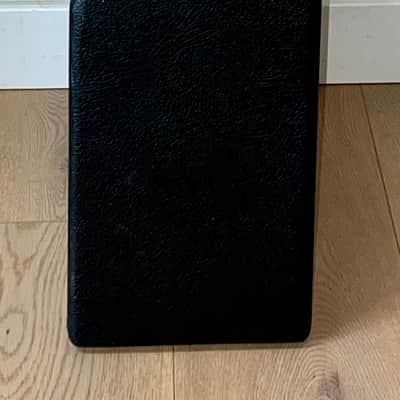
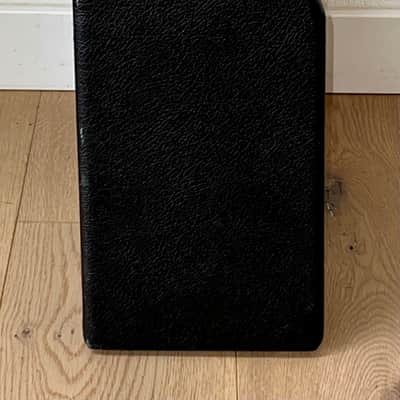
1978 Fender Vibro Champ, came to us as part of a fantastic Estate Collection, every Amp was simply in fantastic condition, , serviced, Tuned and Ready for Action. This 1978 is no exception. 48 years old and looks like a reissue. The Tone is fantastic completely original. We completely went through it , it is very,very clean.
Champ History:
THE RUNDOWN
Few amps have been in the Fender family longer or in more varied forms than the venerable Champ. Small but mighty, it has delighted, inspired and surprised guitarists since 1948 as an indispensable practice amp and prized recording amp, which means that for well more than half a century now, nothing beats a Champ.
Need proof? One of the most notable artists to rely on the Champ is Eric Clapton.
A tweed Champ was Clapton’s main studio amp for 1970 Derek and the Dominos masterpiece Layla and Other Assorted Love Songs and for acclaimed 1974 solo album 461 Ocean Boulevard. When you hear “Layla,” “Bell Bottom Blues” and “I Shot the Sheriff,” you’re hearing an original-era Champ. And in 2011, Fender honored that relationship with Clapton’s signature tweed tube EC Vibro Champ.
To this day, the Champ continues it’s long run of popularity, especially with the tweed '57 Custom Champ.
THE AMP
The Champ storied history began in 1948 as a 4-watt amp with a single 8-inch speaker in the form of the original Champion 800. It was soon replaced by the even-smaller Champion 600 a year later. While both of these early versions were tweed, the Champ was overhauled in 1964 in the “blackface” style with a black Tolex covering.
As with the rest of Fender’s amp lineup, the Champ and Vibro Champ were outfitted with the “silverface” look in 1968, and that existed until 1982, a year thtat birthed the Champ II with 18 watts of power, a 10-inch speaker and newly designed circuitry.
Over the years, the Champ has gone through several other iterations, from tube to solid-state, from tweed to Tolex, but it consistently remained a key piece of gear for casual players and professional artists alike.
THE FULL STORY
The first in the long-running Champ line, the original Champion 800 was a 4-watt amp with a single 8” speaker, three tubes, and an angled rear control panel with two inputs and a single volume control, all in a diminutive “TV-front” pine cabinet covered in greenish tweed linen adorned with a leather handle and Fender-logo nameplate.
It wasn’t around long. The even-smaller Champion 600 replaced the 800 in mid-1949, with identical circuitry but a smaller 6-inch speaker and two-tone brown and white textured vinyl covering. Like most Fender amps of the time, the Champion 600’s TV-front designed changed to a new tweed-covered “wide-panel” style in 1953; earlier versions still said “600” on the control plate; later ones said “Champ-Amp.” The “narrow-panel” style was adopted in 1955, with the control panel moved to the top, new grille cloth and a substantial circuitry redesign that would endure mostly unchanged for a decade (a 12AX7 preamp tube and short-lived high-voltage filter section choke). A larger cabinet and 8” speaker were adopted in 1956, by which time the model was known simply as the Champ. Lasting into the mid-1960s, this version would be the last of the original-era Fender tweed amps.
Fender overhauled the Champ by fall 1964 in the “blackface” style—black Tolex covering and black front-mounted control panel with separate bass and treble controls (although a very few transitional models were made in which the blackface style was applied to the last of the older top-panel cabinets). The tube layout remained the same. 1964 also saw the introduction of model with built-in tremolo called the Vibro Champ. Along with the rest of the Fender amp lineup, the Champ and Vibro Champ adopted the “silverface” style in 1968, and both existed in this form until 1982, when they were given a new blackface control panel shortly before being discontinued.
A new and very different Champ then appeared—1982’s Champ II boasted a 10-inch speaker, all-new circuitry including a master volume and bright switch, and an enormous 18 watts of power from dual 6V6 power tubes (all previous Champs never pumped more than 6 watts). A souped-up version with reverb and a lead channel, the Super Champ, also appeared in 1982, as did the special-edition Super Champ Deluxe, which featured an Electro-Voice speaker, solid oak cabinet, special grille cloth and lacquer finish. None of the 1982 Champ models survived long, however; the Champ II lasted only a year and the Super Champ disappeared in 1986 after CBS sold Fender in 1985.
When a new Fender corporation emerged from CBS rule in the mid 1980s, the first small amp that came out was yet another Champ, this time in a red-knobbed 12-watt version with a 12-inch speaker called, fittingly, the Champ 12. Introduced in 1986, it updated the model with tape inputs, a line out, a headphone jack, and several custom cosmetic treatments including red, white, gray and even snakeskin.
About Capital City Guitars:
We are a small brick and mortar music store, we take pride in earning the respect of our customers. We specialize in safe secure worldwide shipping. Thanks for looking at our items. We always give things a final inspection and going over before shipping. Need anything? Just ask! Contact us directly on our website or call the shop Mon-Sat 11am-6pm PST🎸 😎Thanks,
Capital City Guitars
(360) 956-7097
108 4th Ave. E
Olympia, WA 98501
Please like Us on Facebook & Follow Us on Instagram
Reverb Buyer Protection
Reverb has your back if your item is lost, damaged, or doesn't match its description. Simply report any issues within 7 days and we'll help you get a full refund.Learn more about Reverb Buyer Protection.
| Listed | 9 minutes ago |
|---|---|
| Condition | Excellent (Used) Excellent items are almost entirely free from blemishes and other visual defects and have been played or used with the utmost care.Learn more |
| Brand | |
| Model |
|
| Finish |
|
| Categories | |
| Year |
|
| Made In |
|
| Number of Inputs |
|
| Model Family |
|
| Speaker Configuration |
|
| Electronics |
|
| Direct Output |
|
| Reverb |
|
| Series |
|
| Model Sub-Family |
|
| Power Tube Type |
|
| Color Family |
|
| Number of Channels |
|
| Output Power (Watts) |
|
Product safety information may be available here.

