


Palmer PDI-03 8ohm Speaker Simulator 2010s - Dark Gray

Only 1 left
Grab it before it's gone
Our users rate Reverb
Palmer PDI-03 8ohm Speaker Simulator
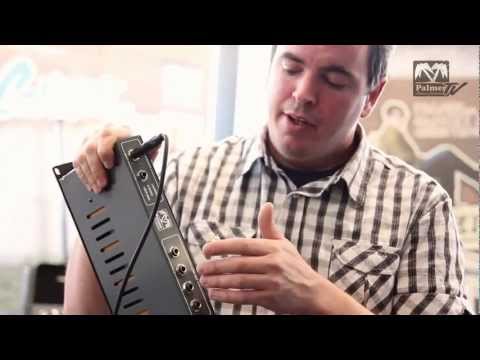
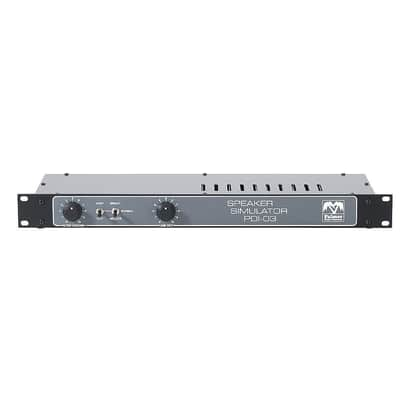
The classic in the Palmer production range is likely to be this version of the speaker simulator. It is now part of the standard equipment for all musicians. It even experienced quite a renaissance thanks to Global Blues player Joe Bonnamassa. Joe’s feedback about this device is consistent with that of most users. What makes this simulator so popular is: firstly its ability to provide a round, speaker-similar, direct analogue signal without delays and with consistent quality on any stage from the power amp of your favourite amplifier; and secondly, its property as splitbox for parallel controllable effects. It is designed for complex equipment circuits which need both frequency compensated and uncompensated signal paths.
The integrated load box allows operation without speakers. When using the device, much is left to personal taste, but some things are not. It is its basic sound that accounts for the quality of a speaker simulator: you may not believe it, but every electronic device has a typical basic sound which is unaffected by slider/bypass position and is always present, just like with buffers in foot pedals. Too many frills and options in the switching abilities of speaker simulators like speaker sizes, cabinet types, microphone angles or even distance between the microphone and the cabinet do not make the basic sound any better, in my opinion, but are rather euphemistic or are the result of compromises. In this respect, the PDI-03 provides a good sound. The uncompensated line-outs and the electronically processed signals sound enjoyably open. The provided device is designed for 16 ohms at 100 watts (also available as 2, 4 and 8 ohm versions from Palmer) and of course offers a transfer to speakers. Thus, you can combine the simulated direct signal from the speakers with the microphone signal. You can achieve the optimum sound in the mix, as in the production of speaker compressions, the simulation output stays fairly neutral. This offers opportunities for further signal processing or just a reason to refine mixes of real microphone signals and simulations. The four line-outs, adjustable on the front panel, are used to direct the signal to amp effects specifically on the uncompensated level.
Here the idea has been put into practice to combine a mono signal isolated from effects with two additional effects channels “lt’s playtime!” I have confined myself primarily to the simulation for recording purposes. So I could once again hear the sounds of one or the other amp through my best-sounding Yamaha NS10 (studio monitors) and fiddle around with the switches on the PDI-03. The left toggle switch simulates the speaker/cabinet characteristic between “open 2×12″ combo”, “closed 4xl2″ box (with typical bass)” and “stack with V-shaped EQ position”. The right-hand switch operates the lifting and lowering of the highs, also with three positions: Bright, Normal and Mellow. I stayed away from the left switch and selected, as a standard, the centre position labelled “Normal”. The lowering of highs was also out of the question for me, I only occasionally switched from “Normal” to “Bright”.
My various Marshalls felt very comfortable with this. I found it more convenient to leave the amp in the mid-level and to involve the pre-amplifier distortion with an appropriate booster. The use of an EQ mixer console, outboard gear or plug-ins on the digital level is easily possible thanks to the open sound of the PDI. Here, it’s worth it, at least for lead sounds, in order to help the signal in the mid frequencies and to add some compression if necessary. Unless you mix in an alternative microphone, as already mentioned. This is then really good, because you just tune the channels until the appropriate phase is found, and so the use of extra sound processors is kept to a minimum.
For live performances, the Palmer PDI-03 is a safe bet, because it is very pleasant soundwise, so that engineers mostly prefer to use it when given the choice of the channel selection.
- Model: PDI03
- Speaker Simulator, Guitar Amp Di, Dummy Load, Line Splitter
- 1 Rack Sized
- Made in Germany
- Controllers: Filter-Volume, Line Out
- Switches: Deep, Normal, Flat and Bright, Normal, Mellow
- Input: Speaker
- Outputs: Filter Out Line/Balanced, Speaker Thru, Line Out 4x uncompensated
- Integrated Loadbox 8Ohm
- Passive: No AC or DC power require
Reverb Buyer Protection
Reverb has your back if your item is lost, damaged, or doesn't match its description. Simply report any issues within 7 days and we'll help you get a full refund.Learn more about Reverb Buyer Protection.
| Condition | Brand New (New) Brand New items are sold by an authorized dealer or original builder and include all original packaging.Learn more |
|---|---|
| Brand | |
| Model |
|
| Finish |
|
| Categories | |
| Year |
|
| Number of Inputs |
|
| Electronics |
|
| Reverb |
|
| Number of Channels |
|
| Pedal Format |
|
Product safety information may be available here.

