A Primer to Picking the Right Sampler for Your Budget and Needs
For musicians and producers looking to create outside the confines of DAWs, grooveboxes can be fun and powerful tune-making options. Much like a laptop equipped with a DAW, most grooveboxes are basically all-in-one electronic instruments. Tools on which users can make beats, craft melodies and harmonies, trigger samples, add effects, and arrange entire songs.
Grooveboxes are also very capable live music performance gear. As Akai’s iconic MPC series and, more recently, Elektron’s Octatrack](/p/elektron-octatrack-mkii-dynamic-8-track-performance-sampler) and [Digitakt machines prove, they can be the “brain” or “hub” of a live music setup, allowing musicians to leave the laptop and DAW at home.
First appearing in the 1980s with the Akai MPC and E-Mu Systems SP samplers, grooveboxes have stuck around through shifting tastes surrounding analogue and digital synthesis, as well as computer-based production. And so there are plenty of groovebox options, both past and present, for songwriting, music production, and live performance.
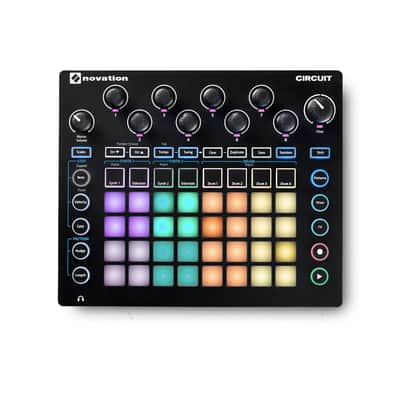
In appearance, the Novation Circuit is a groovebox that resembles an Ableton or Native Instruments controller (minus the LCD screen), more than something like Korg’s grooveboxes of the 1990s and 2000s. The Circuit comes with Novation digital synthesis—two six-voice polyphonic derived from the Nova machine. Users can sculpt sounds on this groovebox, sequence them into beats, but also program basslines, synth melodies, and other sounds. And Novation also gave the Circuit a sampling feature to sweeten the deal.
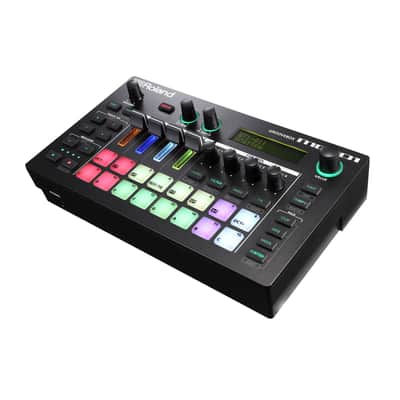
The most recent entry into the budget groovebox category, Roland’s MC-101 is one heck of a tiny machine. Built on the company’s AIRA synthesis technology, and packed with sounds from all of its classic synths and drum machines, the MC-101 is small but extremely powerful. And, more than that, it’s a highly musical groovebox.
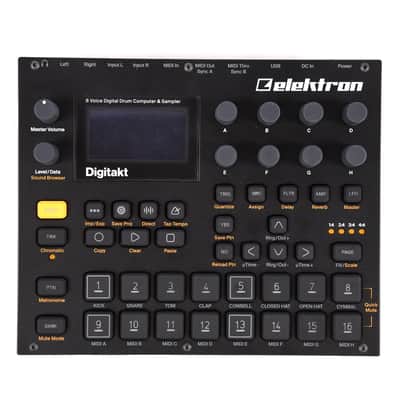
Elektron markets the Digitakt as an “8-Voice Digital Drum Computer & Sampler”, it is essentially a groovebox. It may not have a synth engine, but when samples or single cycle waveforms are loaded into it, users can sculpt sound with a filter and amplitude envelope. The Digitakt also has an FX and LFO section, and is a powerful sequencer with parameter locks and other sequencer features that allow users to bring randomness and variation to their sequences.
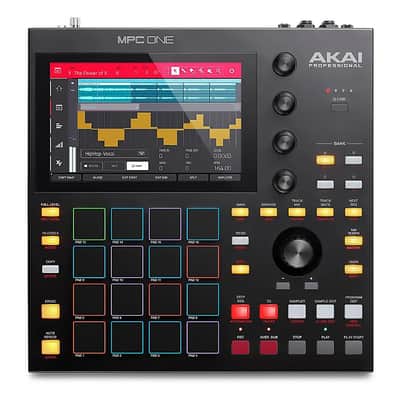
Akai’s MPC-One is a budget but powerful sampler with basically the same workflow as its older siblings, the MPC Live II and MPC-X. What sets the MPC-One apart is a large touch screen for designing sound, creating sequences, and arranging entire tracks. Akai was a great innovator in the groovebox category, and that continues with the MPC-One.
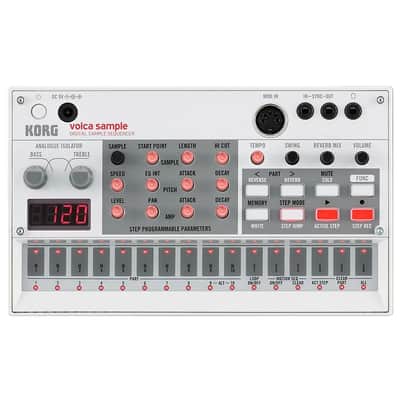
Korg has been making Electribes for three decades, and it definitely shows. Each Electribe is packed with sounds for crafting entire songs. Each redesign of the Electribe a few years back updated the interface and the sample-based synth engine modern users. While the Electribe is a great budget option, its samples always manage to sound tight and musical.
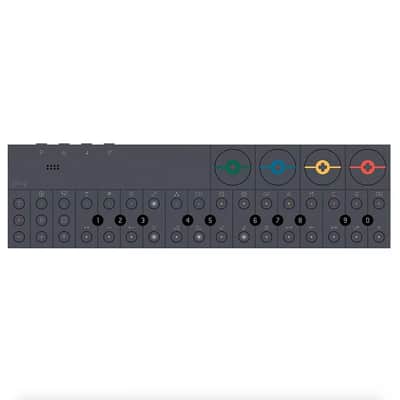
With its strange interface but powerful multimedia synth engine, the OP-Z is a groovebox powerhouse. Unlike any other groovebox, users can load different synth engines via USB. Like the Korg Electribe Sampler, users can load samples onto the OP-Z. In a technological first, musicians and producers can connect the OP-Z to their smartphone via Bluetooth, which lets users dial in specific parameter values.
Types of Grooveboxes
The groovebox is a fairly specific category as far as electronic instruments go. Because of its specificity, grooveboxes really don’t come in a myriad of different interfaces.
Grooveboxes are almost always desktop devices, usually with some combination of drum pads, buttons, knobs, and a small screen. Also, they tend to be either drum machines, samplers, or synthesizers. Whatever the sound source, it is the features and interface that push the machines into groovebox territory.
Sampler Grooveboxes
Sampler Grooveboxes at a glance:
Pioneered by Akai and E-Mu Systems
Onboard sampling and sequencing features
Powerful sound-sculpting capabilities
Modern samplers, which really began with Akai MPC and E-Mu Systems SP series, typically have groovebox functionality. Yes, these machines are great for sampling and warping those sounds, but they’re also great for sequencing and arranging songs.
For decades, hip hop and electronic music artists have built entire tracks on sampler grooveboxes. The weapons of choice in the late 1980s and throughout the 1990s were the MPC and SP series samplers, but competition from Roland (the MC series grooveboxes) and Yamaha soon gave musicians and producers other options.
For years, Roland’s SP-404 series samplers have been attractive grooveboxes. J Dilla even used on his iconic posthumous record, Donuts. More recently, Elektron has been a dominant force in sampler grooveboxes, with its Octatrack and Digitakt machines.
Drum Machine Grooveboxes
Drum Machine Grooveboxes at a glance:
Drum machines with groovebox functionality
Factory sounds + sample storage
Analogue or Digital circuitry
Whether analogue or digital, drum machine grooveboxes are geared more for people looking to design and sequence beats. What this means is that a track’s entire percussive foundation can be built on these machines.
Some of these machines, like the Arturia Drumbrute Impact and Sequential Tempest, won’t have as many sound options as sampler and synth grooveboxes. But others, like the Elektron Analog Rytm mkII and Roland TR-8S will have sampling or synth engines, respectively.
A less critically heralded but popular drum machine is the Alesis SR-16. First introduced in 1990, Alesis produced the SR-16 for several decades. Its drum sounds aren’t great, but its song mode certainly makes it a groovebox.
Synth Grooveboxes
Synth Grooveboxes at a glance:
Onboard synth engine
Often include drum samples
Powerful sequencing and song arrangement functionality
This type of machine is best thought of as either an analogue or digital synthesizer with groovebox functionality. Synth grooveboxes may be built more for synth basslines, leads, and pads, but with some tinkering, they can also output percussive sounds.
One of the earliest synth grooveboxes was Roland MC-202. Released in TK, the MC-202 is a machine that basically turned the iconic SH-101 monophonic analogue synth into a groovebox. Throughout the 1990s and early 2000s, Roland released new iterations of the MC series, with digital synth engines, giving them more dynamic sound sculpting capabilities.
Over the years, Roland has kept refining its groovebox offerings. In the last few years, Roland has released the MC-101 and MC-707 grooveboxes, both of which come with the company’s AIRA synth engine.
In the 1990s, Yamaha also released some of these machines, like its DX-200—a groovebox equipped with the company’s FM synthesis technology. They also released the AN-200, a virtual analogue synth, which took its cues from Yamaha’s ANX1 keyboard synth.
This past year, Elektron got into the synth groovebox game, first with the Digitone, then with the Model:Cycles. Like the Yamaha DX-2000, both the Digitone and Model:Cycles are grooveboxes with FM synth engines, making them incredibly flexible sound design and sequencing tools for entire tracks.