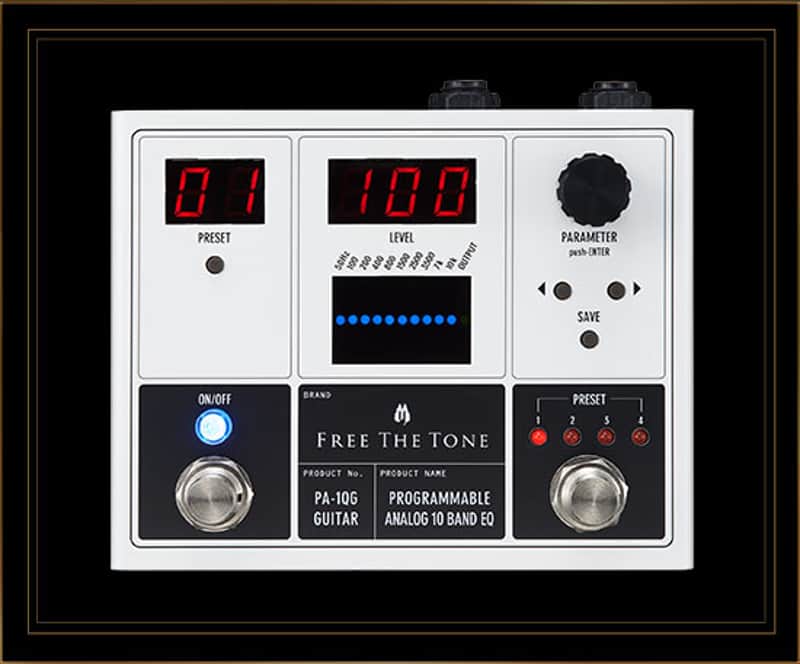
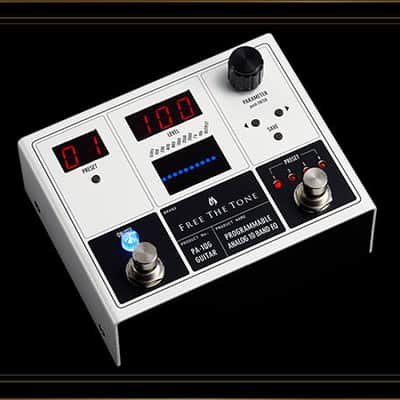
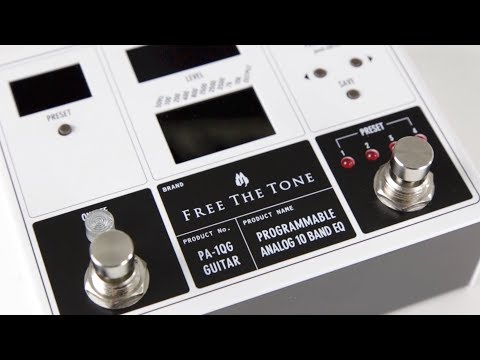
Presenting the new Free The Tone PA-1QG Programmable Analog 10 Band EQ Pedal.

The Free The Tone PA-1QG EQ Pedal is an epoch-making device produced by pursuing integration of digital and analog technologies cultivated through the development of their and pedals.   At first glance the PA-1QG looks like a digital equalizer effects unit but it is an “analog equalizer.” Including I/O sections, its equalizer circuits through which the guitar/bass signals pass are all fully analog and contour the rich tones of your guitar/bass as analog signals. This is the same signal processing method you will find in graphic equalizers with conventional slider volume controls. The PA-1QG is an analog effects unit, but its parameter control section is a digital circuit that can precisely store and process the status of various parameters in the digital domain. This enables real-time parameter control via presets and MIDI.   The PA-1QG is an effects unit that fuses rich analog sound with the ease and versatility of a digital control device while maintaining a high level of sound quality. Experience its state-of-the-art sound and ease of operation. for yourself!

  • All of the equalizer circuits (including I/O sections) that pass instrument signals are fully analog and the parameter control section is a digital circuit. This allows for real-time control via preset recalling and MIDI.
  • The HTS (Holistic Tonal Solution) circuit which is one of the major features of the Free The Tone products has been renewed with this product release. It holistically manages high-quality guitar/bass signals from input to output to keep the sound texture the same whether the effect is on or off.
  • The 10-band equalizer’s frequencies are selected specially for guitar and for bass and the frequencies and equalizer curves are optimized for each instrument to allow more useful and minute adjustments.
  • Any of 99 presets can be recalled instantly by control via MIDI signals.
  • The PA-1QG can be used not only as an equalizer effects unit but also as a preset volume controller that manages sound level in each preset. It is equally suitable to applications to increase the volume of solo playing or to level out individual differences in output levels when switching between multiple guitars/basses.
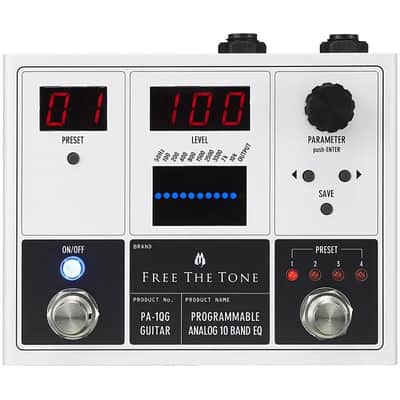
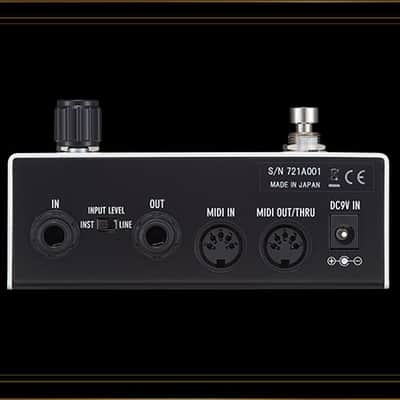
Number of presets: 99 Input impedance: INST min. 1 MΩ / LINE min. 300 kΩ Output load impedance: min. 10 kΩ Max. input level: INST +4 dBm / LINE +14 dBm (EQ setting = flat) Controls: ◀︎▶︎ cursor keys, PARAMETER encoder, INST(-10dB)/LINE(+4dB) level selector switch Frequencies: PA-1QG/50 Hz, 100 Hz, 200 Hz, 400 Hz, 800 Hz, 1500 Hz, 2500 Hz, 3500 Hz, 7 kHz, 10 kHz (±12 dB) PA-1QB: 40 Hz, 80 Hz, 125 Hz, 250 Hz, 500 Hz, 800 Hz, 1200 Hz, 2400 Hz, 4500 Hz, 8 kHz (±12 dB) Terminals: 1/4" standard phone jack x 2 (input and output) DC9V input jack (for AC adapter), DIN 5-pin connector x 2 (MIDI IN and OUT/THRU) Power supply: Dedicated DC9V AC adapter Current consumption: max. 200 mA Dimensions (W x D x H): 120 x 102.3 x 58.5 mm or 4.7 x 4.0 x 2.3 inches (incl. protuberances such as footswitch, jacks, etc.) Weight (excl. accessories): approx. 350 g or 0.77 lbs Accessories: Warranty card, manual, AC adapter, rubber feet x 4 Specifications and appearance subject to change without notice

Reverb Buyer Protection

Reverb has your back if your item is lost, damaged, or doesn't match its description. Simply report any issues within 7 days and we'll help you get a full refund.Learn more about Reverb Buyer Protection.

ConditionBrand New (New)
Brand New items are sold by an authorized dealer or original builder and include all original packaging.Learn more
Brand
Model
  • PA-1QG Programmable 10-Band Analog Guitar EQ
Categories
Made In
  • Japan
Pedal Format
  • Standard

Product safety information may be available here.

The Guitar Sanctuary

McKinney, TX, United States
Joined Reverb:2013

Reverb Protection

Simple Returns, Secure Transactions, Human Support

Learn more

Secure Checkout

Promoted similar listings


Product reviews

Reverb Gives

Your purchases help youth music programs get the gear they need to make music.

Oops, looks like you forgot something. Please check the fields highlighted in red.