


Rode NTG3B Precision RF-Bias Broadcast Shotgun Condenser Microphone (Matte Black)

Free 2-Day Shipping


30-Day Return Policy
Enjoy peace of mind with your new gear
Our users rate Reverb
The Rode NTG3B is the matte-black colorway of the RF-bias broadcast shotgun condenser that production sound mixers reach for when the weather turns. External RF-bias circuitry — the same approach used in the top tier of broadcast shotgun design — keeps the capsule operating reliably in rain, fog, humidity, and condensation that crash a conventional DC-biased condenser. The 10-inch supercardioid barrel locks on-axis on dialogue while rejecting the off-axis crowd, traffic, and HVAC noise that surrounds every real location. Self-noise is 13 dBA: low enough that the soft sounds of a documentary interview arrive on the recorder above the noise floor instead of buried beneath it.
Built for the Boom Operator, the ENG Crew, and the Documentary CameraThe matte-black finish is not cosmetic — it is the on-camera version. A reflective satin shotgun pulled into frame distracts the viewer; the NTG3B's anti-glare matte finish lets the mic drop into a shot without becoming the shot. The 5.75 oz solid brass body is light enough to boom for an eight-hour day without forearm fatigue, and heavy enough to feel the resistance against handling noise. RF-bias circuit design also means handling noise — the rustle that radiates up the shaft from the operator's grip — sits lower in the take than on cheaper film shotguns.
RF-Bias vs DC-Bias: Why It Matters on Real ShootsA conventional condenser charges the capsule with a fixed DC bias voltage. When humidity hits the diaphragm — outdoors at dawn, in a rainforest, on a wet city street, in a snowstorm — that DC bias short-circuits across the moisture and the mic crackles, pops, or fails. The NTG3B's external RF-bias circuit uses a high-frequency carrier signal that is unaffected by moisture. The diaphragm modulates that carrier; the modulation is demodulated back to audio. The result: a true condenser that keeps recording in conditions that put a DC-biased shotgun back in the case.
10-Inch Supercardioid Reach for Boom-on-Camera DialogueA short shotgun's barrel is its directional system. The NTG3B's 10-inch interference tube delivers a supercardioid pattern with a tight on-axis lobe — the boom operator hovers the mic 18 to 36 inches above the talent's mouth and the supercardioid pattern hands you the voice while the off-axis room thins out. Frequency response runs 40 Hz to 20 kHz; output impedance is 25 Ohms balanced on the 3-pin XLR, low enough to drive a 50-foot cable run to a sound mixer's bag without high-frequency rolloff. Maximum SPL of 130 dB at 1% THD means the mic handles loud SFX — slammed doors, blanks on set, motorcycle pass-bys — without overload.
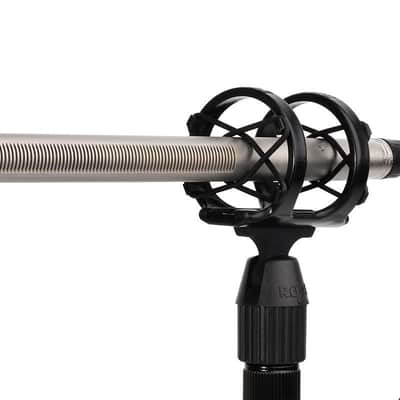
What Ships in the NTG3B BoxThe retail box includes the RC3 weatherproof aluminium storage cylinder — a screw-top crush-resistant tube that protects the mic in transit and doubles as the production case for an entire location bag. The WSNTG3 foam windshield ships with the mic for indoor and light-wind work; a Rycote or Cosi blimp and dead-cat are sold separately for serious outdoor wind. The RM5 stand mount threads to any standard mic stand or boom pole, and the ZP2 zip pouch holds the small accessories.
For the Production Sound Mixer Comparing to Higher-Priced Moisture-Resistant ShotgunsThe NTG3B is the Rode answer to the top-tier RF-bias broadcast shotgun category. Sound mixers cross-shopping the higher-priced moisture-resistant condensers describe the NTG3B's tone as crisp and forward with a usable proximity response on close work, and Rode's build standards back the mic for working professionals who put gear under daily abuse. For the documentary shooter, ENG operator, narrative production sound mixer, or wildlife recordist who needs a moisture-resistant broadcast shotgun in stealth black, the NTG3B is the working answer.
| Condition | Brand New (New) Brand New items are sold by an authorized dealer or original builder and include all original packaging.Learn more |
|---|---|
| Brand | |
| Model |
|
| Categories | |
| Year |
|
Product safety information may be available here.

