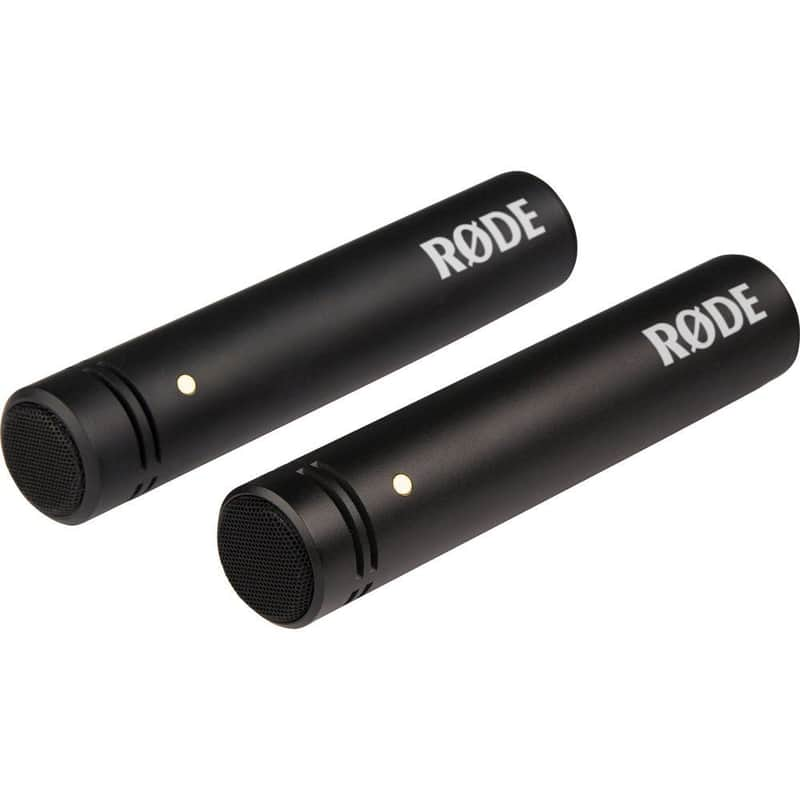
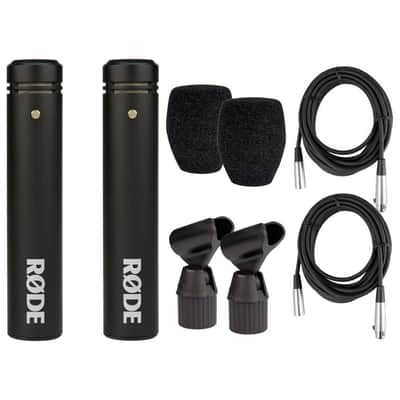
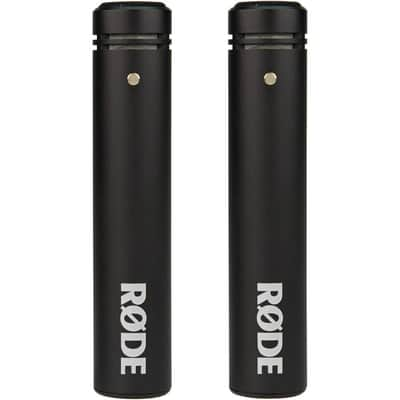
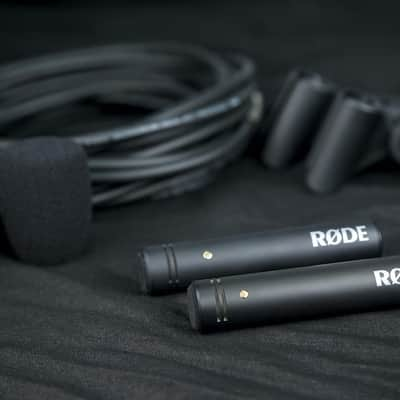
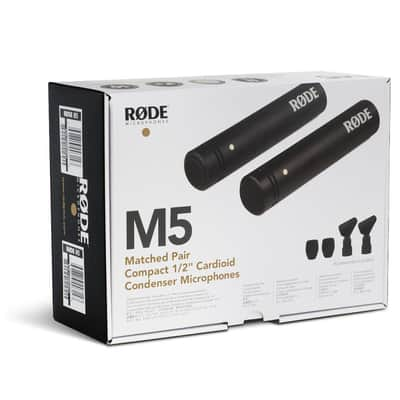
Rode M5 Matched Pair Small-Diaphragm Cardioid Condenser Microphones
El vendedor no ha establecido un costo de envío para Canadá. Por favor vendedor mensaje para preguntarle sobre el envío.


Política de devoluciones de 30 días
Disfruta de tu nuevo equipo sin preocupaciones
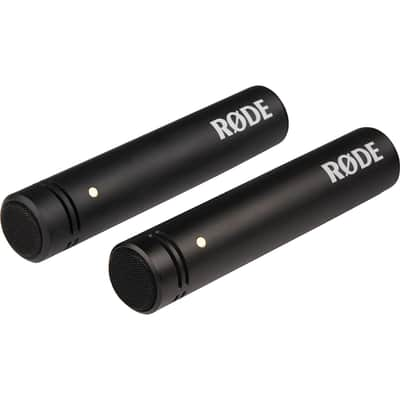
The Rode M5-MP is a matched pair of small-diaphragm cardioid condenser microphones — sometimes called pencil condensers — engineered for stereo recording where left and right have to track each other within 1 dB of sensitivity. Each microphone is built around the same 1/2-inch gold-sputtered diaphragm Rode developed for the NT5, which means the M5 pair captures the same low-noise, full-frequency detail at roughly half the price of an NT5 pair. The two microphones in this box are matched at the factory, finished in ceramic matte black, and shipped with WS5 foam windshields and RM5 stand mount clips so they're ready to mount on a stereo bar the moment they come out of the case.
1/2 Inch Cardioid Condenser, 19 dB-A Self-Noise, 140 dB Maximum SPLThe capsule is a permanently polarized 1/2-inch end-address cardioid condenser. Frequency response spans 20 Hz to 20 kHz, the same full-bandwidth coverage you'd expect from a much more expensive small-diaphragm. Maximum SPL is rated at 140 dB, high enough to take a cymbal crash 6 inches off the bell or a close-mic'd snare overhead without breaking up. Equivalent noise sits at 19 dB-A, quiet enough to record a 14-singer choir, an orchestral string section, or piano in a quiet room without the noise floor coloring the take. Output is balanced XLR 3-pin, running from any standard 24V to 48V phantom-powered preamp or interface.
Why Buyers Compare It to a Pair of SM81sBuyer review threads on this microphone are full of recordists who arrived expecting a budget condenser and ended up running blind A/B tests against a borrowed pair of Shure SM81s on choir, drum overheads, and string sections. The recurring report is that they couldn't tell the two pairs apart. That's not an opinion the marketing copy invents — it's the most-repeated comment on the M5 across years of buyer reviews. The matched-pair selection is the reason: any condenser pair has to track each other to image stereo cleanly, and Rode hand-selects each M5-MP within 1 dB sensitivity tolerance. The detail at the top end, the lack of harshness on cymbals, and the balanced mid-range across the pair are why working engineers buy M5s for the overhead position and the choir bar.
Drum Overheads, Acoustic Guitar, Piano, Choir — One Pair Covers Every Stereo Pickup JobDrum overhead duty is the most-cited use case. Run them spaced about 5 feet over the kit, or rig a stereo bar above the snare for an XY or ORTF coincident pair, and the cymbal articulation reads with clean stick definition while the kick and snare bleed sit naturally below. Acoustic guitar in stereo — typically XY at the 12th fret — captures the full body without proximity boost. Grand piano gets a coincident pair under the lid for stereo image without phase cancellation when the player and engineer both hear a single source. Choir recording with the pair on a bar at ORTF spacing gives accurate width without spilling into the room. The compact 0.79-inch diameter body fits between cymbals, under piano lids, and in tight stage placements where larger condensers wouldn't go.
Equally at Home in the Studio, on Stage, or in the FieldThe all-metal body with ceramic matte-black finish is built for the road — buyers report 5-plus years of travel and live use without finish wear or capsule failure. End-address pickup geometry means the microphone aims straight at the source like a shotgun, so positioning is intuitive even for first-timers. Field recordists use the pair for ambient room tone, birdsong, foley, and stereo nature recording. Live-sound engineers run them as choir overheads in churches and theaters.
Who the Rode M5-MP Is ForIf you're a first-time stereo recordist, this is the pair to start on — matched, durable, predictable, and inexpensive enough to learn on without anxiety. If you're upgrading from a pair of un-matched dynamics or large-diaphragm condensers used as overheads, the M5 pair will give you tighter top-end detail and proper stereo imaging in ways unmatched mics can't. If you're a comparison shopper looking at the Shure SM81 or Neumann KM 184, the M5 pair lands at well under half the price of either pair and is a defensible choice in any project studio, church PA, or live-recording rig. One purchase, two microphones, every common stereo pickup job covered.
| Estado | Nuevo (nuevo) Productos nuevos son vendidos por tiendas oficiales o por el fabricante original e incluyen todo su empaquetado original.Más información |
|---|---|
| Marca | |
| Modelo |
|
| Categorías | |
| Año |
|
| Tipo de micrófono |
|
| Con cable/Inalámbrico |
|
| Patrón polar |
|
| Electrónica |
|
La información de seguridad del producto se encuentra disponible aquí.

Protección de Reverb
Devoluciones sencillas, transacciones seguras, asistencia personal
Más información