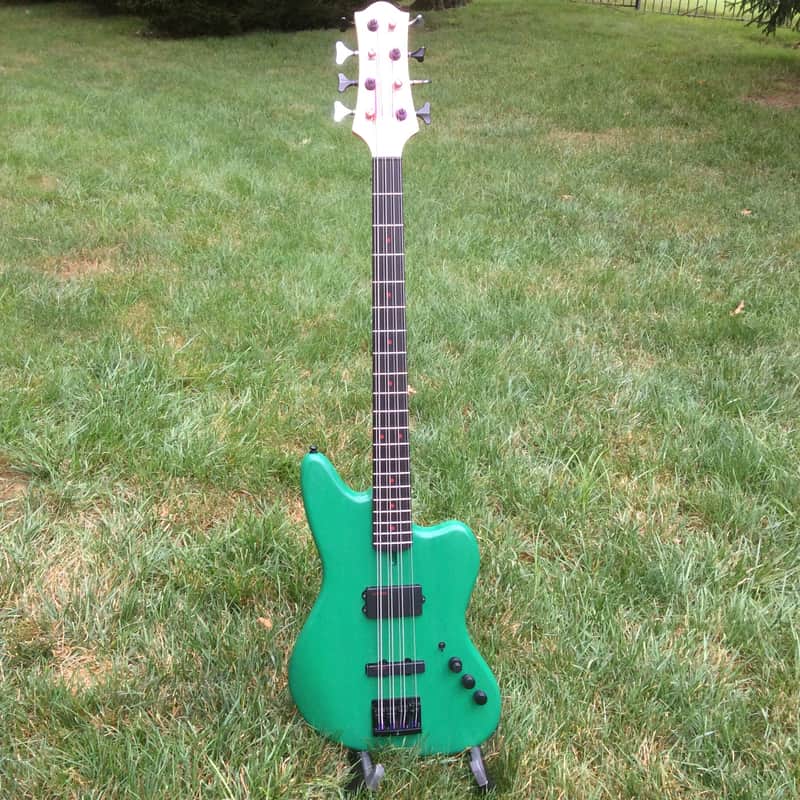
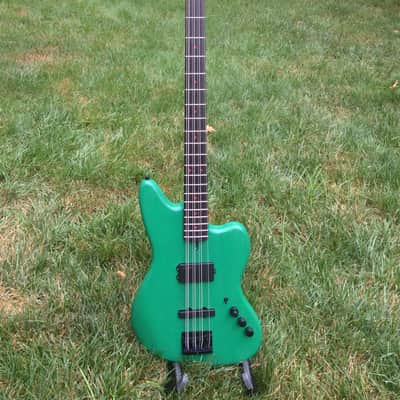
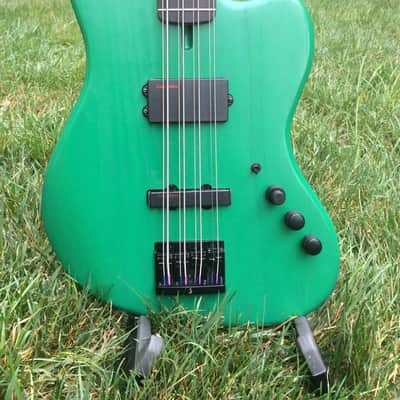
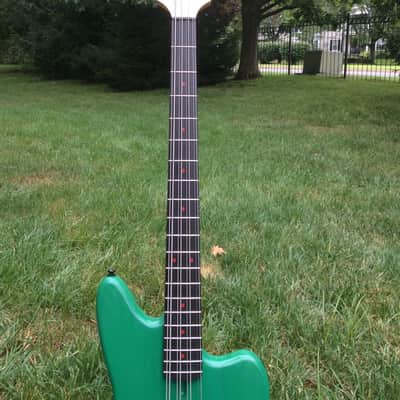
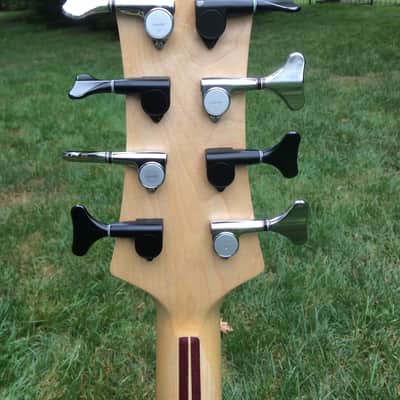
Warmoth 8-string (octaves) bass, Lace Man o War, dual tones with Kellingsound midboost/mid-scoop
This gear has sold
See similar gear from other Reverb sellers
Listed:6 years ago
Views:1,037
Saves:21
Offers:1

United States
Our users rate Reverb
9 pounds 1 ounces
This bass is admittedly overpriced because it is somewhat irreplaceable. It is irreplaceabl because it is made from a Warmoth 8-string neck that Warmoth doesn't make anymore. , and a Schaller 8-string bridge that Schaller doesn't make anymore. I would have to buy some used items to make this bass again.
Let me say some things about this guitar.
1. The tuners. These are Gotoh 707 tuners, chrome, for the octaves, and black tuners that come with Ibanez basses, said to be made by Gotoh for the bass strings.
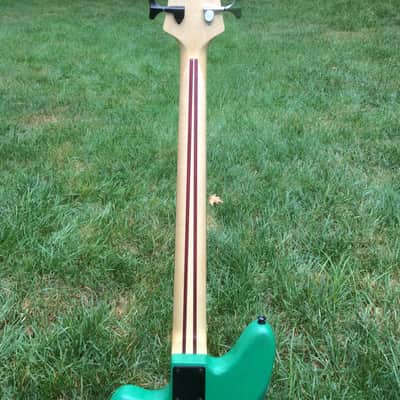
2. The neck. This is said to be the last 8-string bass neck made by Warmoth. After they told me earlier this year that the last one had been made, and they don't make them any more, this showed up on the in-stock page. Apparently the purchaser did not want a 20-fret neck, so it was returned. It is made with Warmoth Super-bass construction, double-expanding truss rod, with stainless steel rods. It is made of 5-piece construction of maple and purpleheart. The fingerboard is a 1/4-inch slab of ebony, with red coral inlay, and a straight 10" radius. The nut width is 1-3/4". The octaves are on top. The frets are nickel, 6105 size. The neck shape is fatback. I finished it with a coat of Osmo Polyx clear. Feels just like a raw neck, but you couldn't get wine or coffee to stain it if you wanted.
The graphtech nut.... I was a little dismayed with Warmoth when it just kind of popped off easily, and I glued it back in place, but if it easily comes out again I would not be surprised.
The neck, of course, is on the heavy side. 3lbs, 9.5 ounces!
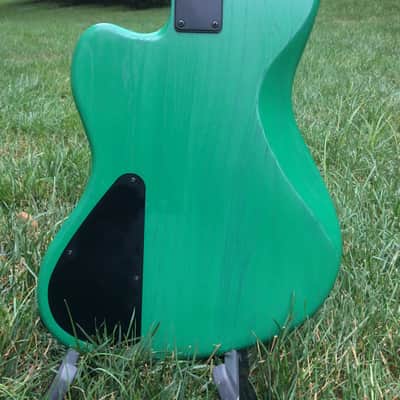
3. The body. The body is a Warmoth Roasted Swamp Ash Jazzmaster body. It is finished with Osmo products, colored wood wax and polyx finish. It has a coat of blue first, then green. The grain of the wood shows through the green finish as dark blue wood grain, which can be pleasant . Because it is Roasted Swamp Ash, it is on the lighter side. With the pickups, bridge, and electronics it weighs 5 pounds, 7.5 ounces, barely heavier than the neck. (I know I am trying to be precise in my measurements, and I may be off an ounce or so, but it is not a body-heavy bass)
4. The pickups. I chose Lace sensor because there is no pole-spacing problem and because a lot of pickups have a reputation for being sometimes bass-heavy, and this bass needed pickups that were friendly for guitar frequencies. There was a lucky shot in the fact that the logo for the Lace Man-O-War pickups I chose and the inlay on the neck are both red.
5. The electronics. Lace explains that their pickups do best with passive electronics. They recomend 250K pots with ,022 capacitor. So there are volumepots and a tone knob with that fits that bill. There is also a toggle for the MM pickup that puts the pickup in three configurations, Seres, Split, and parallel. The volume is a stacked volume with the bridge jazz and MM with their own volume controls. The first tone knob connected to the volume is a push-pull knob. Down it is a normal tone knob. Pulled up, the second knob is also connected to the volume. The second tone knob can be connected with the first tone knob all the way open to ten (thus overriding that knob) or down a bit.
The second tone knob is a Kellingsound 3-way. This is how Kelling describes it:
"This custom tone pot is a Bourns A500k push pull. This is passive no battery needed. This gives you 3 different tone settings. In down position it has a Greasebucket tone circuit this lets you turn down the tone but leaves some highs it also doesn't lose as much volume as a normal tone cap. When in up position it has two more settings. One on 10 and one on 0. When it's in the middle position it by passes the other two settings. The setting on 10 is a mid boost and the one on 0 is a mind scoop."
So, if you can follow all that, without getting your hands and ears on the bass, you can see that there is a large variety of tone configurations in this bass.
6. The bridge. The bridge is a Schaller 8-string bridge. This comes with 8 saddles that adjust independently for intonation and height. The saddles come blank and the purchaser has to make grooves in them. Doing this to new saddles is nerve-wracking because the strings should be close enough so that they can be held down with one finger, and also far enough so they don't vibrate against each other, etc. etc. I am happy with how this worked out.
7. The strings. I have done some experimenting with strings, and settled on a configuration I really like. I use Ken Smith Piccolo Bass Burners 18-45 with a set of Ken Smith Compressors Extra Light 40-95. I have two sets of Curt Mangan piccolo 20-50 and a set of unused and untried D'Addario EXL-170-8 octaves bass strings that I would part with for a little extra money if you wanted to make an offer that included them.
8. The price. As I wrote, this bass is kind of irreplaceable. One could find used parts, or purchase a different 8-string octaves bass. They all have their own problems and benefits. The price is quite high for what this is and is made up of A) the cost of the materials plus B) the price that overcomes my feelings of loss. It is a great bass, and I have played it a couple times with musician friends outside in a park distanced, masked, with battery amplifiers. It can be big and bombastic the way Jack Bruce played them, and also delicate and musical when one focusses on the piccolo strings for fills and quieter accompaniment to acoustic guitars. And the ebony fretboard.... doing away with this bass is like taking bitter medicine and the price I ask is the sugar that helps it go down.
This bass is admittedly overpriced because it is somewhat irreplaceable. It is irreplaceabl because it is made from a Warmoth 8-string neck that Warmoth doesn't make anymore. , and a Schaller 8-string bridge that Schaller doesn't make anymore. I would have to buy some used items to make this bass again.
Let me say some things about this guitar.
1. The tuners. These are Gotoh 707 tuners, chrome, for the octaves, and black tuners that come with Ibanez basses, said to be made by Gotoh for the bass strings.
2. The neck. This is said to be the last 8-string bass neck made by Warmoth. After they told me earlier this year that the last one had been made, and they don't make them any more, this showed up on the in-stock page. Apparently the purchaser did not want a 20-fret neck, so it was returned. It is made with Warmoth Super-bass construction, double-expanding truss rod, with stainless steel rods. It is made of 5-piece construction of maple and purpleheart. The fingerboard is a 1/4-inch slab of ebony, with red coral inlay, and a straight 10" radius. The nut width is 1-3/4". The octaves are on top. The frets are nickel, 6105 size. The neck shape is fatback. I finished it with a coat of Osmo Polyx clear. Feels just like a raw neck, but you couldn't get wine or coffee to stain it if you wanted.
The graphtech nut.... I was a little dismayed with Warmoth when it just kind of popped off easily, and I glued it back in place, but if it easily comes out again I would not be surprised.
The neck, of course, is on the heavy side. 3lbs, 9.5 ounces!
3. The body. The body is a Warmoth Roasted Swamp Ash Jazzmaster body. It is finished with Osmo products, colored wood wax and polyx finish. It has a coat of blue first, then green. The grain of the wood shows through the green finish as dark blue wood grain, which can be pleasant . Because it is Roasted Swamp Ash, it is on the lighter side. With the pickups, bridge, and electronics it weighs 5 pounds, 7.5 ounces, barely heavier than the neck. (I know I am trying to be precise in my measurements, and I may be off an ounce or so, but it is not a body-heavy bass)
4. The pickups. I chose Lace sensor because there is no pole-spacing problem and because a lot of pickups have a reputation for being sometimes bass-heavy, and this bass needed pickups that were friendly for guitar frequencies. There was a lucky shot in the fact that the logo for the Lace Man-O-War pickups I chose and the inlay on the neck are both red.
5. The electronics. Lace explains that their pickups do best with passive electronics. They recomend 250K pots with ,022 capacitor. So there are volumepots and a tone knob with that fits that bill. There is also a toggle for the MM pickup that puts the pickup in three configurations, Seres, Split, and parallel. The volume is a stacked volume with the bridge jazz and MM with their own volume controls. The first tone knob connected to the volume is a push-pull knob. Down it is a normal tone knob. Pulled up, the second knob is also connected to the volume. The second tone knob can be connected with the first tone knob all the way open to ten (thus overriding that knob) or down a bit.
The second tone knob is a Kellingsound 3-way. This is how Kelling describes it:
"This custom tone pot is a Bourns A500k push pull. This is passive no battery needed. This gives you 3 different tone settings. In down position it has a Greasebucket tone circuit this lets you turn down the tone but leaves some highs it also doesn't lose as much volume as a normal tone cap. When in up position it has two more settings. One on 10 and one on 0. When it's in the middle position it by passes the other two settings. The setting on 10 is a mid boost and the one on 0 is a mind scoop."
So, if you can follow all that, without getting your hands and ears on the bass, you can see that there is a large variety of tone configurations in this bass.
6. The bridge. The bridge is a Schaller 8-string bridge. This comes with 8 saddles that adjust independently for intonation and height. The saddles come blank and the purchaser has to make grooves in them. Doing this to new saddles is nerve-wracking because the strings should be close enough so that they can be held down with one finger, and also far enough so they don't vibrate against each other, etc. etc. I am happy with how this worked out.
7. The strings. I have done some experimenting with strings, and settled on a configuration I really like. I use Ken Smith Piccolo Bass Burners 18-45 with a set of Ken Smith Compressors Extra Light 40-95. I have two sets of Curt Mangan piccolo 20-50 and a set of unused and untried D'Addario EXL-170-8 octaves bass strings that I would part with for a little extra money if you wanted to make an offer that included them.
8. The price. As I wrote, this bass is kind of irreplaceable. One could find used parts, or purchase a different 8-string octaves bass. They all have their own problems and benefits. The price is quite high for what this is and is made up of A) the cost of the materials plus B) the price that overcomes my feelings of loss. It is a great bass, and I have played it a couple times with musician friends outside in a park distanced, masked, with battery amplifiers. It can be big and bombastic the way Jack Bruce played them, and also delicate and musical when one focusses on the piccolo strings for fills and quieter accompaniment to acoustic guitars. And the ebony fretboard.... doing away with this bass is like taking bitter medicine and the price I ask is the sugar that helps it go down.
Reverb Buyer Protection
Reverb has your back if your item is lost, damaged, or doesn't match its description. Simply report any issues within 7 days and we'll help you get a full refund.Learn more about Reverb Buyer Protection.
| Listed | 6 years ago |
|---|---|
| Condition | Excellent (Used) Excellent items are almost entirely free from blemishes and other visual defects and have been played or used with the utmost care.Learn more |
| Brand | |
| Model |
|
| Finish |
|
| Categories | |
| Year |
|
| Made In |
|
Product safety information may be available here.