TOM 1501 Soviet Analog Polyphonic Synthesizer
This seller has not set a shipping cost for Continental U.S.. Please contact them to ask about shipping.


Our users rate Reverb
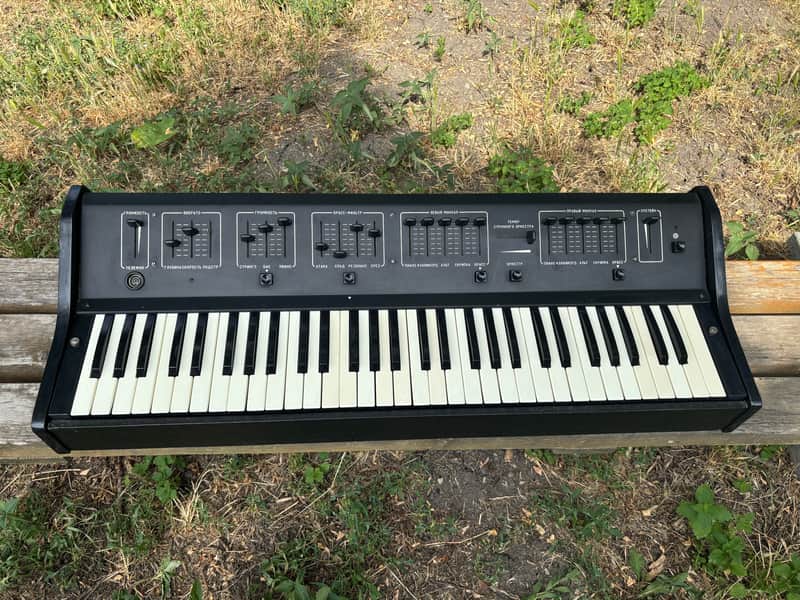
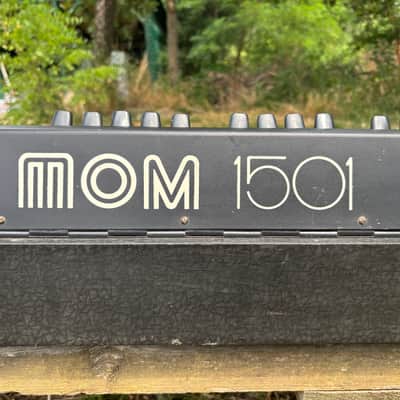
Rare legendary Soviet analog fully polyphonic “String Machine” from the 80s. It's said to be the Soviet variant of a Crumar Multiman, ARP Omni or Solina String Ensemble.
The TOM 1501 has a very unique topology. It has one high-frequency master oscillator with divide-down circuitry (similar to an electronic organ).
This means it has Full polyphony (every key can be pressed and have sound at the same time). This means no voice stealing and extremely stable tuning. Because every note derives from the same master oscillator, it almost never drifts out of tune the way VCO polysynths do.
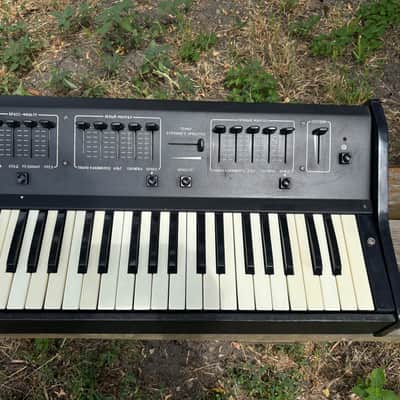
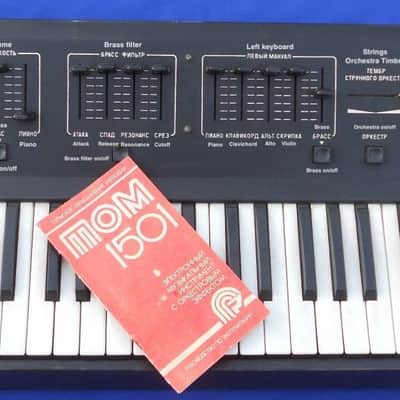
Unique feature is the splitable keyboard. The sound of the left and right section of the keyboard can have a different sound setup (see "Left keyboard", "Right keyboard" sliders). Split point is indicated with the little arrow below the filter section. The sound mix of the different "orchestral" sounds can be set up for each section.
The sounds can be divided into 3 categories:
Brass
The sound that takes the show is the "Brass" sound, which also has the most settings attached to it, including a Moog style resonant ladder filter which can also be envelope controlled. It's a very pleasant, thick square wavey sound. Additionally, the Brass sound has an on/off switch for both sides.
Filter controls include:
- Attack
- Release
- Cutoff
- Resonance
Orchestra
You can augment the Brass sound with the other "orchestral" sounds like violin, alto (=viola) and clavicord (=contrabass). These orchestral sounds are mixed together and fed into the famous analog bucket-brigade delay (BBD) chorus. This is the TOM's strongest sound. The chorus makes the instrument sound much larger than it really is. The effect is controlled by the "Orchestra" settings, which includes a timbre slider and an on/off button.
Piano
A bright filtered waveform that resembles soft piano sound.
They all add really usable timbres that, combined with the Brass are just superb.
There is a Main mix section containing volume controls for Piano, Strings (controlling Clavicord, Alto and Violin), Bass (also has on/off button)
There is a built in LFO for the Vibrato effect with Depth and Speed controls. LFO speed is indicated by a red LED on the front panel.
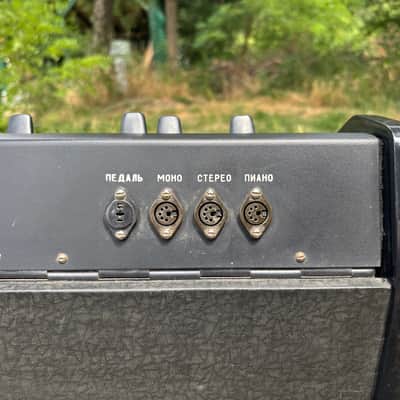
Outputs in order:
- PIANO: separate output for just the Piano sound
- STEREO: The stereo output is not a classic stereo output. Instead, the internal sound engines are split between the left and right channels: Left channel: Brass section Right channel: Piano and Strings sections This allows you to process or mix the brass independently from the piano/string sounds when using the stereo output
- MONO: mixed mono signal containing all the sounds is output
- HEADPHONES: output for use with headphones (located on the front panel). This output also has a separate volume control above it.
Input:
- PEDAL: sustain pedal input
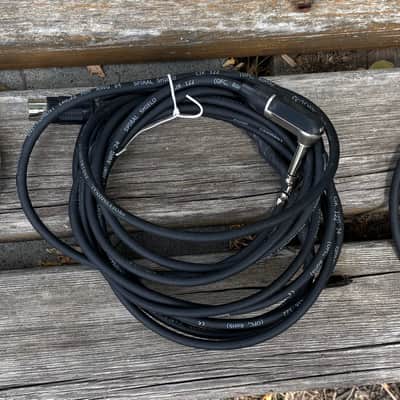
The synthesizer is completely original and unmodified. To be usable in today's studios I had custom made some 5pin to 1/4" jack cables. One with a straight plug and one with an angled plug. These are included. Comes with original power cable.
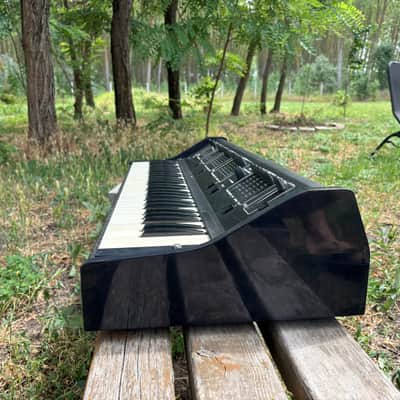
Apart from visual traces of use, there is one missing slider cap. I purchased the synth this way. Since this is the Master Tune slider, I never replaced it since during my use it was actually beneficial that the tune is visually distinct and harder to move accidentally.
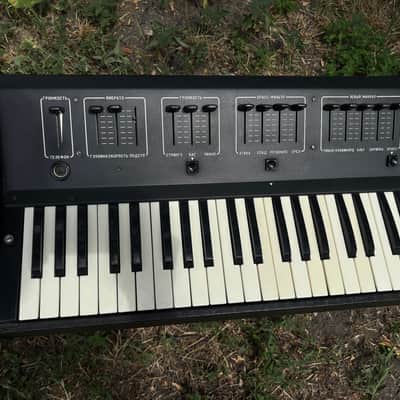
Front panel sliders:
- Main volume (headphones)
- Vibrato depth
- Vibrato speed
- Fine tuning
- Strings volume
- Bass volume
- Piano volume
- Brass filter attack
- Brass filter release
- Brass filter resonance
- Brass filter cutoff
- Orchestra chorus timbre
- Orchestra chorus on/off
- Sustain
- Individual voice volume for each keyboard half
See last photo for translated front panel layout.
Note: Master volume on the front panel only affects the Headphone out port below it.
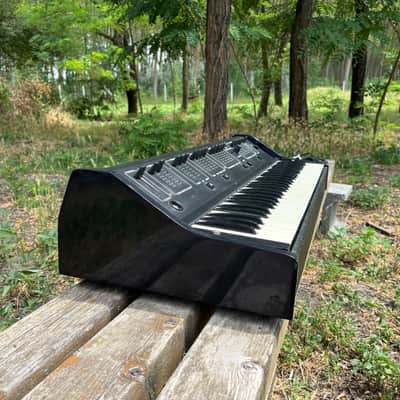
Built like a tank, real wood and steel. Comes from non-smoking studio.
There are also MIDI retrofit kits available for this synth, e.g.: Tom 1501 MIDI kit retrofit Vitalka Custom
Keyboard: 61 keys (F–F)
Polyphony: Full
Weight: ~13 kg
Dimensions: 920 × 360 × 195 mm (WxDxH)
Power: 220 V AC, 50 Hz
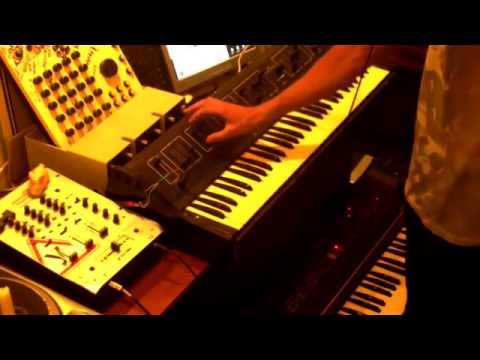
The attached youtube video is not mine, but greatly demonstrates what this synth is capable of. Kudos to Аудиофонд for the video. (I can send video sample of the actual unit in action on request)
I'm open to other shipping options as well, like seller provided courier. Message me and we'll figure it out.
Reverb Buyer Protection
Reverb has your back if your item is lost, damaged, or doesn't match its description. Simply report any issues within 7 days and we'll help you get a full refund.Learn more about Reverb Buyer Protection.
| Listed | 2 days ago |
|---|---|
| Condition | Good (Used) Good condition items function properly but may exhibit some wear and tear.Learn more |
| Brand | |
| Model |
|
| Finish |
|
| Categories | |
| Year |
|
| Made In |
|
| Number of Keys |
|
| Polyphony |
|
| Analog / Digital |
|
| Key Size |
|
Product safety information may be available here.