


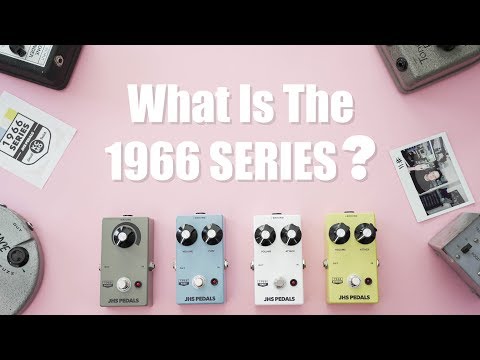
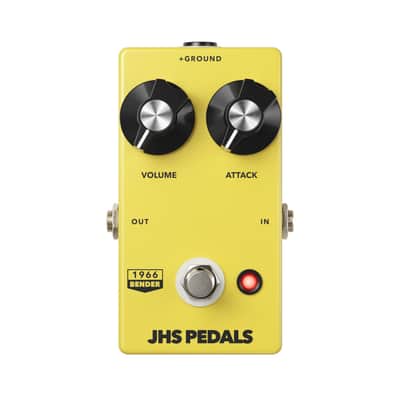
JHS 1966 Series Bender


Rare Find
These don't show up often
Our users rate Reverb
This rare JHS 1966 series Bender is in great condition, works like new and sounds killer. Velcro adhered to backplate. Ships in its original box with original sleeve, schematic, note, serialized polaroid picture and button.
Based on one of the rarest guitar effects pedals ever created, the JHS 1966 Tone Bender 1.5 fuzz pedal delivers thick and aggressive fuzz with amazing sustain. This Sweetwater-exclusive pedal was handwired by JHS founder Josh Scott using his own stock of NOS components — in other words, the 1966 Tone Bender 1.5 is an extremely limited edition pedal. With high-grade carbon resistors, oversized capacitors, and two germanium transistors all hand-matched to the circuit, the JHS 1966 Tone Bender 1.5 puts the most historically significant guitar effect squarely on your pedalboard.
Re-creating a piece of guitar pedal history
The lineage of the JHS 1966 Tone Bender 1.5 fuzz pedal begins in 1962 with the world's first manufactured guitar pedal — the Maestro Fuzz-Tone. By 1965, British engineer Gary Hurst had gotten his hands on the Maestro and modified it for more bass and sustain, thus creating the Tonebender fuzz pedal. The original Tonebender utilized a three-transistor fuzz circuit, as did all subsequent versions of the pedal through its fourth generation. But decades later, pedal collector Dennis Johannsen would discover that his own '60s-era Tonebender was equipped with only two transistors. Further investigation ensued.
Answers would come later through an interview with Hurst. It turns out than in 1966, he did make a "very small batch" of two-transistor Tonebender pedals. And despite their rarity, it became clear that the Arbiter Fuzz face and some other iconic fuzz pedals from that era were almost direct clones of the two-transistor Tonebender. Dennis Johnnsen named this collector's dream the Tonebender MK1.5, and that's the pedal that the JHS 1966 Tone Bender 1.5 re-creates.
Fat fuzz with epic sustain
Plug your guitar into the JHS 1966 Tone Bender 1.5, and it's immediately obvious it was designed for meaty low end and massive sustain. JHS founder Josh Scott recommends running it into a slightly-overdriven amplifier or into an overdrive pedal for maximum sonic tenacity.
Words of wisdom from JHS
Pedal designer Josh Scott wired this exclusive pedal himself, and he offers some tips for how to power it correctly and where to put it in your signal chain. "The circuit uses vintage positive ground voltage, so do not daisy chain your power with other pedals. Inside the pedal is a battery snap, or use any isolated power supply with a normal polarity power cable like your other pedals as I have wired it internally to work that way." Also, "Be sure to always have this pedal first in your signal chain; the guitar must be plugged into its input due to the impedance it requires on its input, no exceptions." So, don't daisy-chain your power with the 1966 Tone Bender 1.5, and put it first in your signal chain for best results.
Reverb Buyer Protection
Reverb has your back if your item is lost, damaged, or doesn't match its description. Simply report any issues within 7 days and we'll help you get a full refund.Learn more about Reverb Buyer Protection.
| Listed | 4 months ago |
|---|---|
| Condition | Very Good (Used) Very Good items may show a few slight marks or scratches but are fully functional and in overall great shape.Learn more |
| Brand | |
| Model |
|
| Finish |
|
| Categories | |
| Year |
|
| Made In |
|
| Pedal Format |
|
Product safety information may be available here.

