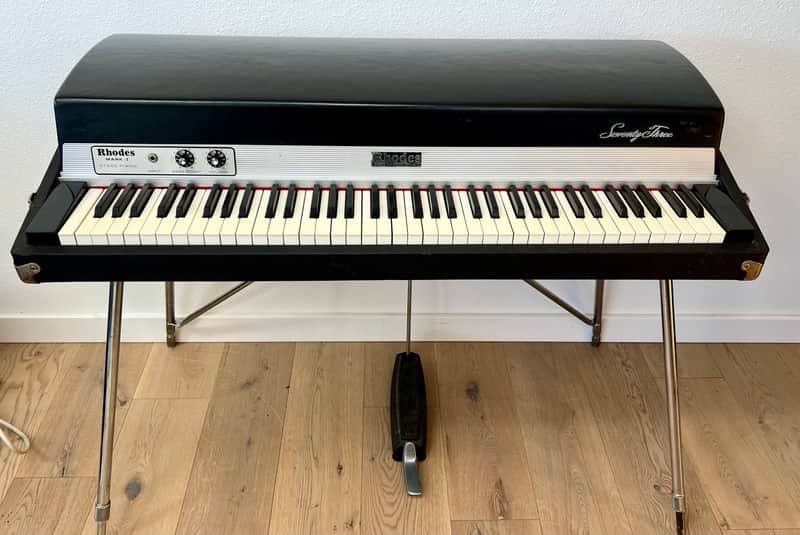
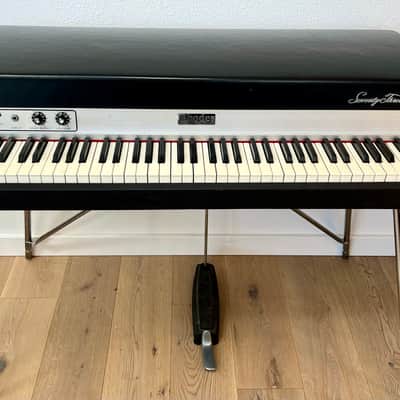
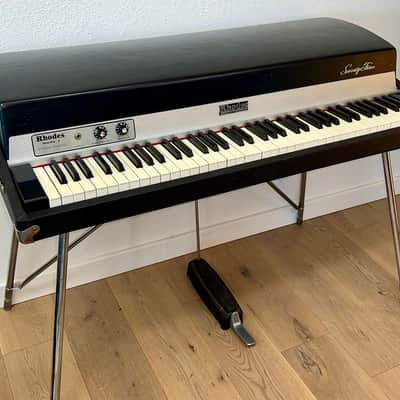
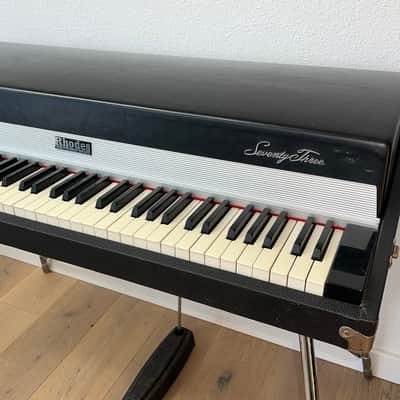
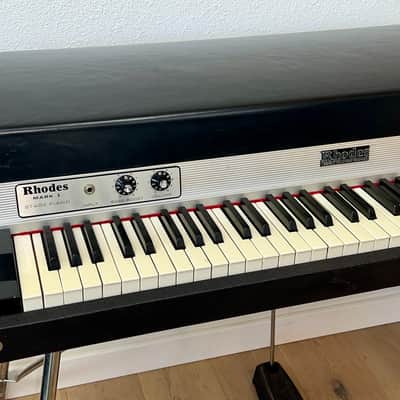
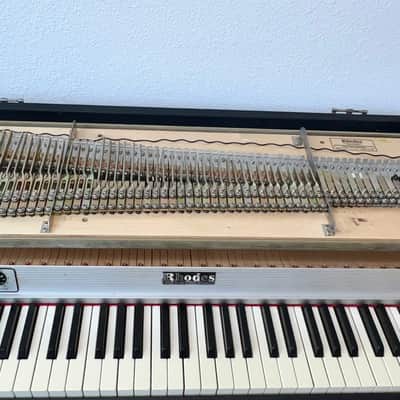
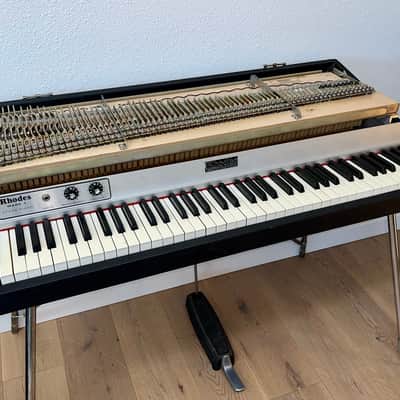
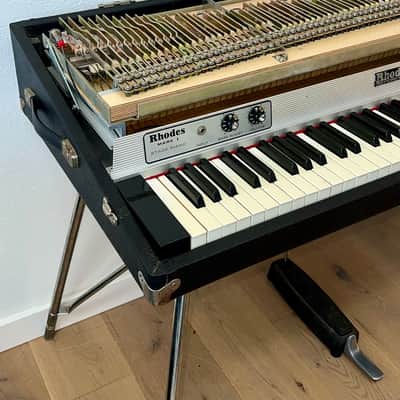
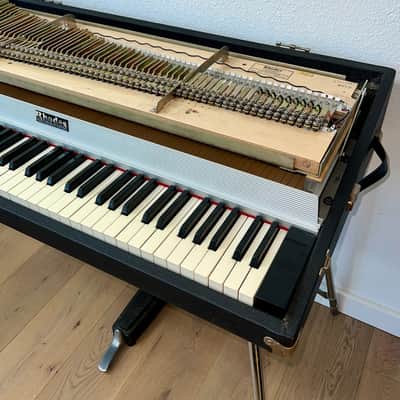
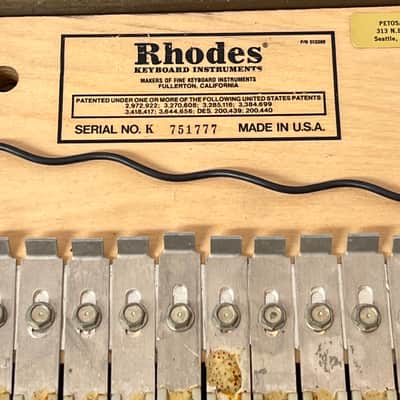
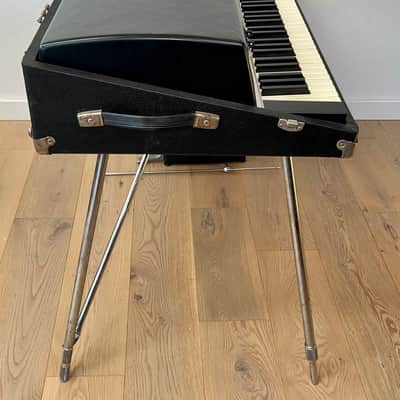
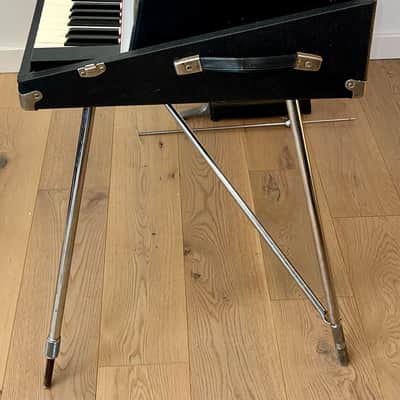
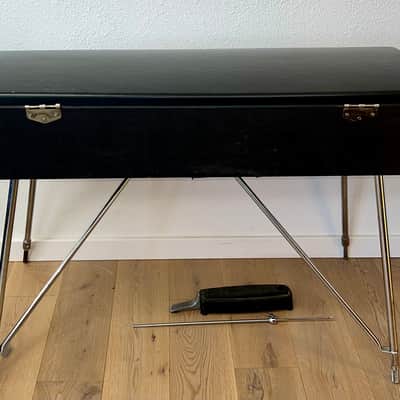
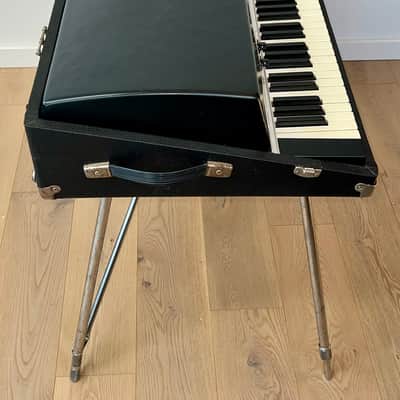
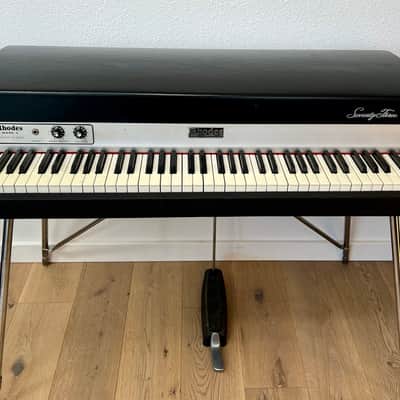
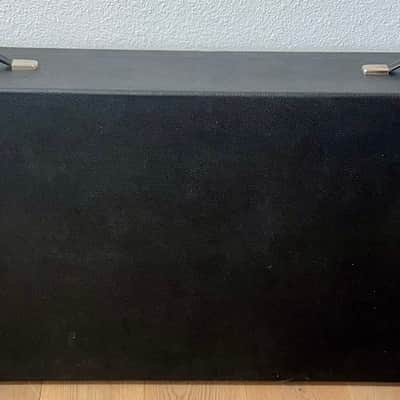
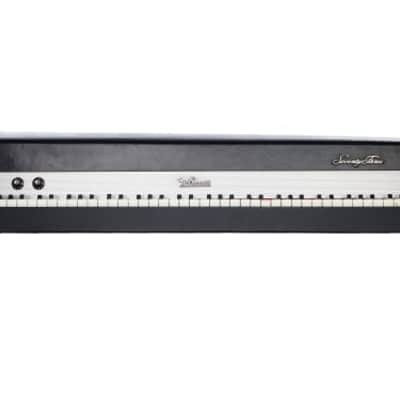
Pristine 1979 Fender Rhodes Mark I Stage 73-Key Electric Piano Black Rounded Top, Complete Stage Package it has been Tuned, Serviced, and Upgraded

Predicted to Sell Soon
Only 1 available and 1 other person has this in their cart

Our users rate Reverb
Fender Rhodes Mark I-A 73 Stage Piano, Complete, Legs, Cross Bars, Sustain Pedal, Cover and Case
Serial Number: 751777
CONDITION: Exceptional, it is clean beyond belief. Clean Inside and out. The inside is clean, no dirt or Dust. The Action is very good. I have had many of these over the years this one is just fantastic. I would say it was stationary. It apprears to have never been on the Road it is way too clean. This owner just had it tuned and serviced at West Sound Vintage in Bremerton Washington and it has had a Vintage Vibe Passive wiring harness installed as well. This Rhodes will give many many years of trouble free use. This is a great one.
1979 Rhodes History:
The 1979 Rhodes Mark I Stage 73 represents the final year of the iconic "Mark I" production line before the transition to the Mark II. By 1979, the "Fender" branding had mostly been dropped from the nameplates, following the CBS acquisition, though players still universally refer to them as "Fender Rhodes".
Core Features and Sound
- Action & Build: Late-70s models often featured all-plastic hammers and different pedestal profiles compared to earlier "sparkle top" versions, which can sometimes result in a "heavier" or "sluggish" feel.
- The "Bell" Tone: The 1979 models are prized for a balanced, moderately bright tone with more "bell-like" highs than the darker, warmer mid-60s units.
- Stage vs. Suitcase: As a Stage model, it is a passive instrument—meaning it lacks a built-in amplifier and speakers. It features simple volume and "bass boost" (low-pass filter) knobs and requires an external amplifier or preamp to play.
The Fender Rhodes Mark I 73 Stage Piano was introduced in 1970 as a more portable, lighter version of the Suitcase model, making it easier for musicians to gig with. It was a 73-note electric piano that came with detachable legs, a sustain pedal adapted from a Rogers hi-hat stand, and a single output jack, and it quickly became popular for its warm, bell-like tone. The "Fender" name was dropped in 1974, and the instrument was simply called the Rhodes Mark I.
- Introduction and portability: The Mark I 73 Stage Piano was released in 1970 as an evolution from the bulky Suitcase model. It weighed around 130 pounds and included components like detachable legs and a sustain pedal for easier transport.
- Design evolution: The early Mark I pianos, produced from 1969 to 1975, underwent design changes in the early 1970s to improve tone and durability. Changes included replacing wooden hammers with hybrid wood-plastic hammers with replaceable Neoprene tips and redesigning the tonebars to be thinner and lighter.
- The "Fender" name: While the Mark I was initially produced under the "Fender Rhodes" name after CBS acquired Fender in 1965, the brand name was changed to just "Rhodes" in 1974.
- Popularity: The Mark I 73 became incredibly popular during the 1970s, with the company claiming in a 1976 advertisement that 82% of the top 100 Billboard albums featuring electric pianos used a Rhodes.
- Sound: The instrument is known for its distinct tonal warmth and bell-like clarity, which comes from a unique mechanism where hammers strike metal tines, and the resulting vibrations are captured by electromagnetic pickups.
- Legacy: The Mark I 73 is a classic and iconic instrument that is still cherished by musicians today for its expressive and dynamic sound.
Development & InnovationHarold Rhodes's initial concept for an electric piano arose in the 1940s while he was in the Army Air Corps, where he built a 29-note lap piano from salvaged B-17 bomber parts to teach bedridden soldiers, a program that became a highly successful music education method. After the war, Rhodes continued to refine his designs, leading to a partnership with Leo Fender in 1959. This collaboration initially produced the Fender Rhodes Piano Bass, a 32-note instrument used famously by Ray Manzarek of The Doors. In 1965, CBS bought Fender, and full-size Rhodes pianos were subsequently put into mass production. The Mark I was a key development:
- Portability: The 73-note Stage Piano model was introduced in 1970 as a lighter option for gigging musicians, weighing around 130 pounds, compared to the bulkier two-piece Suitcase model. It featured a single output jack and came with four detachable legs (sourced from Fender steel pedal guitars) and a sustain pedal mechanism derived from a Rogers hi-hat stand.
About Capital City Guitars:
We are a small brick and mortar music store, we take pride in earning the respect of our customers. We specialize in safe secure worldwide shipping. Thanks for looking at our items. We always give things a final inspection and going over before shipping. Need anything? Just ask! Contact us directly on our website or call the shop Mon-Sat 11am-6pm PST🎸 😎Thanks,
Capital City Guitars
(360) 956-7097
108 4th Ave. E
Olympia, WA 98501
Please like Us on Facebook & Follow Us on Instagram @capitalcityguitars
Reverb Buyer Protection
Reverb has your back if your item is lost, damaged, or doesn't match its description. Simply report any issues within 7 days and we'll help you get a full refund.Learn more about Reverb Buyer Protection.
| Listed | 2 months ago |
|---|---|
| Condition | Excellent (Used) Excellent items are almost entirely free from blemishes and other visual defects and have been played or used with the utmost care.Learn more |
| Brand | |
| Model |
|
| Finish |
|
| Categories | |
| Year |
|
| Made In |
|
| Number of Keys |
|
| Analog / Digital |
|
| Key Size |
|
| Keyboard Action |
|
Product safety information may be available here.

