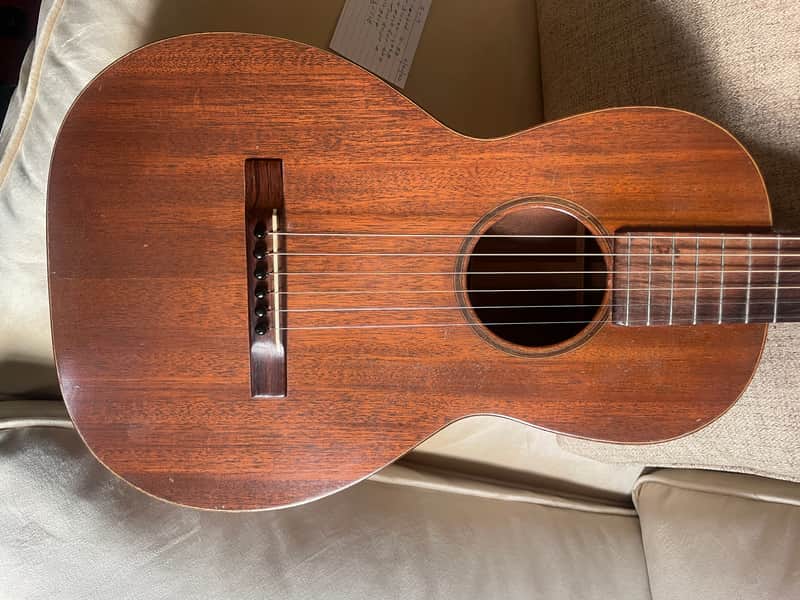
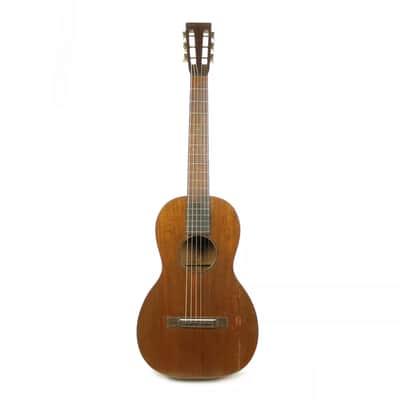
Martin 2-17 1926

Our users rate Reverb
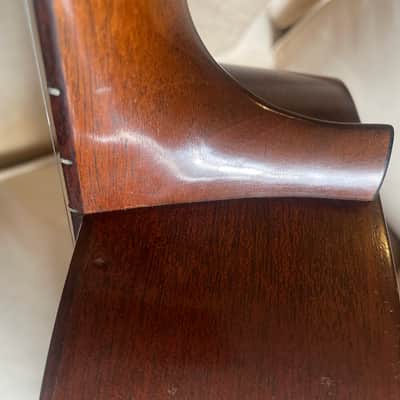
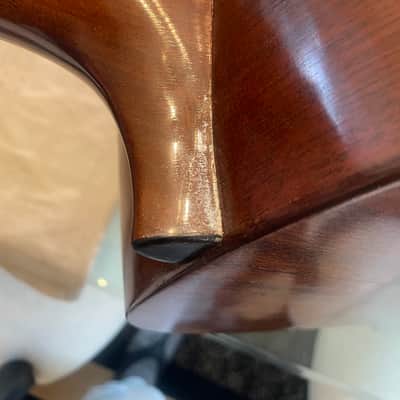
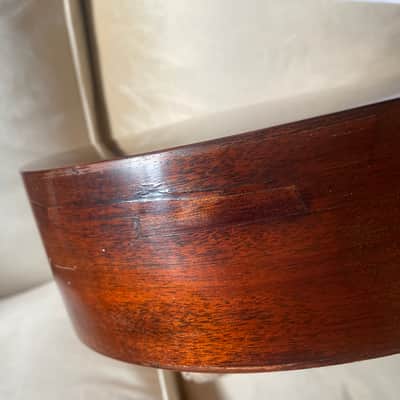
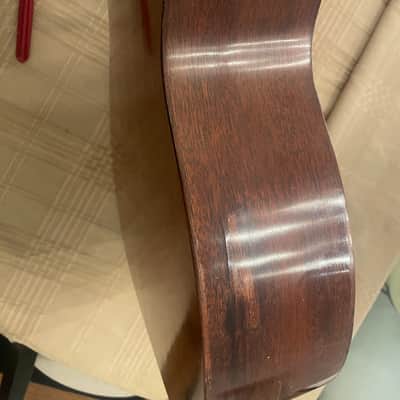
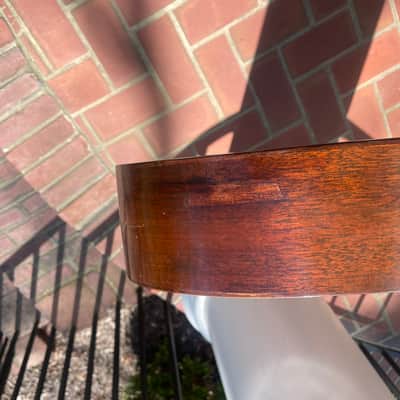
I acquired this guitar in 1998 from Guitars West in San Marcos, CA. During my ownership it received a neck set and an additional beneficial repair to what was a puncture on the bass side of the guitar. It has lived in its original soft case (worn and fragile – valance torn) under relaxed string tension and receives an evaporative sponge humidification at 12 – 18-month intervals. Here in the South, we do not have dryness problems.
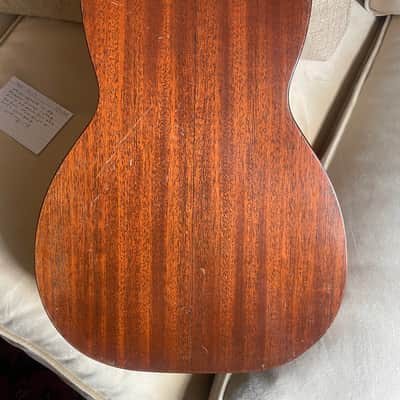
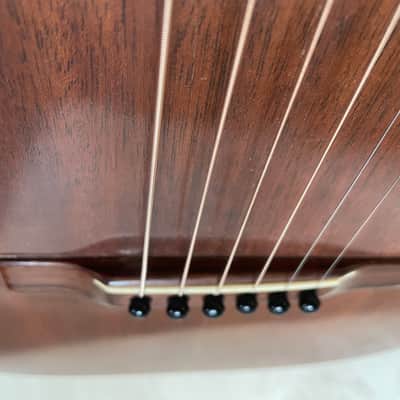
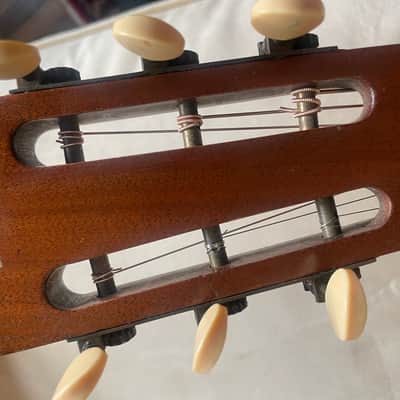
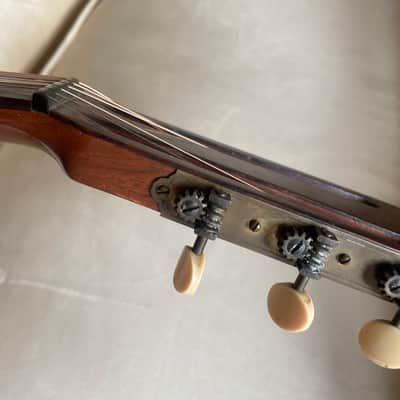
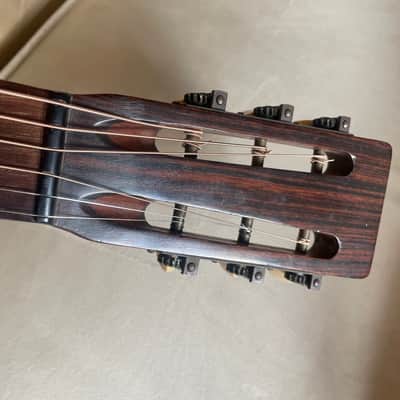
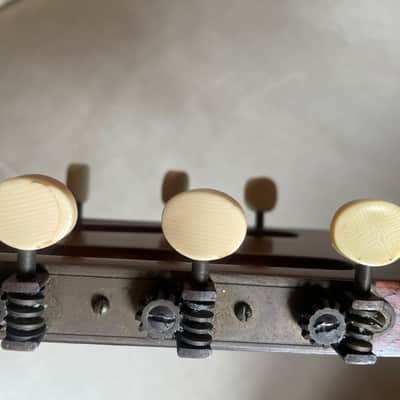
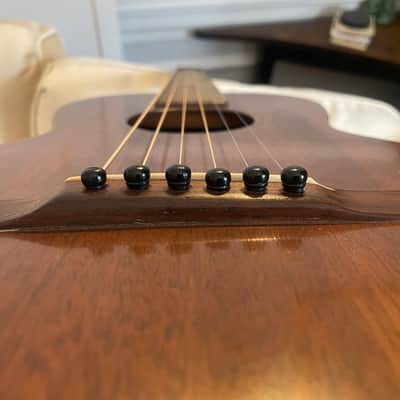
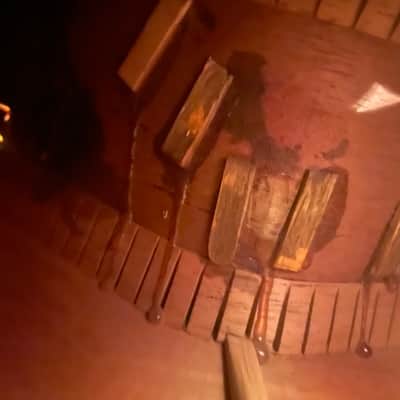
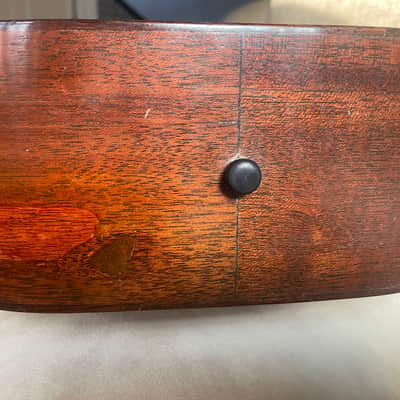
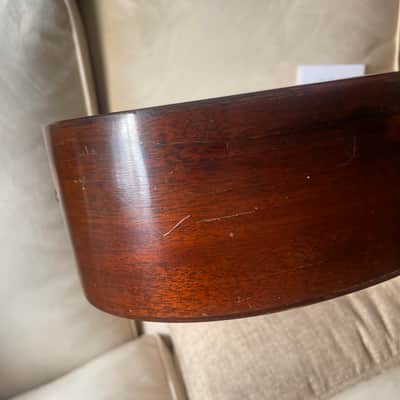
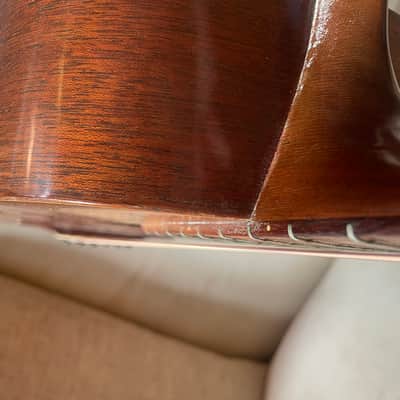
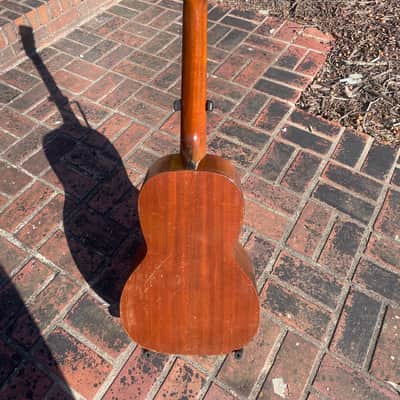
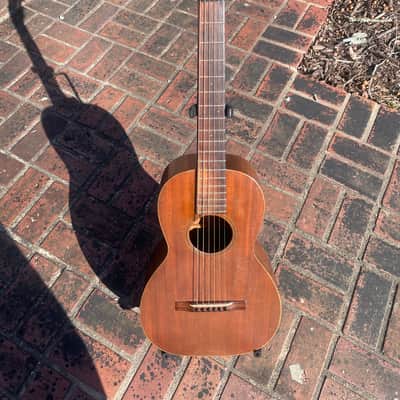
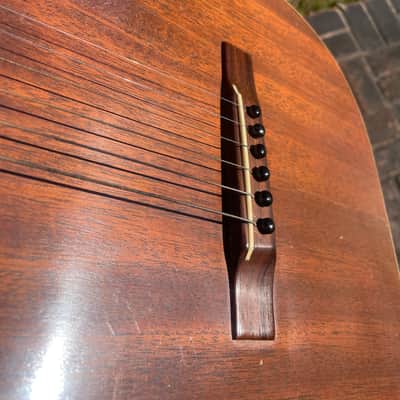
Condition evaluation: The original finish surface black lights consistently with exception of the bass side puncture repair. The interior of this repaired area displays glue drips with cleats fitted. Fortunately, there was no damage to the braces or kerfing. The repair is strong and does not deform the guitar. The repaired exterior looks much better! The bridge is original and full height. The fretboard is full height with no divots confirming minimal play over the last 100 years. There are no loose braces. There are no other cracks. Tuners are original and function properly displaying some tool marks on the screws. The original frets have been dressed; their surfaces are not string worn. The ebony nut and ivory saddle appear original. The pins are replacements. The Reverb business model classifies the guitar to be in GOOD condition due to the bass side repair. I suggest it is at the very top of Reverb's GOOD condition scale.
The original bridge plate remains healthy. I installed an extra string ball on the high E because the winding was nearer to the saddle. A very wise luthier recommends this practice for all strings on vintage guitars to preserve the bridge plates.
Playability is fine / proper. The guitar is currently fitted with 12 – 53 light gauge strings. The low E string height is .08 (5/64) above the 12th fret. The high E string height is .05 (3/64) above the 12th fret. Under full tension there is no bridge rotation or top deflection. This is a healthy surviving strait instrument. I suggest 12 – 53s are a bit strong for this guitar. Tuned down a full step, this 2-17 still resonates with no rattles. A mix of lighter gauge 80 / 20 bronze wound strings would benefit this guitar in my opinion.
The model 2-17 was design braced by the factory for steel strings beginning in 1923. I suggest 1923 to 1928 are the best years for this model because the factory finished these guitars with varnish prior to transitioning to lacquer finishes.
Holding this guitar while speaking into the sound hole, the guitar vibrates in your hands and returns hollow swirling resonant tonal characteristics. This is a strong sounding guitar. My opinion is this 2-17 is an affordable entry to the interesting and enjoyable pre-war arena for the finger style player.
Update: The comments by Russel L. below are not relevant to Seller's description of this guitar, as it was neither described with ebony bridge and board nor parallel bracing. I have reported his post to Reverb, and requested removal. Seller is pleased to clarify design characteristics to an interested Buyer, and apologies on behalf of Reverb for allowing this kind of unprofessional activity to confuse this transaction.
Reverb Buyer Protection
Reverb has your back if your item is lost, damaged, or doesn't match its description. Simply report any issues within 7 days and we'll help you get a full refund.Learn more about Reverb Buyer Protection.
| Listed | 4 months ago |
|---|---|
| Condition | Good (Used) Good condition items function properly but may exhibit some wear and tear.Learn more |
| Brand | |
| Model |
|
| Finish |
|
| Categories | |
| Year |
|
| Made In |
|
| Pickup |
|
| Series | |
| Fretboard Material |
|
| Body Shape |
|
| String Type |
|
| Right / Left Handed |
|
| Number of Strings |
|
| Neck Material |
|
| Finish Style |
|
| Top Material |
|
| Model Family |
|
| Back Material |
|
| Sides Material |
|
| Color Family |
|
| Active Preamp |
|
| Number of Frets |
|
Product safety information may be available here.