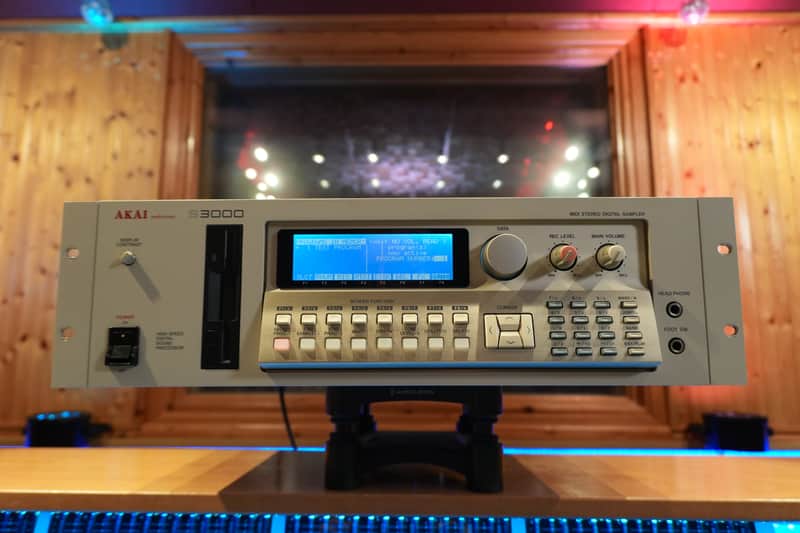
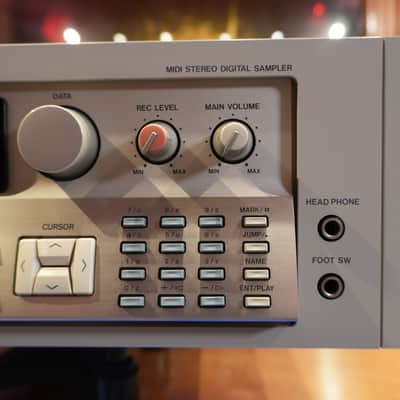
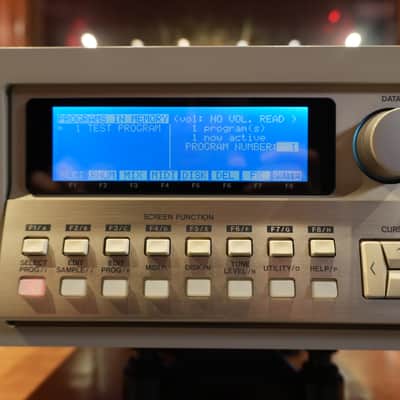
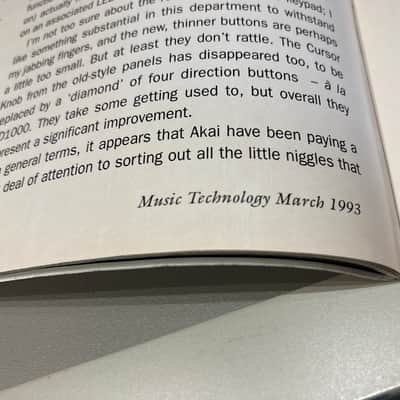
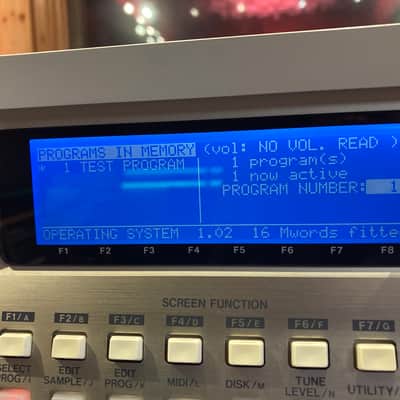
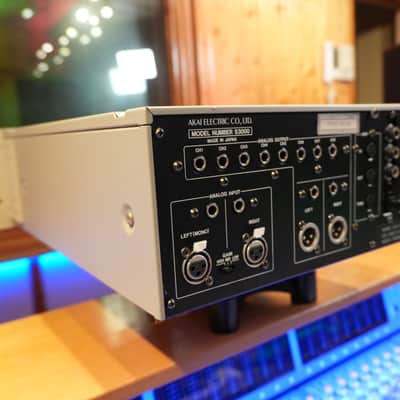
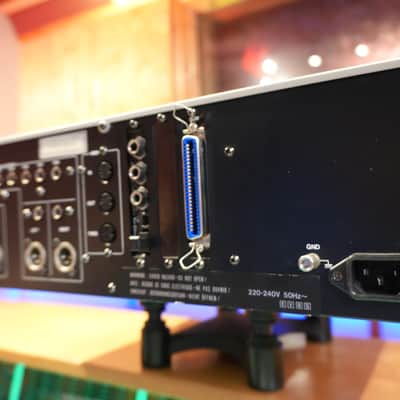
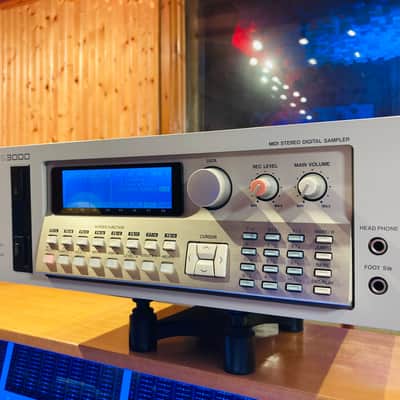
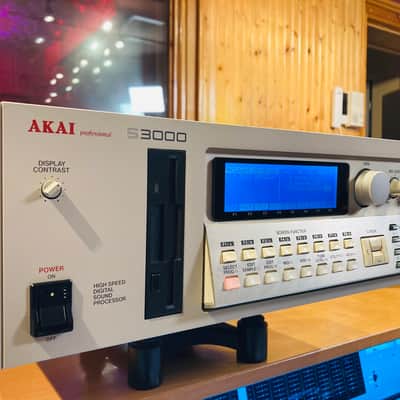
Akai S3000 MIDI Stereo Digital Sampler

Rare Find
These don't show up often
Our users rate Reverb
This is not a device where you can record a sound signal and then process it digitally, and reproduce it across a keyboard having fun. Of course you can also “sync” it to a computer via MIDI, but this isn’t the case. It’s not an electronic musical instrument. Also, not the kind of gear that overexcited musicians and producers some decades ago. This is not the typical “sampler” you may know from the groovy 90’s. This is the definition of a sampler.
It’s actually a piece of history. Yes, that’s true. A monument of the golden years of sampling, representing the most important chapter of the history of music production: The era of early digital audio manipulation. This was the aspect that marked a schism in the music industry ever since- “back then, right now”- present time vs past time. So, what’s the point?
If you want to own a piece of history, this is the day you’re waiting for. You take it or you leave it. If you’re a retro maniac living as a time traveler back and forth and your nostalgia for yesterday haunts today, this is the opportunity to stop being haunted by the ghost of the past when everything (?) was nice and fine and music was shared only through tangible media, records or tapes.
But if you ‘re a dawn-to-earth today’s producer of any level and kind and simply want to expand your sonic palette with digital vintage gear, to differentiate your sound with some of the vibe of the gritty 16 bit audio, this is a device that really should - and deserves - to be in your arsenal.
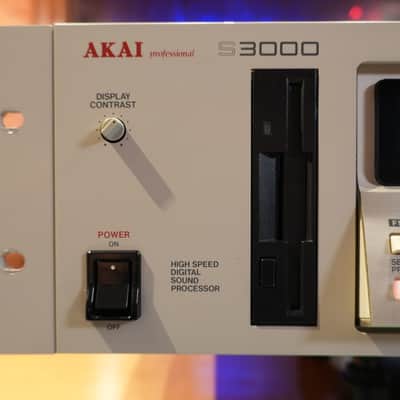
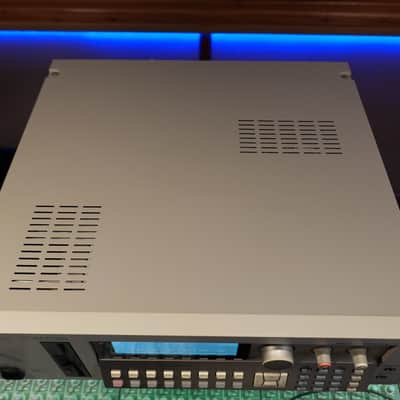
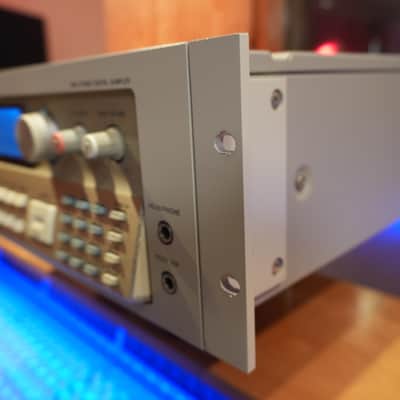
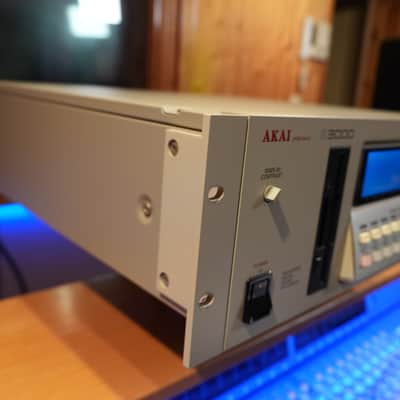
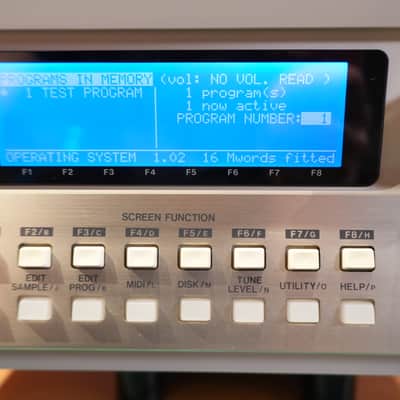
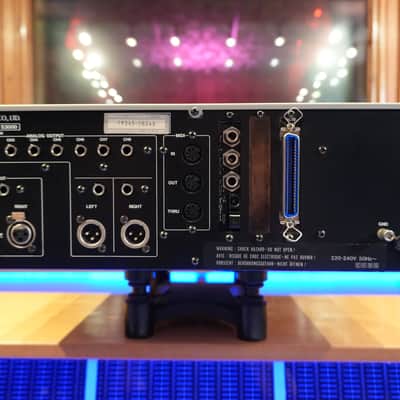
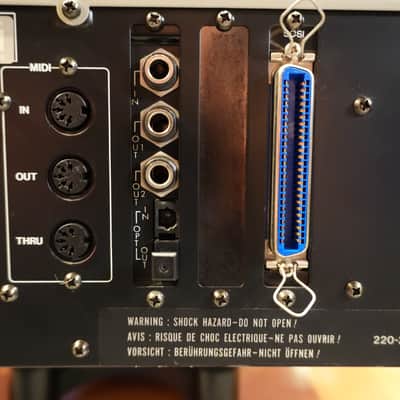
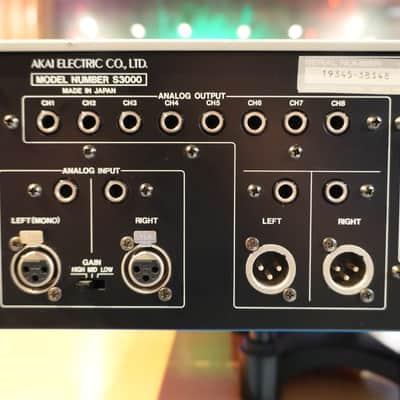
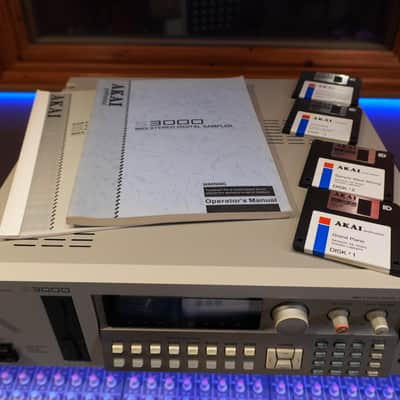
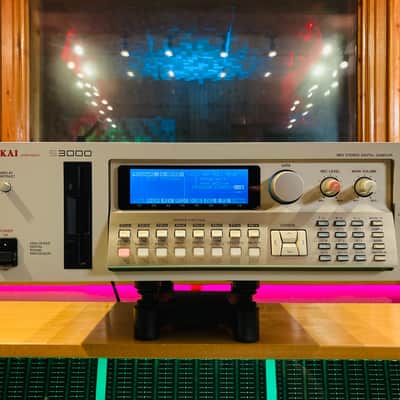
Bought it new in 1994 from Akai’s official dealer in Athens, Greece, expanded during time, serviced in their official workshop when needed and preserved like a time capsule with dedication and attention to detail. RAM memory has expanded to the full 32 Mb and it can run on the V2.0 operating system. It’s equipped with the SCSI interface for connecting it to external hard drives or CD-ROM drives. Also, the digital electrical-optical input/output card has been installed allowing direct recording of samples without analog-to-digital conversion, while the floppy disk drive seems to work normally with most floppy disks. Of course it can always be swapped with a USB emulator. It is accompanied by the grey original power cable, original user manuals and the Akai’s factory floppy disks from the original packaging.
The LCD screen has been modified using CCFL backlight to replace the old EL electroluminescent panel which has a short lifespan and needs to be changed if the device is used for many hours, which is usually the case with any sampler. So, there will be no need to change the backlight for many, many years and the screen brightness will remain unchanged regardless of time of use.
Please have in mind that it is an EU 230V compliant device. If you intend to use it in a 110/120V network you’ll need a step-up transformer. The device has been checked and will be checked before shipping, however as with any vintage equipment it is sold as-is – no returns. Another important reminder: Any extra charges for import duties or other charges are solely the responsibility of the buyer, the price listed is purely the selling price.
Reverb Buyer Protection
Reverb has your back if your item is lost, damaged, or doesn't match its description. Simply report any issues within 7 days and we'll help you get a full refund.Learn more about Reverb Buyer Protection.
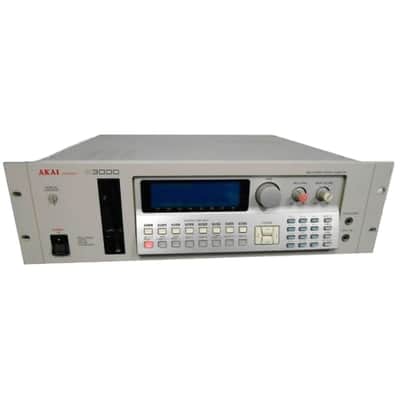
| Listed | a month ago |
|---|---|
| Condition | Excellent (Used) Excellent items are almost entirely free from blemishes and other visual defects and have been played or used with the utmost care.Learn more |
| Brand | |
| Model |
|
| Finish |
|
| Categories | |
| Year |
|
| Made In |
|
| MIDI I/O |
|
| Polyphony |
|
| Analog / Digital |
|
Product safety information may be available here.

