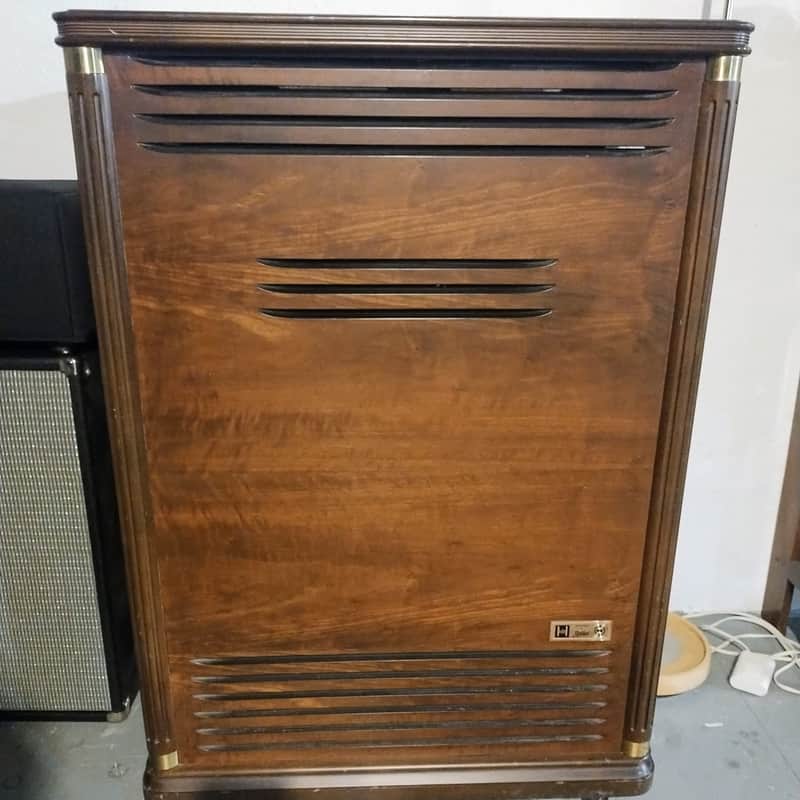
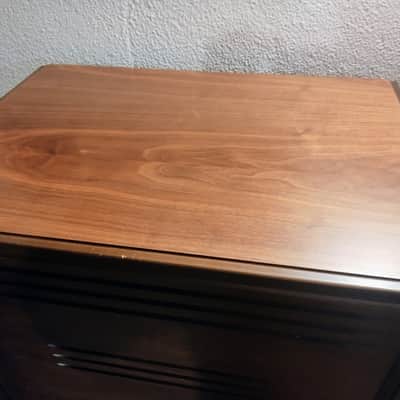
Leslie HL-722 Rotary Speaker w/ BookerLAB Control Pedal
This listing has ended
See similar gear from other Reverb sellers

Our users rate Reverb
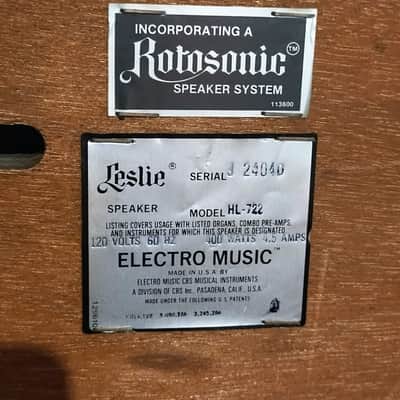
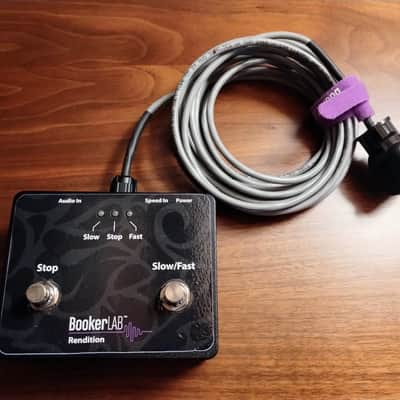
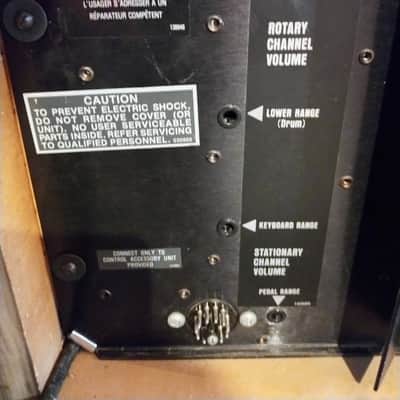
Leslie HL-722 rotary speaker with BookerLAB control pedal. Input any line-level audio source and control the speed. I used this regularly for guitar and other synths and it works great. 11-pin input connection on the Leslie.
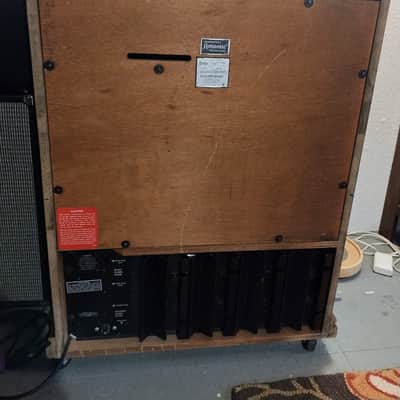
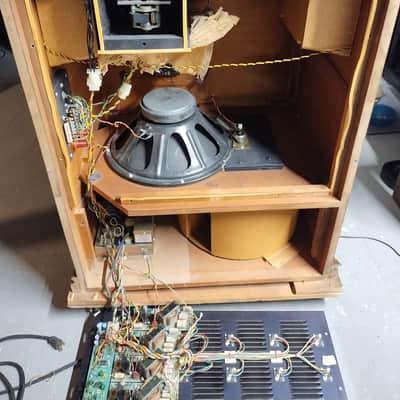
I replaced the bearings, retensioned the belts, and replaced the Mercotac slip-ring contactor on the lower drivers about a year ago. The motors have been lubricated and run great. I also reversed the direction of the horn motor, similar to the setup in the earlier tube-driven Leslies.
Local pickup in Plymouth, MI only, no shipping.
"The HL-722 has two input channels routed via an electronic crossover to four internal amplifiers. Bass frequencies from both the rotary (below 100Hz) and stationary channels (below 220Hz) are routed to the Pedal amplifier board (delivering 70 watts) which drives a 4-ohm 15" bass speaker. The midrange and treble frequencies from the Stationary input (above 220Hz) route to the Keyboard amplifier board (delivering 65 watts) which drives three 6X9" speakers, each housed in a styrofoam sub-enclosure. Rotary channel frequencies above 100Hz are split into two bands. The band from 100Hz to 450Hz is sent to the Drum amplifier board (40 watts) which drives a heavy-duty 6X9" speaker housed in a RotosonicDrum. Not only is this driver beefier than earlier Rotosonics the output "throat" is deeper than that of the 710's drum. The band from 450Hz on up is sent to the Horn amplifier board (40 watts) which drives a Jensen V21 16-ohm treble driver (early units) or an 8-ohm horn driver from either Jensen or Atlas (the author's personal HL-722 ca. 1985 had an 8-ohm horn driver with a Jensen EIA code and a date code indicating manufacture in 1985. This was replaced with a late V21 from a 720 to suit the author's tastes in tonal balance.) All four amplifier boards are the standard Leslie solid-state 4-transistor amplifier with interstage transformer and rear-panel-mounted output transistors. Later versions of these models use larger aluminum heat sinks on the rear panel as opposed to simply using the sheetmetal rear panel as a heat sink as in the early versions of this series, 710, 760, and other solid-state Leslies. There are separate gain trimmers accessible by screwdriver for each amplifier board allowing the organist to "voice" the Leslie to his/her personal preference. These models also feature "Treble Response Control" (TRC), a pair of switches on the side of the cabinet allowing the user to select from three levels of "brightness" for both the Rotary and Stationary channels."
Reverb Buyer Protection
Reverb has your back if your item is lost, damaged, or doesn't match its description. Simply report any issues within 7 days and we'll help you get a full refund.Learn more about Reverb Buyer Protection.
| Listed | 2 years ago |
|---|---|
| Condition | Excellent (Used) Excellent items are almost entirely free from blemishes and other visual defects and have been played or used with the utmost care.Learn more |
| Brand | |
| Model |
|
| Finish |
|
| Categories | |
| Year |
|
| Made In |
|
Product safety information may be available here.