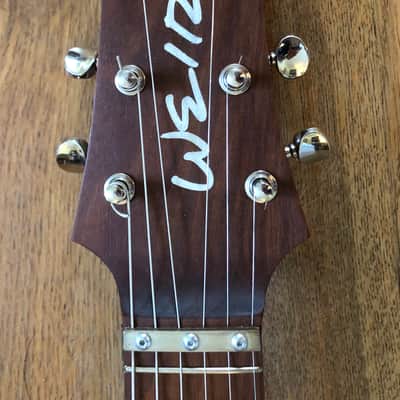

Weir "Poorboy" Guitar #51
This gear has sold
See similar gear from other Reverb sellers
Listed:6 years ago
Views:521
Watchers:19
Offers:1

Portsmouth, VA, United States
Our users rate Reverb
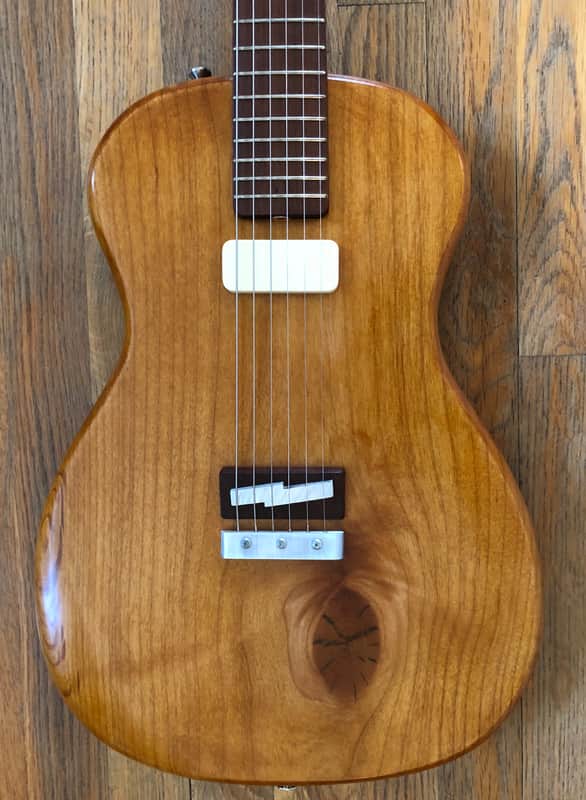
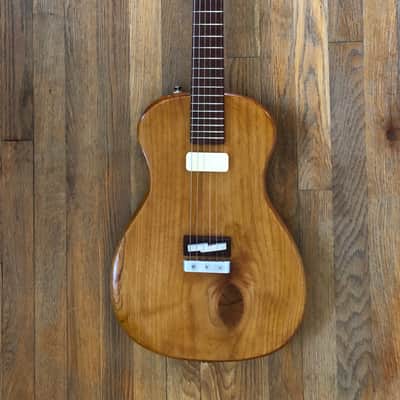
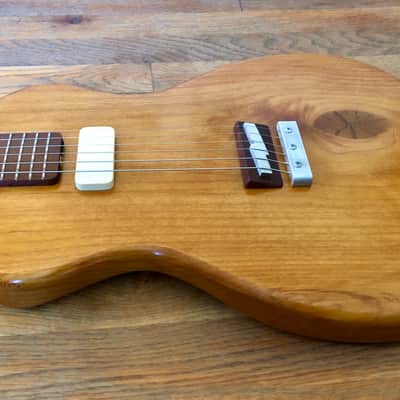
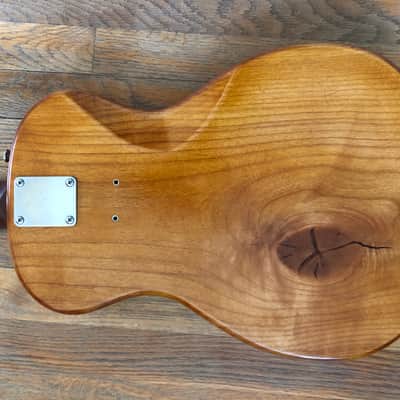
Gently used Weir Poorboy Guitar #51 built in 2015. It's in very good shape and plays beautifully. Just a few minor marks here and there from 4 years of play. This is a one of a kind instrument, all handmade in Escondido, Ca. by Dave Weir. For more info, check out his very creative work and minimalist philosophy on guitar building. I'm selling only because I'm playing more bass guitar these days. Will definitely miss this excellent guitar.
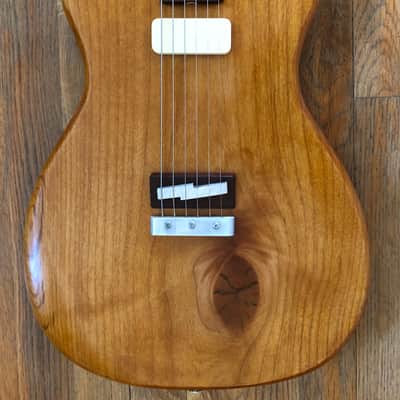
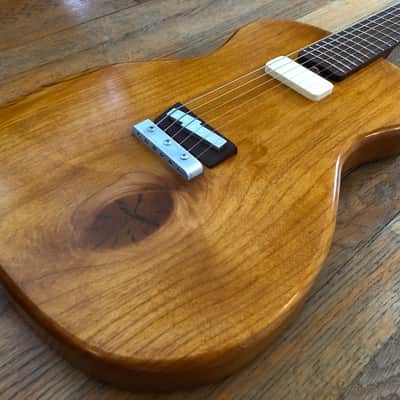
1 piece Alder body with very cool knot
Hand rubbed oil varnish (French polish with amber tint)
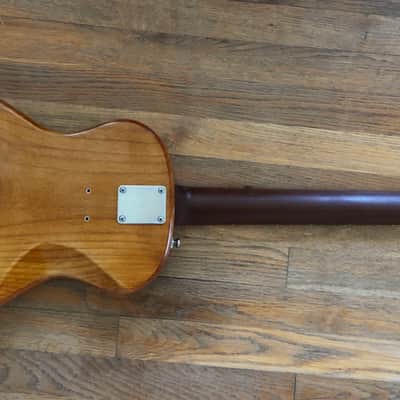
1 Piece Ipe Neck / Fingerboard. Gunstock Oil Finish.
Truss Rod
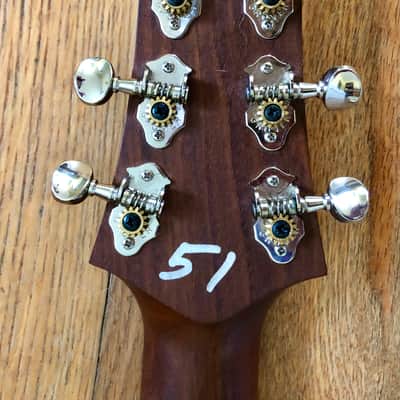
Grover Sta-Tite Tuners 14:1.
Nickel Silver String guide.
.039”x.084” Nickel alloy fret wire with Zero Fret.
23 frets. 25” Scale. 1 3/4” wide at Zero Fret.
Nickel Silver side dots
Direct Drive Weir Guitars PF2 pickup.
Weight 7.5 pounds
20mm thick gig bag
from weirguitars.com:
"Weir Guitars is a little one man shop operating out of Escondido, California. I specialize in handmade electric guitars featuring rock solid design and Bare Bones Tone. I use the best materials I can find but also try to keep it simple and keep the price down.
The first and still primary guitar I make is the Poorboy. It is stripped done to the essentials, which allows me as a builder and you as a player to focus on what really matters, the sound and the play-ability.
The pickup is wired directly to the end pin output jack. There is no volume or tone control. For me, these things were always somewhere between a distraction and an annoyance. Once I started building my own guitars, they were the first thing to go.
The Standard Pickup is my PF2, which is electricly similar to a mini humbucker. There are a few differences. There are no adjustable pole pieces, instead there are steel bars inside each coil. The magnet is usually AlNiCo 5, although I am still experimenting. There is no back plate, and instead everything is wrapped in copper foil, which grounds and shields the steel bars. The whole assembly is then encased in epoxy resin.
I route the pickup cavity very tight to the body of the pickup. The pickup is pressed into the body with a fair amount of force, and is extremely solid. I want the pickup to move as little as possible, with no motion relative to the strings. This allows the pickup to most clearly sense the vibrations of the strings. It's one part of the rock solid design. There are a couple of set screws installed from the back which sit under the pickup and allow you to set and change the closeness to the strings.
The bridge is another part of the rock solid design. I use a Dead Stop Tail Piece which is a big chunk of aluminum screwed down directly to the body. The bridge is a specially milled piece of Aluminum or Corian which sits on a hardwood bridge ramp. I usually usually match the neck wood. Remember, this is an electric guitar, not an acoustic. The sound comes from the vibrating strings interacting with the pickup, not from the top of the guitar. We want to keep as much energy as we can in the strings. The solid bridge sitting on the solid hardwood ramp is much better at keeping the energy in the strings than all those little screws and things you find in a typical electric guitar bridge.
The bridge is cut in the Z or lightning bolt shape to properly intonate the strings. It is reversible for sets with wound or unwound G strings. It works very well for most normal sets. If you have a very unusual set, say 8/52, it may require some modification. Action height is set by moving the bridge up or down the ramp, and intonation is set by moving the ramp assembly forward or backward.
The next innovation which contributes to rock solid design is the neck joint. The neck pocket is a trapezoid, cut slightly smaller than the neck itself. The neck is installed by positioning it an inch or so toward the bridge, where it can start to drop in. It is then pushed away from the bridge until the heel clears, and then forced down into the pocket. Once in place, then body and neck are pushing against each other on four sides. This is compared to a typical bolt on neck, which has pressure on two sides, and a glued on neck, which I don't think has any mating pressure anywhere. The result of this "Bare Trap" neck joint is superior resistance to string dampening. I believe it provides better sustain than any other system, including "neck through".
The neck itself, including the fret board, is made of one solid piece of hardwood. Some of the woods I like are Maple, Ipe, Merbau, and Baked MAple, and Goncalo Alves . Maple is the easiest to obtain and is an excellent, traditional wood for guitar necks. It is not too expensive, is very hard and smooth, and still machines and sands fairly easily. Baked Maple is a little more stable , and a little darker. Merbau and Ovangkol are harder, Merbau is open grain which makes it feel very fast. Ipe is incredible hard and stiff, and is very hard to work with. But it does make for a very beautiful, great sounding neck.
I use a zero fret and an inverted Nickel Silver string guide. This arrangement allows me to use a flat headstock, and I can make the neck and headstock out of one piece of wood with very little waste. The zero fret provides for excellent low action, and consistent intonation. I'm using Grover Sta-Tite open back tuners because they work well, they match the bare bones style of the guitar, and are reasonably priced."
1 piece Alder body with very cool knot
Hand rubbed oil varnish (French polish with amber tint)
1 Piece Ipe Neck / Fingerboard. Gunstock Oil Finish.
Truss Rod
Grover Sta-Tite Tuners 14:1.
Nickel Silver String guide.
.039”x.084” Nickel alloy fret wire with Zero Fret.
23 frets. 25” Scale. 1 3/4” wide at Zero Fret.
Nickel Silver side dots
Direct Drive Weir Guitars PF2 pickup.
Weight 7.5 pounds
20mm thick gig bag
from weirguitars.com:
"Weir Guitars is a little one man shop operating out of Escondido, California. I specialize in handmade electric guitars featuring rock solid design and Bare Bones Tone. I use the best materials I can find but also try to keep it simple and keep the price down.
The first and still primary guitar I make is the Poorboy. It is stripped done to the essentials, which allows me as a builder and you as a player to focus on what really matters, the sound and the play-ability.
The pickup is wired directly to the end pin output jack. There is no volume or tone control. For me, these things were always somewhere between a distraction and an annoyance. Once I started building my own guitars, they were the first thing to go.
The Standard Pickup is my PF2, which is electricly similar to a mini humbucker. There are a few differences. There are no adjustable pole pieces, instead there are steel bars inside each coil. The magnet is usually AlNiCo 5, although I am still experimenting. There is no back plate, and instead everything is wrapped in copper foil, which grounds and shields the steel bars. The whole assembly is then encased in epoxy resin.
I route the pickup cavity very tight to the body of the pickup. The pickup is pressed into the body with a fair amount of force, and is extremely solid. I want the pickup to move as little as possible, with no motion relative to the strings. This allows the pickup to most clearly sense the vibrations of the strings. It's one part of the rock solid design. There are a couple of set screws installed from the back which sit under the pickup and allow you to set and change the closeness to the strings.
The bridge is another part of the rock solid design. I use a Dead Stop Tail Piece which is a big chunk of aluminum screwed down directly to the body. The bridge is a specially milled piece of Aluminum or Corian which sits on a hardwood bridge ramp. I usually usually match the neck wood. Remember, this is an electric guitar, not an acoustic. The sound comes from the vibrating strings interacting with the pickup, not from the top of the guitar. We want to keep as much energy as we can in the strings. The solid bridge sitting on the solid hardwood ramp is much better at keeping the energy in the strings than all those little screws and things you find in a typical electric guitar bridge.
The bridge is cut in the Z or lightning bolt shape to properly intonate the strings. It is reversible for sets with wound or unwound G strings. It works very well for most normal sets. If you have a very unusual set, say 8/52, it may require some modification. Action height is set by moving the bridge up or down the ramp, and intonation is set by moving the ramp assembly forward or backward.
The next innovation which contributes to rock solid design is the neck joint. The neck pocket is a trapezoid, cut slightly smaller than the neck itself. The neck is installed by positioning it an inch or so toward the bridge, where it can start to drop in. It is then pushed away from the bridge until the heel clears, and then forced down into the pocket. Once in place, then body and neck are pushing against each other on four sides. This is compared to a typical bolt on neck, which has pressure on two sides, and a glued on neck, which I don't think has any mating pressure anywhere. The result of this "Bare Trap" neck joint is superior resistance to string dampening. I believe it provides better sustain than any other system, including "neck through".
The neck itself, including the fret board, is made of one solid piece of hardwood. Some of the woods I like are Maple, Ipe, Merbau, and Baked MAple, and Goncalo Alves . Maple is the easiest to obtain and is an excellent, traditional wood for guitar necks. It is not too expensive, is very hard and smooth, and still machines and sands fairly easily. Baked Maple is a little more stable , and a little darker. Merbau and Ovangkol are harder, Merbau is open grain which makes it feel very fast. Ipe is incredible hard and stiff, and is very hard to work with. But it does make for a very beautiful, great sounding neck.
I use a zero fret and an inverted Nickel Silver string guide. This arrangement allows me to use a flat headstock, and I can make the neck and headstock out of one piece of wood with very little waste. The zero fret provides for excellent low action, and consistent intonation. I'm using Grover Sta-Tite open back tuners because they work well, they match the bare bones style of the guitar, and are reasonably priced."
Reverb Buyer Protection
Reverb has your back if your item is lost, damaged, or doesn't match its description. Simply report any issues within 7 days and we'll help you get a full refund.Learn more about Reverb Buyer Protection.
| Listed | 6 years ago |
|---|---|
| Condition | Very Good (Used) Very Good items may show a few slight marks or scratches but are fully functional and in overall great shape.Learn more |
| Brand | |
| Model |
|
| Finish |
|
| Categories | |
| Year |
|
| Made In |
|
| Body Type |
|
Product safety information may be available here.