


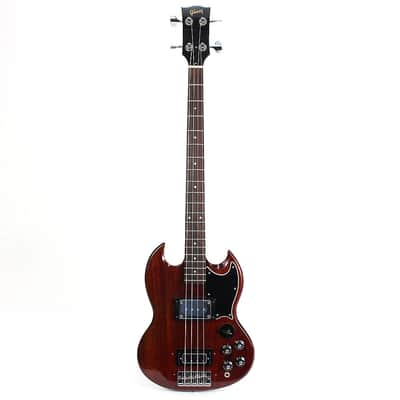
Gibson EB-3 1972 Bass (Walnut Finish - VG+)


Rarità
Non compaiono spesso
I nostri utenti valutano Reverb
The 1972 Gibson EB-3 bass marks one of the most drastic, ground-up structural redesigns in the entire history of the model. After phasing out the polarizing slotted headstocks early in the year, Gibson completely overhauled the instrument's wood composition, physical layout, and internal electronics.
This is the first of two EB-3’s I have from 1972. This one is VG+ condition and looks remarkably nice for its age. There is some player scuff on the back of the bass, but nothing that’s deeply etched into the wood. Aside from that, there are a few minor dings and missing screws, but is VERY clean looking. This has the more common Walnut finish. Comes with long black case, which may be original? This bass is from an estate collection.
I’ve confirmed the age partly through checking the CTS pots (see photo) which indicate a 1371XX number (denoting a 1971 manufacture date for the pot), but the body and layout is clearly based on the 1972 specs. The serial number is 964651.
The Massive 1972 Overhaul & Specifications
• The Return to Solid Headstocks: After 1971, Gibson abandoned the fragile slotted design and returned to a solid wood headstock. It features a prominent neck volute (a reinforcement bump behind the nut) and a stamped "MADE IN U.S.A." mark.
• Shift to Maple Necks: In a major departure from the traditional all-mahogany builds of the 1960s, Gibson swapped to a much stiffer 3-piece maple set neck. This increased stability and brightened the bass's natural acoustic tone. The fingerboard was also extended to 21 frets.
• Relocated Neck Pickup: To combat the notoriously muddy, bass-heavy tone of previous years, Gibson shifted the large neck humbucker backward, positioning it significantly further down the body toward the middle position. This gave the 1972 model a noticeably tighter, more midrange-focused punch.
• Thicker Body: The solid mahogany body grew heavier and thicker (by roughly 3/16") to accommodate the new layout and provide a sturdier anchor for the neck joint.
• Upgraded Hardware & Electronics: This year introduced Series 2 circuitry, which downsized the internal choke transformer. It features a large 5-ply pickguard and transitioned away from the early 2-point bridge toward a robust 3-point adjustable bridge with metal saddles.
Production Numbers
Gibson shifted a combined total of 1,355 standard EB-3 and long-scale EB-3L units in 1972. Because of the mid-year tooling overhaul, early 1972 "transitional" units can occasionally be found with leftover 1971 parts (such as a 3-piece mahogany neck instead of maple or a final leftover slotted headstock).
Protezione di Reverb per gli acquirenti
Reverb ti protegge nel caso in cui il tuo articolo venga perso, danneggiato o non corrisponda alla descrizione. Basta segnalare eventuali problemi entro 7 giorni e ti aiuteremo a ottenere il rimborso completo.Scopri di più sulla Protezione di Reverb per gli acquirenti.
| Pubblicato | 20 ore fa |
|---|---|
| Condizione | Molto buono (Usato) Gli articoli "Molto buoni" possono mostrare qualche piccolo segno o graffio ma sono pienamente funzionali e in buone condizioni generali.Scopri di più |
| Marchio | |
| Modello |
|
| Finish |
|
| Categorie | |
| Anno |
|
| Prodotto in |
|
| Materiale tastiera |
|
| Famiglia colore |
|
| Materiale body |
|
| Destrimani/Mancini |
|
| Pickup attivi/passivi |
|
| Materiale manico della chitarra |
|
| Stile top in legno |
|
| Configurazione pickup |
|
| Preamplificatore attivo |
|
| Stile finish |
|
| Numero di corde |
|
| Forma body |
|
| Numero di tasti |
|
Le informazioni sulla sicurezza del prodotto sono disponibili qui.

Protezione di Reverb
Resi semplici, transazioni sicure, assistenza di persone in carne e ossa
Scopri di più