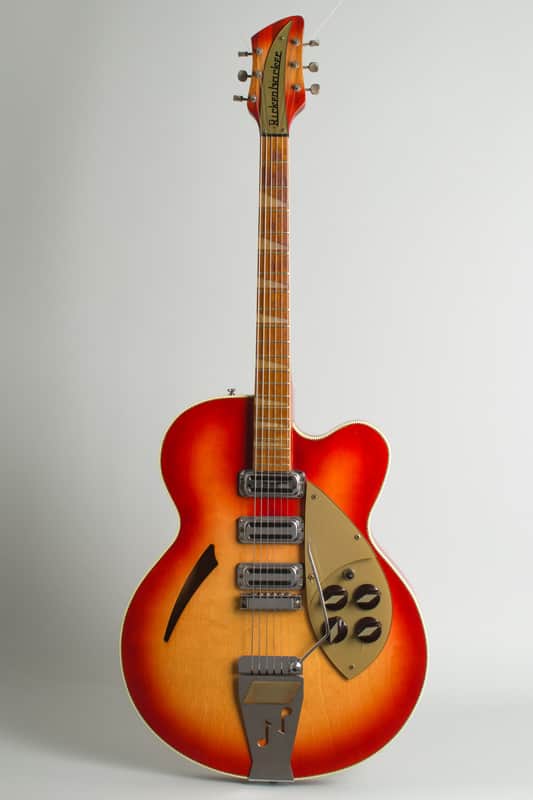
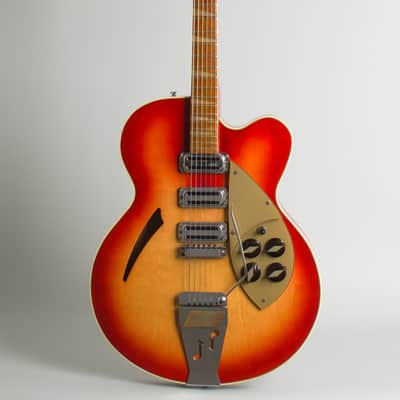
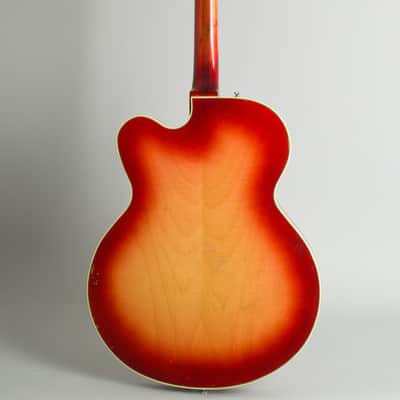
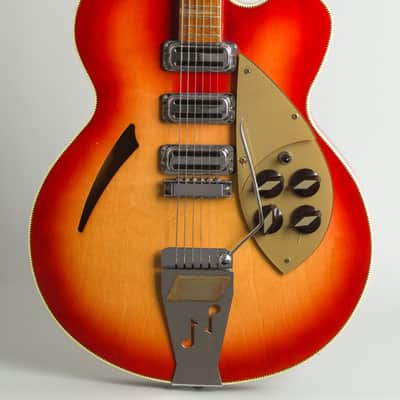
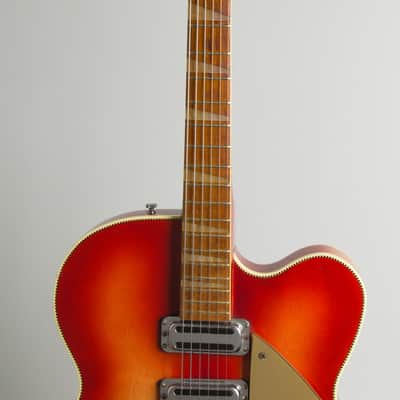
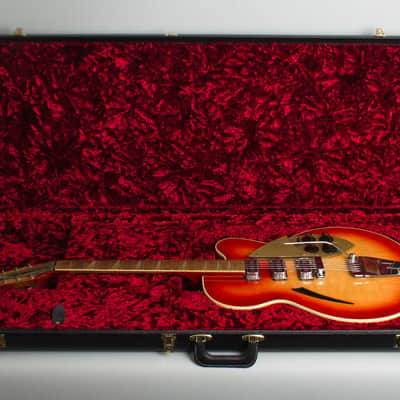
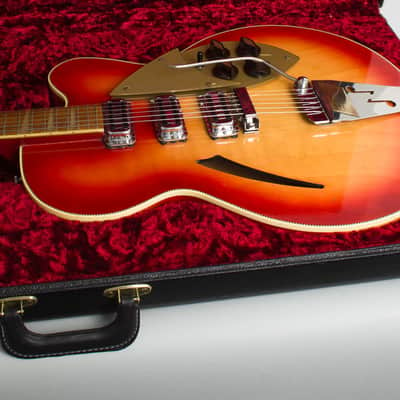
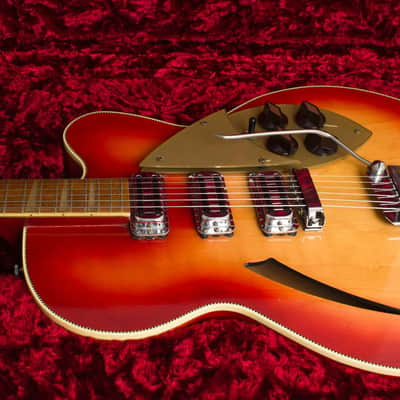
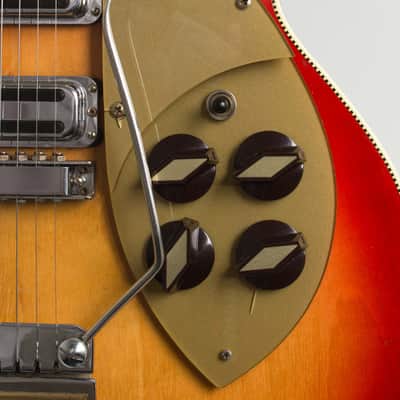
Rickenbacker Model 375F Semi-Hollow Body Electric Guitar (1961), ser. #AH-580, black tolex hard shell case.
Price$14,500
+ $250 Shipping

Listed:3 hours ago
Views:58
Saves:16
Offers:0

Brooklyn, NY, United States
Our users rate Reverb
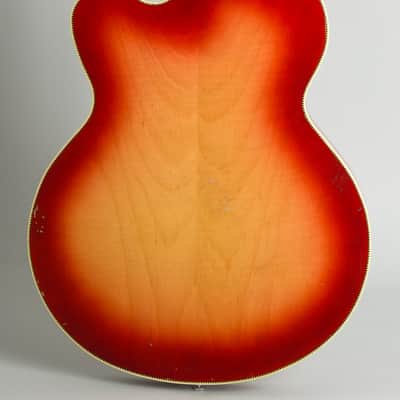
Rickenbacker Model 375F Model Semi-Hollow Body Electric Guitar (1961), made in Los Angeles, serial # AH-580, Fireglo red sunburst finish, laminated maple body, laminated maple and walnut neck, Padouk fingerboard, black tolex hard shell case.
Rickenbacker has created a number of iconic instruments over the last 90+ years; some have become classics, while others have disappeared into relative obscurity. This Capri Model 375F is one of the latter, and also one of the rarest and more unusual! The Rickenbacker 300 F-series "Full Body" models were originally offered as part of the Capri series starting in summer 1958, but despite remaining on the price lists well into the 1960s were produced in such tiny numbers as to be effectively discontinued almost immediately. This 1961 Model 375F is a late-production example of the top of this line, the fanciest model offered with three pickups, vibrato and a beautiful Fireglo finish.
The "Full body" designation referred primarily to width rather than depth; the flat-topped hollow body is almost 17" wide but only 2" deep at the rim. The body shape with the single rounded treble-side cutaway is more traditional (and less striking visually) than the standard Model 310-375 familiar to most players; it was referred to as "semi-cutaway" in the company catalog and may have been intended to woo more conservative jazz players to the Rickenbacker camp. The body is constructed with solid flat top and beck sections mated to bent rims unlike the carved-out "butcher block" method used on the standard Capris.
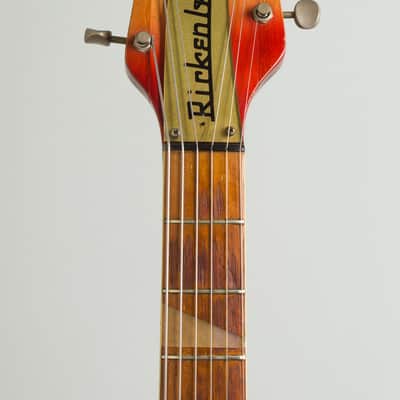
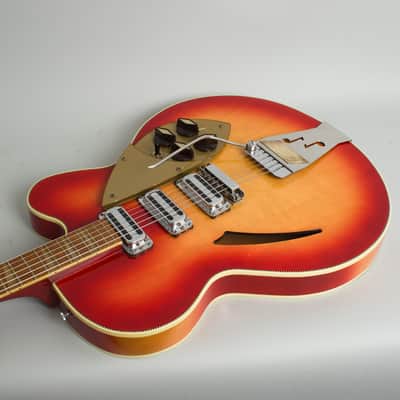
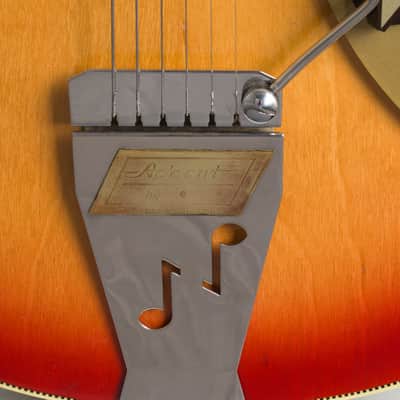
The features are classic early-'60s Rickenbacker, including the three "toaster-top" chrome pickups, double elevated gold-backed Lucite pickguard, "oven" style control knobs, gold nameplate on the headstock, rare long-plate Accent vibrato tailpiece (with the cool cut-out musical note motif and contrasting brass nameplate) and adjustable four-point roller bridge. The finish on this guitar is "Fireglo" which is the company's moniker for a dramatic red-natural shaded sunburst lacquer. The top and back are bound with the distinctive checkerboard pattern around the top edge seen only on deluxe Rickenbackers.
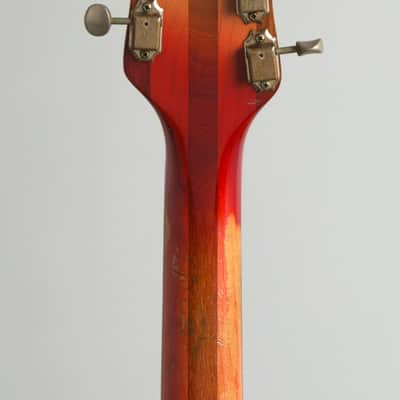
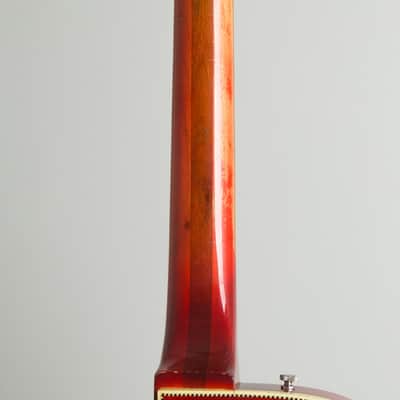
The neck is the standard Rickenbacker laminated maple/walnut style with a single truss rod, not the double-rod system introduced soon after. The fingerboard is bound and inlaid with the early style "slash" inlay that is another Rickenbacker trademark. Due to the different and far more substantial heel design, the whole instrument has a much more solid feel and these full-body guitars do not suffer the neck-angle issues that often plague the more familiar double cutaway Capri models.
As well as looking like no other instrument, the 375F is a unique feeling guitar. The large body with no arching gives it a slightly "flattened" look but it plays pretty much the same as more familiar period Rickenbacker Capris. The sound falls into the traditional Rickenbacker sonic niche, but with added acoustic depth and warmth due to the much larger body cavity. As with all Deluxe models of the time it is wired with the "Rick-O-Sound" stereo option almost nobody ever uses.
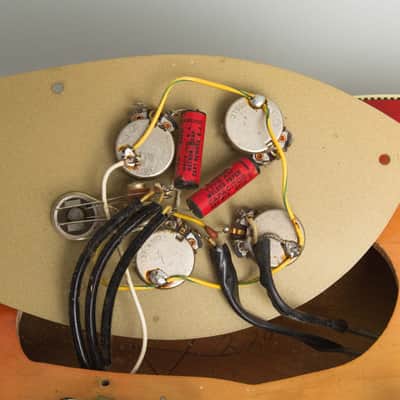
The "F" models were prominently featured in Rickenbacker's 1958-9 color catalog but sales-wise were far less successful commercially than the more familiar double cutaway Capris; only a small number of any given model were produced before the entire series slid into obscurity. There is some debate about the limited production figures of these guitars but this top-line 375-F is a very rare instrument! The serial number on the jackplate indicates it was finished out in August 1961; The four matched original pots are coded to the 3d week of that year. The original list price in July 1961 was $464, plus 459.50 for the case.
These full-body guitars are now seldom encountered in any condition, and this is a truly spectacular example. They had few prominent users when new although Jimmy Bryant endorsed them briefly in the early '60s before moving on to Magnatone, and Toots Thielmans was seen with them as well. We have had several of these "F" models over the years but this is our first top-of-the-line 375-F, a real showpiece for Rickenbacker's finest artistry in the pre-Beatle era.
Overall length is 41 3/4 in. (106 cm.), 16 3/4 in. (42.5 cm.) wide at lower bout, and 2 in. (5.1 cm.) in depth, measured at side of rim. Scale length is 24 3/4 in. (629 mm.). Width of nut is 1 1/2 in. (38 mm.).
This is a generally clean and fine playing example of this early full-body Rickenbacker Capri, played but not heavily worn. There is light general wear over the entire instrument with some very fine checking to the body and minor dings, dents and scrapes over the instrument, heaviest on the sides. The back has some belt-buckle worming mostly into but not through the finish.
The back of the neck has noticeable wear to the wood and some feelable minor dings and dents, but nothing too distracting. The fingerboard has areas of visible wear through the lacquer up into the middle region; this was not a "Cowboy Chord" guitar but belonged to some kind of hot picker! The only crack of any sort is a small split to the upper side around the strap button, solid but visible. The seams of the outer headstock wings are feelable at the base end but not separating.
Ther is one oddity to the original finish, a very carefully delineated sprayed over spot between the neck and middle pickups which absolutely appears to be factory work (the lacquer matches exactly under UV light). It looks like this was done to disguise a small flaw/fill to the wood just ahead of the middle pickup at the finishing stage but over time has become more noticeable. In 1961 Rickenbacker did not offer "factory seconds" so it looks like some extra effort was made to make the top-of-the-line (and likely custom ordered) guitar saleable!
The pickups, wiring, knobs, roller bridge (with cover), vibrato unit (including the fragile handle) stereo jack plate, strap buttons and tuners remain original; there light wear to some components. The upper gold pickguard has small cracks off the upper corner screw, while the lower has a single split off the lower rear knob. The truss rod plate is fully intact. Some of the rubber grommets under the pickguards are correct replacements.
The original frets have been crowned down with some subsequent wear; the truss rod has had a shim added behind the adjusting nut for added torque guitar plays quite well. The nut is the original composite. Sonically this guitar performs exactly as expected, sounding great with the classic Rickenbacker chime enhanced by a deeper body resonance.
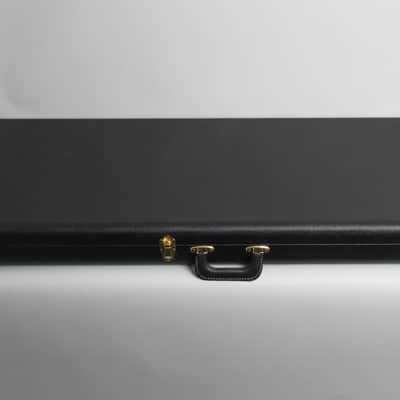
The original case is gone but a deluxe custom-fitted modern HSC is provided that is far more protective. This i
Rickenbacker has created a number of iconic instruments over the last 90+ years; some have become classics, while others have disappeared into relative obscurity. This Capri Model 375F is one of the latter, and also one of the rarest and more unusual! The Rickenbacker 300 F-series "Full Body" models were originally offered as part of the Capri series starting in summer 1958, but despite remaining on the price lists well into the 1960s were produced in such tiny numbers as to be effectively discontinued almost immediately. This 1961 Model 375F is a late-production example of the top of this line, the fanciest model offered with three pickups, vibrato and a beautiful Fireglo finish.
The "Full body" designation referred primarily to width rather than depth; the flat-topped hollow body is almost 17" wide but only 2" deep at the rim. The body shape with the single rounded treble-side cutaway is more traditional (and less striking visually) than the standard Model 310-375 familiar to most players; it was referred to as "semi-cutaway" in the company catalog and may have been intended to woo more conservative jazz players to the Rickenbacker camp. The body is constructed with solid flat top and beck sections mated to bent rims unlike the carved-out "butcher block" method used on the standard Capris.
The features are classic early-'60s Rickenbacker, including the three "toaster-top" chrome pickups, double elevated gold-backed Lucite pickguard, "oven" style control knobs, gold nameplate on the headstock, rare long-plate Accent vibrato tailpiece (with the cool cut-out musical note motif and contrasting brass nameplate) and adjustable four-point roller bridge. The finish on this guitar is "Fireglo" which is the company's moniker for a dramatic red-natural shaded sunburst lacquer. The top and back are bound with the distinctive checkerboard pattern around the top edge seen only on deluxe Rickenbackers.
The neck is the standard Rickenbacker laminated maple/walnut style with a single truss rod, not the double-rod system introduced soon after. The fingerboard is bound and inlaid with the early style "slash" inlay that is another Rickenbacker trademark. Due to the different and far more substantial heel design, the whole instrument has a much more solid feel and these full-body guitars do not suffer the neck-angle issues that often plague the more familiar double cutaway Capri models.
As well as looking like no other instrument, the 375F is a unique feeling guitar. The large body with no arching gives it a slightly "flattened" look but it plays pretty much the same as more familiar period Rickenbacker Capris. The sound falls into the traditional Rickenbacker sonic niche, but with added acoustic depth and warmth due to the much larger body cavity. As with all Deluxe models of the time it is wired with the "Rick-O-Sound" stereo option almost nobody ever uses.
The "F" models were prominently featured in Rickenbacker's 1958-9 color catalog but sales-wise were far less successful commercially than the more familiar double cutaway Capris; only a small number of any given model were produced before the entire series slid into obscurity. There is some debate about the limited production figures of these guitars but this top-line 375-F is a very rare instrument! The serial number on the jackplate indicates it was finished out in August 1961; The four matched original pots are coded to the 3d week of that year. The original list price in July 1961 was $464, plus 459.50 for the case.
These full-body guitars are now seldom encountered in any condition, and this is a truly spectacular example. They had few prominent users when new although Jimmy Bryant endorsed them briefly in the early '60s before moving on to Magnatone, and Toots Thielmans was seen with them as well. We have had several of these "F" models over the years but this is our first top-of-the-line 375-F, a real showpiece for Rickenbacker's finest artistry in the pre-Beatle era.
Overall length is 41 3/4 in. (106 cm.), 16 3/4 in. (42.5 cm.) wide at lower bout, and 2 in. (5.1 cm.) in depth, measured at side of rim. Scale length is 24 3/4 in. (629 mm.). Width of nut is 1 1/2 in. (38 mm.).
This is a generally clean and fine playing example of this early full-body Rickenbacker Capri, played but not heavily worn. There is light general wear over the entire instrument with some very fine checking to the body and minor dings, dents and scrapes over the instrument, heaviest on the sides. The back has some belt-buckle worming mostly into but not through the finish.
The back of the neck has noticeable wear to the wood and some feelable minor dings and dents, but nothing too distracting. The fingerboard has areas of visible wear through the lacquer up into the middle region; this was not a "Cowboy Chord" guitar but belonged to some kind of hot picker! The only crack of any sort is a small split to the upper side around the strap button, solid but visible. The seams of the outer headstock wings are feelable at the base end but not separating.
Ther is one oddity to the original finish, a very carefully delineated sprayed over spot between the neck and middle pickups which absolutely appears to be factory work (the lacquer matches exactly under UV light). It looks like this was done to disguise a small flaw/fill to the wood just ahead of the middle pickup at the finishing stage but over time has become more noticeable. In 1961 Rickenbacker did not offer "factory seconds" so it looks like some extra effort was made to make the top-of-the-line (and likely custom ordered) guitar saleable!
The pickups, wiring, knobs, roller bridge (with cover), vibrato unit (including the fragile handle) stereo jack plate, strap buttons and tuners remain original; there light wear to some components. The upper gold pickguard has small cracks off the upper corner screw, while the lower has a single split off the lower rear knob. The truss rod plate is fully intact. Some of the rubber grommets under the pickguards are correct replacements.
The original frets have been crowned down with some subsequent wear; the truss rod has had a shim added behind the adjusting nut for added torque guitar plays quite well. The nut is the original composite. Sonically this guitar performs exactly as expected, sounding great with the classic Rickenbacker chime enhanced by a deeper body resonance.
The original case is gone but a deluxe custom-fitted modern HSC is provided that is far more protective. This i
Reverb Buyer Protection
Reverb has your back if your item is lost, damaged, or doesn't match its description. Simply report any issues within 7 days and we'll help you get a full refund.Learn more about Reverb Buyer Protection.
| Listed | 3 hours ago |
|---|---|
| Condition | Excellent (Used) Excellent items are almost entirely free from blemishes and other visual defects and have been played or used with the utmost care.Learn more |
| Brand | |
| Model |
|
| Finish |
|
| Categories | |
| Year |
|
| Body Type |
|
Product safety information may be available here.

