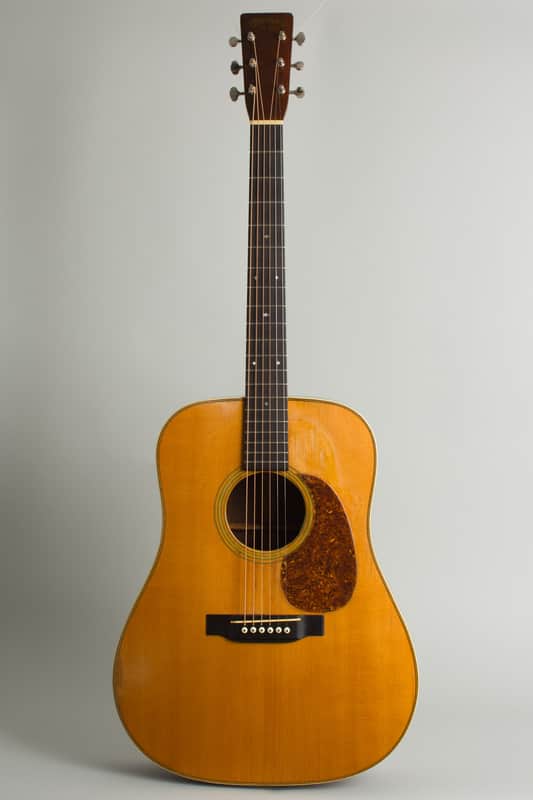
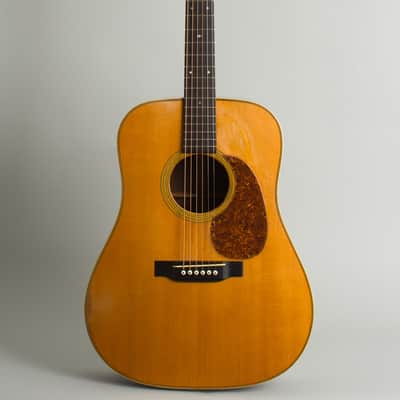
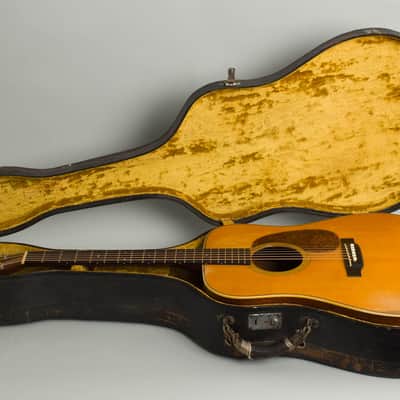
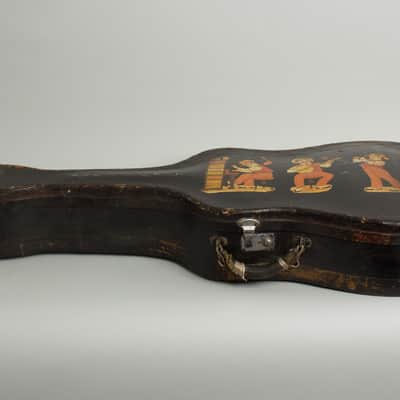
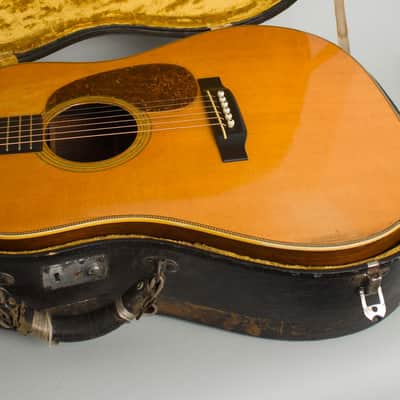
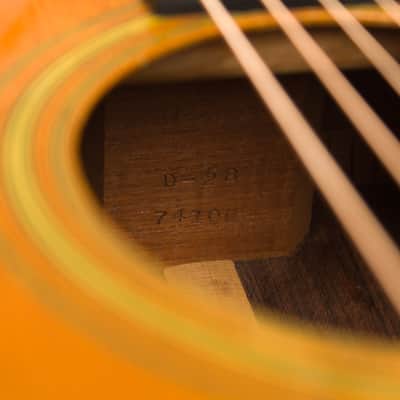
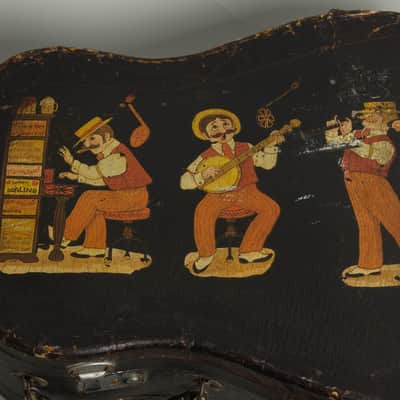
C. F. Martin D-28 Flat Top Acoustic Guitar (1940), ser. #74100, period black hard shell case.
Prezzo originale$115,000
Riduzione di prezzo del $20.000
Nuovo prezzo$95,000
+ $200 Spedizione
Pubblicato:2 mesi fa
Visualizzazioni:1.390
Salvataggi:51
Offerte:0

Brooklyn, NY, Stati Uniti
I nostri utenti valutano Reverb
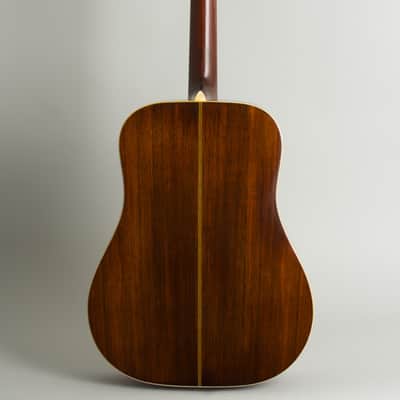
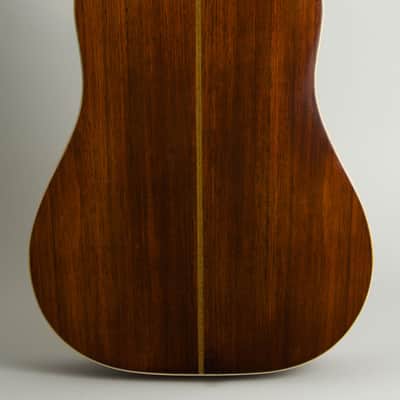
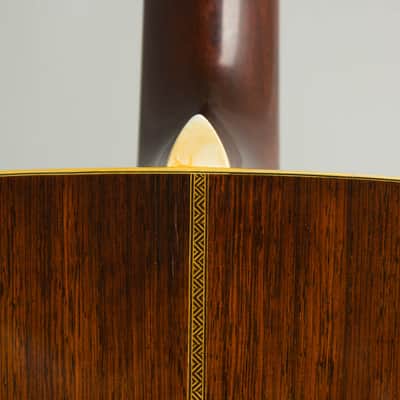
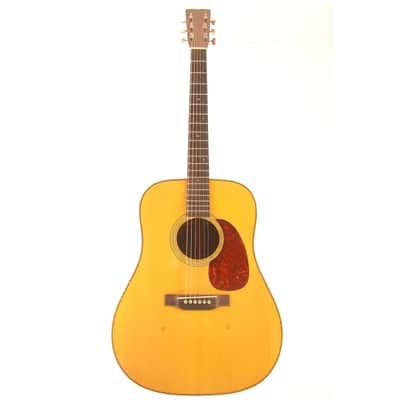
C. F. Martin D-28 Model Flat Top Acoustic Guitar (1940), made in Nazareth, PA, serial # 74100, natural lacquer finish, Brazilian rosewood back and sides, spruce top; mahogany neck with ebony fingerboard, period black hard shell case.
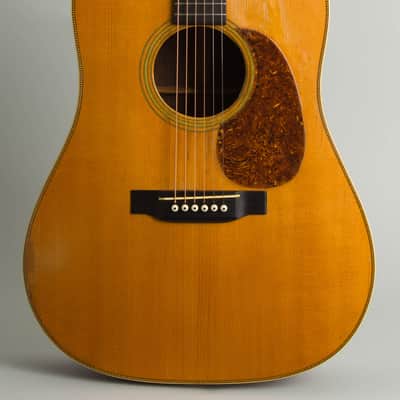
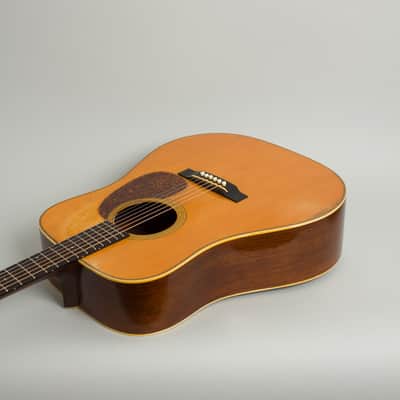
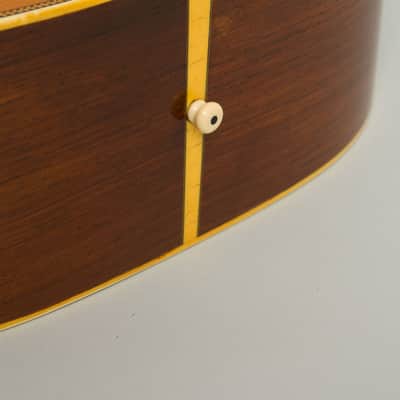
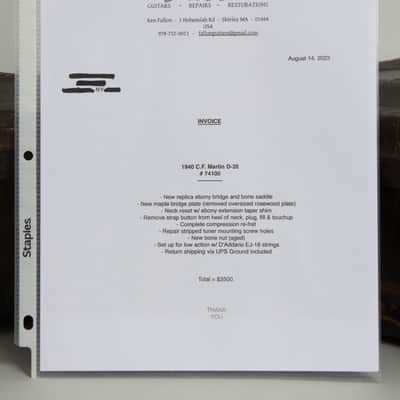
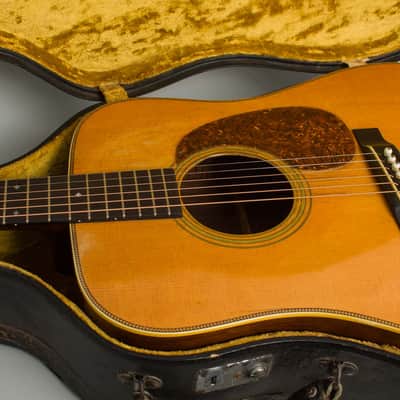
This is a lovely, generally well preserved example of an original pre-war Martin D-28 "Herringbone". It shows signs of decades of play but is less heavily worn than many, now over 85 years along. This guitar has had just three owners since 1940, and one notable alteration/restoration. The original owner added a larger Gibson pickguard in the later 1950s as he was wearing into the top in front of the original small Martin guard. He sold the guitar in 1970 and the second owner sent it back to Martin to have the original re-installed (it was still in the case) which also resulted in some light overspray to the top. The ghostly shadow of the Gibson guard can still be seen, especially under blacklight. The most recent owner acquired the guitar in 2020 and sent it to master luthier/restorer Ken Fallon in 2023 for a 100,000 mile checkup resulting in a full restoration to original specs making it a fantastic player ready for the next century.
This later "pre-War" period guitar was built in Nazareth at the very beginning of 1940, nearly two years before the US entered WWII. The serial number is 74100; the last recorded for 1939 is 74061. Style 28 Martins from this period are referred to as a "bone" after the namesake herringbone wood marquetry trim around the top. Whether this cosmetic feature has any affect on the sound is a hotly debated question, but it became a sought-after element after Martin stopped using it by mid-1947. By then the D-28 had seen a number of other changes, most importantly the discontinuation of the scalloped top braces in 1944. The instruments of the later 1940's and '50's have a different sonic character, but some players even then preferred the sound and feel of older ones.
This solidly "Pre-War" guitar retains the metal neck reinforcement deleted during the war, and the top bracing is the rearward shifted pattern adopted in 1939. This is delicately scalloped and noticeably lighter than the typical later 1940s-50s style. The materials are what is now considered the finest possible. The back and sides are beautifully straight grained Brazilian rosewood with some lighter figure on the outer quarters of the back, the top is lovely straight grained Appalachian spruce. The restored small "teardrop" shape pickguard just below the sound hole is the original tortoise celluloid. The replica ebony bridge is the typical Martin "belly" shape with a canted bone saddle.
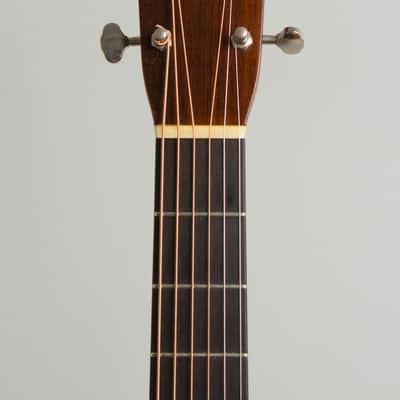
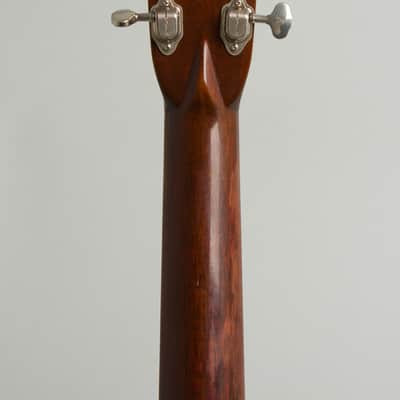
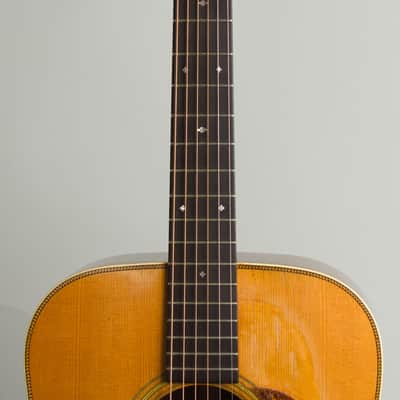
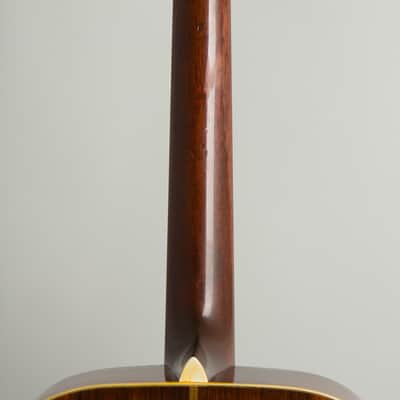
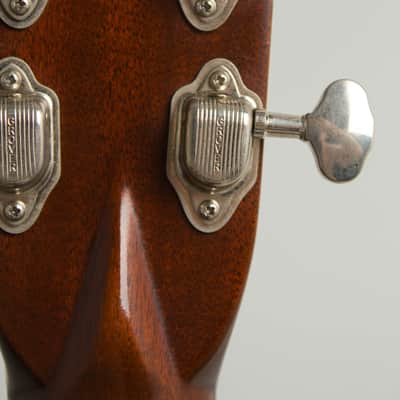
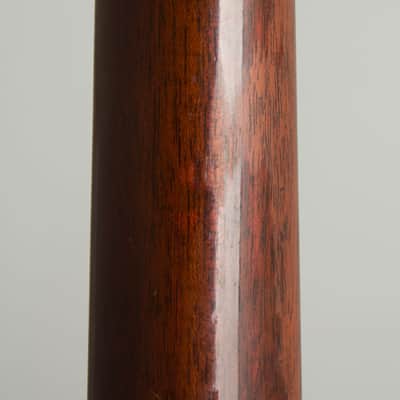
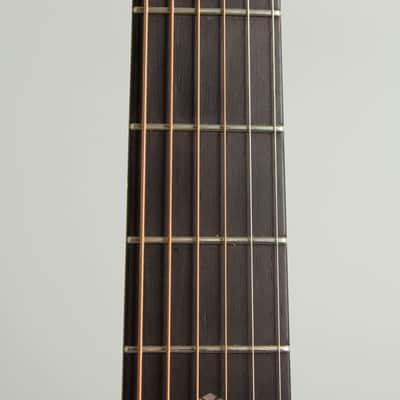
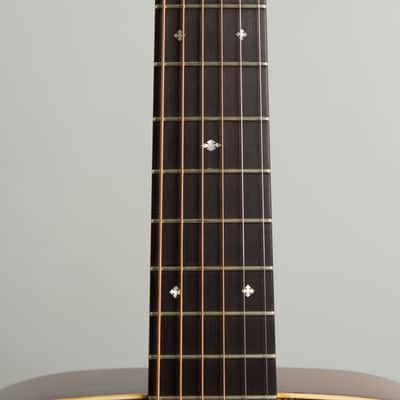
The neck is mahogany with an unbound ebony fingerboard decorated with discreet slotted diamond pearl inlay. The peghead is faced in straight grained Brazilian rosewood with the "C.F. Martin & C." decal at the top. The neck profile is fairly slim and round backed with less of a "V" feel in the profile than many pre-war Martins. The original tuners are the short-lived enclosed individual Grover units seen only in this late pre-war period with smooth "butterbean" metal buttons.
Cosmetically this guitar shows signs of play over eight decades, but is not as heavily worn as many prewar Martins. Playing into the open mikes of radio studios and barn dance stages many Country and Western performers of the period (accent on "Western") found the Martin D-28 the best instrument available. Costing an even $100 in 1940 (without case) the D-28 represented a sizable investment for a working performer and once obtained was often played constantly. This D-28 is one of only 134 shipped in 1940; compared to modern production this is a paltry number, by the 1970s thousands of Dreadnoughts were built every year. The mahogany-bodied D-18 cost significantly less at $65 and sold in much larger numbers (377 shipped in 1940) but the D-28 represented the preferred stage or recording guitar for many performers.
In the minds of most acoustic guitar players, collectors and historians few instruments approach the early scallop-braced rosewood Martin Dreadnought in terms of sound or historical importance, as close to a perfect flat top as has ever been made. Although the definitive Bluegrass guitar when this one was made "Bluegrass" as a defined style did not exist; it was not until later in the 1940's that the "classic" Monroe band with Lester Flatt established that paradigm. At the time these instruments were judged by the rhythm they produced to power a group; the solo "hot picking" that characterizes the modern audience for these guitars was generations away.
The sound of this D-28 is not as deep as some, it is very even with the power and depth of a Dreadnought but a well defined tonal character, a superlative instrument for just about any style of play. Even with the visible pickguard ghost this early 1940 model is a beautiful guitar to behold, a joy to play and a significant piece of fretted history.
Overall length is 41 in. (104.1 cm.), 15 3/4 in. (40 cm.) wide at lower bout, and 4 15/16 in. (12.5 cm.) in depth at side, taken at the end block. Scale length is 25 1/4 in. (641 mm.). Width of nut is 1 11/16 in. (43 mm.).
This just over 85 years old D-28 shows moderate play wear and some very careful repair and restoration to the original standards. The thin lacquer finish overall remains original except for some light overfinishing to the top related to the re-installation of the original pickguard and what looks like some light added finish to the back of the neck that is heavily worn through again. The finish shows light checking (mostly to the top) with scattered dings, dents, and scratches and older pick marks to the top around the soundhole and under where the Gibson pickguard once sat. There is also pick scratching to the wood between the strings above the top edge of the pickguard, and finish rubbed away in the upper arm wear area.
The back and sides show comparatively light wear with only small dings, dents and scratches with some shallow buckle wear into but not through the back finish. The back of the neck has heavily rubbed-through areas on both sides and the center seam, but only a few very minor feelable dinks along its length and no heavy capo wear.
The only crack repairs to the top are a very small grain split at the top edge of the lower bass bout, where the player's arm rests and several similar small splits off the lower waist, all solidly sealed. The areas around the pickguard and bridge are crack free as is the back. The sides have nearly bookmatched cracks along each waist (likely due to a grain flaw in the rosewood) neatly sealed and bias taped internally.
As noted above the original thin tortoise celluloid pickguard was re-installed in the 1970s, it had been sav
This is a lovely, generally well preserved example of an original pre-war Martin D-28 "Herringbone". It shows signs of decades of play but is less heavily worn than many, now over 85 years along. This guitar has had just three owners since 1940, and one notable alteration/restoration. The original owner added a larger Gibson pickguard in the later 1950s as he was wearing into the top in front of the original small Martin guard. He sold the guitar in 1970 and the second owner sent it back to Martin to have the original re-installed (it was still in the case) which also resulted in some light overspray to the top. The ghostly shadow of the Gibson guard can still be seen, especially under blacklight. The most recent owner acquired the guitar in 2020 and sent it to master luthier/restorer Ken Fallon in 2023 for a 100,000 mile checkup resulting in a full restoration to original specs making it a fantastic player ready for the next century.
This later "pre-War" period guitar was built in Nazareth at the very beginning of 1940, nearly two years before the US entered WWII. The serial number is 74100; the last recorded for 1939 is 74061. Style 28 Martins from this period are referred to as a "bone" after the namesake herringbone wood marquetry trim around the top. Whether this cosmetic feature has any affect on the sound is a hotly debated question, but it became a sought-after element after Martin stopped using it by mid-1947. By then the D-28 had seen a number of other changes, most importantly the discontinuation of the scalloped top braces in 1944. The instruments of the later 1940's and '50's have a different sonic character, but some players even then preferred the sound and feel of older ones.
This solidly "Pre-War" guitar retains the metal neck reinforcement deleted during the war, and the top bracing is the rearward shifted pattern adopted in 1939. This is delicately scalloped and noticeably lighter than the typical later 1940s-50s style. The materials are what is now considered the finest possible. The back and sides are beautifully straight grained Brazilian rosewood with some lighter figure on the outer quarters of the back, the top is lovely straight grained Appalachian spruce. The restored small "teardrop" shape pickguard just below the sound hole is the original tortoise celluloid. The replica ebony bridge is the typical Martin "belly" shape with a canted bone saddle.
The neck is mahogany with an unbound ebony fingerboard decorated with discreet slotted diamond pearl inlay. The peghead is faced in straight grained Brazilian rosewood with the "C.F. Martin & C." decal at the top. The neck profile is fairly slim and round backed with less of a "V" feel in the profile than many pre-war Martins. The original tuners are the short-lived enclosed individual Grover units seen only in this late pre-war period with smooth "butterbean" metal buttons.
Cosmetically this guitar shows signs of play over eight decades, but is not as heavily worn as many prewar Martins. Playing into the open mikes of radio studios and barn dance stages many Country and Western performers of the period (accent on "Western") found the Martin D-28 the best instrument available. Costing an even $100 in 1940 (without case) the D-28 represented a sizable investment for a working performer and once obtained was often played constantly. This D-28 is one of only 134 shipped in 1940; compared to modern production this is a paltry number, by the 1970s thousands of Dreadnoughts were built every year. The mahogany-bodied D-18 cost significantly less at $65 and sold in much larger numbers (377 shipped in 1940) but the D-28 represented the preferred stage or recording guitar for many performers.
In the minds of most acoustic guitar players, collectors and historians few instruments approach the early scallop-braced rosewood Martin Dreadnought in terms of sound or historical importance, as close to a perfect flat top as has ever been made. Although the definitive Bluegrass guitar when this one was made "Bluegrass" as a defined style did not exist; it was not until later in the 1940's that the "classic" Monroe band with Lester Flatt established that paradigm. At the time these instruments were judged by the rhythm they produced to power a group; the solo "hot picking" that characterizes the modern audience for these guitars was generations away.
The sound of this D-28 is not as deep as some, it is very even with the power and depth of a Dreadnought but a well defined tonal character, a superlative instrument for just about any style of play. Even with the visible pickguard ghost this early 1940 model is a beautiful guitar to behold, a joy to play and a significant piece of fretted history.
Overall length is 41 in. (104.1 cm.), 15 3/4 in. (40 cm.) wide at lower bout, and 4 15/16 in. (12.5 cm.) in depth at side, taken at the end block. Scale length is 25 1/4 in. (641 mm.). Width of nut is 1 11/16 in. (43 mm.).
This just over 85 years old D-28 shows moderate play wear and some very careful repair and restoration to the original standards. The thin lacquer finish overall remains original except for some light overfinishing to the top related to the re-installation of the original pickguard and what looks like some light added finish to the back of the neck that is heavily worn through again. The finish shows light checking (mostly to the top) with scattered dings, dents, and scratches and older pick marks to the top around the soundhole and under where the Gibson pickguard once sat. There is also pick scratching to the wood between the strings above the top edge of the pickguard, and finish rubbed away in the upper arm wear area.
The back and sides show comparatively light wear with only small dings, dents and scratches with some shallow buckle wear into but not through the back finish. The back of the neck has heavily rubbed-through areas on both sides and the center seam, but only a few very minor feelable dinks along its length and no heavy capo wear.
The only crack repairs to the top are a very small grain split at the top edge of the lower bass bout, where the player's arm rests and several similar small splits off the lower waist, all solidly sealed. The areas around the pickguard and bridge are crack free as is the back. The sides have nearly bookmatched cracks along each waist (likely due to a grain flaw in the rosewood) neatly sealed and bias taped internally.
As noted above the original thin tortoise celluloid pickguard was re-installed in the 1970s, it had been sav
Protezione di Reverb per gli acquirenti
Reverb ti protegge nel caso in cui il tuo articolo venga perso, danneggiato o non corrisponda alla descrizione. Basta segnalare eventuali problemi entro 7 giorni e ti aiuteremo a ottenere il rimborso completo.Scopri di più sulla Protezione di Reverb per gli acquirenti.
| Pubblicato | 2 mesi fa |
|---|---|
| Condizione | Molto buono (Usato) Gli articoli "Molto buoni" possono mostrare qualche piccolo segno o graffio ma sono pienamente funzionali e in buone condizioni generali.Scopri di più |
| Marchio | |
| Modello |
|
| Finish |
|
| Categorie | |
| Anno |
|
| Ritiro |
|
| Serie | |
| Tipo di corda |
|
| Destrimani/Mancini |
|
| Numero di corde |
|
| Materiale manico della chitarra |
|
| Stile top in legno |
|
| Forma body |
|
| Materiale parte posteriore |
|
| Materiale parti laterali |
|
| Stile finish |
|
| Materiale parte anteriore |
|
| Materiale tastiera |
|
| Famiglia modello | |
| Famiglia colore |
|
| Preamplificatore attivo |
|
| Numero di tasti |
|
Le informazioni sulla sicurezza del prodotto sono disponibili qui.

Protezione di Reverb
Resi semplici, transazioni sicure, assistenza di persone in carne e ossa
Scopri di più