
Troy, MI, United States
About this listing
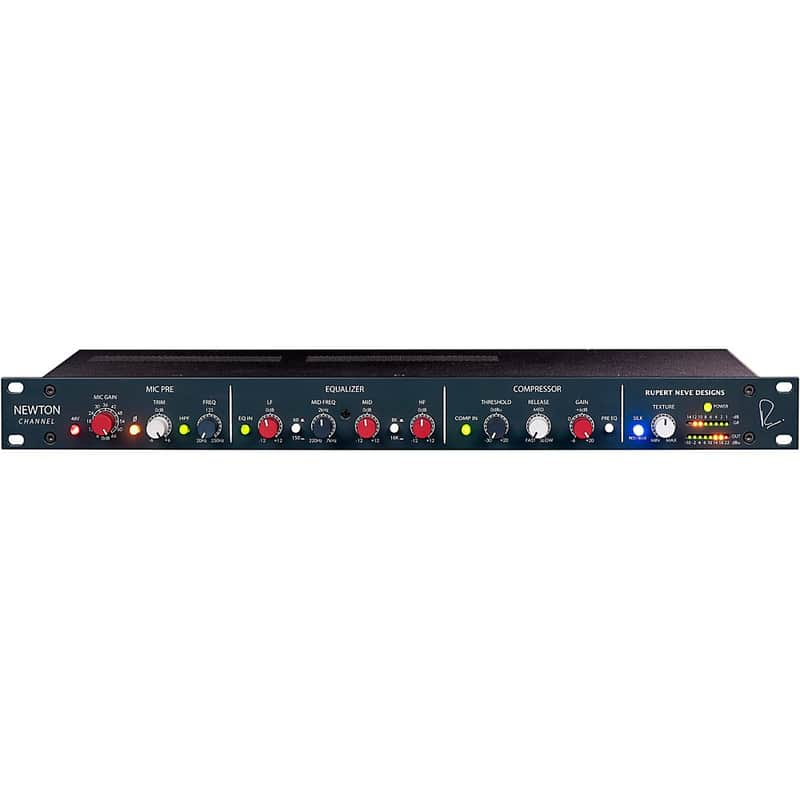
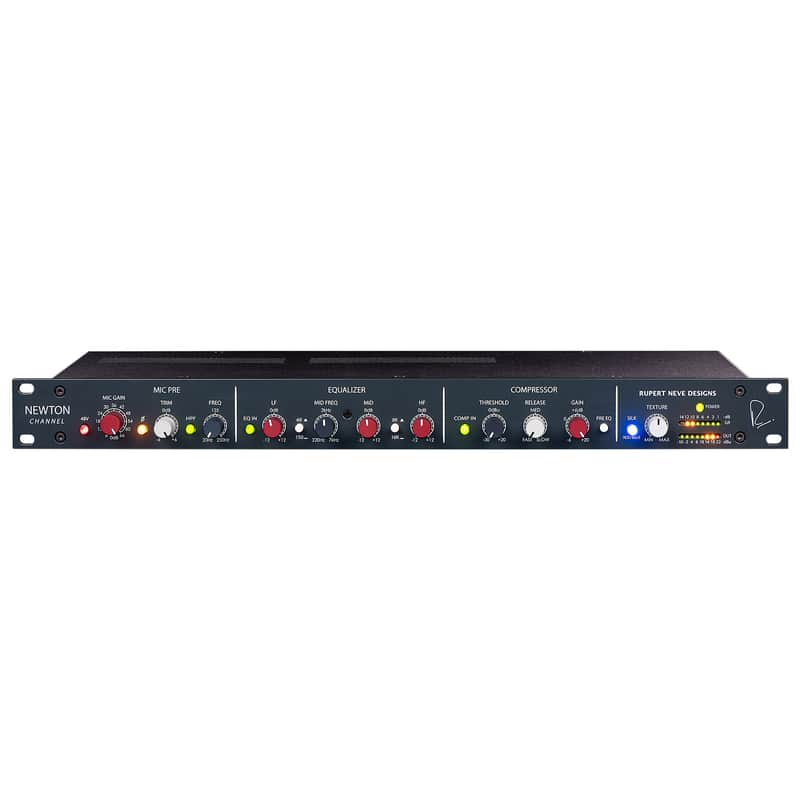
Rupert Neve Designs Newton Channel Preamp, EQ, and CompressorThe Rupert Neve Designs Newton Channel pairs a premium Class A microphone preamp with a discrete three-band equalizer, a versatile VCA compression stage, and custom transformer-coupled outputs with variable Silk saturation. A generous 72 dB of mic gain ensures every signal comes through loud and clear, while the EQ and compressor provide powerful tone- and dynamics-shaping, and the Silk circuits offer two flavors of harmonic enhancement. Reach for the Newton Channel to track vocals, drums, and bass guitars, or process line-level sources from your DAW and send them back into the digital domain for mixing. Explore the Rupert Neve Designs Newton Channel and make it the new centerpiece of your outboard gear collection. CLASS A MICROPHONE PREAMP The input stage of the Rupert Neve Designs Newton Channel starts with a fully Class A microphone preamp offering 66 dB of coarse gain plus 6 dB of trim for a total of 72 dB of mic gain. Unlike the Shelford Channel, the Newton mic pre uses an electronically balanced input rather than an input transformer, which keeps the front end clean and fast while the output stage supplies the color. Push-button switches engage 48 V phantom power and polarity inversion, and a variable high-pass filter sweeps from 20-250 Hz to remove rumble before the EQ. The combo XLR/TRS connector on the rear panel accepts both microphone and line-level signals, so one Newton Channel can handle anything from a ribbon mic to a vintage synth. DISCRETE THREE-BAND EQ The Newton channel strip features a discrete three-band equalizer stage for broad tone-shaping. The low-frequency shelf switches between 60 and 150 Hz, while the high-frequency shelf offers 8 kHz and 16 kHz options. Each provides up to 12 dB of boost or cut on a stepped control with 31 positions for precision and recallability. The mid-band sweeps from 220 Hz to 7 kHz with a fixed Q designed to stay musical whether you're cleaning up low-mid muddiness, adding presence, or pulling back harsh upper midrange frequencies. The EQ section even has its own bypass button for quick A/B comparisons against the unprocessed sound. VERSATILE VCA COMPRESSOR The compressor in the Rupert Neve Designs Newton Channel is the latest version of the company's famed VCA design, this time featuring a soft knee and a fixed 2:1 ratio for effortlessly smooth dynamics every time. The threshold covers +20 dBu to -30 dBu, release times run from 50 ms to 500 ms, and make-up gain spans -6 dB to +20 dB, all on 31-detent pots. A fixed attack time of 20 ms lets initial transients pass before the compressor closes, so drums keep their snap and acoustic instruments don't lose definition. A Pre EQ button moves the compressor ahead of or behind the equalizer. Finally, an eight-segment meter shows gain reduction and a rear-panel Stereo Link jack ties two units together for linked stereo processing. RED AND BLUE SILK CIRCUITS FOR ADDED HARMONICS At the end of the Newton signal path sits the Silk circuit, Rupert Neve Designs' famous variable harmonic color stage. The Silk function offers three states: off, Red mode, and Blue mode. Red mode lifts harmonic content generated by mid- and high-frequency information, adding sheen to vocals, pianos, strings, and snare drums. Blue mode emphasizes low-frequency energy and low mids to thicken bass, kick, baritone vocals, and heavy guitars. The Newton's Texture control sets how much saturation you get, from nearly transparent to rich and colorful. CUSTOM OUTPUT TRANSFORMERS FOR SUBTLE SATURATION Every Newton Channel strip ends with a custom output transformer stage wound to Rupert Neve Designs specifications. The Newton's main output is a balanced XLR on the rear panel, but a second XLR runs 6 dB lower so you can drive the iron hard for saturation without clipping your converters or the next processor in the chain. Both outputs work at the same time so you can feed a recorder and a separate monitor path without external mults or splitters, and a ground lift switch isolates the chassis from hum problems. Driven gently, the Newton Channel stays clean, but when pushed hard, this channel strip delivers the thick low-end and forward midrange that made the Rupert Neve sound legendary. NEWTON VS. SHELFORD: WHAT'S THE DIFFERENCE? The Shelford Channel remains RND's flagship channel strip, and the Rupert Neve Designs Newton Channel sits below it at roughly half the price. The clearest difference is the front end: the Shelford Channel uses a custom input transformer for heavier vintage character, while the Newton Channel uses an electronically balanced input for a cleaner, more modern tone closer to the 5211 mic pre. The Shelford runs an inductor-based EQ and a diode bridge compressor, while the Newton pairs its discrete EQ with the faster VCA design, but both units feature transformer-coupled outputs with variable Silk circuits. Choose the Shelford Channel for maximum vintage weight, or choose the Newton Channel when you want two channels of Rupert Neve tone for the price of one. ABOUT RUPERT NEVE DESIGNS Rupert Neve spent six decades designing the consoles and hardware that shaped modern records, from the 80 Series desks of the 1970s to the products built today in Wimberley, Texas. Rupert Neve Designs was founded to carry that work forward, and its engineering and design team still builds every circuit around real transformers, Class A gain stages, and carefully matched components. The Rupert Neve Designs Newton Channel takes its name from Newton Abbot, the English town where Rupert Neve was born, linking his earliest work to the company's current designs. RUPERT NEVE DESIGNS NEWTON CHANNEL FEATURES: Fully Class A mic preamp paired with a three-band EQ, VCA compression stage, and Silk transformer saturationMic preamp offers 72 dB of gain (66 dB of coarse gain plus 6 dB of trim)Balanced XLR/TRS combo input on the rear panel accepts microphone and line-level sources48 V phantom power and polarity inversion on front panel push-button switches with LED indicationVariable high-pass filter from 20 Hz to 250 Hz with independent bypassDiscrete 3-band EQ with 12 dB of boost or cut per band and an independent EQ section bypassLow-frequency shelf at 60 Hz or 150 Hz; high-frequency shelf at 8 kHz or 16 kHzSweepable midrange band from 220 Hz to 7 kHz with a fixed, musical Q2:1 Compressor with fixed 20 ms attack time, +20 dBu to -30 dBu threshold, 50 ms to 500 ms release options, and -6 dB to +20 dB of make-up gainPre EQ switch places the compressor before or after the equalizerSilk Red and Silk Blue modes with a 31-detent Texture control over transformer harmonicsEight-segment LED meters for compressor activity and output level in dBuBalanced XLR main output plus a separate -6 dBu XLR output, usable at the same timeStereo Link TRS jack for linked stereo operation and a ground lift switch on both outputsFrequency response of less than 10 Hz to 30 kHz within 0.1 dBInternal universal 90-240 V power supply, IEC inlet, and 1U rackmount chassis handcrafted in the USA
Price$1,999

Free 2-Day Shipping

Predicted to Sell Soon
Only 1 available and 1 other person has this in their cart

30-Day Return Policy
Enjoy peace of mind with your new gear