Roland SH3A synthesizer fixer upper 70's - Black/yellow
Ce matériel a été vendu
Découvrez du matériel similaire proposé par d'autres vendeurs Reverb

Nos utilisateurs évaluent Reverb
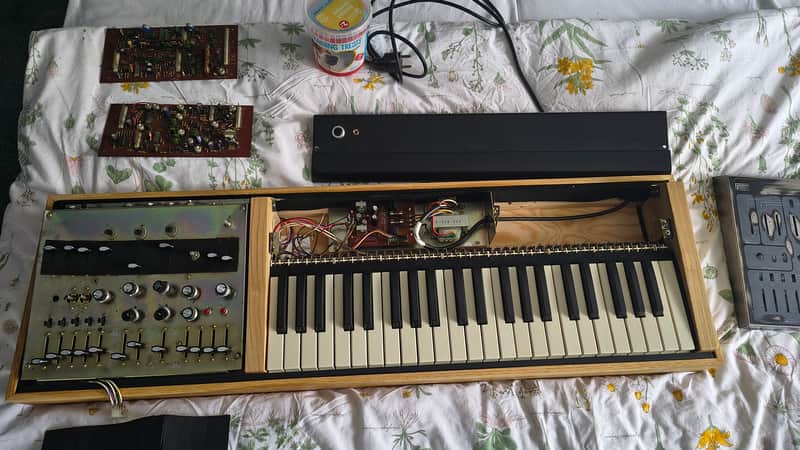
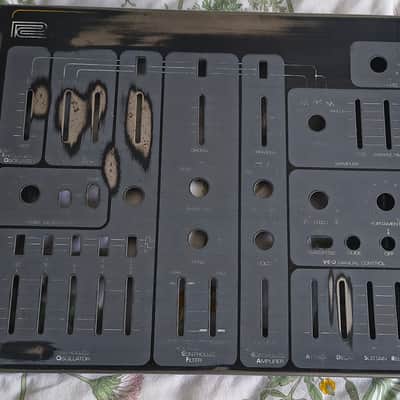
Roland SH3A analog synthesizer non functional !
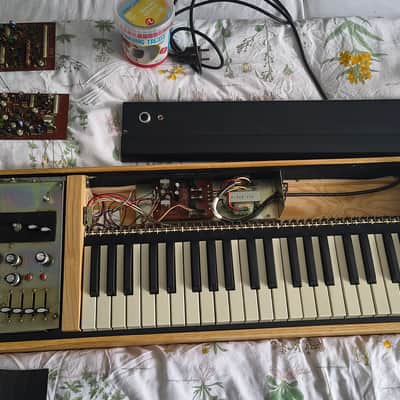
For fixer upper !
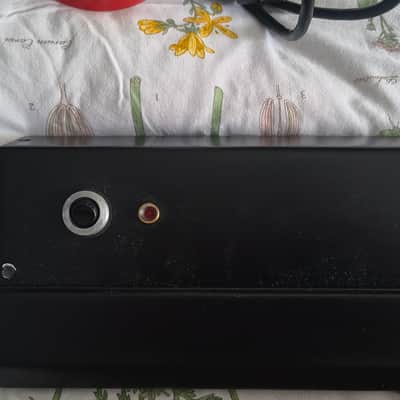
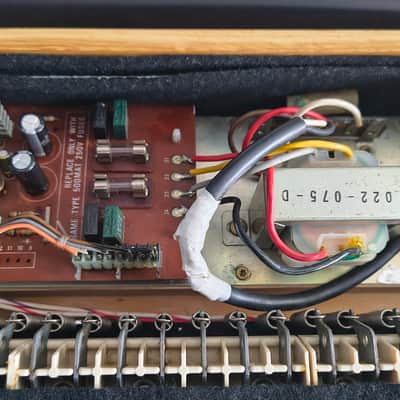
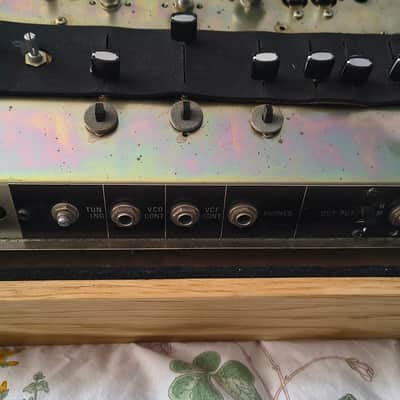
DIY new wooden case, very nice !
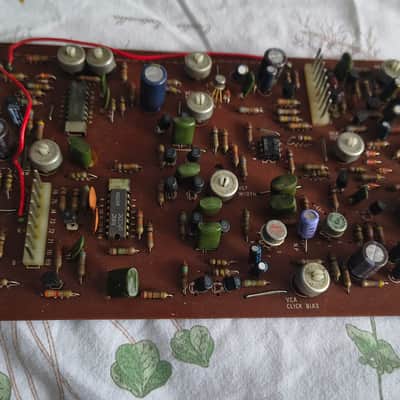
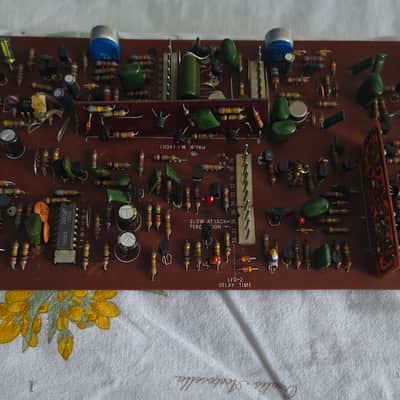
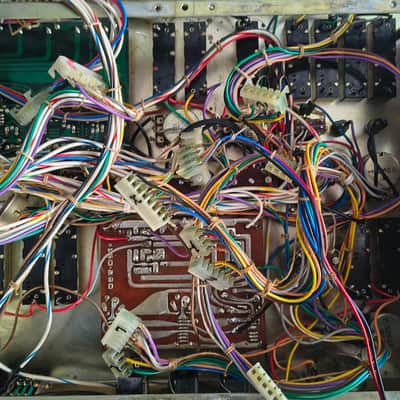
All the parts are there and I recapped all the PCB's.
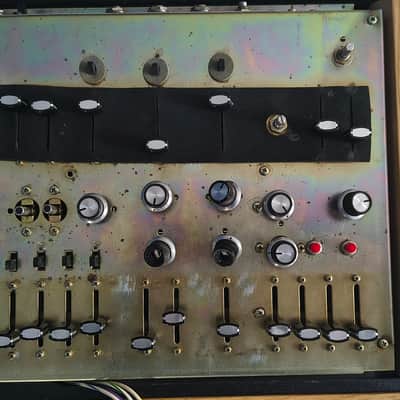
The synth goes on, you here the LFO and the parameter pots are working. Noise generator works, Filter works but no VCO.
Schematics are online !
Beautiful project for the rainy days !
Thank you for watching and if you have questions, let me know !
Specs :
ManufacturerRolandDates1975– 1976specificationsPolyphonyMonophonicTimbralityMonotimbralOscillator1 VCO, 1 White/Pink Noise GeneratorLFOLFO1 has sawtooth waveform, LFO2 sine or square and delay slider, Sample-and-Hold with level and sample time sliders. LFO's can be assigned to VCF, VCA, VCO.Synthesis typeAnalog SubtractiveFilterResonant self-oscillating low-pass filter w/ frequency and resonance controlsAttenuator1 ADSR Aftertouch expressionNoVelocity expressionNoStorage memoryNoneEffectsNoneInput/outputKeyboard44 keys (F–C)
The SH-3A is a monophonic analog synthesizer that was manufactured by Roland from 1975 to 1981.[1] It is unique in that it is capable of both the usual subtractive synthesis and also the less common additive synthesis, offering mixable waveforms at different footages. Two LFOs and a unique sample-and-hold section provided capabilities not found in competing self-contained synthesizers of the time. The SH-3A was Roland's first non-preset based synth. The predecessor, the Roland SH-1000, could also do this but didn't offer as much control as on the SH-3A. The rhythmic pulsing in the Blondie song "Heart of Glass" is an example of its sound.
Contrary to common belief, the initial version "SH-3" did not infringe on the transistor ladder-filter patent of Robert Moog. It used a diode filter like the EMS VCS 3. The SH-3A does use a transistor ladder-filter and as a result can generate Moog-like sounds.
Cet article est vendu « en l’état »
Cet article est vendu « en l'état » et ne peut pas être retourné sauf s'il est dans un état différent de ce qui est décrit ou photographié. Les articles doivent être retournés dans leur état d'origine, tels qu'ils ont été expédiés, dans leur emballage d'origineEn savoir plus.
| Mis en ligne | il y a un an |
|---|---|
| État | Ne fonctionne pas (occasion) Le matériel en état « Ne fonctionne pas » ne fonctionne pas comme il devrait. Tous les dysfonctionnements connus doivent être clairement décrits dans la description de l'annonce. En savoir plus |
| Marque | |
| Modèle |
|
| Finaliser |
|
| Catégories | |
| Année |
|
| Fabrication |
|
| Polyphonie |
|
| Nombre de touches |
|
Des informations concernant la sécurité des produits peuvent être disponibles ici.