Denver, CO, United States
About this listing
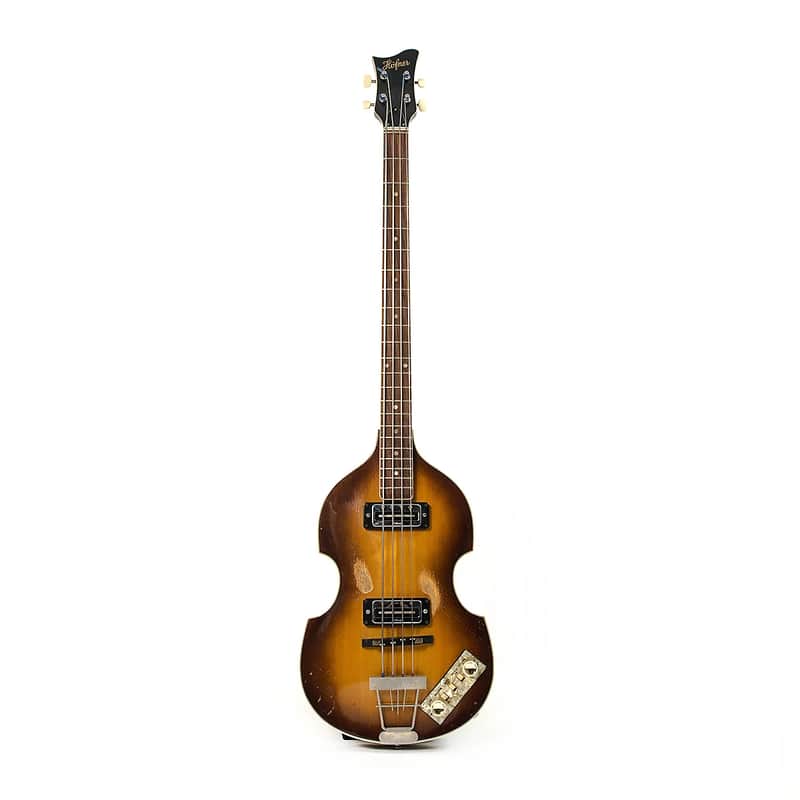
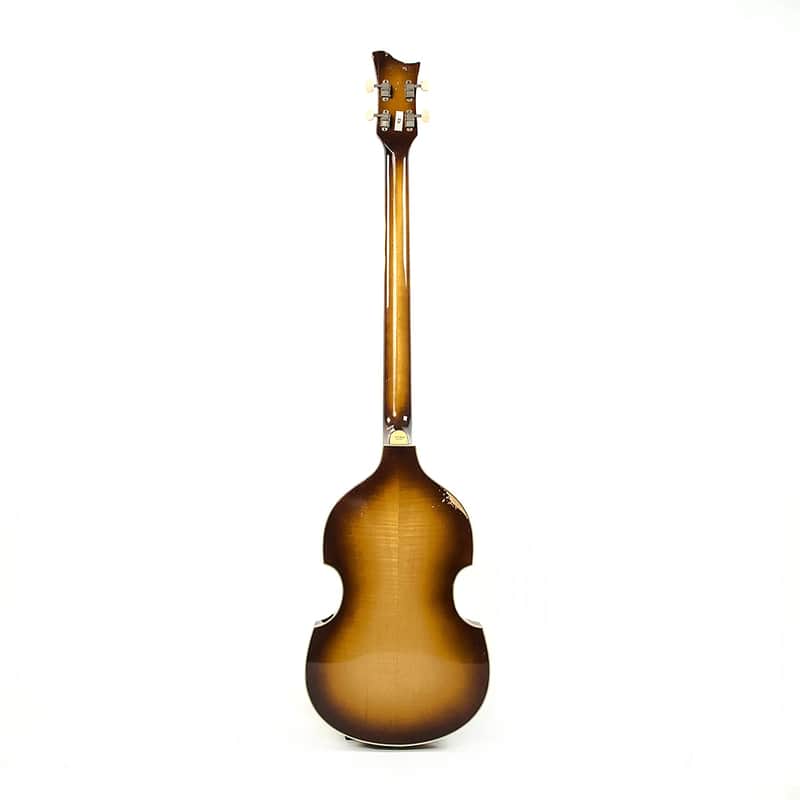
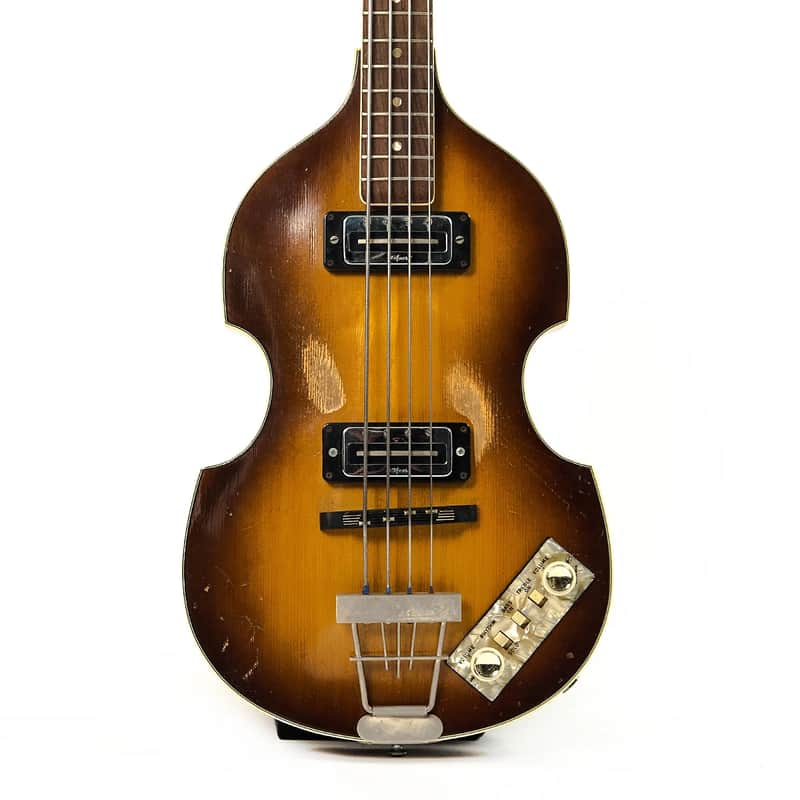
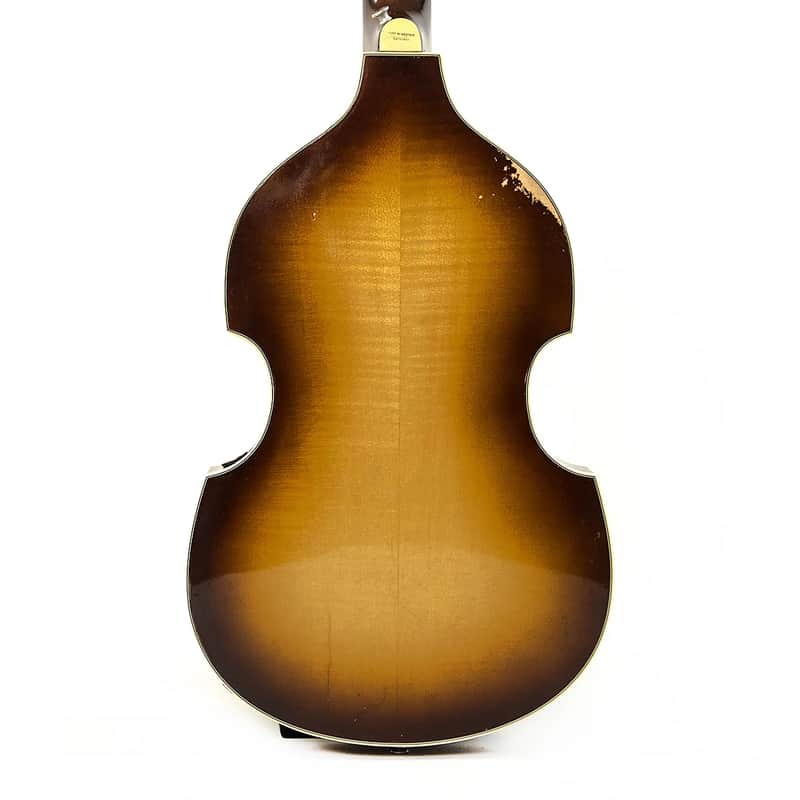
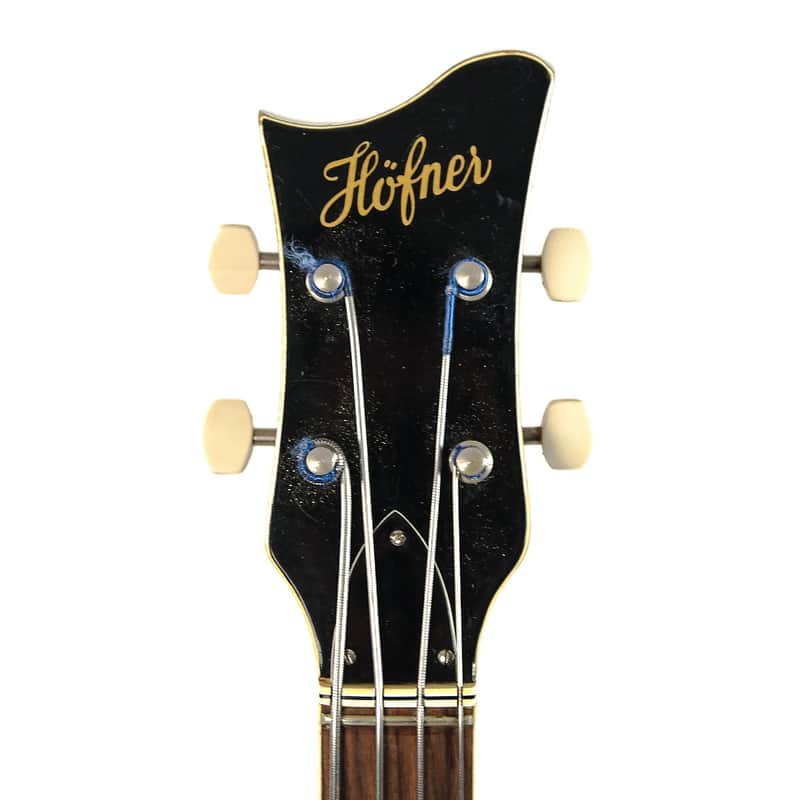
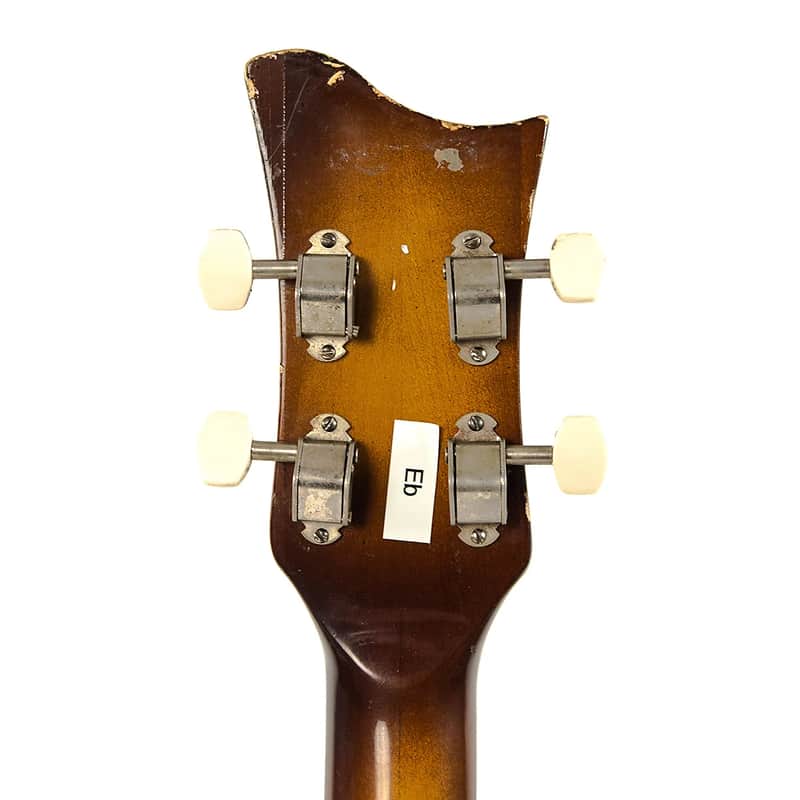
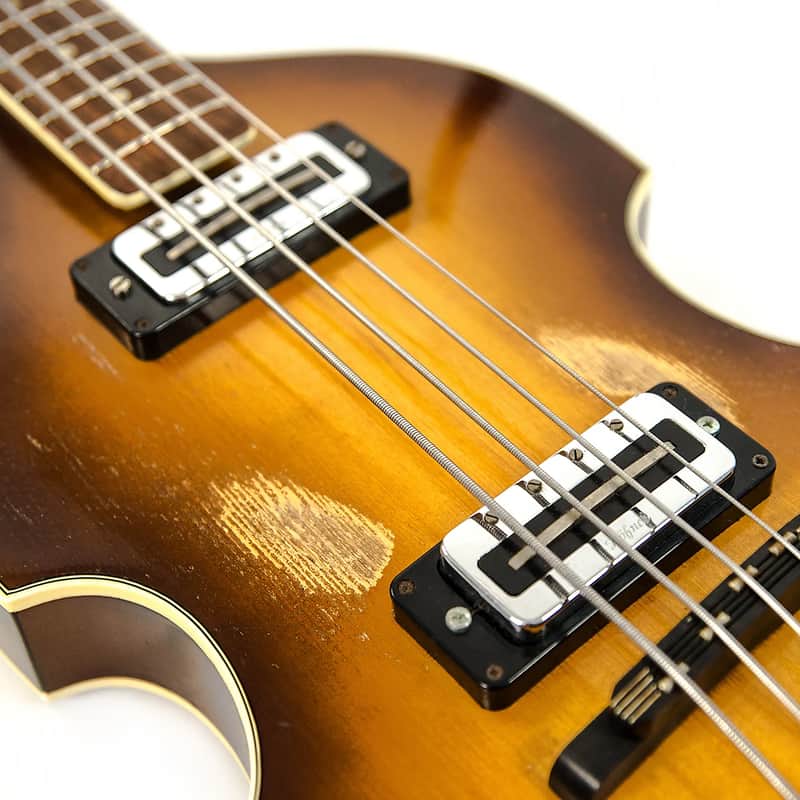
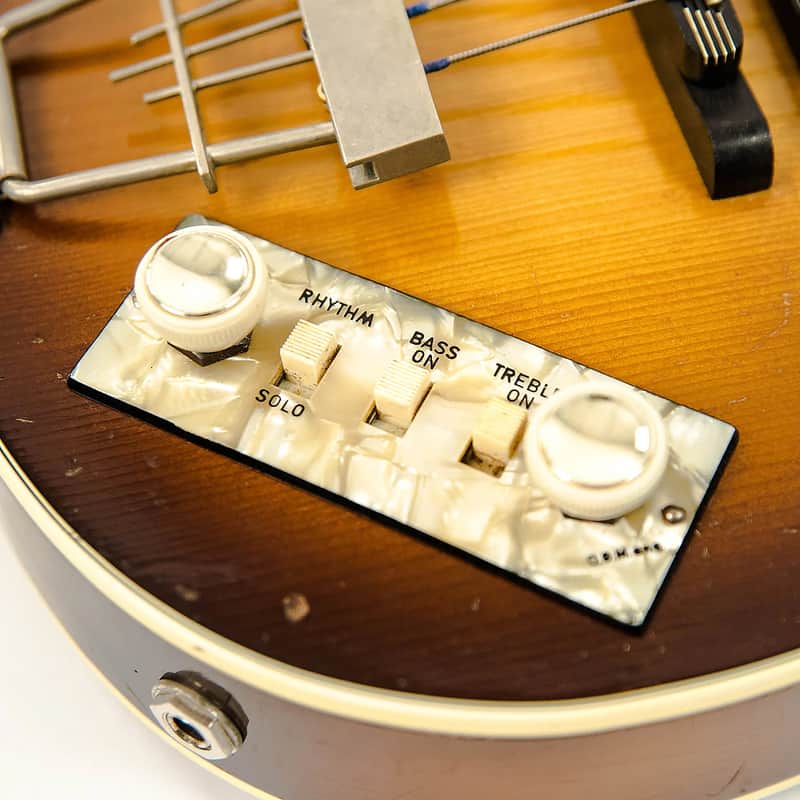
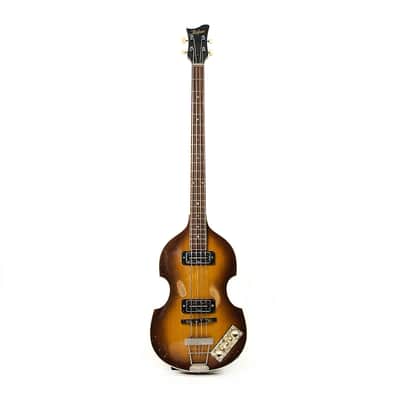
1970 Hofner 500/1 Violin Beatle Bass w/ OHSC – I acquired this bass from a local guitar player who’d owned it for 35 years and never played it, so it is a bit of a “closet classic” in EX original condition. It is in EXCELLENT ORIGINAL CONDITION (down to the screws), with a spruce top and flamed maple back and sides, as well as a 3-piece (maple/beech/maple) neck. The back is 1 piece. The rims are very flamed. There is fairly light finish checking (top only), a few minor dings and some play wear, but overall excellent (8.5) condition. It has a nitrocellulose finish, that looks correct under black light. The hollow bass is uber-light at 4.85 lbs., strung up. It has the original Excelsior red-felt-lined hardshell case in good condition, 5 latches, metal hinges w/ integrated feet, the original handle.As for the bass, features are as follows: -Pickups: 2x 512B “bar blade”, which debuted in ’67 (the 513B has a notch in the blade). “Hofner” is engraved on both chrome covers (this disappeared in ’75). Plating is excellent. The original black PU mounts feature 2 top-mounted set or "grub") screws, from this era. Sound is typical Hofner, it's why we love them, along with the "aura" and the history. Many feel these pickups were the best Hofner pickups sonically, with more clarity than the older “staple” pickups. I agree. -Neck: Excellent condition, only one ding on back, finish excellent. 30” short scale, 22 frets plus a “zero fret”. 3-piece maple with rosewood fingerboard is in excellent condition. No pearloid heel cap, but rather the short-rounded heel that debuted in early ‘68. Thus, there are no stress cracks, as often seen on these basses. Both original cream plastic strap buttons. The fingerboard features pearloid dots and dot markers on the side. The original frets are in excellent condition. Original W-B-W nut. Headstock has special typical smaller gold scripted Hofner logo (this changed to silver). Appears to be original truss rod cover (looks like others I've seen this "bell" shape and W-B-W-B 4-ply on several 1970's). The action is extremely low with no buzzes, having just been pro-set-up, 2.0 mm at 12th fret. The strings are new-- the "benchmark string" for Hofner 500: TI JF324H Jazz flats (.43 - .96) and are low tension as well as sounding fantastic. These $95 strings make this bass play like butter! There is a second new net in case of Hofner lights, as well, a bit different but also good sound and feel. -Tuners: Enclosed “pyramid” tuners made by Van Ghent. Nickel with slotted screws and off-white plastic buttons. -Electronics: Controls include Volume1 (bridge), Volume2 (neck), 3 “sliders” (this was the tail-end of the cream colored ones that became black): “rhythm/solo”, “bass on” and “treble on”. Black printing on the control plate. Preh pots have FR-2 (resin bonded paper) bottoms and both are stamped “450/250k” (week 45, 1970, 250k resistance). The knobs are standard aged white “teacups”, which were used until late 1970, when Hofner switched to the black plastic ones. I am not positive if they are original to the bass. -Tailpiece: “short”, nickel plated, stamped “Made in Germany”. -Bridge: H72/20-B ebony w/ rollers and movable metal saddles. Connects to PG by nail. -Plastic: The pearl cream pearloid for the control panel and pickguard has an amazing aged patina—ambered. The larger control panel plate here, and a black Hofner scripted logo on the pickguard, which is correct for 1970 (contrary to what you might read). The truss rod cover is 4-ply (W-B-W-B) and uses phillips screws.Unlike my '68, the truss rod takes a 4mm Allen wrench to operate it, and Hofner was experimenting with stronger truss rods at this time due to neck issues. My luthier checked the bass and found no issues. The neck is straight and the action and playability are good. ******************NOTE: Gibson started the violin-shaped bass thing in 1953, as they attempted to build upright bass replacements. The EB-1 had an end pin but was a solid body. Hofner debuted the 500/1 violin bass in 1956, and Paul McCartney, who made it famous, came along in around 1961. There are literally dozens of copies of this epic design since. There are 300+ violin bass clones displayed on the violinbasses.com website (a very good resource!).NOTE2: The electronics are considered "quirky" by some: if both bass and treble switches are turned on, there is no sound. You basically cannot control the tone of each pickup, other than with a "mix" of the 2 volumes. For example, if you turn the Bass selector on, the treble (bridge) PU is de-activated, and this lowers the overall gain. More logical: If “rhythm” is on, the output and treble is decreased by about 30%-- a bit quieter. Conversely, the "solo" position gives you a treble and volume boost. Having both OFF means both pickups are activated. One curiosity: On the control cavity plate, it is marked “D.G M. ang”, which has to do with patenting, per Hofner, similar to Gibson's "patent applied for". The bass was just set up-- new TI strings, intonated, the bridge was fit better and the action was set up low. Right now, the thumbwheels are up about 2 mm.
Price$3,495
+ $125 Shipping