Bellingham, WA, United States
About this listing
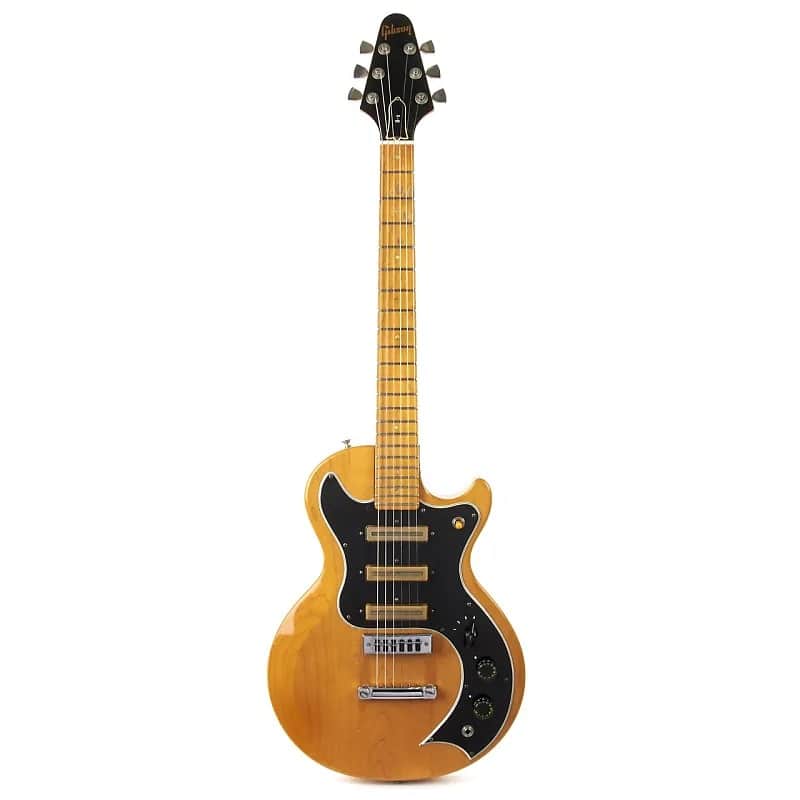
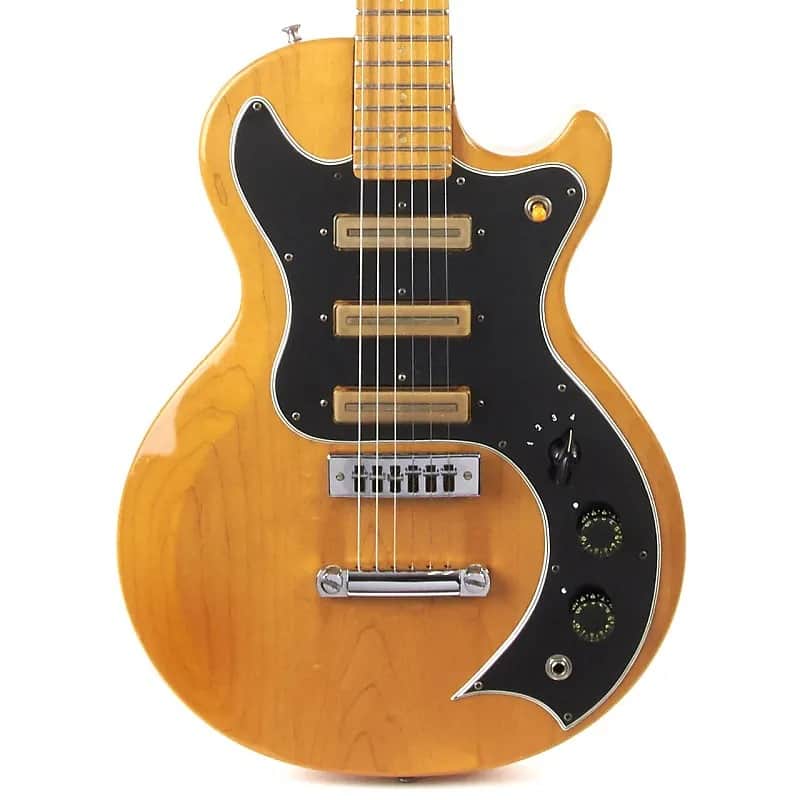
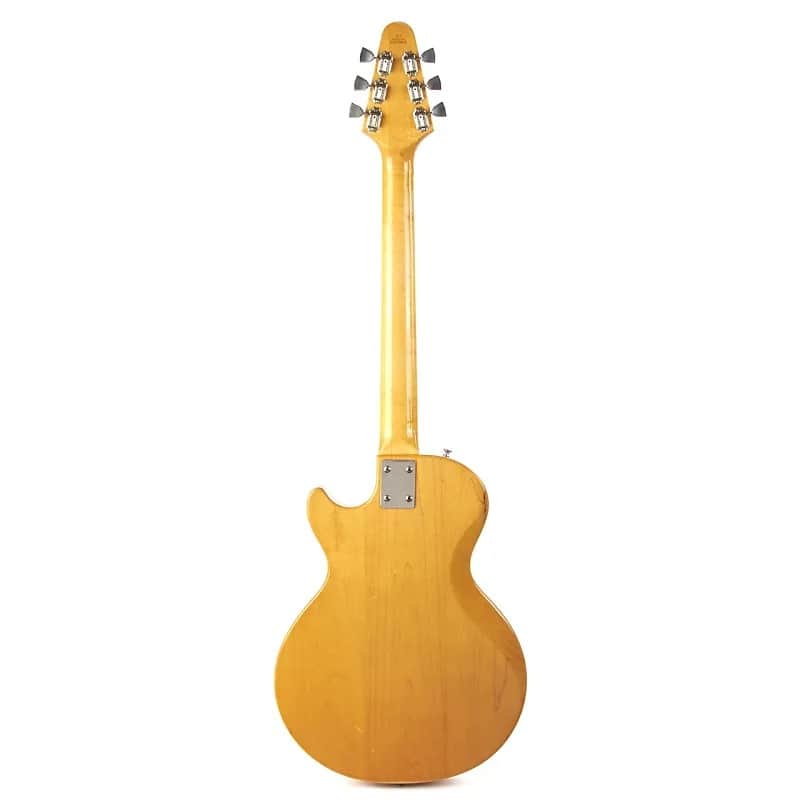
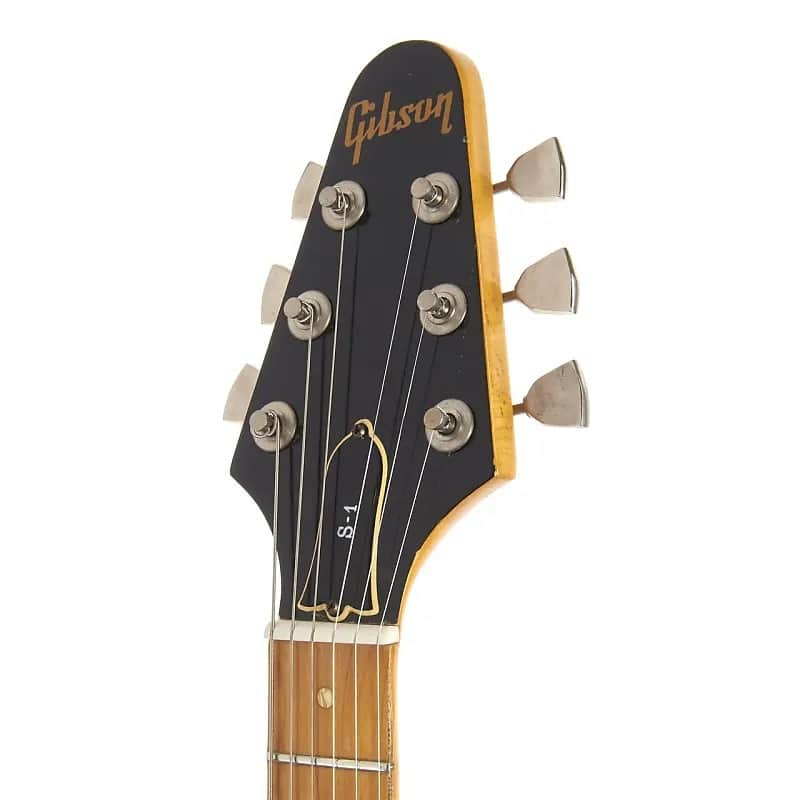
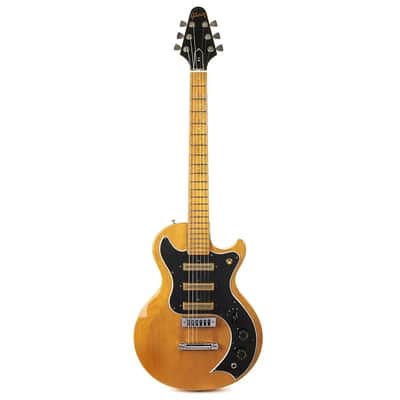
Gibson S1 Natural S1The condition is “very good” – see the pictures. Guitar looks nice but has plenty of pick swirls, tarnish on metal, and nicks/scrapes/buckle rash, etc.A portion of the finish is worn off in the back. Frets show some wear but at least for me is not a problem for playability. I added Dunlop strap locks.It appears to be all original (except tuning heads – they were replaced by similar and the original are in the case) hardware, and of course the pickups. The guitar is currently using the "Keith Richards" tuning, i.e., G major, or DGDGBD. Obviously it can be retuned but it holds this tuning very well. Comes with your choice of a newer Gibson hard case in good shape (see pics) or an original vintage Gibson case that is seriously beat up. I can send pics if you are interested in that one. (If you want both, I am looking for an additional $85 plus all shipping.) PS BTW: There is NO RISK to the buyer. The guitar is sold "As Described."Reverb rules are that returns are accepted within 7 days, if the instrument was not "As Described" and the guitar was not damaged in the buyer's care.However, I had a bad experience a few years ago where a guy bought a nice guitar from me, gigged with it(!), and then a few weeks later tried to return it.Music stores with 30-day return policies can handle stuff like that. But I'm not a music store ... Again, if it arrives "not as described," then that is covered by Reverb's return policy.Reverb's policy does protect the buyer. If you buy something from me or any other seller on Reverb, but it arrives "not as described," then please immediately inform the seller (in this case, me) and also Reverb.From Wikipedia, the free encyclopediaThe Gibson S-1 is an electric guitar, made by the Gibson Guitar Corporation.Gibson started producing the S-1 in mid-1974, but released it on the market in 1975. Its production lifespan was 1974-1980. Like the Gibson Marauder, the S-1 was an attempt to break through into the single-coil guitar market. It too consisted of a flat Les Paul -like body with a maple Flying V neck bolted on. Unlike the Marauder, however, the S-1 featured three "see-thru" single-coil pickups designed by Bill Lawrence, with fairly elaborate circuitry to generate humbucking and single-coil pick-up sounds. Just like the Marauders, the S-1 all had Schaller made "Harmonica" ("tune-o-matic" style) bridges and the standard Gibson stopbar tailpiece. The S-1 had one 2 way toggle switch and a "chicken head" 4 position rotary switch. This 4 way rotary switch made it possible to use the pick-ups in 4 different ways: 1) neck + middle, 2), middle pick-up + bridge pick-up, 3) all three together, and 4) the neck and bridge out of phase. In the down position the 2 way toggle switch bypassed the entire 4 position rotary switch circuit and made one straight connection to the bridge pick-up, which resulted in a sound to that of the Fender Esquire (Telecaster in bridge only position). The potentiometers are volume and tone. The sound was similar to that of a Fender Stratocaster or a Fender Telecaster.[citation needed]The Gibson S-1 was initially endorsed by Ronnie Wood and Keith Richards of The Rolling Stones, as well as Carlos Santana. Like the Marauder, the nontraditional construction and Fender-like characteristics contributed to the unpopularity and demise of the model in the early 1980s.Both the Marauder and S-1 were phased out in early 1980, to be replaced by the brand new Gibson Sonex.from Vintage Guitar Gibson S-1Solid body electric guitarIn the 1970s Norlin-owned Gibson dabbled in some new approaches to guitar building. Some ideas were truly innovative (such as the circuitry in the RD Artist guitar and bass) whilst others were just new to Gibson. Guitar manufacturers in the USA were having problems. The oil-crisis, Viet Nam War, cheap imports from the far east and deep recession were all taking their toll. All the big American guitar companies were losing sales to new cheaper competitors; production costs had to be reduced for certain entry level instruments. Techniques that had long been resisted, such as the use of bolt-on necks, scratchplate mounted controls, and the use of woods such as alder and maple, were finally acceptable. After all Fender had now been using them for close on two decades, and were doing very well.In late 1974 Gibson launched the Marauder M-1 guitar and Grabber G-1 bass. They were alder bodied with a bolt-on maple neck. Nothing like the solid mahogany set necked SGs, Les Pauls and EB basses that were Gibsons solid-body mainstays.Model: Gibson S-1Available: 1975-1981Body: Woods varied to some extent; though broadly maple (1976 - 79) or mahogany (1978-79). Early examples from 1975 may also have used alder.Neck: Bolt-on. 24 3/4" scale, 22 frets. Laminate maple, with rosewood fingerboard (1975-early '78), or maple fingerboard (1976-1979)Pickups: 3 high frequency Gibson "special design" adjustable pickups, with a "bright/low" tonality. These were single coil units, each with one Alnico magnet and no adjustable polepieces. Part numbers 13660 (front), 13661 (middle), 13662 (back).Dimensions: 13" wide, 17 1/4" long, 1 3/4" deepSales were good in 1975, and a further two models in the same vein were unveiled; the S-1 guitar and companion G-3 Grabber bass. The interesting thing about these instruments were the pickup configurations designed by Bill Lawrence, who was working at Gibson at the time. The S-1 had three single coil pickups, more akin to a Fender Stratocaster than anything ever produced by Gibson previously and a four-way switch that "allows you to form your own humbucking or non-humbucking combinations". The G-1 and M-1 had initially been alder bodied and this was changed to maple soon afterwards. It is unclear whether any alder-bodied S-1 instruments were manufactured, though quite possible. They were certainly produced with a maple body, and eventually mahogany was also (optionally) available as a body material too.Gibson S-1 'lead' switchOne of the great features of the S-1 was the bypass toggle switch. Most guitarists familiar with Gibson control layouts will naturally assume this to be a three-way pickup selector switch, but this is not the case. In fact it is just a two-way switch, allowing normal function in the up-position, i.e. a combination of two or more pickups in humbucking mode (depending on the position of the four-way chicken head switch) OR a simple "biting" lead setting in the down position; the bridge pickup alone.But there were two variations in the S-1 wiring. In the Adventures in Archives articles from November 1997, Gibson historian Walter Carter explainsI also came across a schematic for the "S-1, Second Series," made in 1978 and after I was talking with Customer Relations head Wayne Green about it when a voice behind me said, "I drew that schematic." The voice came from Pat Murphy, who recently rejoined Gibson after working here from 1975-78 in final assembly and quality control. According to Pat, the S-1 was supposed to be Gibson's version of the Fender Stratocaster, but the original design didn't let the player select "the Hendrix sound" - the neck pickup alone. Pat was the one who rewired the S-1 to fix that problem
Original Price$2,250
$701 price drop
New Price$1,549
+ $103.86 Shipping to