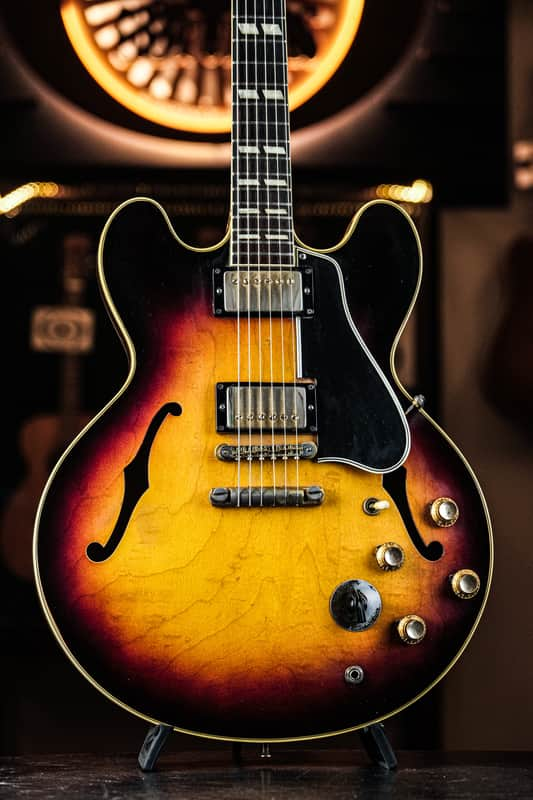
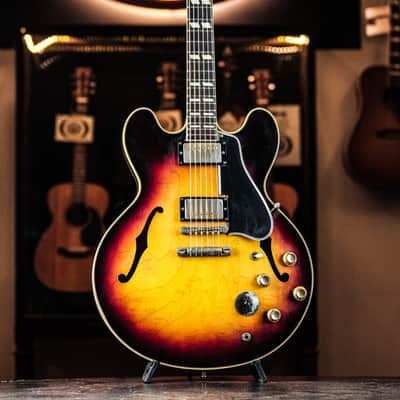
1960 Gibson ES-345TD sunburst


Seltener Fund
Diese sieht man nicht oft
Unsere Benutzer bewerten Reverb
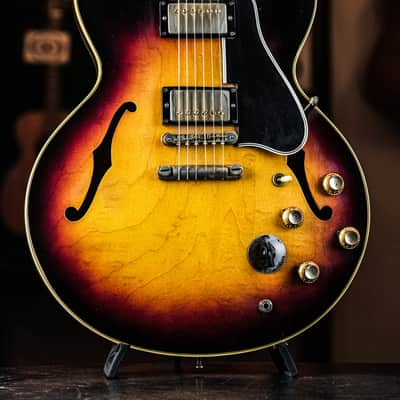
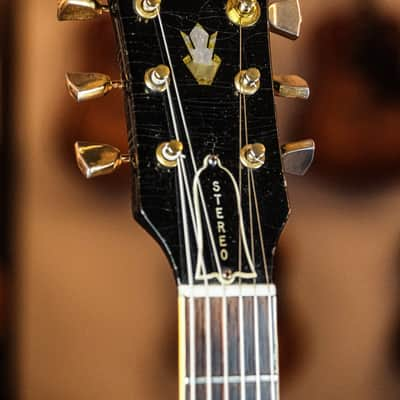
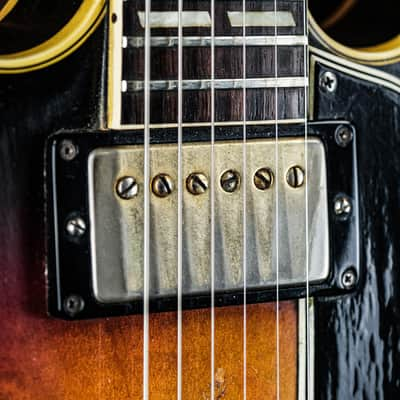
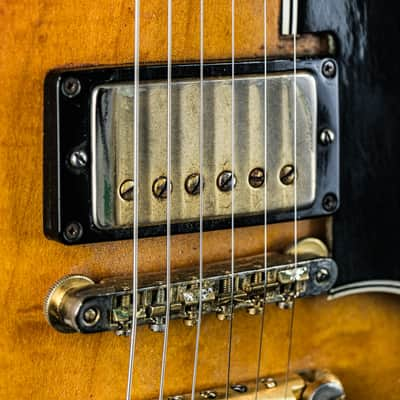
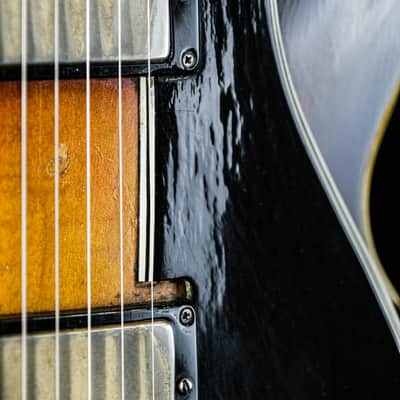
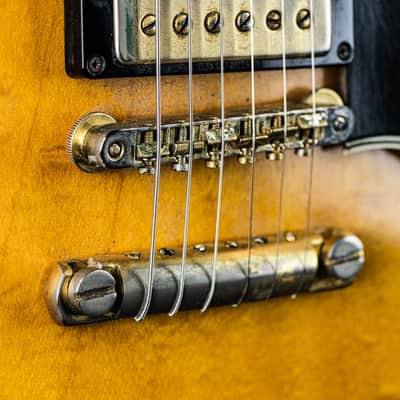
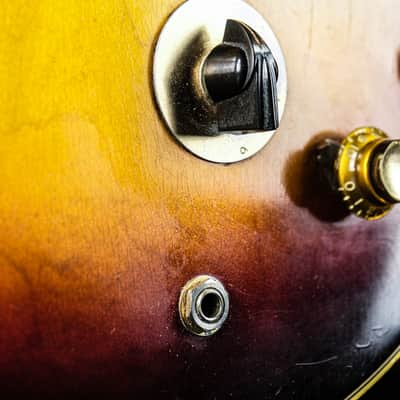
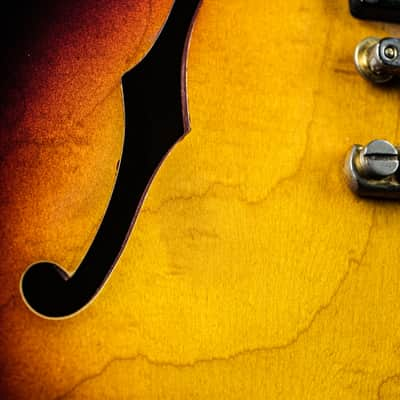
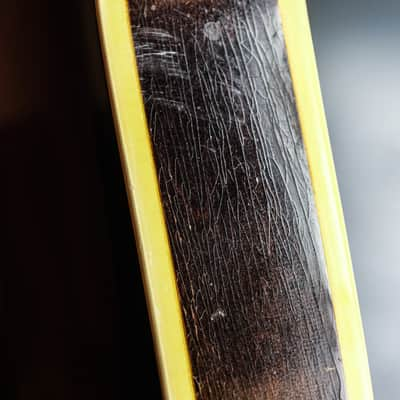
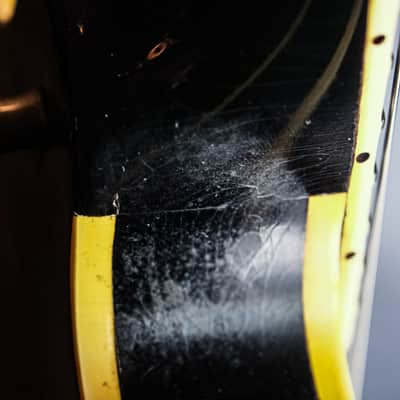
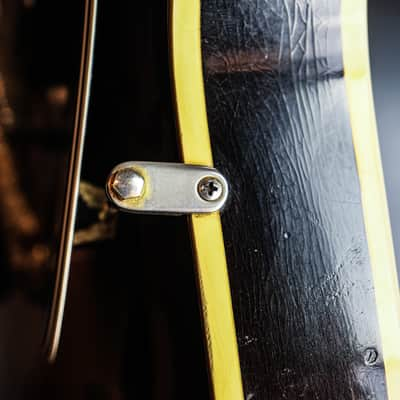
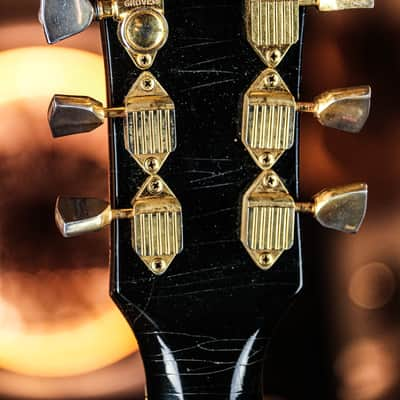
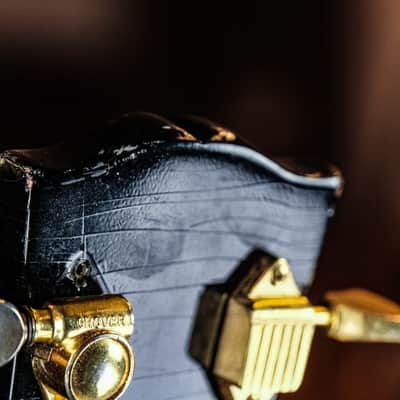
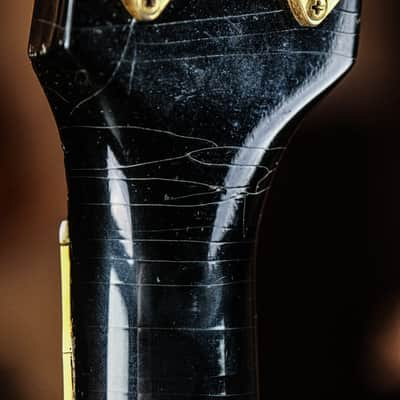
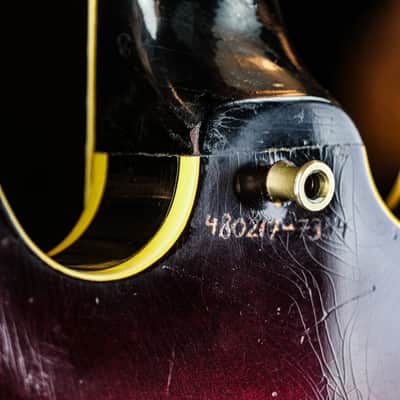
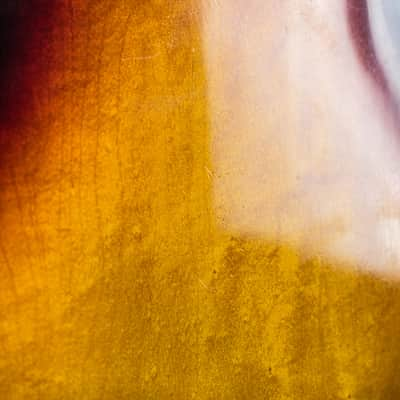
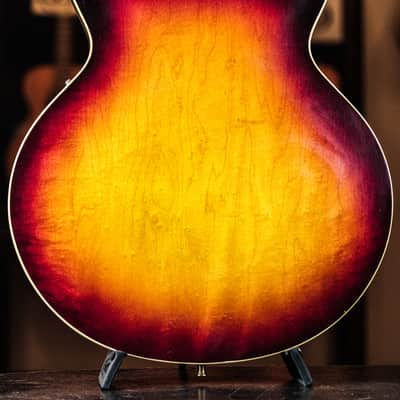
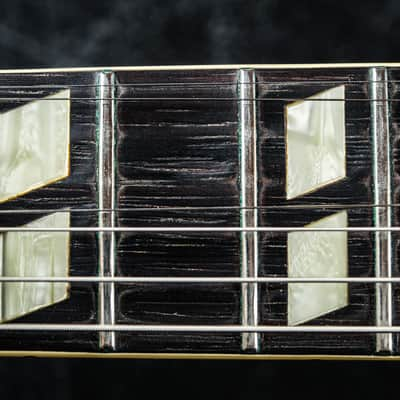
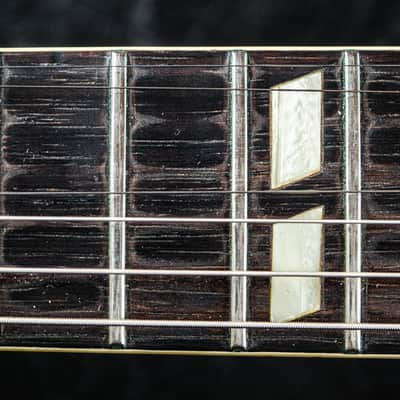
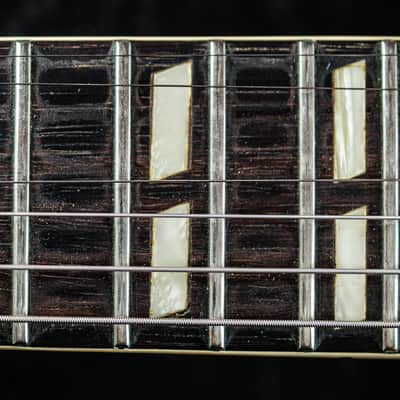
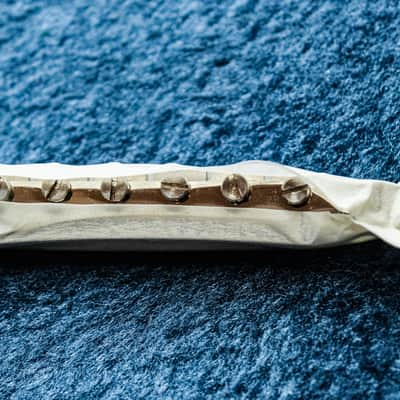
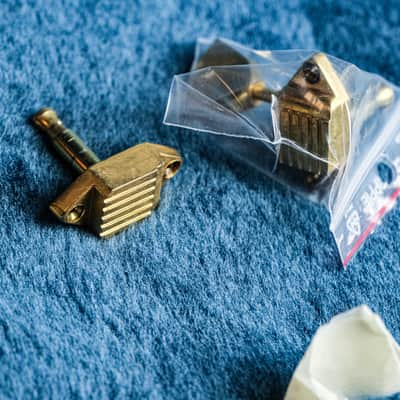
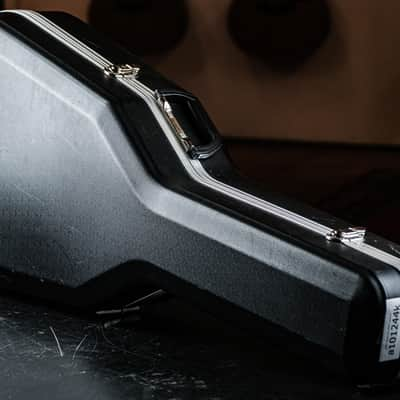
Good condition, 6/10, Made in USA, including modern hardcase, repaired headstock and refinished neck with dark areas around the neck break and the neck heel, original finish on the body, original tune-o-matic bridge (also comes with a modern bridge in the case), original PAF humbuckers with unopened covers and the long pickguard that extends to the bottom of the bridge (this version was replaced with a short pickguard on the instruments built in late 1960 and onwards), beautiful maple figuring in the back, replaced strap buttons, the guitar was built for stop tail and tune-o-matic (lacquer over the studs in the body) but it has holes around the endpin from a later installed/removed trapeze tailpiece but no other signs on the binding or on the top, this guitar originally shipped from Kalamazoo with a set of single line single ring Kluson Deluxe tuners and it currently has a set of repro gold Boston 60-GLR Machine Heads (and in the case are some other tuners that have been on the guitar; 5 original gold waffle-back Kluson tuners, out of which one is broken, and one gold Grover tuner), has a previous owners ID number engraved on the back by the strap button
Scale length is 24 3/4 in. (629 mm.). Width of nut is 1 11/16 in. (43 mm.). All the popular features such as stereo-Varitone and stoptail/tune-o-matic (this guitar is an original stop tailpiece model -- many ES-345s were ordered with vibratos in the 1960s. The "stoptail" design is generally held to enhance playability, giving an adjustable angle to the bridge off the tailpiece which can be steeper than the typical vibrato setup, increasing string break angle over the saddles. In 1965 a trapeze tailpiece was fitted as standard and the "stoptail" configuration was no longer an option, more info:
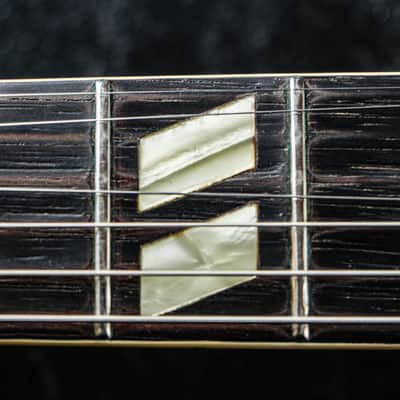
The ES-345 proved a fairly popular guitar in the 1960s, with signature users running the gamut from jazz to blues (most notably Freddie King) to several prominent British invasion players, including Pretty Thing Dick Taylor, Tony Hicks of the Hollies (who used one extensively), Eric Stewart of the Mindbenders and (briefly) Beatle George Harrison. Still, this was a fairly expensive guitar, and just 251 of these shipped in 1960 which is not a lot for Gibson in that period. Introduced in 1959 as an upscale, stereo version of the ES-335, the Gibson ES-345 is a premier semi-hollow electric guitar featuring a center block for sustain, a 6-position Varitone switch, gold-plated hardware, and split-parallelogram inlays. Known for its versatility in blues and jazz, it was famously used by B.B. King and Chuck Berry. The Varitone switch offered six different notch-filter tones, while the stereo output required a special Y-cable. Early models featured "Patent Applied For" (PAF) humbuckers before transitioning to "Patent Number" pickups in 1962.

| Inseriert | vor 7 Monaten |
|---|---|
| Zustand | Gut (Gebraucht) Artikel mit Zustand Gut funktionieren einwandfrei, können aber einiges an Makeln oder Spielspuren aufweisen.Weitere Informationen |
| Marke | |
| Modell |
|
| Farbe |
|
| Kategorien | |
| Jahr |
|
| Hergestellt in |
|
| Griffbrettmaterial |
|
| Farbfamilie |
|
| Korpusmaterial |
|
| Halskonstruktion |
|
| Korpusform |
|
| Rechts-/Linkshändig |
|
| Anzahl der Saiten |
|
| Halsmaterial |
|
| Deckenholz |
|
| Finish-Muster |
|
| Finish-Stil |
|
| Modellunterfamilie | |
| Steg/Tailpiece-Typ |
|
| Tonabnehmerkonfiguration |
|
| Mensur |
|
| Modellreihe | |
| Anzahl der Bünde |
|
| Saitentyp |
|
| Offset-Körper |
|
| Deckenmaterial |
|
Möglicherweise sind hier Informationen zur Produktsicherheit verfügbar.

Reverb-Schutz
Einfache Rücksendungen, sichere Transaktionen, Support von Experten
Weitere Informationen