


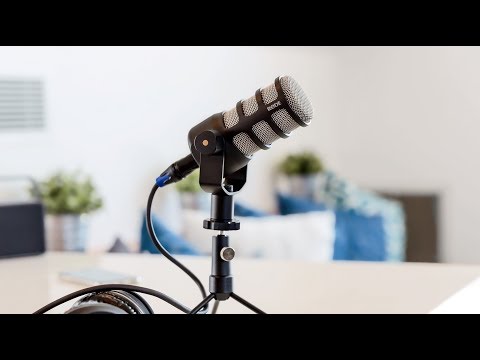
Rode PodMic Cardioid Dynamic Broadcast Microphone with Integrated Swing Mount (Black)
El vendedor no ha establecido un costo de envío para España. Por favor vendedor mensaje para preguntarle sobre el envío.


Política de devoluciones de 30 días
Disfruta de tu nuevo equipo sin preocupaciones
Nuestros usuarios valoran Reverb
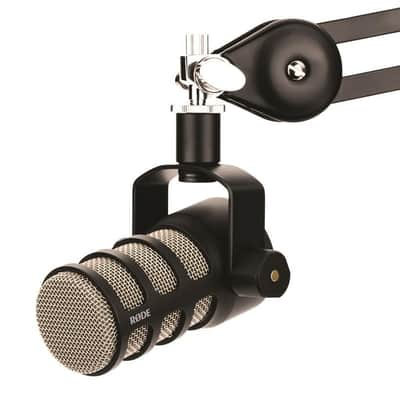
The Rode PodMic is the dynamic broadcast microphone that put the 'radio sound' on home desks. End-address, all-metal, and tuned for speech, it captures voice with a warm midrange and a tight cardioid pattern that rejects everything off to the side — keyboards, fans, the air conditioner, the dog. The internal pop filter handles plosives without a gooseneck pop screen in the shot, and the internal shockmount keeps desk thumps and arm-adjustment noise out of the recording. The integrated swing mount locks at any angle with wing nuts on each side. This is the microphone that turned untreated bedrooms and home offices into broadcast-ready studios for solo podcasters, Twitch streamers, voice-over artists, and multi-host shows.
Why the Cardioid Dynamic Capsule Beats a Condenser in Your RoomCondenser microphones are extraordinarily sensitive — which is what makes them the right choice in a treated studio and the wrong choice in your apartment. The PodMic's dynamic capsule needs you closer to the diaphragm to drive it, and that proximity is the feature, not the limitation. Speaking 1 to 4 inches off the grille fills your voice with low-end warmth and lets the cardioid pattern do its job: anything off-axis to the front is attenuated. The room you're sitting in stops being heard. The 320 Ω output impedance feeds standard interface preamps with healthy headroom — louder and easier to drive than the SM7B at a fraction of the price, with no cloud lifter required for most interfaces. The PodMic is engineered for the rooms most podcasters and streamers actually record in.
What the Internal Pop Filter and Internal Shockmount Save You From BuyingThe PodMic is designed as a complete package. The dual-mesh housing acts as the pop filter — plosives are absorbed before the capsule hears them, so the recording stays clean on close-mic 'P' and 'B' consonants without a gooseneck pop screen blocking the on-camera shot. The capsule is internally suspended on the swing mount; the swing mount is internally decoupled from the body. The result: desk thumps, mouse clicks, and the inevitable arm-adjustment handling noise stay out of the audio. You don't need to add an external shock mount. You don't need an external pop filter. Two accessories most condenser microphone setups require are already inside this body.
20 Hz – 20 kHz Response Engineered for Voice, Not MusicThe PodMic's frequency response covers the full 20 Hz – 20 kHz range, but it isn't a flat measurement-microphone curve. Rode tuned the capsule for spoken voice: warm low-mid presence that flatters baritone hosts, controlled high-mid bite that keeps consonants intelligible on the upper end, and a gentle taper at the extremes that keeps room rumble and HVAC hiss from sneaking in. The result is the broadcast-warm tonality that listeners associate with FM radio and the major podcasts — and it lands without any post-processing EQ in your DAW or RODECaster scene.
XLR-Only and Why That Matters: Professional Signal Path, Real Preamp ControlThe PodMic uses a 3-pin XLR connector. There is no USB on this mic. That choice matters: an XLR mic feeds an external preamp — an audio interface, a RODECaster Pro II, a Streamer X, or a live mixer — which gives you per-channel gain, per-channel processing, and the option to scale to multi-host shows by adding more mics on the same console. Phantom power is not required. The 320 Ω output impedance is designed for standard interface preamps, and the dynamic capsule's higher sensitivity-per-gain-stage means cheaper interfaces drive it cleanly without a cloud lifter. Whether your interface is an AI-1, a Scarlett, or a RODECaster Pro II, the PodMic plugs in with a single XLR cable and works.
Built Like a Tank and Built to Disappear on CameraSolid metal body, stainless steel mesh grille, integrated swing mount with wing nuts on each side. The PodMic weighs 865 g — heavy enough to demand a 2-pound-rated boom arm but light enough not to bounce on a desk stand. The matte black finish on metal looks the part on a Twitch overlay or a podcast cover image. The wing nuts let you angle the capsule, lock it down, and forget about it for the rest of the session — no slip, no creep. This microphone is designed to live on a desk for years of daily recording, and it's earned that reputation in tens of thousands of home studios.
Who the PodMic Is ForFor the first-time podcaster who needs broadcast quality without learning to treat a room. For the streamer who upgraded from a USB headset and discovered the chair creak was being recorded. For the voice-over artist working from a home office. For the multi-host podcast running two, three, or four PodMics into a RODECaster Pro II — the cardioid pattern keeps each host's mic from picking up the others. And for the buyer comparing the PodMic to the Shure SM7B who realizes the PodMic is louder out of the box, doesn't need a cloud lifter, and costs significantly less. Sit down. Plug into XLR. Record.
| Estado | Nuevo (nuevo) Productos nuevos son vendidos por tiendas oficiales o por el fabricante original e incluyen todo su empaquetado original.Más información |
|---|---|
| Marca | |
| Modelo |
|
| Categorías | |
| Año |
|
| Electrónica |
|
| Tipo de micrófono |
|
| Con cable/Inalámbrico |
|
| Patrón polar |
|
La información de seguridad del producto se encuentra disponible aquí.

Protección de Reverb
Devoluciones sencillas, transacciones seguras, asistencia personal
Más información