Used Guitar Prices Have Settled. Now What?
Tracking the trends in used guitar pricing with the Reverb Price Index
The Electric Guitar Price Index:
Like other categories of musical equipment—and most other consumer goods, from watches to cars—used electric guitars saw price spikes in 2021 through 2022, due to pandemic-fueled demand and supply chain issues.
At their peak, used electrics had gotten 32% more expensive than they had been in 2019. In the years since, they pared back gains and fell toward earth. A strong supply (and, at times, oversupply) of new gear returned, helping ease price pressure as demand lessened, particularly for entry level guitars.
By early 2025, prices of used electric guitars overall had settled to about 10% cheaper than their pandemic heights. Then, talk of tariffs began to give guitarists a new reason to be concerned about gear becoming more expensive again.
Everywhere a gearhead turned, they saw headlines about prices set to go through the roof due to tariffs and inflation, or doomsday warnings about crashes that were right around the corner.
But what's happened since? More stability.
While we have certainly seen price increases on new products, the used electric guitar market is holding steady, with demand and supply both proving to be resilient. For the time-being at least, guitarists who feared that new price increases would quickly affect used instruments too can breathe a sigh of relief.
Price trends in the used market today are looking a lot like they did before the pandemic, and, for that matter, a lot like they did before the latest tariffs.
There are seasonal ebbs and flows with price variances of around 2-4% for the market overall, while certain brands, subcategories, and individual models of course have their own ups and downs (which we'll dig into below).
Will this stability hold? We'll be tracking the data to see in the Reverb Price Index.
Did you miss our earlier report on the Effects & Pedals Price Index? Check that out too.
Gibsons and Fenders Set the Trends for the Whole Market's Moves
As the two largest electric guitar brands in the world, it makes sense that the value of Fenders and Gibsons track closely with the overall market. Both peaked in 2022, dipped around 4-5% for the next few years, and have stabilized at about 20% above their 2019 prices.
In March of this year, the average price of all brands increased slightly before falling back down across the board. And while that coincides with a time when tariff discourse dominated the news, you can also see similar seasonal rises and falls around that time each year. Notably, the average price increase of used guitars from other brands was much larger than those from Gibson and Fender.
The Used Electric Guitar Market By Brands:
When we look at price data for individual models, we can see this stabilization in action. Consider SG Standards made from 1991-2012. They jumped more than 30% in value at their peak, but have now landed at just 14% higher than they were in 2019. Back then, you could get one for an average price of $962. Today? $1,096.
The Les Paul Customs of the same era are now selling at an average of 19% higher in 2025 vs. 2019, having dropped 2% in the past 12 months.
Vintage Guitar Prices Soared Higher and Are Still More Volatile
The Vintage Market Compared to the Used Market as a Whole:
The vintage guitar market has been, in a word, choppy.
Its pandemic highs far outpaced the rest of the used guitar market, with final sale prices in 2022 coming in 42% higher overall than they'd been in 2019 (compared to the wider used market's 32% price increase).
At the same time, there have been wild ups and downs month-to-month, as the value of collectible guitars bought and sold each month can be as unique as the instruments themselves.
In Q2 of 2025, there's been a modest bounce back upwards, with some individual models pulling the average higher. In just the last 12 months:
- 1961 Gibson SG Juniors have increased in value 49%
- Norlin-era Les Paul Standards have increased by 41%
- Refinished Fender Stratocasters from 1954-'65—still a great value compared to those with their original finish—have increased 35%
- Late CBS-era Strats from 1978-'81 have increased 30%
- And even the humble Gibson Marauder and a few eras of vintage Fender Mustangs ('72-'80, '65-'69) have increased 10% or more
Meanwhile, one model that more than doubled in value between 2019 and 2024—Competition-stripe Mustangs from 1969-'73—have fallen 22% in the last year.
The Greatest Gains Have Been Made By… the Hello Kitty Strat?
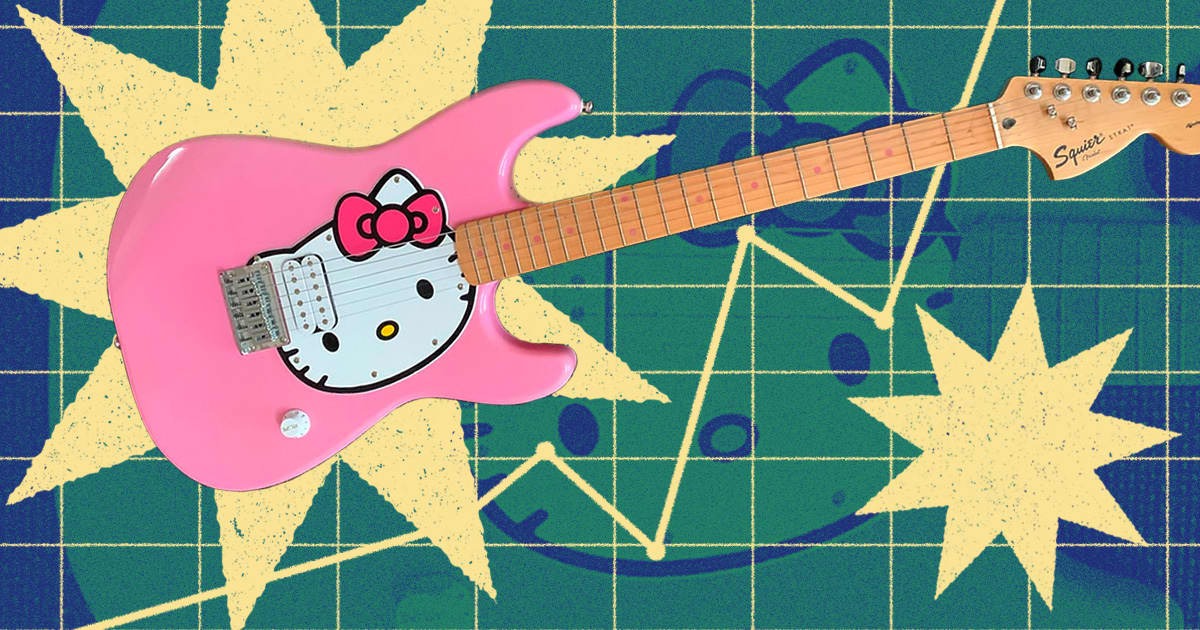
Out of all of the guitars we tracked in the Reverb Price Index, what model increased the most in price since 2019? The Squier Hello Kitty Stratocaster.
Thanks to viral videos from The Dooo and a resurgent interest in the novelty of the guitar, its price more than tripled from 2019 to 2024. Such buzz led Fender to reissue the model in limited quantities last year, which only modestly broke the fever.
While the Hello Kitty Strat has slumped 27% in the last year, it's still trading for 175% more in 2025 than it did in 2019.
Unique Models Are Beating the Rest of the Market
While standard-fare models underpin the standard curve of the trendline, there are more than a few interesting anomalies that have jumped in price.
Signature guitars for some particular artists have blossomed:
- Epiphone's Joe Bonamassa Signature "Treasure" Firebird I has more than doubled its value in 2025 vs. 2019, jumping 34% in the last 12 months alone.
- Epiphone's Tom DeLonge Signature ES-333 is also now more than double its 2019 price, even after dropping 20% in the last 12 months.
- Fender's Johnny Marr Signature Jaguar is another that just keeps appreciating in value, up 71% since 2019 and growing 16% in the last year alone.
- EVH's 5150 Striped Series, which resembles Eddie Van Halen's own red-black-and-white Frankstrat, has increased 40% since 2019, making huge gains in just this last year.
Discontinued models have also seen significant jumps:
- Fender's Road Worn '50s Telecaster, which was discontinued in 2019, continues to be a fan-favorite on the used market, increasing in value by 80% since that time.
- Gibson's Les Paul Junior Tribute DC, which was discontinued in 2020, has followed a similar though less extreme arc, trading for 58% more in 2025 than it did in 2019.
And a trio of Fender MIJ reissues have also seen outsized gains:
- The ST-62 Stratocaster Reissue is up 90%
- The JG-66 Jaguar Reissue is up 77%
- The TL-62 Telecaster Custom Reissue is up 43%
Has PRS Been the Quiet Champion All Along?
The Used Electric Guitar Market By Brands:
Take another look at how brands compare with one another, and you'll see that PRS can be seen as a quiet champion amid years of volatility.
While PRS guitars didn’t see the same spike during the pandemic, they also didn’t fall off a cliff afterward. They’ve held value better than almost any other brand, with steady pricing and a reputation for consistency.
Key Takeaways
We hope you explore the Price Index charts above—and dig into the Reverb Price Guide for individual models—to draw your own conclusions about the price trends of the gear you love. We'll certainly keep doing the same.
But what are our biggest takeaways on the Electric Guitar Reverb Price Index now?
- Price stability over the past 12 months. It’s easy to be overwhelmed by the eye-catching headlines that prices are either crashing like never before or will go through the roof due to tariffs and inflation. However, the data that we see from millions of transactions on Reverb tells a different story.
- Vintage models have retained more of the pandemic era price gains.
- Signature guitars, discounted models, and other unique instruments have risen in popularity and price over the last year.
- PRS has seen the least price volatility over the last 6 years.
The used market is behaving more predictably again. For buyers, that means you can have confidence in the resale value of a used instrument you purchase. For sellers, it should give some clarity into how you price your gear when you're ready to part with it. After some volatile years and in the middle new uncertainty, that stability can give us all a little piece of mind.
4 Ways Reverb Can Help You Navigate the Market
When entering the market to buy or sell a piece of gear, remember these four things:
List price isn’t selling price. The best moves are made with good data, and Reverb provides not only this Price Index, but also the Reverb Price Guide that drills down to the exact items you have and shows you recent transactions.
As you look through live listings to gauge the competition, also search the Price Guide for your gear for a reality check. Similarly, if you like looking through sold listings, remember that the price you see on a sold listing is the List Price and not the Sold For price. (Ready to go? Start a listing now.)
Track your gear Collection. Add gear you've bought on Reverb and anywhere else to your Collection, and get real-time view of your gear’s estimated value based on recent sales data. You can add items with just a few clicks, monitor trends over time, and even list your gear for sale directly from your Collection.
Watch and save what you want—even if you’re not ready to pull the trigger now. Build your own personalized Reverb in your Favorites by saving searches, products, listings, brands you care about, and shops you love. You’ll get notified when prices drop, new items get listed, or rare gear becomes available. It’s an easy way to stay connected to the gear you love.
Replace doomscrolling with dreamscrolling on the Reverb App. Why spiral in despair when you could spiral into vintage fuzz circuits? Download the Reverb App today if you don't already have it. Instead of scrolling the same recycled memes and endless product ads (unless they're Reverb ads), fill your Feed with gear you’re interested in.
What's the Reverb Price Index?
Where are we pulling this data from? Well, we've begun to compile all of the selling and buying activity on our marketplace in a brand new way: the Reverb Price Index (RPI).
This data-driven tool tracks pricing trends across the used music gear market. Think of it like a stock market index but for pedals, guitars, synths, and other gear, providing a standardized measure of category- and brand-level price trends over time.
While we've already been using it internally, we are planning to make it publicly available in full soon, allowing everyone to keep a close eye on the ups and downs of the gear market. (The charts above are just a taste.)
Our existing Reverb Price Guide shares the exact price history of individual products, but the Reverb Price Index will mark the first time we can view the relative movement of the market as a whole, reflecting actual trends in the buying and selling behavior of the music gear community.
Have an idea of what you're like to see or how it might help you in your own buying and selling journey, let us know at [email protected].