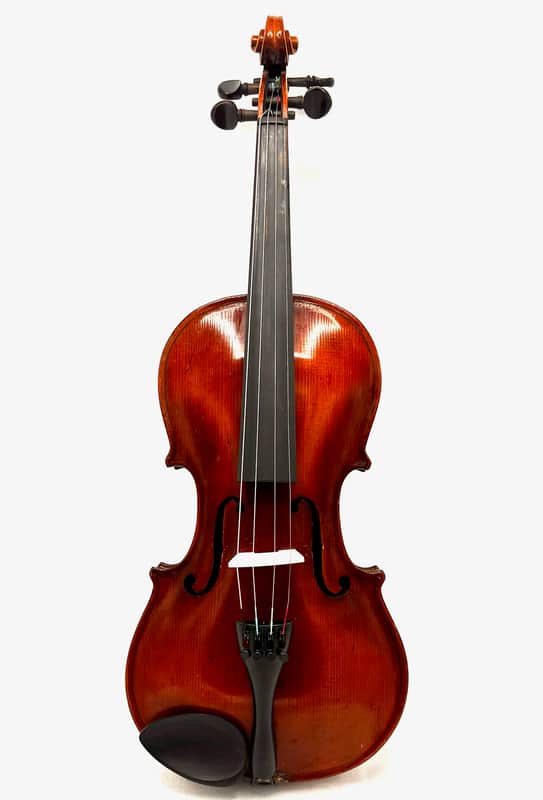
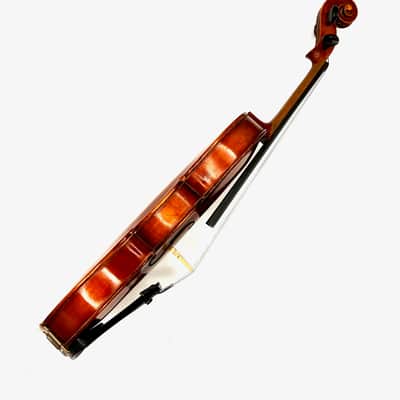
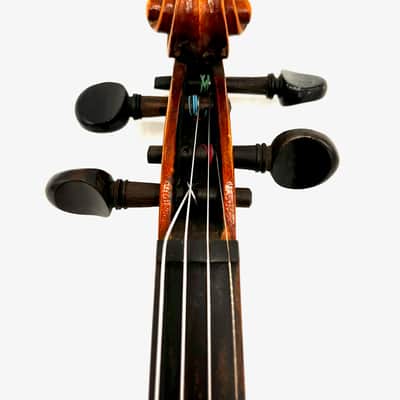
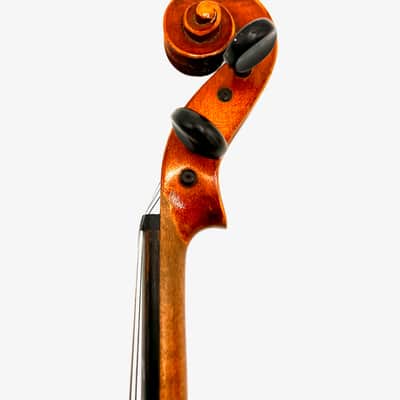
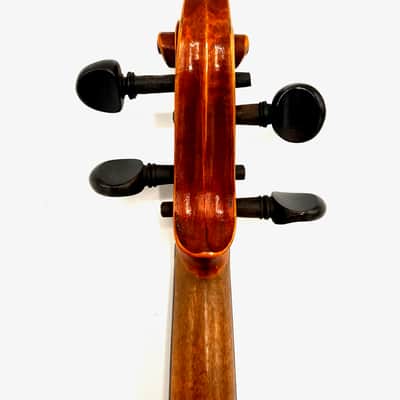
Full-Size Violin · Stainer Model · Late 19th / Early 20th Century · Germany

Envío gratis
desde Hilversum, Países Bajos


Nuestros usuarios valoran Reverb
Introduction
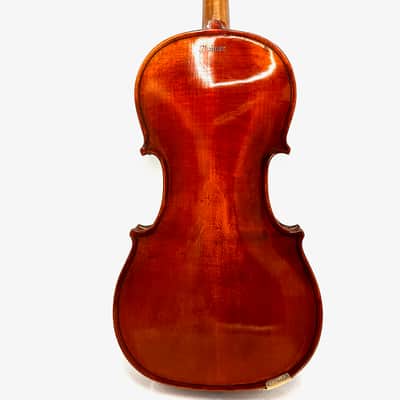
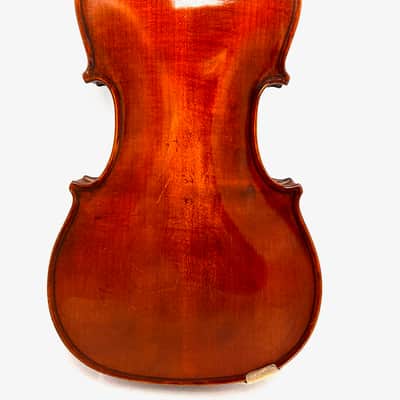
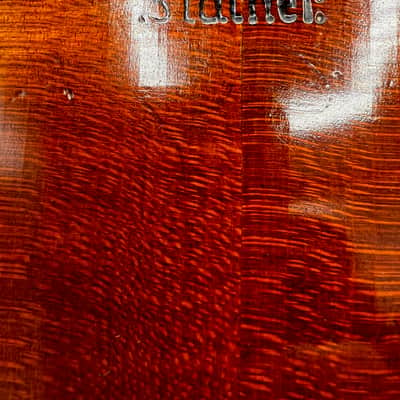
This full-size violin bears the brand “Stainer” stamped on the back below the neck button, identifying it as a German workshop instrument made after the celebrated model of Jacob Stainer, the renowned 17th-century Tyrolean violin maker. The instrument was produced in Germany, most likely in the Markneukirchen or Mittenwald region, during the late 19th or early 20th century — an era when Stainer-model violins were widely manufactured across Saxon and Bavarian workshops for both domestic use and international export. It is not an original Stainer, but a historically styled German workshop reproduction.
Historical and Artistic Context
Jacob Stainer (c. 1617–1683) was among the most celebrated violin makers of the Baroque era, and his instruments were considered the finest in Europe well into the 18th century. His distinctive high-arched design produced a sweet, focused tone ideal for chamber music and solo repertoire of the period. By the 19th century, workshops in Markneukirchen, Klingenthal, and Mittenwald had developed a thriving tradition of producing instruments modelled after Stainer’s patterns. These workshop violins served musicians, students, and dealers across Europe and beyond, and represent an important chapter in the history of German violin making.
Craftsmanship and Materials
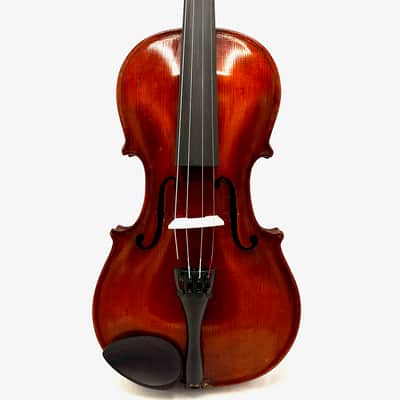
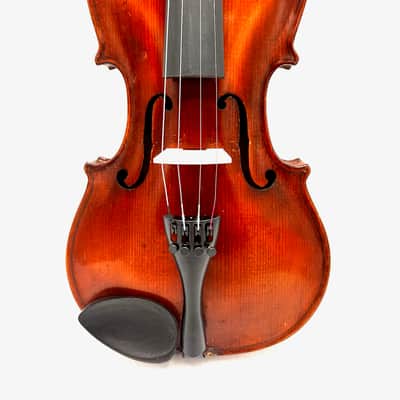
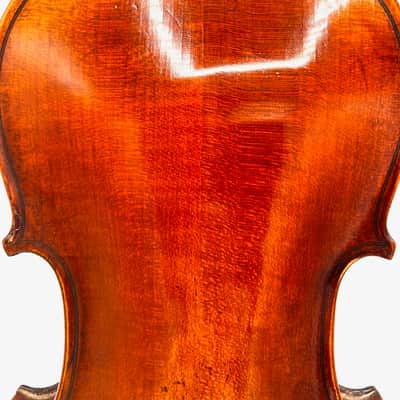
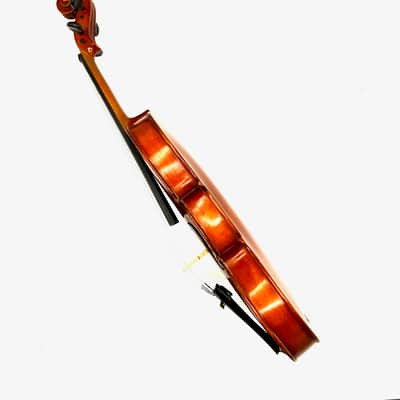
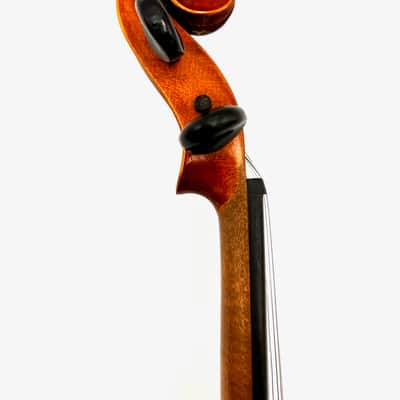
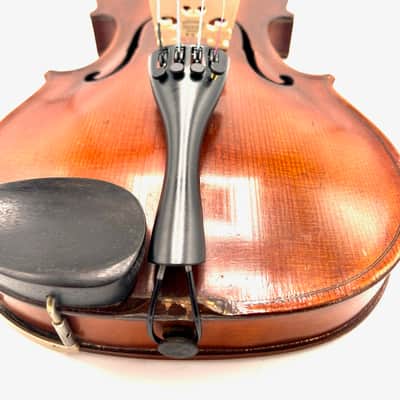
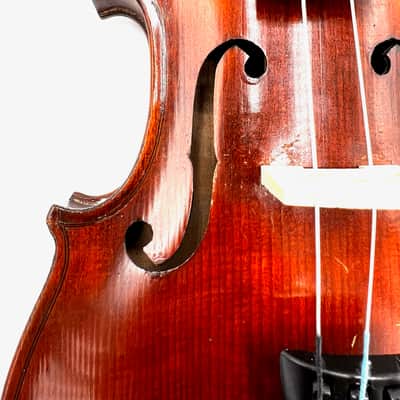
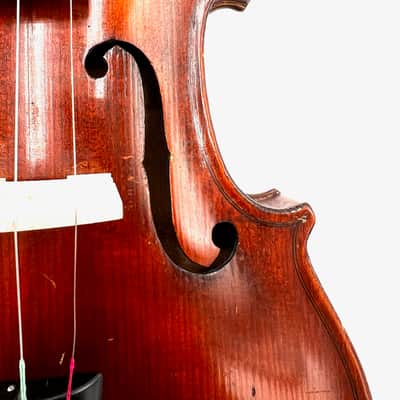
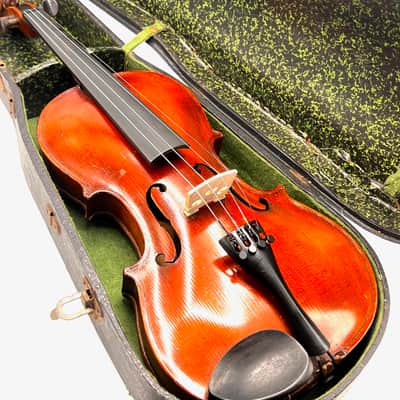
The top is crafted from spruce with a fine, even grain across the entire plate, displaying consistent spacing from centre to edge. The one-piece maple back shows a subtle, narrow flame visible under a warm, red-brown varnish with good depth and lustre. The “Stainer” brand is clearly stamped below the neck button on the back. The ribs are of matching maple. The varnish is a rich red-brown tone, applied evenly and in well-preserved condition with only minor surface wear consistent with age. The scroll is neatly carved with clean chamfers and proportionate volute turns. Purfling is inlaid along the edges of the top and back. The f-holes are cleanly cut with moderate fluting, set symmetrically and consistent with the Stainer pattern.
Sound Character and Playability
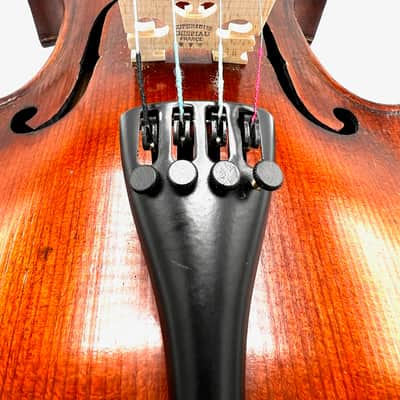
The violin is sold with a new uncut Despiau bridge, new strings, and a soundpost in position. The ebony fingerboard provides an adequate playing surface. Four ebony pegs are fitted and functional. An ebony Guarneri-style chinrest and an ebony tailpiece with four integrated fine tuners complete the setup. The instrument needs to be fitted and set-up before playing. We offer additional services to cut the bridge to size, please contact us before or after the sale.
Condition
Spruce top in good condition with no open cracks. Maple back and ribs in good condition with normal signs of age and use. Original neck and scroll in good condition. Ebony fingerboard with adequate playing surface.
Specifications
Brand: “Stainer” (stamped on back)
Origin: Germany
Period: Late 19th / early 20th century
Model: After Jacob Stainer
Size: 4/4 (full size)
Total length: 60 cm
Weight: 430 grams
Strings: New (Factory)
Attribution
Branded Stainer, German workshop production, late 19th / early 20th century.
Este producto es vendido tal cual
Este producto fue vendido tal y no puede ser devuelto al menos qué sea entregado en una condición diferente a como fue descrito o fotografiado.Los productos deben ser devueltos en su estado original junto a todo su empaquetado original. Obtén más información.
| Publicado | hace 7 días |
|---|---|
| Estado | Bueno (segunda mano) Productos en estado buen funcionan debidamente pero pueden exhibir imperfecciones cosméticas y otros gastos físicos.Más información |
| Marca | |
| Modelo |
|
| Categorías | |
| Año |
|
La información de seguridad del producto se encuentra disponible aquí.


Protección de Reverb
Devoluciones sencillas, transacciones seguras, asistencia personal
Más información