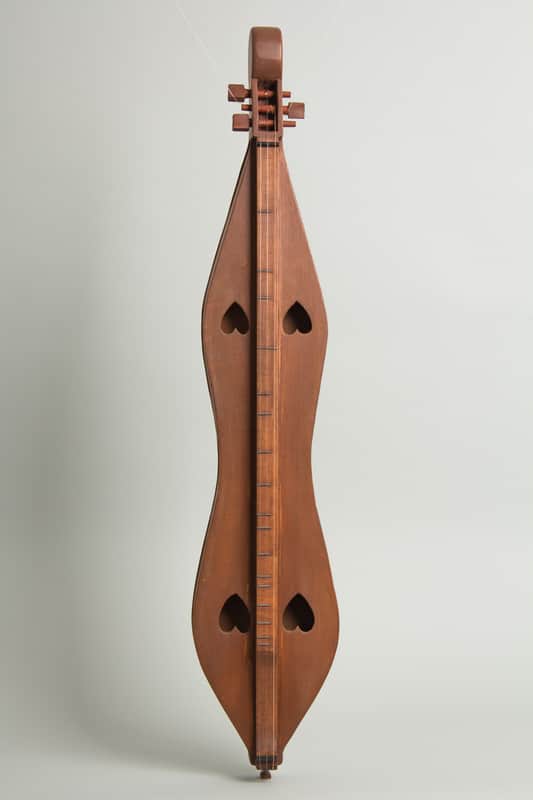
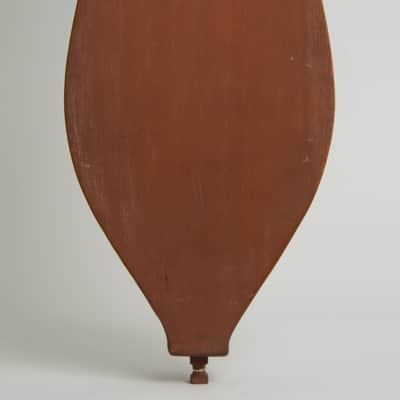
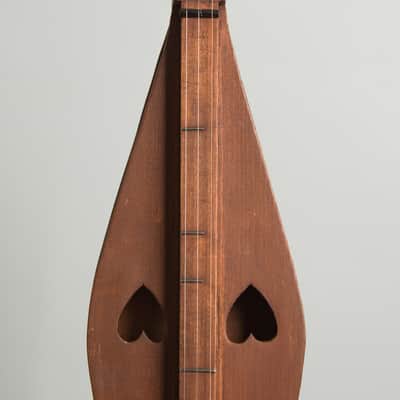
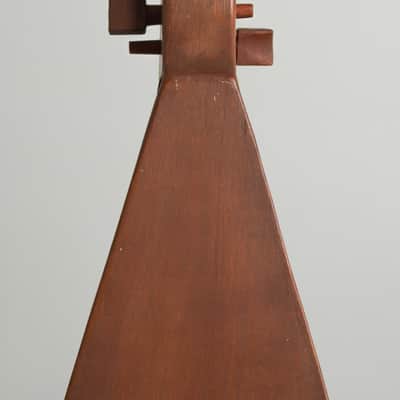
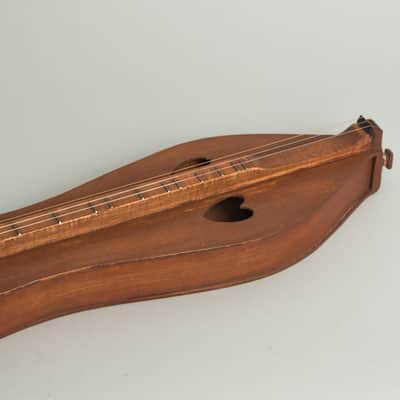
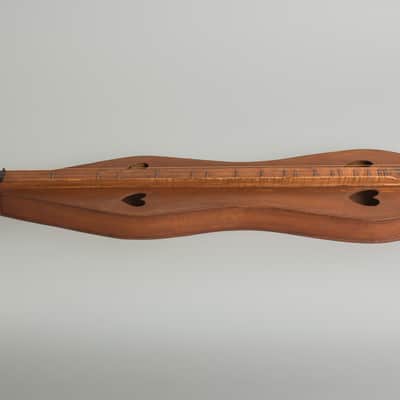
G.E. Thomas 3-String Appalachian Dulcimer, c. 1950s, brown gig bag case.
El vendedor no ha establecido un costo de envío para España. Por favor vendedor mensaje para preguntarle sobre el envío.
Precio original €465.56
20% de rebaja
Precio nuevo €372.45
+ envío
Publicado:hace 3 meses
Visitas:119
Guardados:3
Ofertas:0

Brooklyn, NY, Estados Unidos
Nuestros usuarios valoran Reverb
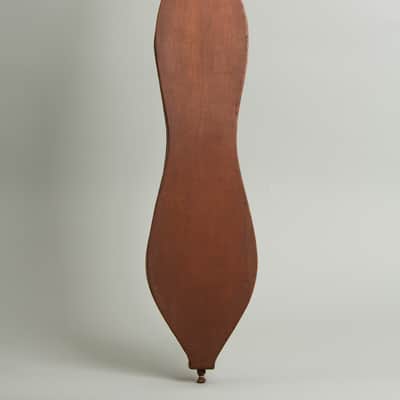
G.E. Thomas 3-String Model Appalachian Dulcimer, c. 1950s, made in Southern Appalachia, natural finish, cherry top, back, and sides, brown gig bag case.
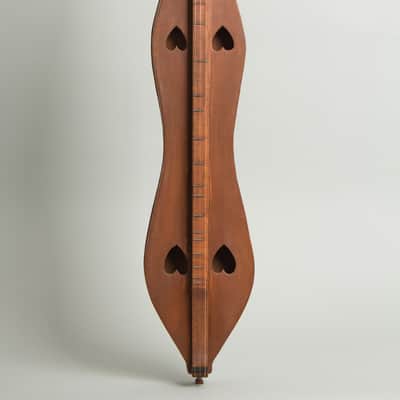
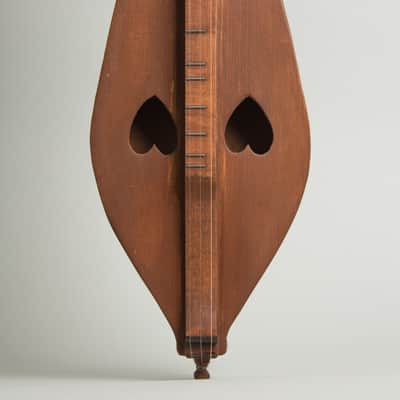
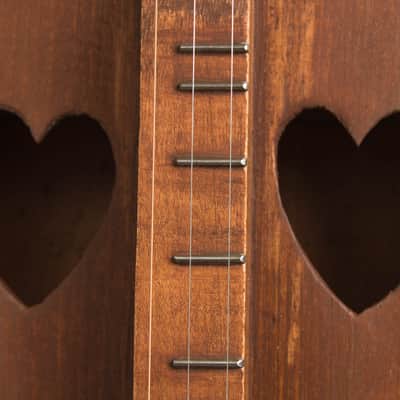
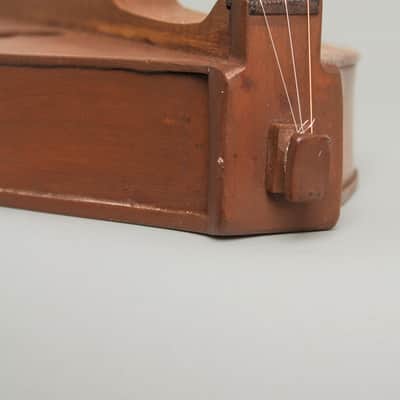
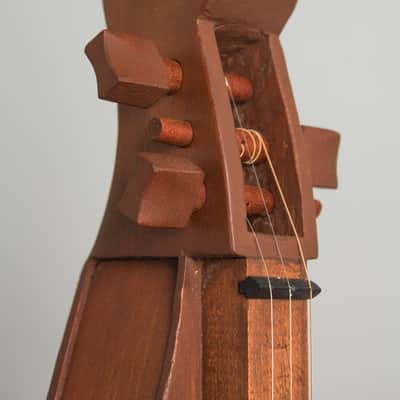
This instrument came from Southern Appalachia around West Viriginia and seems to fit with many building traditions of the area particularly around Huntington where dulcimer-making was already a cottage industry; we date this to somewhere midcentury. The dulcimer itself is a traditional Appalachian hourglass dulcimer for three strings with a neither-rare-nor-common half fretted fingerboard. The two treble strings can be fretted, while the bass string is meant to drone unfretted except at the spot allowing a fifth above the tonic; you can play two chords on this one! It is all cherry, painted with a sort of translucent wood paint, save for the nut and saddle which appear to be ebony (or at least an ebonized wood of some sort). It has hand-carved friction tuners, a wooden dowel tailpiece, and the ever-charming heart-shaped soundholes.
We cannot identify an original builder, but the gentleman from whom we received this dulcimer took it upon himself to do a bit of anthropological research and we see fit to include the findings. Near Huntington, the Prichard School was a shelter for homeless and disadvantaged children. According to public records, the only "G. Thomas" from around this period in the area would have been a child who passed through the Prichard School 1930 and likely stayed in the area at least into his teenage years as evidenced by his enrollment the following decade in another program for homeless youth. The founder of the school is a cousin of regional dulcimer maker, Charles Prichard, and the owner speculates that perhaps George showed some affinity for woodworking and music and may have given dulcimer building a try.
As with so many folk traditions, there is a beauty and charm to the ambiguity of the origin of this instrument. Obviously, time and care was put into this instrument and it was a successful build. While it is not the most refined dulcimer we have handled, this is a perfectly usable and lovely-looking instrument and a captivating piece of Appalachian Americana.
Length is 35 1/2 in. (90.2 cm.), 6 7/8 in. (17.5 cm.) wide at lower bout, and 3 in. (7.6 cm.) in depth at deepest point. Scale length is 28 3/8 in. (721 mm.). Width of nut is 1 in. (25 mm.).
This dulcimer is in overall great shape with seemingly no cracks or repairs. It has held together pretty well over the years, perhaps in part to its slightly clunky interior construction. That is not to say it is not still a nice and balanced sounding dulcimer, the tone is brighter than some. Some additional glue may have been pumped into one treble side seam to stabilize a bit of separation at some point. The ebony nut and saddle are the only things that may not be original to this instrument; it would have been difficult to come across these materials at the time primarily for a poor or working class amateur luthier, and visually the pieces just look somewhat newer and retrofitted to the original slots. We cannot say for certain, but they are healthy.
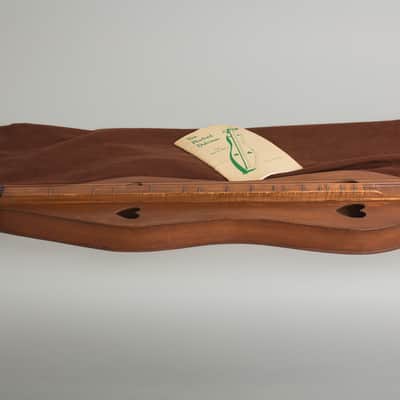
The partial frets show little wear and the two frettable strings intonate well. The painted-over-wood finish is original and in decent shape, and the "G.E. Thomas" crudely carved into the inner bracing is clearly visible through the lower soundholes. This resides in an old dulcimer bag complete with a 1973 edition of a privately published instructional dulcimer booklet entitled "The Plucked Dulcimer" first issued in 1961. This includes music, diagrams, history of the instrument and notable builders of the time; it makes for a charming read even for a non-beginner dulcimer appreciator. Excellent - Condition.
This instrument came from Southern Appalachia around West Viriginia and seems to fit with many building traditions of the area particularly around Huntington where dulcimer-making was already a cottage industry; we date this to somewhere midcentury. The dulcimer itself is a traditional Appalachian hourglass dulcimer for three strings with a neither-rare-nor-common half fretted fingerboard. The two treble strings can be fretted, while the bass string is meant to drone unfretted except at the spot allowing a fifth above the tonic; you can play two chords on this one! It is all cherry, painted with a sort of translucent wood paint, save for the nut and saddle which appear to be ebony (or at least an ebonized wood of some sort). It has hand-carved friction tuners, a wooden dowel tailpiece, and the ever-charming heart-shaped soundholes.
We cannot identify an original builder, but the gentleman from whom we received this dulcimer took it upon himself to do a bit of anthropological research and we see fit to include the findings. Near Huntington, the Prichard School was a shelter for homeless and disadvantaged children. According to public records, the only "G. Thomas" from around this period in the area would have been a child who passed through the Prichard School 1930 and likely stayed in the area at least into his teenage years as evidenced by his enrollment the following decade in another program for homeless youth. The founder of the school is a cousin of regional dulcimer maker, Charles Prichard, and the owner speculates that perhaps George showed some affinity for woodworking and music and may have given dulcimer building a try.
As with so many folk traditions, there is a beauty and charm to the ambiguity of the origin of this instrument. Obviously, time and care was put into this instrument and it was a successful build. While it is not the most refined dulcimer we have handled, this is a perfectly usable and lovely-looking instrument and a captivating piece of Appalachian Americana.
Length is 35 1/2 in. (90.2 cm.), 6 7/8 in. (17.5 cm.) wide at lower bout, and 3 in. (7.6 cm.) in depth at deepest point. Scale length is 28 3/8 in. (721 mm.). Width of nut is 1 in. (25 mm.).
This dulcimer is in overall great shape with seemingly no cracks or repairs. It has held together pretty well over the years, perhaps in part to its slightly clunky interior construction. That is not to say it is not still a nice and balanced sounding dulcimer, the tone is brighter than some. Some additional glue may have been pumped into one treble side seam to stabilize a bit of separation at some point. The ebony nut and saddle are the only things that may not be original to this instrument; it would have been difficult to come across these materials at the time primarily for a poor or working class amateur luthier, and visually the pieces just look somewhat newer and retrofitted to the original slots. We cannot say for certain, but they are healthy.
The partial frets show little wear and the two frettable strings intonate well. The painted-over-wood finish is original and in decent shape, and the "G.E. Thomas" crudely carved into the inner bracing is clearly visible through the lower soundholes. This resides in an old dulcimer bag complete with a 1973 edition of a privately published instructional dulcimer booklet entitled "The Plucked Dulcimer" first issued in 1961. This includes music, diagrams, history of the instrument and notable builders of the time; it makes for a charming read even for a non-beginner dulcimer appreciator. Excellent - Condition.
| Publicado | hace 3 meses |
|---|---|
| Estado | Excelente (segunda mano) Los productos excelentes casi no tienen ninguna imperfección ni defecto visual, y han sido usados con el máximo cuidado posible.Más información |
| Marca |
|
| Modelo |
|
| Acabado |
|
| Año |
|
La información de seguridad del producto se encuentra disponible aquí.

Protección de Reverb
Devoluciones sencillas, transacciones seguras, asistencia personal
Más información