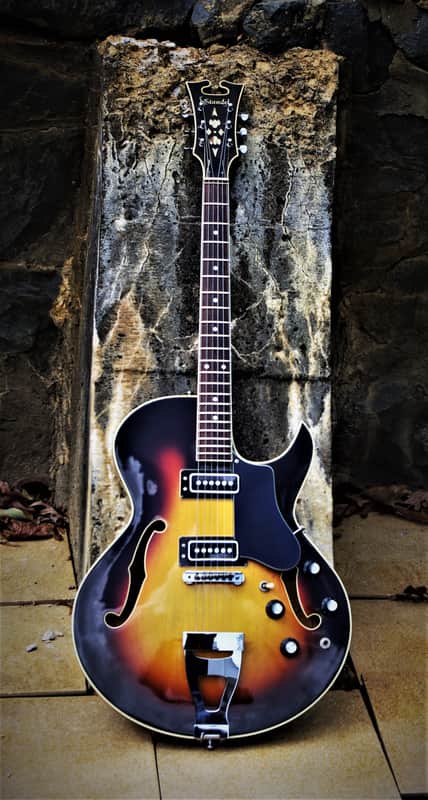
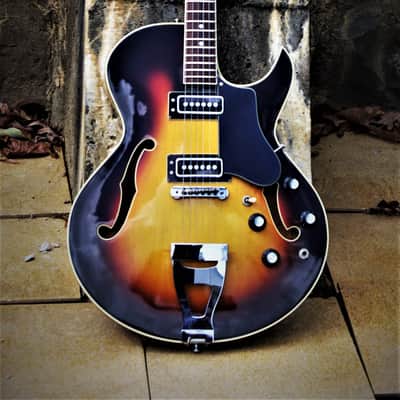
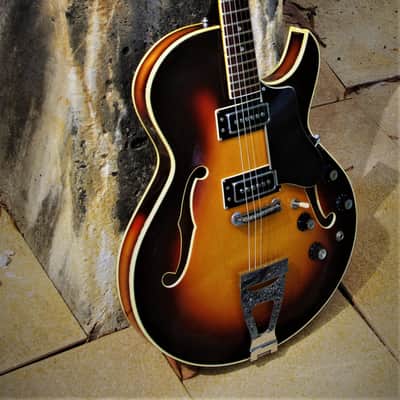
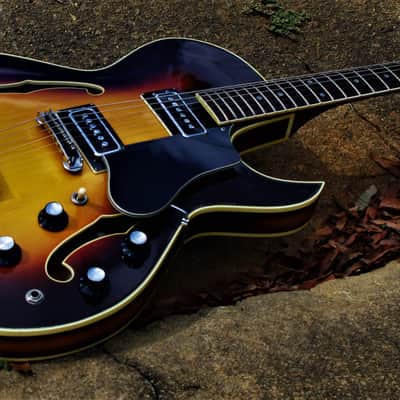
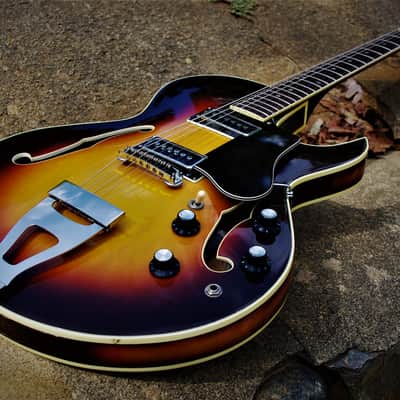
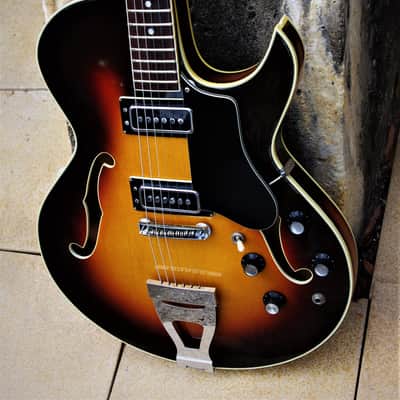
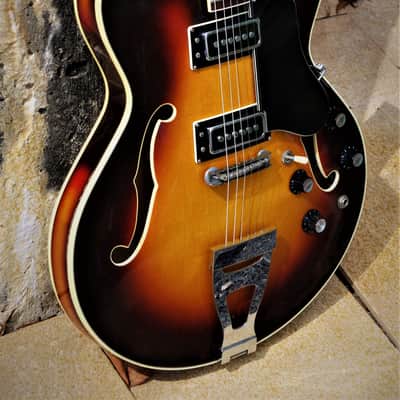
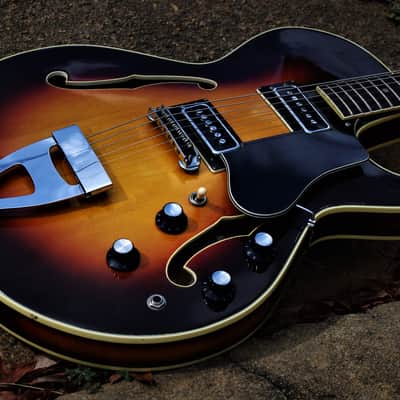
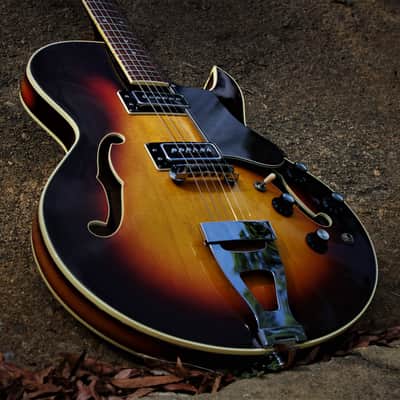
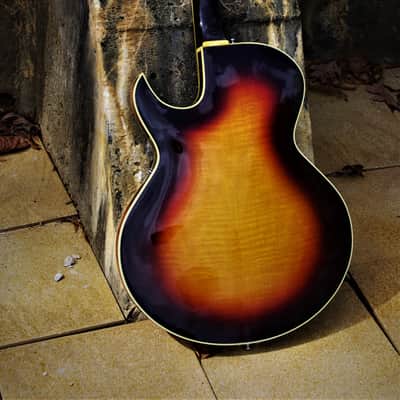
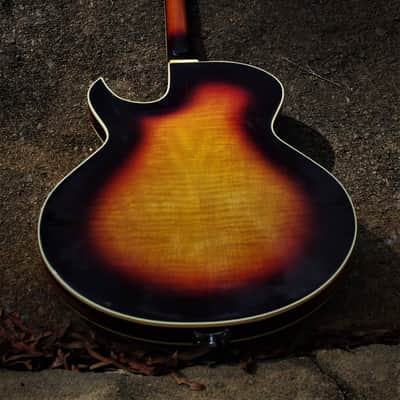
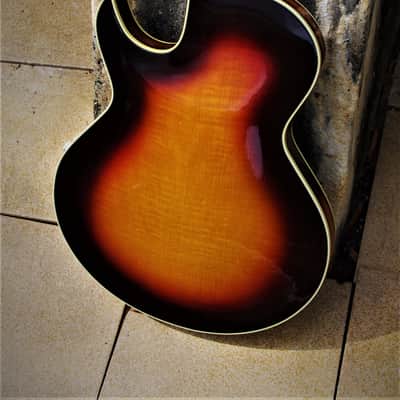
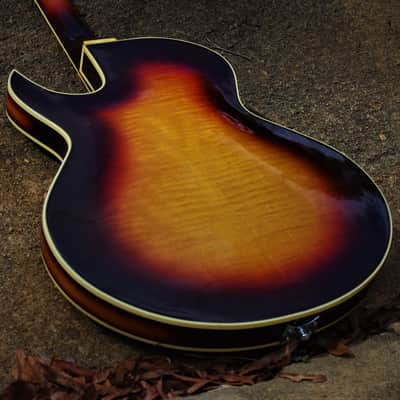
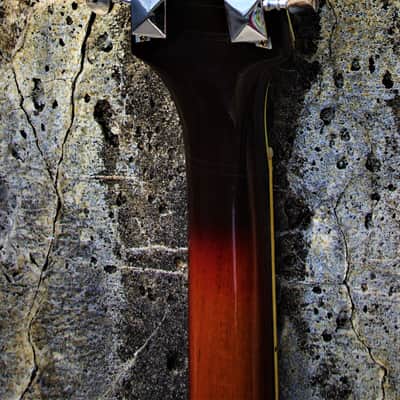
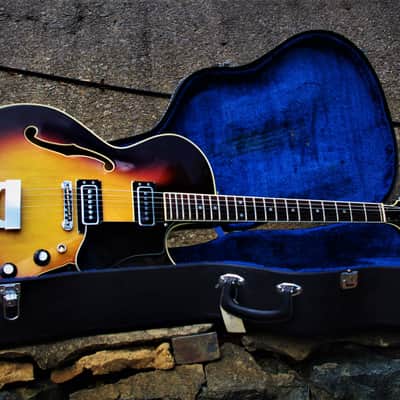
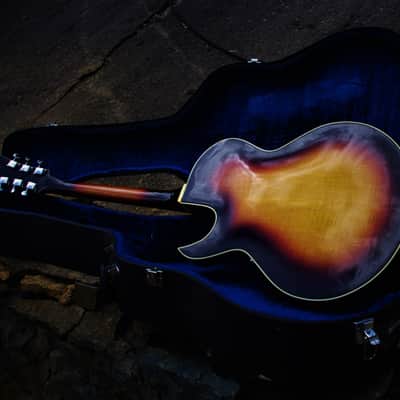
Standel 430-S 1968 - Sunburst. Very rare & collectible.
This seller has not set a shipping cost for France. Please contact them to ask about shipping.

Our users rate Reverb
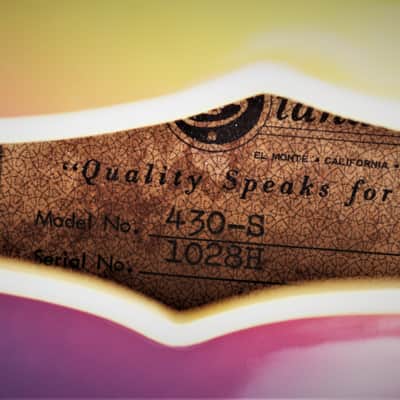
STANDEL · MODEL 430-S
Standard Line· Built by Sam Koontz — 1967
Single-Cutaway Thinline Jazz Guitar ·Serial No. 1028H · IGM Item #902
International Guitar Museum · Home of the Richard Davis Collection
This Standel Model 430-S is offered by the International Guitar Museum of Durham, North Carolina, which now houses the Richard Davis Collection — one of the world’s largest and most deeply curated private assemblages of vintage and custom guitars, and home to the largest single gathering of Standel/Koontz instruments anywhere. The guitar comes directly from that collection, accompanied by full IMIR provenance documentation and a Certificate of Authenticity.
Museum founder and curator Rich Davis describes the instrument in his own words:
“Another fantastic Standel by Sam Koontz. As I have said many times, Standel guitars are among the most underrated and undervalued instruments in the entire vintage market — and this one is a compelling case in point: a true jazz guitar, with smooth action and tones that are pure and fluid.
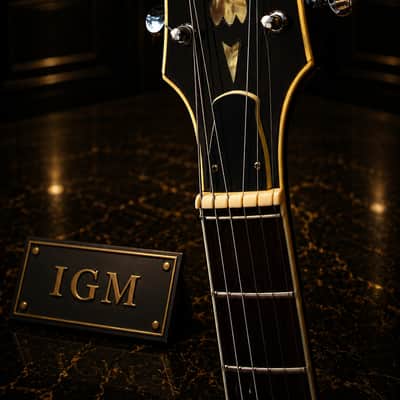
It is an ES-175-style single-cutaway player: light, beautifully balanced, and equally comfortable seated or standing. I especially like the tone and balance that come from this thinline hollow body paired with the legendary Rowe/DeArmond single coils. And I will single out the neck — it is one of the best-playing necks I have found on any guitar. Slim, with a radius that is off the charts, crested at the center and beautifully rounded. The photographs tell the rest of that story.”
Why This Guitar Matters — The Koontz Story
Most players know “Standel” as an amplifier name. Bob Crooks founded the company in Temple City, California in 1953, and after a few half-hearted attempts to enter the guitar business, he connected with the Harptone company of Newark, New Jersey — a respected case maker with some guitar-building background. Harptone commissioned a New Jersey luthier named Sam Koontz to design an entire line of hollowbody guitars and to build the production line itself, including some of the machinery used to make them.
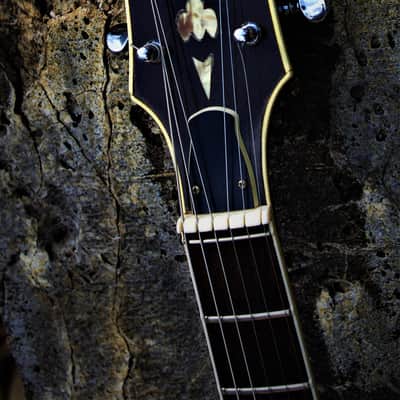
That detail matters. Koontz was not a factory hand. He was a master archtop builder working in the direct lineage of John D’Angelico and Jimmy D’Aquisto — a name now spoken in the same breath as those legends and Elmer Stromberg. His calling card was the distinctive “Koontz Crown” headstock, inspired by D’Angelico, and he was a genuine innovator: he devised sliding f-hole and soundhole doors to fight feedback on his archtops, the first of which is owned by jazz great Pat Martino. He was so devoted to his materials that he traveled to Germany to hand-select the tonewoods for his instruments.
Then there is scarcity. According to the best documentable data, only about 300 Standel/Harptone guitars were ever built, all between 1967 and 1969, across roughly twenty catalog models in three tiers — the Deluxe Artist Line (the 1000, 900, and 800 series), the Deluxe Line (the 500 and 700 series), and the Standard Line (the 600 and 400 series). This 430-S belongs to the Standard Line: the most straightforward of the three tiers, without the block inlays and master-volume appointments of the Deluxe and Artist guitars, but built to the very same Koontz design, the same construction approach, and the same Rowe/DeArmond electronics. With total production so small, no model in the catalog — Standard Line included — exists in any quantity. Every one of them is genuinely scarce.
And here is the part collectors are missing: after 1970, Koontz returned to Linden, New Jersey and hand-built fewer than 200 archtops under his own name — instruments now commanding prices up to $50,000 and rarely surfacing for sale. Those celebrated guitars grew directly out of the work he did here, for Harptone and Standel. This 430-S came from the same hands and the same eye, just a few years earlier — and it can still be acquired for a tiny fraction of that. The market simply has not connected the two yet.
These guitars were also unlucky in their timing. Introduced just as solid bodies were surging back, they became one of the great “lost” instruments of the 1960s almost as soon as they appeared. Had they arrived a few years earlier, they would be household names today.
About This Guitar
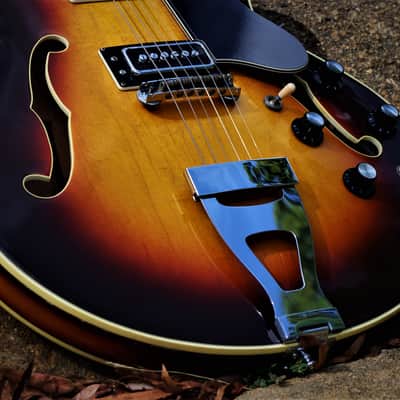
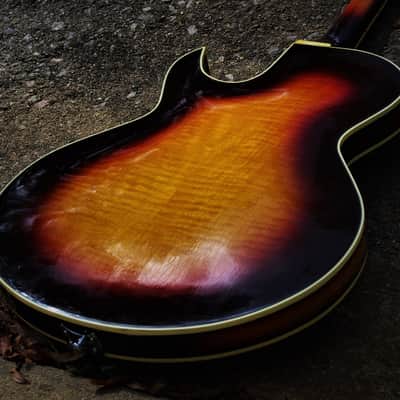
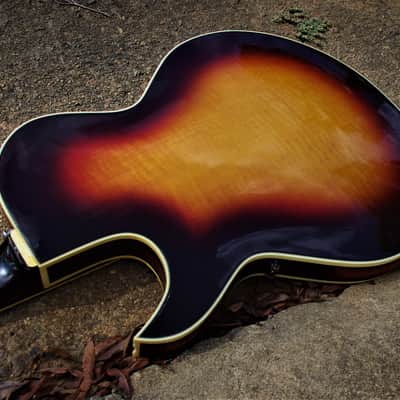
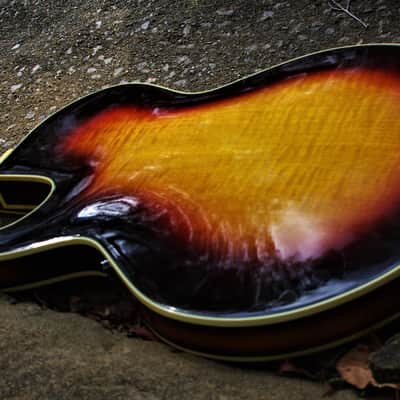
A single-Florentine-cutaway thinline archtop built squarely in the jazz-guitar tradition — my own comparison is to a Gibson ES-175. The body is light and exceptionally well balanced, with an arched maple top and sides and a flamed maple back. As noted above, the neck is the standout: a very slim mahogany profile with a superbly rounded, center-crested radius that makes this one of the easiest-playing necks in the collection. The voice is pure, fluid, and unmistakably 1960s — strong, full, and just a touch jangly — thanks to the Rowe/DeArmond single coils. One honest disclosure: the neck pickup is the original Rowe single coil, while the bridge pickup is a non-original single coil, closely matched in size to the Rowe unit and fitted to the original mounting ring and housing, but noticeably hotter. The tuners and remaining hardware are original.
Specifications
Maker / Year
Sam Koontz at the Harptone factory — 1967
Model / Line
Standel 430-S — Standard Line
Serial No.
1028H
IGM Item No.
902
Body
Thinline hollowbody, single Florentine cutaway
Top & Sides
Arched maple
Back
Flamed maple
Finish
Sunburst
Neck
Mahogany, very slim fast-playing profile; superbly rounded, center-crested radius
Fingerboard
Rosewood with pearl dot inlays
Headstock
Inlaid (Koontz design)
Pickups
Two single coils with individually adjustable pole pieces — neck: original Rowe/DeArmond; bridge: non-original replacement (see note)
Controls
3-way pickup toggle
Hardware
Original tuners; adjustable compensating roller bridge
Binding
3-ply body binding; 1-ply bound f-holes, neck, and headstock
Measurements
Nut 1-11/16″ ·Lower bout 16″ · Body depth at side 1-3/4″
Case
Original hard shell case (OHSC)
Condition
In good condition — an honest, naturally relic’d player that wears the usual marks of years of music-making: dings, dents, and scrapes throughout. Frets are good. The one departure from original specification is the bridge pickup, a non-original single coil fitted to the original ring and housing, as described above. Maintained in climate-controlled, museum-grade conditions. Includes the original hard shell case (OHSC).
Provenance Statement
This specimen is offered directly from the exhibit collection of the International Guitar Museum, Durham, North Carolina.
From the Richard Davis Collection. This instrument comes from the Richard Davis Collection — one of the world’s largest and most deeply curated private assemblages of vintage and custom instruments: more than 900 guitars and 200 amplifiers spanning 225+ brands from 12 countries, assembled over 27 years of purposeful, scholarly collecting, and home to the largest gathering of Standel/Koontz guitars anywhere. This is not inventory that passed through a dealer’s hands. It is a documented piece from a single, serious collection — selected, authenticated, and preserved by one curator.
Why provenance matters now. The market has spoken decisively on what documented provenance is worth. At Christie’s landmark Jim Irsay sale in March 2026, instruments with documented collection history realized $94.5 million — 136% above estimate — confirming what serious collectors already knew: a guitar’s story, chain of custody, and the collection it comes from are inseparable from its value. Single-owner pieces from major curated collections command meaningful premiums over otherwise comparable instruments, and that gap is widening.
Institutional-grade documentation. This instrument is accompanied by a formal Certificate of Authenticity and a transferable Title of Ownership registered with the International Musical Instrument Registry (IMIR), Luxembourg — providing clear chain of custody and documentation of a standard normally reserved for museum deaccessions.
When you acquire from the Richard Davis Collection, you acquire the provenance with the instrument. That value transfers with the title — and it does not expire.
This is a chance to own a genuine Sam Koontz jazz guitar — before the rest of the market does the math.
Available exclusively from the professionally curated, internationally renowned Richard Davis Collection — accompanied by Certificate of Authenticity and Title of Ownership issued by the International Musical Instrument Registry (IMIR).
| Listed | 2 days ago |
|---|---|
| Condition | Excellent (Used) Excellent items are almost entirely free from blemishes and other visual defects and have been played or used with the utmost care.Learn more |
| Brand | |
| Model |
|
| Finish |
|
| Categories | |
| Year |
|
| Made In |
|
| Right / Left Handed |
|
| Body Type |
|
| Number of Strings |
|
Product safety information may be available here.

