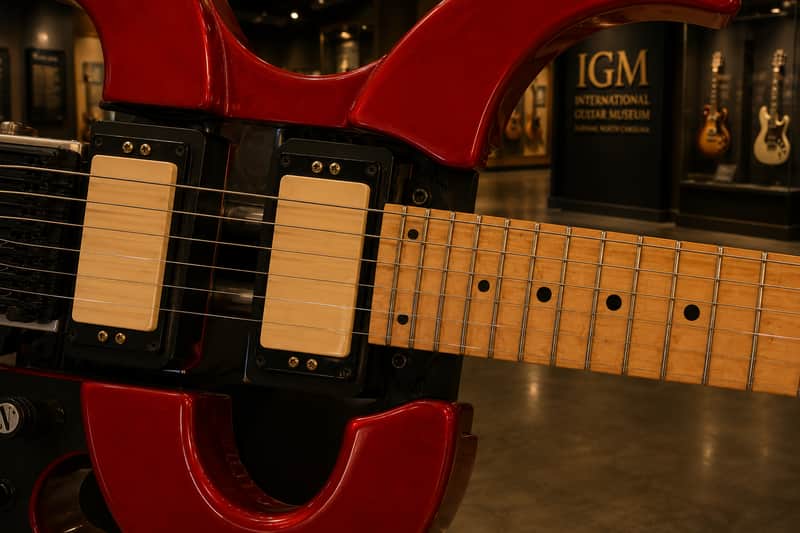
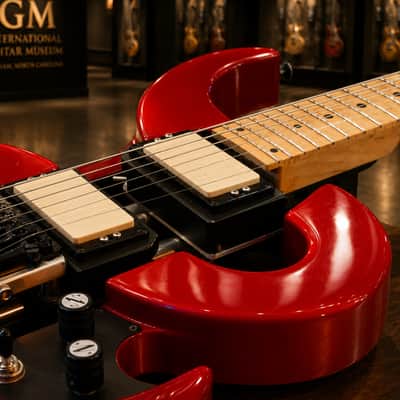
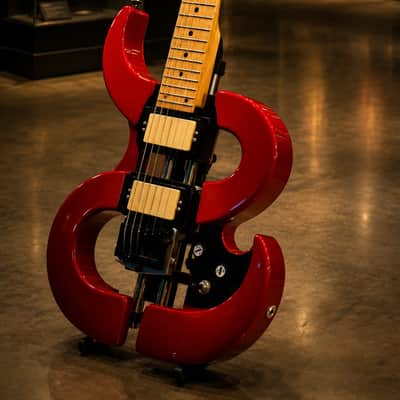
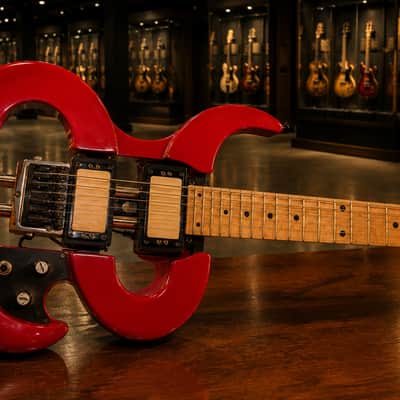
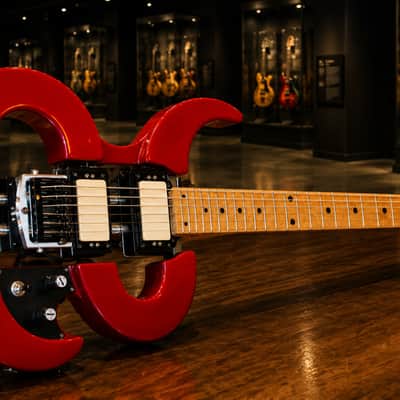
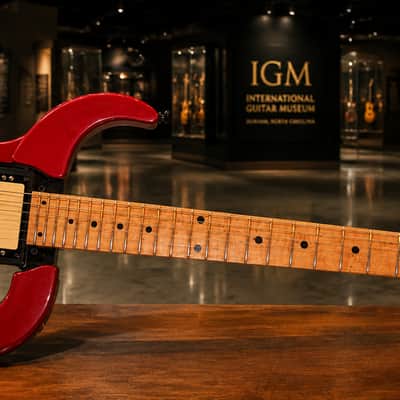
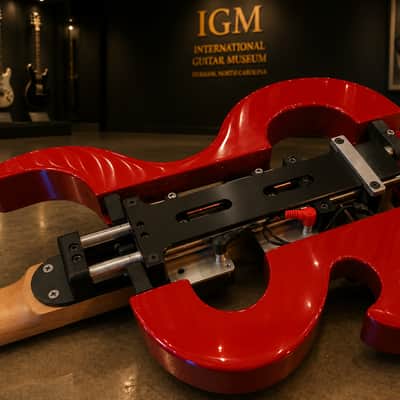
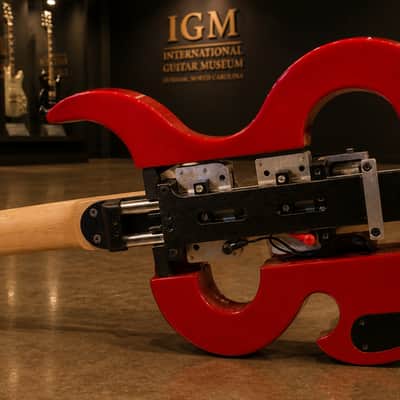
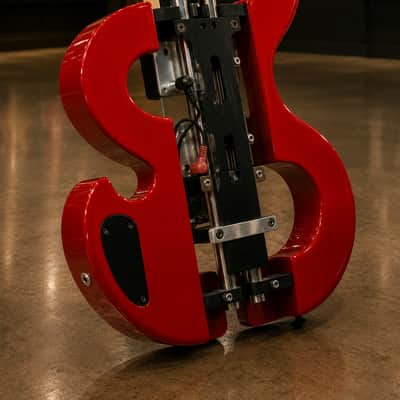
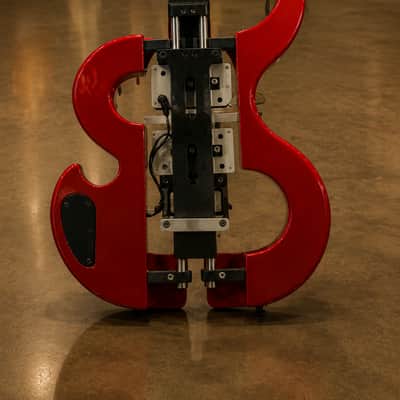
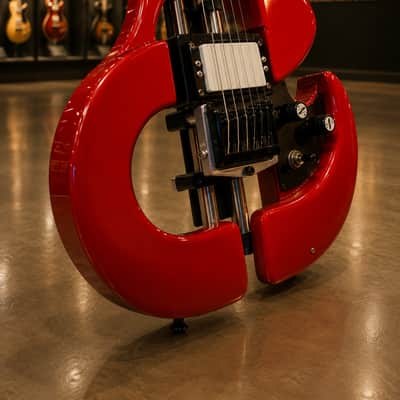
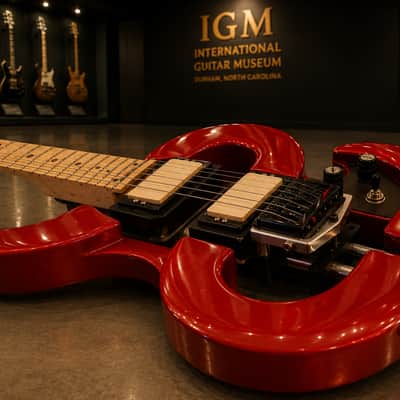
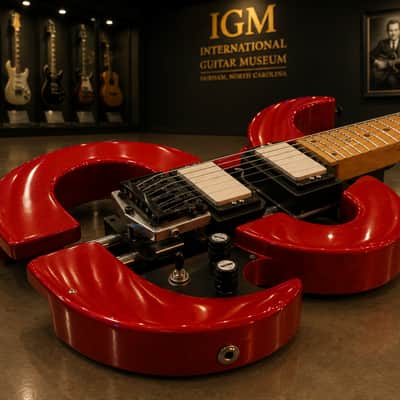
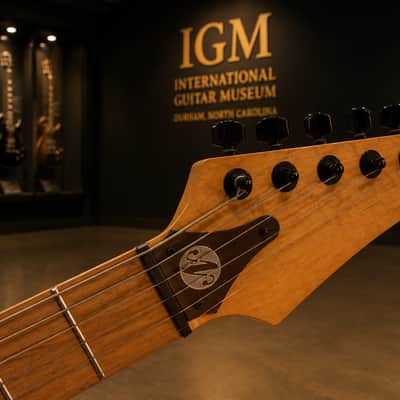
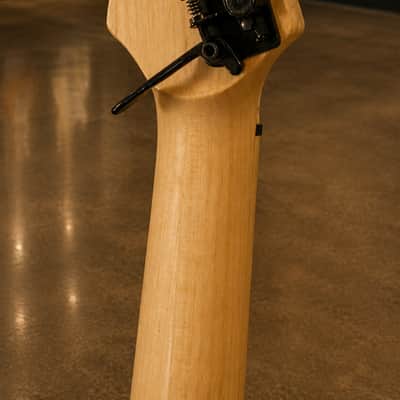

NORTON PYTHON 1992. Museum Specimen Guitar. Steel frame guitar. Ultra Rare. From Museum.
This seller has not set a shipping cost for Czech Republic. Please contact them to ask about shipping.

Our users rate Reverb
NORTON PYTHON GUITAR | DC1862 | 1992 — RESEARCH SUMMARY
This is a museum specimen guitar that is ultra-rare and highly valued due to its extraordinary design and build. This is an unusual guitar in that there is no other guitar like it in the marketplace.
THE BUILDER: HUGH M. NORTON & NORTON GUITARS
Norton Guitars is one of the most genuinely innovative and least recognized custom guitar companies in American instrument history — a situation that is now beginning to correct itself as serious collectors rediscover the brand.
The company is located in Belgrade, Montana, and is the technical brainchild of Hugh M. Norton, inventor and patent holder of the "Norton Mainframe System," co-founded alongside Ron Slowik. Norton is a graduate of the Berklee College of Music in Boston with a degree in Film Scoring and Musical Arrangement and holds a degree with honors in technical electronics — an unusual combination of musical and engineering credentials that directly informs the instruments he builds.
Early Norton models were branded HMN Custom Instruments before the company transitioned to the Norton name. The Python is one of Norton's registered model lines, alongside the Merlin bass, the Wraith bass, the NG4 guitar, and the NG5 hollow body.
Hugh Norton also toured and played with T-Bone Walker for two years, from 1972 until Walker's death — giving him direct experience at the highest level of professional performance that informed his approach to instrument design from a player's perspective, not merely an engineer's.
THE NORTON MAINFRAME — THE CORE INNOVATION
What separates a Norton guitar from every other instrument on the market is the patented Norton Mainframe System — the structural and tonal foundation of every instrument the company produces.
The Norton Mainframe is a skeleton made of T6061 aircraft-grade aluminum, around which the instrument's wood body, neck, and electronics are constructed. On the Wraith bass version, the tube frame incorporates radial wound carbon fiber tubes and machined anodized aluminum, producing what Norton describes as "extraordinary depth and clarity." The central assembly — bridge, neck, and pickups — can be tilted up to 27 degrees in either direction, allowing the musician to adjust the neck angle to personal preference, while simultaneously reducing stress on the hand and wrist during extended play.
This architecture is not a gimmick. It is a patented, engineered solution to problems that conventional wood construction cannot address: consistent resonance regardless of humidity or temperature, structural rigidity that maximizes sustain and harmonic transfer, and ergonomic flexibility unavailable in any traditional instrument. It is the kind of thinking that comes from someone with both a musician's ear and an engineer's mind.
THE PYTHON MODEL
The Python is Norton's flagship guitar model — the instrument that most directly demonstrates the Mainframe technology applied to a six-string electric platform. Your 1992 example, serial DC1862, is a particularly significant piece for the following reasons:
Early Production: 1992 places this guitar in the early years of the Norton company, when instruments were being built in very small numbers by hand in Belgrade, Montana. The serial number DC1862 suggests a structured serial system — the DC prefix likely indicating a specific configuration or finish code within the Python line.
The "DC" Designation: Based on Norton's known model architecture, the DC prefix most likely indicates a double-cutaway body configuration — the Python was offered in both single and double cutaway variants, with the double cutaway providing the upper fret access appropriate to the instrument's performance-oriented design intent.
Registered Trademark: The Python name was formally trademarked by Armond McCoy (Norton's business partner) in 2003, confirming its status as one of Norton's core and enduring model lines.
WHY THIS GUITAR IS SIGNIFICANT
Norton Guitars represents a chapter of American lutherie that the mainstream market has been chronically slow to appreciate — precisely because the company's approach is so different from conventional instrument building that buyers accustomed to traditional wood-only construction sometimes struggle to understand what they're looking at. That dynamic is changing rapidly.
The combination of aircraft aluminum structural architecture, hand American craftsmanship from Belgrade, Montana, and Hugh Norton's unique credentials — Berklee-trained musician, electronics engineer, touring professional — produced instruments of genuine technical distinction that are now increasingly sought by collectors who understand that the boutique instrument market of the early 1990s was producing work that has been undervalued for decades.
A 1992 Python in collectible condition, with its documented serial number and early-production provenance, sits at exactly the intersection of historical significance and market timing that defines a strong collector acquisition.
VALUATION NOTE
Norton Python guitars from this era are extremely scarce on the secondary market — so scarce that meaningful comparable sales data is limited. The rarity itself is a valuation factor and for this guitar, a 1992 Norton Python in good to excellent condition should be valued in the $10,000–$15,000 range, with the IMIR COA and Richard Davis Collection provenance supporting the upper end of that band. As Norton's reputation continues to grow, these early production examples will only become more difficult to find.
| Listed | 8 days ago |
|---|---|
| Condition | Excellent (Used) Excellent items are almost entirely free from blemishes and other visual defects and have been played or used with the utmost care.Learn more |
| Brand | |
| Model |
|
| Finish |
|
| Categories | |
| Year |
|
| Made In |
|
| Right / Left Handed |
|
| Number of Strings |
|
| Body Type |
|
Product safety information may be available here.

