


Soyuz Launcher Inline Mic Activator & Gain Booster for Dynamic & Ribbon Mics
This seller has not set a shipping cost for Denmark. Please contact them to ask about shipping.


30-Day Return Policy
Enjoy peace of mind with your new gear
Our users rate Reverb
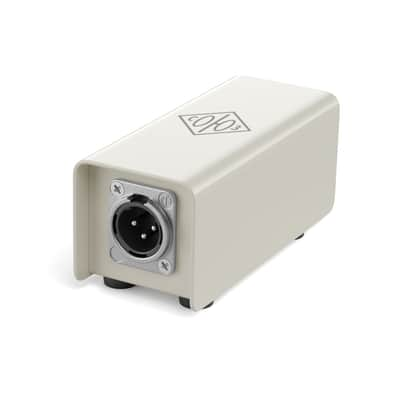
The Soyuz Launcher is an inline microphone activator and gain booster that adds +26 dB of transformer-colored gain ahead of your preamp, drawing 48V phantom power and built for passive dynamic and low-output ribbon microphones. It fixes the quiet, thin, hissy signal you get when a low-output mic leaves your preamp straining at full gain, adding clean level right at the front of the signal chain with a vintage, transformer-driven color rather than a sterile lift. One XLR connector on each end, no batteries required. The thin, distant sound is replaced by weight, warmth, and usable level.
What an Inline Mic Activator Actually IsAn inline microphone activator is a self-contained gain stage that sits in the signal path between your microphone and your preamp — mic plugs into the Launcher, the Launcher plugs into your interface or console. Unlike turning up the preamp, which amplifies everything after the fact, an activator adds clean gain right at the front of the chain, before the weak signal has to travel through cables and into a preamp that would otherwise be straining. The Launcher is an XLR-to-XLR unit (male input, female output) in a lightweight metal body, so it drops into any standard mic line with nothing to configure.
Why Low-Output Dynamics and Ribbons Sound Thin — and How +26 dB Ahead of the Preamp Fixes Both Level and NoisePassive dynamic and ribbon microphones put out a much weaker signal than active condensers — often 20 dB or more lower. To hear them at a usable level, you have to crank a modest interface or console preamp near the top of its range, and that is where two problems appear: many modest preamps simply run out of clean gain before the mic is loud enough, and every preamp adds its own hiss that gets amplified right along with the quiet signal, so you hear noise instead of a clean, full sound. Placing the Launcher's +26 dB ahead of the preamp solves both at once. The weak mic signal is boosted to a healthy level before it ever reaches your preamp, so you can turn that preamp down into its quiet, clean sweet spot. The result is more level and a lower noise floor — the mic sounds full and present instead of thin and hissy.
Colored, Not Clean: Why the Transformer Is the PointPlenty of inline boosters aim for a purely transparent lift. The Launcher deliberately does more: its gain comes from a custom hand-wound transformer, and that transformer is the tone. As the signal crosses it, it picks up the warm, saturated, console-style color that engineers associate with classic vintage preamps — fullness and character, not just volume. That is why people reach for it over a clean booster: it rescues the level and adds a flattering vintage warmth in the same move. If you want a dead-neutral boost, this is the wrong tool on purpose; if you want your dynamic or ribbon to sound bigger and richer, the coloration is the whole appeal.
Phantom-Powered — and Why It Can't Feed a CondenserThe Launcher runs entirely on standard 48V phantom power from your interface or console — no batteries, no wall supply. Here is the critical detail: it requires that 48V to operate, and it does not pass phantom power downstream to the microphone. That is by design and it defines what the Launcher is for. Passive dynamics and ribbons need no phantom power to work, so the Launcher gives them the gain they crave while safely consuming the 48V itself. A condenser microphone, by contrast, needs phantom power delivered to it to function at all — and since the Launcher blocks phantom from reaching the mic, it cannot power a condenser. Use it only with passive dynamic and low-output ribbon mics; sending phantom into some vintage ribbons through other paths can even damage them, so the Launcher's block is a feature, not a limitation.
On Podcasts, Broadcast Dynamics, Ribbons, Snare, and AmpsThe Launcher's home turf is any low-output mic on a preamp that can't quite feed it. Podcasters and broadcasters running big broadcast-style dynamics into modest interfaces get the loud, clean, radio-ready level they're missing, plus a warmth that flatters speech. Ribbon owners finally hear their mic's full body instead of a faint, dark whisper. In the studio it puts console-style color and gain on a snare drum or in front of a cranked guitar cabinet, and because it works on live and PA consoles too, it earns its place on stage as readily as in the tracking room. Anywhere a passive mic sounds thin and quiet, the Launcher makes it big.
Who the Soyuz Launcher Is ForIt is for the podcaster or broadcaster whose favorite dynamic sounds weak and noisy on an entry-level interface and wants level and tone in one box. It is for the ribbon or dynamic owner who wants genuine vintage-console warmth without buying a full outboard preamp. And it is for the engineer who already has enough gain but wants the color — the hand-wound transformer character that makes a source sound fuller and more finished. Just remember the one rule: passive dynamics and ribbons only, never condensers. Within that lane, the Launcher turns a thin, quiet signal into a warm, present, professional one.
| Condition | Brand New (New) Brand New items are sold by an authorized dealer or original builder and include all original packaging.Learn more |
|---|---|
| Brand | |
| Model |
|
| Categories | |
| Year |
|
Product safety information may be available here.

