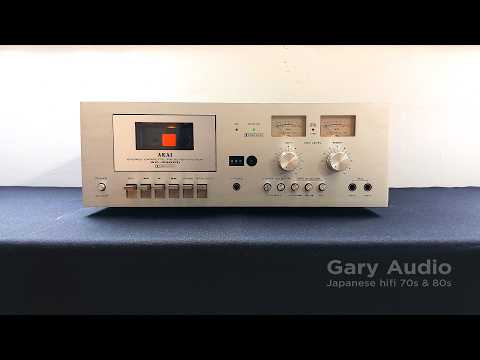
Akai CS-705D 2-Head Stereo Cassette Deck CS 705 D Japan 1976

I nostri utenti valutano Reverb
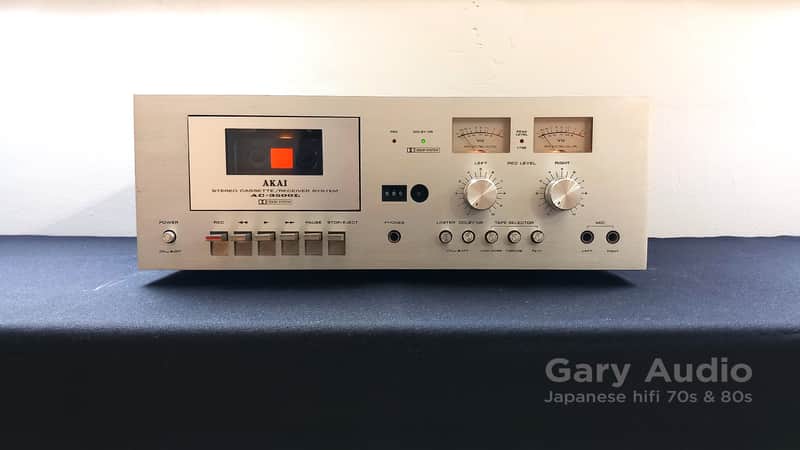
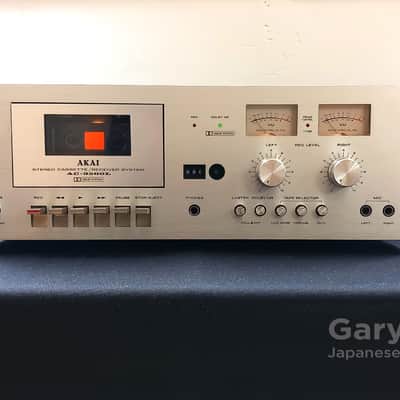
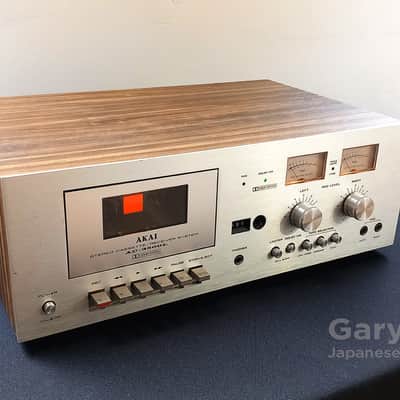
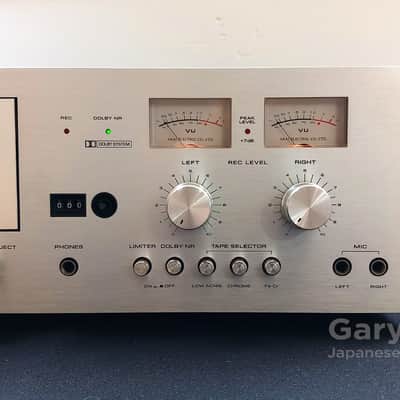
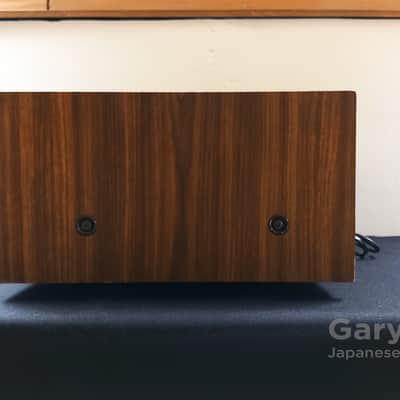
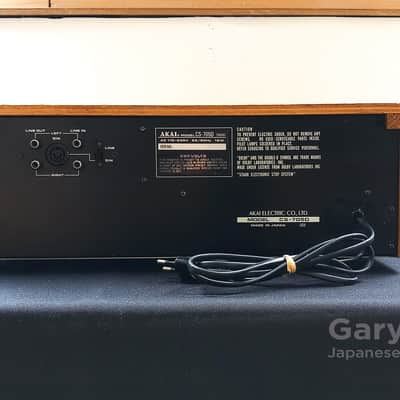
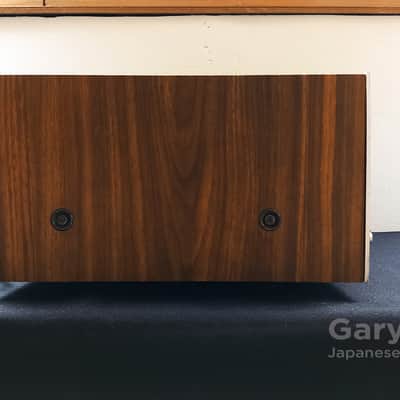
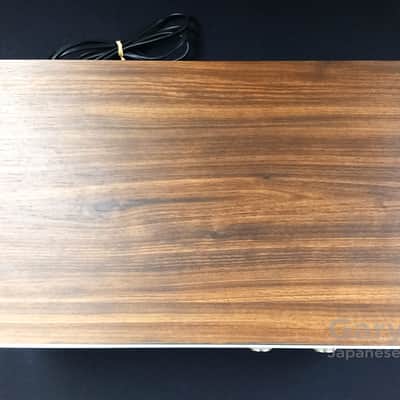
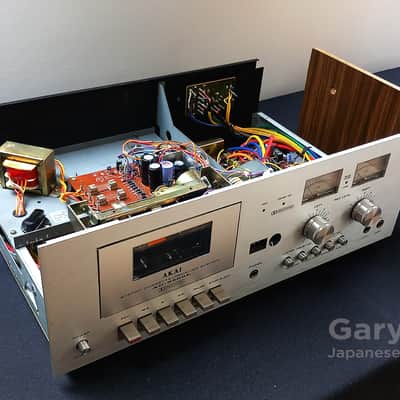
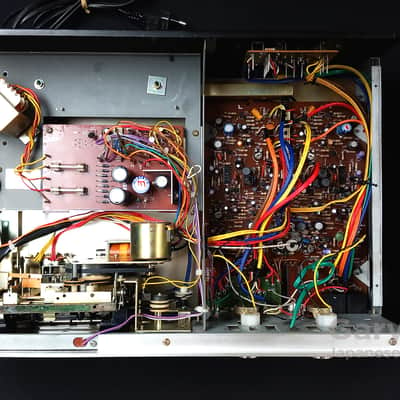
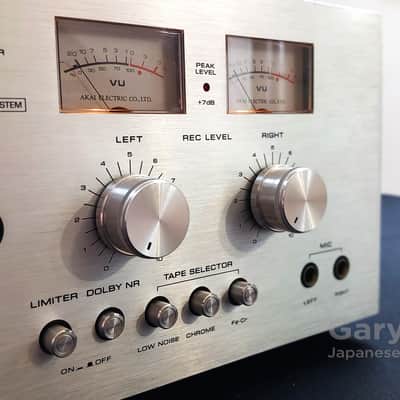
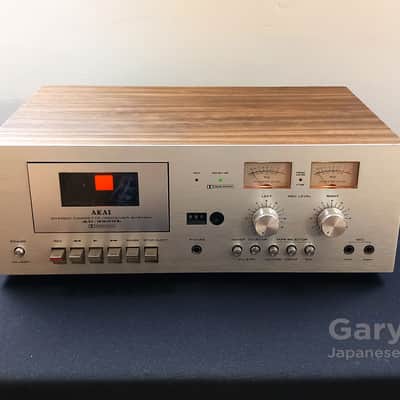
A beautifully built Akai tape deck from the 70s. The CS-705D cassette recorder was introduced in 1976. Externally the CS-705D has an elegant look with brushed aluminum front panel, smooth turning metallic record level knobs and wood case. Under the case we will find a mechanically operated one motor transport with multi belt and idler transmission, a characteristic of these early mechanisms. The heads are permalloy heads that can handle Low-Noise (Normal), Chrome and Ferro-Chrome tapes. Frequency response is 35-14000 Hz (LH), 35-15000Hz (Chrome) and 30-17000 (FeCr). From a distance the VU meters might appear slightly small but that's only because of the very large front panel (440*165 mm). In practice these are very nice, easy to read VU meters with a "classic" warm lighting. On the front panel we can find two microphone inputs while at the back we can find both RCA and 5-pin DIN standard sockets with a selector switch for the one to be used.
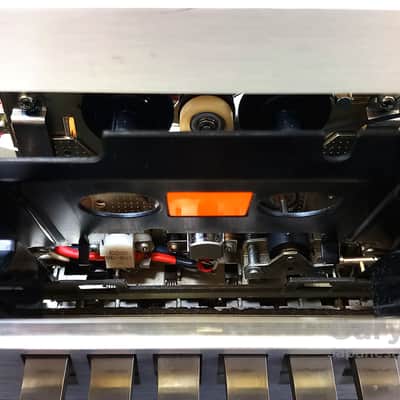
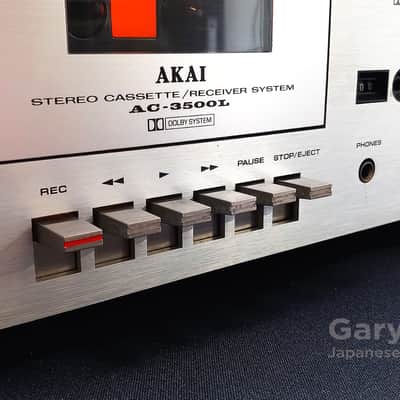
Recordings can be made with (or without) the use of the Dolby noise reduction circuit while the recording level can be adjusted independently for left and right channel. The CS-705D was also available in black finish and it was usually presented as a matching unit for Akai receivers. One interesting is the way the cassette door is constructed.
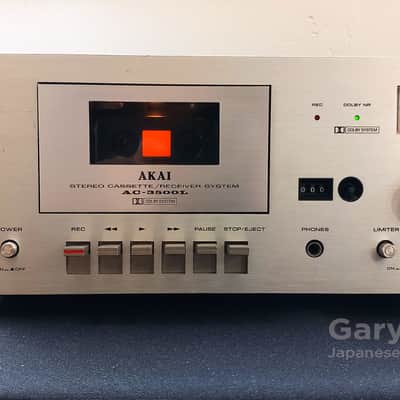
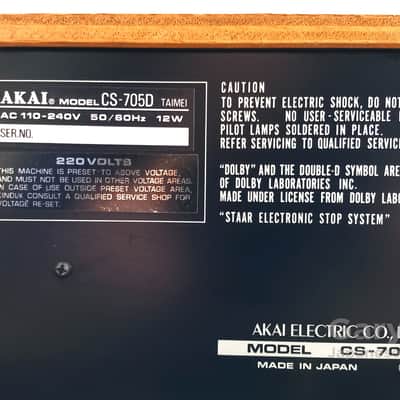
Even though it's only a basic model it has a very solid construction. This is a completely cleaned and restored cassette deck with new belts and idler tires. Recording and playback tested, all functions work properly. I only discovered after restoration that the model number is different on the cassette door (AC-3500L) and on the back panel (CS-705D). It’s probably because the cassette door was replaced from a AC-3500 (L) model that is an integrated tape deck / receiver Akai construction from the late 70s. Actually developed from the CS-705 model so I kept the CS-705D model name.
Specifications
Manufacturer: Akai Electric Co., Ltd.; Tokyo
Model: CS-705 D
Years of Manufacture: 1976-1978
Type: 2-head, stereo cassette deck
Track System: 4-track, 2-channel stereo
Made in: Japan
Color: Silver, housing wood
Dimensions (WHD): 440 x 165 x 300 mm
Weight: 6,8 kg
Technical data:
Type: 2-head, single compact cassette deck
Track System: 4-track, 2-channel stereo
Tape Speed: 4.75 cm/s
Heads: 1 x record/playback, 1 x erase
Motor: electronically speed controlled DC
Tape Type: type I, CrO2, FeCr
Noise Reduction: B
Frequency Response: 35Hz to 16kHz (FeCr tape)
Signal to Noise Ratio: 61dB (dolby B)
Wow and Flutter: 0.08%
Total Harmonic Distortion: 1.5%
Input: 70mV (line), 0.3mV (mic)
Output: 0.41V (line)
Semiconductors: 24 x transistors, 25 x diodes, 2 x IC
Tape selector: Fe, FeCr, CrO2
Shape: Book-shelf unit
Noise reduction: Dolby-B
Special features:
Recording level limiter
Peak level indicator
Automatic end stop
Electronically controlled DC motor
International shipping in a hard cardboard box, carefully and safely lined.
Questo articolo è venduto "Come da descrizione”
Questo articolo è venduto "Come da descrizione" e non può essere restituito a meno che non arrivi in condizioni diverse da come è stato descritto o fotografato. Gli articoli devono essere restituiti nelle condizioni originali in cui sono stati spediti, con tutti gli imballi originali.Scopri di più.
| Pubblicato | 2 mesi fa |
|---|---|
| Condizione | Eccellente (Usato) Gli articoli "Eccellenti" sono quasi completamente privi di difetti e altri difetti visivi e sono stati suonati o utilizzati con la massima cura.Scopri di più |
| Marchio | |
| Modello |
|
| Categorie | |
| Anno |
|
| Prodotto in |
|
Le informazioni sulla sicurezza del prodotto sono disponibili qui.

Protezione di Reverb
Resi semplici, transazioni sicure, assistenza di persone in carne e ossa
Scopri di più