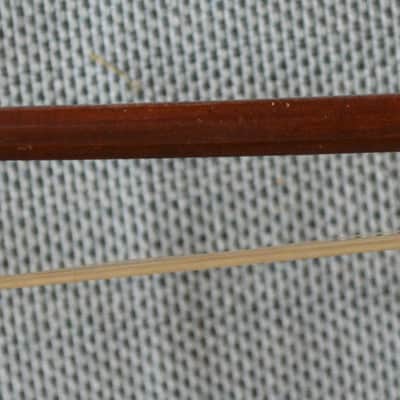
Unbranded 3/4 Octagonal Violin Bow, 58g

Our users rate Reverb
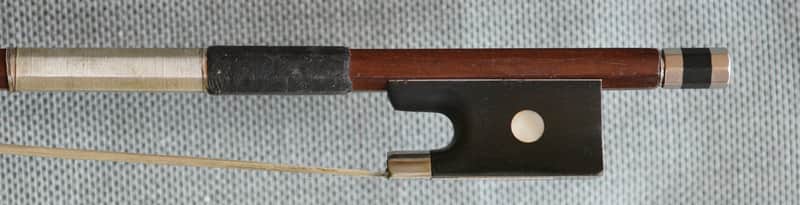
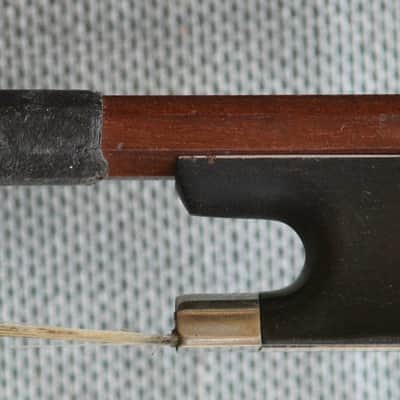
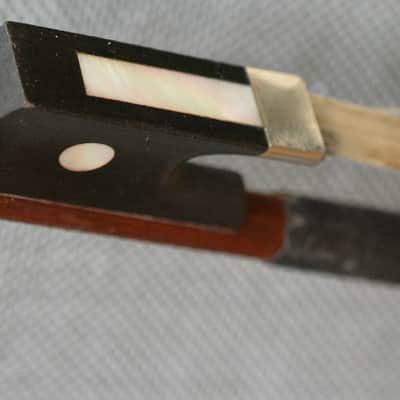
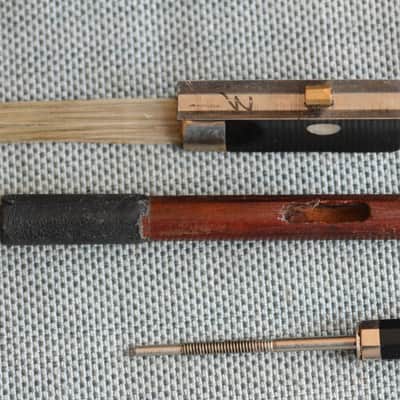
Handsome Octagonal violin 3/4 bow with ebony frog, Total length of 680mm, 58g including hair, balance point of 158mm, and Lucci velocity 4481m/s (bv75_22)
Mass – the weight of the bow including hair and lapping or grip
Length – measured from tip to end of adjuster or button
Balance point -measured from the front of the frog
Sound velocity – the velocity of sound travelling through the wood. Higher velocity (over 4800 m/s) correlates to a more responsive bow.
A few comments on internet purchases of bows for concert strings. Bows have several variables (Responsiveness, stiffness, density, geometry, aesthetics) that impact how they are perceived by the player and the listener. Bow makers, musicians, and technologists have for many years worked to arrive at rational measures for how a bow will function, but even today, the challenge remains to reliably understand how a bow may perform outside of actually using it. At Hopestreet Music Emporium, we understand the uncertainty that buyers rightfully have in paying for a bow that may look great or may cost a lot but not live up to performance expectations. Stiffness has been a popular measure for predicting playing characteristics for a particular bow, however, it is well established that both stiff and flexible sticks can be quite responsive. Responsiveness has been the most tricky aspect to quantify. In 1983, Giovanni Lucchi, a very well regarded bow maker in Cremona Italy developed a tool and method to measure the velocity of sound through tone wood and did considerable experimentation to correlate sound velocity with bow responsiveness. In the years since, many bow and instrument makers have used tone wood velocity as a basis to select woods and evaluate bow performance. To help buyers know that the bow they purchase will be the bow they want and expect, we include several key measurements including bow mass (lighter bows can be more lively and easier for fast passages, but may require more force to get volume), length (bowmakers have used different lengths, and some players prefer longer or shorter bows for their repertoire), point of balance (some players prefer a heavier tip, etc), and sound velocity through the bow. Each element influences the bow and contributes to the responsiveness of the bow.
With respect to aesthetics, some very handsome bows have very modest playability, and some very modest looking bows (for example with plain ½ lined frogs or simple leather grip vs silver lapping) can be excellent. The challenge to distinguish good bows from poor becomes even greater now with a number of reproductions being made to look like bows of fine old makers.
Here’s wishing you success in your search for a great bow.
| Listed | 4 years ago |
|---|---|
| Condition | Very Good (Used) Very Good items may show a few slight marks or scratches but are fully functional and in overall great shape.Learn more |
| Brand | |
| Model |
|
| Finish |
|
| Categories | |
| Year |
|
Product safety information may be available here.