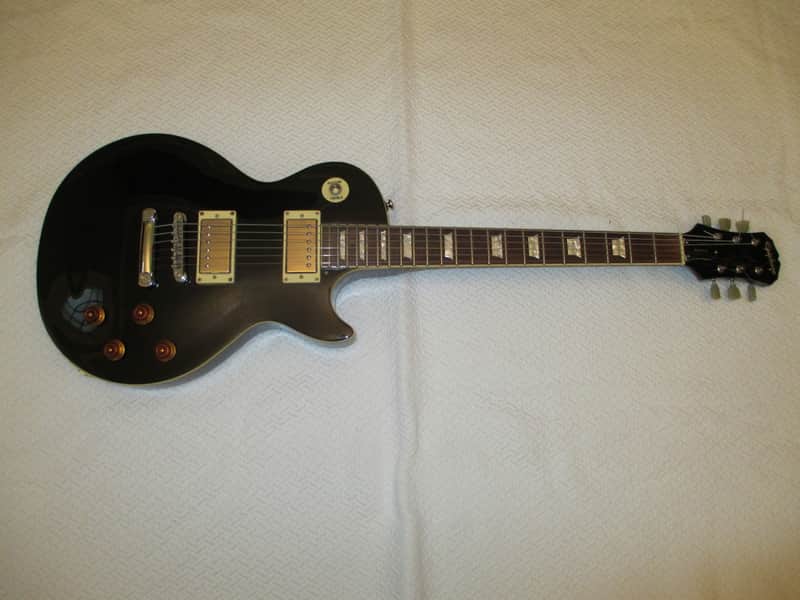
Epiphone/Gibson Les Paul 2001 Black Quality Korean not China
Price$425
+ $35 Shipping
This listing has ended
See similar gear from other Reverb sellers
Listed:13 years ago
Views:974
Saves:3
Offers:0

Buffalo, NY, United States
Our users rate Reverb
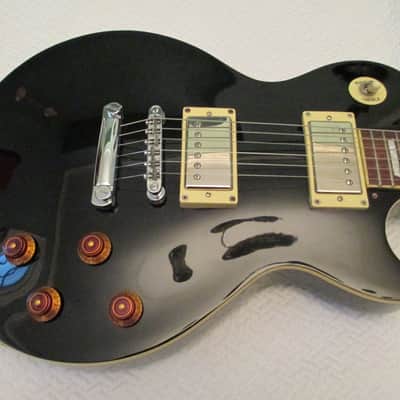
For Sale is a Black Beauty Epiphone Les Paul Guitar which has been upgraded with Gibson U.S.A. 57 Classic Pickups.I will attach the pickguard before shipping.
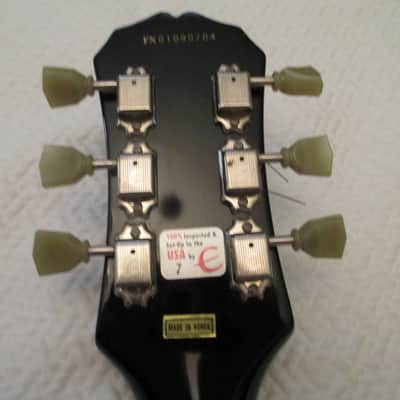
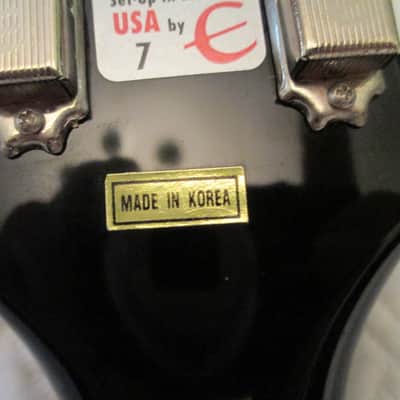
This particular guitar was built in 2001 in Korea.
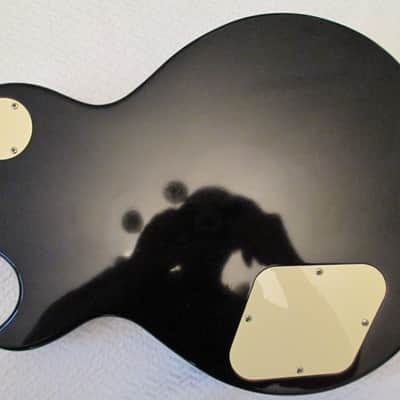
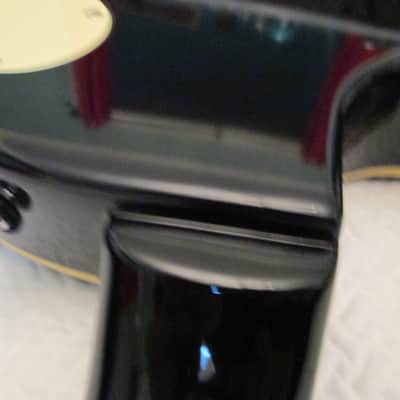
There are no Gouges or major marks on the body, just an unnoticeable ding or two.
Sorry no hard case, However I do have a gig bag that I will throw in so that your guitars finish will remain Beautiful.
I also ship in a double boxed guitar box and use Bubble Wrap.
Good Luck and happy hunting.
PLEASE READ this article before buying a Chinese made Les Paul.
Asian imports built under the name of Epiphone first came from Japan. Sometime in the eighties, Gibson shifted it’s Epiphone operation to Korea. Around 1989, Gibson began to utilize Epiphone as a budget brand to develop affordable versions of classic Gibson shapes. By the early nineties, Epiphone’s line of guitars was in full force, with the Epiphone Les Paul Standard and the Epiphone G-400 (SG). As more models emerged throughout the nineties, Epiphone began to rise in popularity.
By 2002, Gibson had left Korea in favor of an exclusive Epiphone plant in China. This decision was said to be made in order to build a better, more consistent guitar. Some argue this was a decision by Gibson to lower labor costs. Today, this question haunts forum after forum; Which Epiphones are better? Korea made or China made Epiphones. As a former music store employee and an owner and player of many different Epiphones, I write this article to share my experience.
My Experience
My first experience with Epiphone was in the summer of 1995. I was looking for my first “real” guitar with about 300 dollars to spend. Even in the mid nineties 300 dollars did not fetch much. In a local music store, a used Epiphone G-400 caught my eye. This G-400 was probably one of the first ones made, a set neck heritage cherry color with dot inlays, the smaller pick guard, and bare bones pickups. I purchased the guitar and would use it live and in the studio until about 1999.
It was in the fall of 1999 when it was replaced by my 1999 Epiphone Les Paul Custom which was also made in Korea. I bought this guitar new from the Musicians Friend catalog (pre-internet) for 700 dollars (with case). The guitar was and still is a beautiful and faithful reproduction of the Gibson classic.
Thirteen years later, this is still my primary guitar, even after a slew of other guitars which have come in and gone out of my life. I can honestly say, I have not played a Gibson that can touch it in terms of playability or sound. To be fair the bridge pickup was replaced with a Seymour Duncan JB model.
My experience with Chinese made Epiphones is just as extensive as with it’s Korean counterparts. I have owned and sold a MIC 2006 Epiphone Les Paul Standard and currently own a MIC 2010 Epiphone 1966 SG Reissue (G-400). I sold my MIC Les Paul after the headstock shattered from a minor fall on a carpeted floor. A fall that my old MIK G-400 survived on a hard wood floor.
My MIC G-400 is a beautiful guitar that looks pretty much exactly like a Gibson SG Standard sans the headstock shape and plastic binding. I would also add that I did own a 1997 Gibson SG Standard for a few years that I base this comparison on, however this article is not about Gibson Vs. Epiphone.
My Take On The Differences
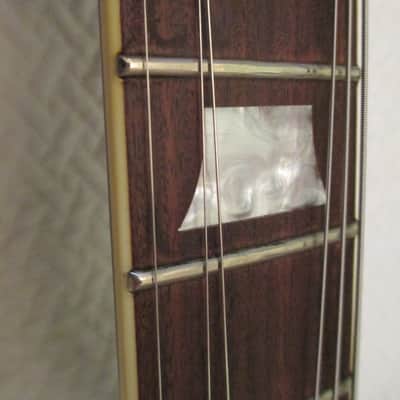
As an owner and player of many Epiphones from both Korea and China I favor those that were made in Korea. I have found that the craftsmanship, particularly on the fret board is nearly perfect on Korean models, whereas Chinese models have many defects where the inlays are set.
Korean models tend to be more consistent with each other while Chinese models tend to have varying weights which suggest inconsistent wood choices. The inspection process for Korean made Epiphones seems to have been more stringent based on the variety of defects I have seen on their Chinese counterparts.
Other Differences
When making the comparison between Chinese and Korean made Epiphone guitars, one should look at the numbers. When Epiphones were built in Korea, the average number of guitars built came to around 4500 per year. That’s 375 guitars per month or about 12 guitars per day. Epiphone in China builds just over 10,000 guitars per year. That’s about 835 guitars per month or about 28 guitars per day.
Demand for low to mid cost guitars has increased the output of Epiphone. This means these guitars must be built faster under tighter deadlines, with less attention to detail. I would also venture to say that Korean guitar builders enjoy a much higher standard of living than Chinese guitar builders. Happier, better paid employees with more time to create a product usually equals a better executed instrument.
My Opinion
Many see (myself included) Epiphone Korea as the golden age of Epiphone production under Gibson ownership. Epiphones made in the nineties in Korea are fantastic instruments second only to the Japanese Elitist Series. The Korean Epiphones made in the nineties were often contracted under the Samick company which is exceptional at guitar building. In contrast, I feel many of the newer Epiphones coming from China and Indonesia are rushed in order to meet consumer demand.
Buying An Epiphone
If I were looking for an Epiphone guitar, I would definitely be looking at the used market for a Korean made version manufactured sometime between 1991 and 1999. This seems to be the point where Epiphone Korea had ironed out any wrinkles in production. In 1998 and 1999 Epiphone received awards for it’s production quality. Many consider these two years to have been the peak of Korean Epiphone quality. I feel from 2000 or 2001 onward Epiphones may have begun to slide in quality as the plans to move production to China were probably already in motion.
Finding A MIK Epiphone
These Epiphones can be difficult to find for a few reasons. Remember, Epiphones made during this era were made in much smaller numbers than newer Epiphones. Based on the math, there were likely 60,000 or less guitars total made during the Korean era. While this number seems high, many of these guitars by now have been broken or modified. The ones that are in mint condition are being held onto closely. MIK Epiphones are beginning to slowly rise in value and demand due to their good reputation.
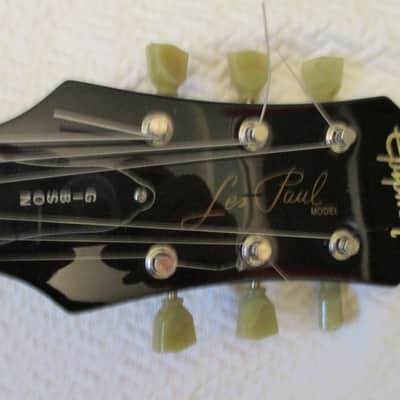
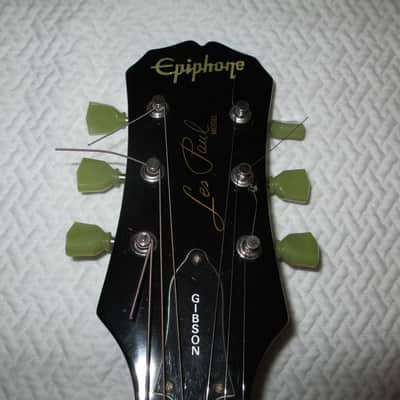
If you find a Korean Epiphone for a great price, don’t hesitate to buy. These guitars will be fading away from the marketplace over the next 20 years. It is important to confirm authenticity of Epiphone guitars to ensure you are buying an MIK Epiphone. Utilize the online resource, The Guitar Dater Project. Here you can enter the serial number of any Epiphone guitar to confirm its origins. Another thing to look at is the truss rod cover. If the cover says “GIBSON” written vertically, this suggests the guitar is Korean.
If the truss rod cover says the model of the guitar, this suggests it is Chinese. There may be a few Korean models that used this truss rod cover, but Epiphones from the nineties strictly used the “GIBSON” branded truss rod cover. I think this also compounds the point of the argument; Gibson was comfortable putting their name on Korean Epiphone guitars. Beware that truss rod covers can be purchased for a few dollars on Ebay so always confirm the serial number before buying.
In Conclusion
If you want an Epiphone, look at the Korean made variety. You will have a guitar that was unrushed, built with care, and made by a happier employee. You will also likely save money when compared to buying a newer Epiphone.
Andrew Downs is the author of 21st Century Guitar Trader, a survival guide to music gear trading.
This particular guitar was built in 2001 in Korea.
There are no Gouges or major marks on the body, just an unnoticeable ding or two.
Sorry no hard case, However I do have a gig bag that I will throw in so that your guitars finish will remain Beautiful.
I also ship in a double boxed guitar box and use Bubble Wrap.
Good Luck and happy hunting.
PLEASE READ this article before buying a Chinese made Les Paul.
Asian imports built under the name of Epiphone first came from Japan. Sometime in the eighties, Gibson shifted it’s Epiphone operation to Korea. Around 1989, Gibson began to utilize Epiphone as a budget brand to develop affordable versions of classic Gibson shapes. By the early nineties, Epiphone’s line of guitars was in full force, with the Epiphone Les Paul Standard and the Epiphone G-400 (SG). As more models emerged throughout the nineties, Epiphone began to rise in popularity.
By 2002, Gibson had left Korea in favor of an exclusive Epiphone plant in China. This decision was said to be made in order to build a better, more consistent guitar. Some argue this was a decision by Gibson to lower labor costs. Today, this question haunts forum after forum; Which Epiphones are better? Korea made or China made Epiphones. As a former music store employee and an owner and player of many different Epiphones, I write this article to share my experience.
My Experience
My first experience with Epiphone was in the summer of 1995. I was looking for my first “real” guitar with about 300 dollars to spend. Even in the mid nineties 300 dollars did not fetch much. In a local music store, a used Epiphone G-400 caught my eye. This G-400 was probably one of the first ones made, a set neck heritage cherry color with dot inlays, the smaller pick guard, and bare bones pickups. I purchased the guitar and would use it live and in the studio until about 1999.
It was in the fall of 1999 when it was replaced by my 1999 Epiphone Les Paul Custom which was also made in Korea. I bought this guitar new from the Musicians Friend catalog (pre-internet) for 700 dollars (with case). The guitar was and still is a beautiful and faithful reproduction of the Gibson classic.
Thirteen years later, this is still my primary guitar, even after a slew of other guitars which have come in and gone out of my life. I can honestly say, I have not played a Gibson that can touch it in terms of playability or sound. To be fair the bridge pickup was replaced with a Seymour Duncan JB model.
My experience with Chinese made Epiphones is just as extensive as with it’s Korean counterparts. I have owned and sold a MIC 2006 Epiphone Les Paul Standard and currently own a MIC 2010 Epiphone 1966 SG Reissue (G-400). I sold my MIC Les Paul after the headstock shattered from a minor fall on a carpeted floor. A fall that my old MIK G-400 survived on a hard wood floor.
My MIC G-400 is a beautiful guitar that looks pretty much exactly like a Gibson SG Standard sans the headstock shape and plastic binding. I would also add that I did own a 1997 Gibson SG Standard for a few years that I base this comparison on, however this article is not about Gibson Vs. Epiphone.
My Take On The Differences
As an owner and player of many Epiphones from both Korea and China I favor those that were made in Korea. I have found that the craftsmanship, particularly on the fret board is nearly perfect on Korean models, whereas Chinese models have many defects where the inlays are set.
Korean models tend to be more consistent with each other while Chinese models tend to have varying weights which suggest inconsistent wood choices. The inspection process for Korean made Epiphones seems to have been more stringent based on the variety of defects I have seen on their Chinese counterparts.
Other Differences
When making the comparison between Chinese and Korean made Epiphone guitars, one should look at the numbers. When Epiphones were built in Korea, the average number of guitars built came to around 4500 per year. That’s 375 guitars per month or about 12 guitars per day. Epiphone in China builds just over 10,000 guitars per year. That’s about 835 guitars per month or about 28 guitars per day.
Demand for low to mid cost guitars has increased the output of Epiphone. This means these guitars must be built faster under tighter deadlines, with less attention to detail. I would also venture to say that Korean guitar builders enjoy a much higher standard of living than Chinese guitar builders. Happier, better paid employees with more time to create a product usually equals a better executed instrument.
My Opinion
Many see (myself included) Epiphone Korea as the golden age of Epiphone production under Gibson ownership. Epiphones made in the nineties in Korea are fantastic instruments second only to the Japanese Elitist Series. The Korean Epiphones made in the nineties were often contracted under the Samick company which is exceptional at guitar building. In contrast, I feel many of the newer Epiphones coming from China and Indonesia are rushed in order to meet consumer demand.
Buying An Epiphone
If I were looking for an Epiphone guitar, I would definitely be looking at the used market for a Korean made version manufactured sometime between 1991 and 1999. This seems to be the point where Epiphone Korea had ironed out any wrinkles in production. In 1998 and 1999 Epiphone received awards for it’s production quality. Many consider these two years to have been the peak of Korean Epiphone quality. I feel from 2000 or 2001 onward Epiphones may have begun to slide in quality as the plans to move production to China were probably already in motion.
Finding A MIK Epiphone
These Epiphones can be difficult to find for a few reasons. Remember, Epiphones made during this era were made in much smaller numbers than newer Epiphones. Based on the math, there were likely 60,000 or less guitars total made during the Korean era. While this number seems high, many of these guitars by now have been broken or modified. The ones that are in mint condition are being held onto closely. MIK Epiphones are beginning to slowly rise in value and demand due to their good reputation.
If you find a Korean Epiphone for a great price, don’t hesitate to buy. These guitars will be fading away from the marketplace over the next 20 years. It is important to confirm authenticity of Epiphone guitars to ensure you are buying an MIK Epiphone. Utilize the online resource, The Guitar Dater Project. Here you can enter the serial number of any Epiphone guitar to confirm its origins. Another thing to look at is the truss rod cover. If the cover says “GIBSON” written vertically, this suggests the guitar is Korean.
If the truss rod cover says the model of the guitar, this suggests it is Chinese. There may be a few Korean models that used this truss rod cover, but Epiphones from the nineties strictly used the “GIBSON” branded truss rod cover. I think this also compounds the point of the argument; Gibson was comfortable putting their name on Korean Epiphone guitars. Beware that truss rod covers can be purchased for a few dollars on Ebay so always confirm the serial number before buying.
In Conclusion
If you want an Epiphone, look at the Korean made variety. You will have a guitar that was unrushed, built with care, and made by a happier employee. You will also likely save money when compared to buying a newer Epiphone.
Andrew Downs is the author of 21st Century Guitar Trader, a survival guide to music gear trading.
Reverb Buyer Protection
Reverb has your back if your item is lost, damaged, or doesn't match its description. Simply report any issues within 7 days and we'll help you get a full refund.Learn more about Reverb Buyer Protection.
| Listed | 13 years ago |
|---|---|
| Condition | Excellent (Used) Excellent items are almost entirely free from blemishes and other visual defects and have been played or used with the utmost care.Learn more |
| Brand | |
| Model |
|
| Finish |
|
| Year |
|
| Made In |
|
Product safety information may be available here.