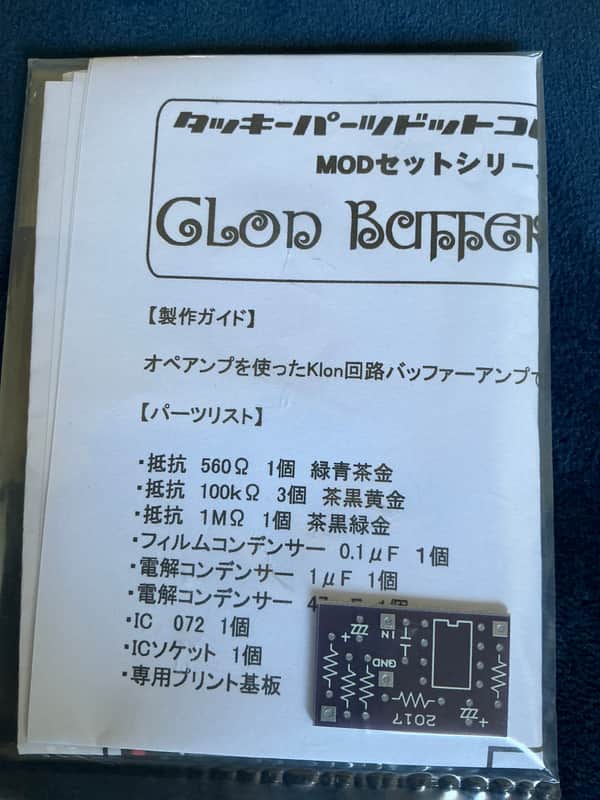
Pedal Freaks Clon Buffer Kit

Free Shipping
from Chiba, Japan



14-Day Return Policy
Enjoy peace of mind with your new gear
Our users rate Reverb
You've probably read somewhere that "the Klon has a better buffer," and wonder how could it be better than a "TRUE" bypass. If a buffered bypass is not a 'true' bypass, than it must be an untrue bypass, right??? What is true anyway? Truth is light. Ignorance = darkness…
Your true sound never makes it past the output jack without a buffer. A cable will always suck some high end. You may like that familiar darkness that cable capacitance adds to your tone but I'd rather hear the high-end nuances in picking, chords and digital delay modulations.
A well designed Buffered Bypass does not completely counter this darkening effect of all guitar cables but it does is prevent your signal from getting weaker downstream of the pedal. Unfortunately the most basic pedal buffers are not well designed with the right type of transistor or capacitors. So these cheap buffers may lack headroom or sound thin.
So what makes the Clon buffer (or any brand-name buffer) better?
Different buffers have different input impedances. This one is about 1MΩ which is the same as most tube amps, twice as much as a TS9 and about 10x a vintage* fuzz. There's no magic in a good buffer circuit -- just best practices of electronics engineering. Output impedance should also be considered when choosing a buffer. For longer cable runs and pedal chains, try a Cornish-style buffer!
Get out from under the blanket, and Make music in the light! Add this kit to your DIY build or use it to mod your true bypass pedal for a stronger more articulate clean tone. It makes other pedals* sound better, too!
*Buffers are not recommended for use with fuzz inputs.
| Listed | 6 days ago |
|---|---|
| Condition | Excellent (Used) Excellent items are almost entirely free from blemishes and other visual defects and have been played or used with the utmost care.Learn more |
| Brand |
|
| Model |
|
| Categories | |
| Made In |
|
Product safety information may be available here.

