


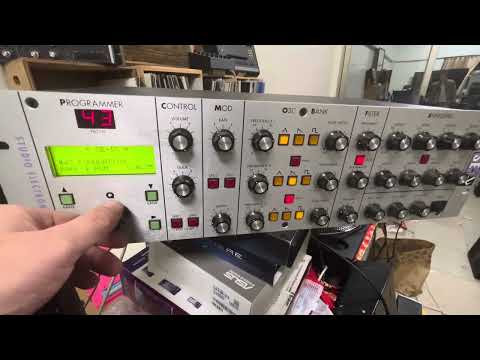
Studio Electronics SE-1 Analogue Monosynth

Predicted to Sell Soon
Only 1 available and 1 other person has this in their cart

Our users rate Reverb
Studio Electronics SE-1: Features and Notable Producers Who Have Used It
The Studio Electronics SE-1 (later upgraded to the SE-1X) is a classic monophonic analog rack synthesizer introduced by Studio Electronics in the mid-1990s. Inspired by the legendary Minimoog Model D, it retains the iconic Moog sound while adding modern features such as MIDI, patch memory, and extensive modulation options, making it a favorite "secret weapon" in professional recording studios.
Key Features1. Three True Analog VCOs (Voltage-Controlled Oscillators)
- Three discrete analog VCOs
- Simultaneous Saw, Pulse, and Triangle waveforms (Oscillator 2 on the SE-1X offers a Sine wave)
- Oscillator Sync
- Pulse Width Modulation (PWM)
- White Noise Generator
- Ring Modulation
Perfect for creating:
- Thick analog basses
- Classic Moog leads
- Acid basslines
- Drones
- Sound effects
2. Dual Filter Architecture
One of the SE-1X's most distinctive features is its two classic filter designs:
- 24 dB Moog Ladder Low-Pass Filter
- 12 dB Oberheim SEM Filter (Low-Pass / Band-Pass)
This allows the synth to deliver both:
- The warm, punchy Minimoog bass sound
- The open, aggressive Oberheim-style leads and textures
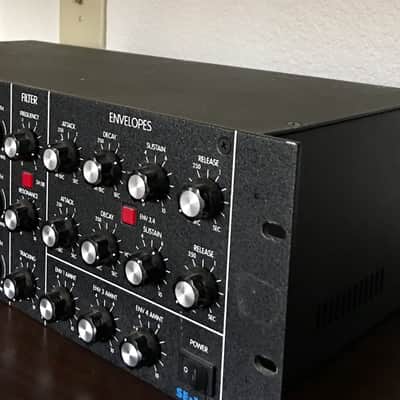
3. Four ADSR Envelope Generators
The SE-1 provides four independent envelopes:
- ENV1 – Filter
- ENV2 – Amplifier
- ENV3 – Assignable
- ENV4 – Assignable
They can be routed to parameters such as:
- Filter cutoff
- Oscillator pitch
- Pulse width
- LFO speed
- Resonance
- And many other modulation destinations
4. Three LFOs
The synthesizer includes three flexible LFOs with multiple waveforms:
- Triangle
- Saw
- Reverse Saw
- Square
- Random
- Noise
Additional features include:
- MIDI Sync
- Key Trigger
- Phase Control
5. Full MIDI Implementation
For its time, the SE-1 offered exceptionally advanced MIDI capabilities:
- Program Change
- MIDI CC control
- Patch Memory
- MIDI automation
- MIDI clock synchronization
These features made it easy to integrate into DAWs such as Cubase and Logic.
6. Extensive Patch Memory
Unlike the original Minimoog, the SE-1 can store hundreds of presets (approximately 693–792 patches depending on the model), making it highly practical for studio work.
Sound Characteristics
The SE-1 is best known for its:
- Massive analog bass
- Hip-Hop bass
- G-Funk lead sounds
- Trance leads
- Techno bass
- Acid basslines
- Synth brass
- Analog effects
Its exceptionally powerful low end has earned it the reputation of being "the secret Moog of many recording studios."
Notable Producers and Artists
Several well-known producers and artists have publicly listed the SE-1 among their studio equipment, including:
- Dr. Dre
- Fatboy Slim
- Front Line Assembly
- Astral Projection
In addition, many studio producers working in pop, film scoring, and electronic music during the late 1990s and early 2000s reportedly used the SE-1, although complete equipment lists for individual recordings are rarely available.
Songs and Musical StylesDr. Dre
The SE-1 is widely believed to have been one of Dr. Dre's preferred analog synthesizers for creating G-Funk basses and lead sounds. While there is no official song-by-song equipment documentation, it is often associated with the sonic character of tracks such as:
- "Still D.R.E."
- "The Next Episode"
- "Forgot About Dre"
These songs feature the deep, powerful analog bass sound for which the SE-1 is well known.
Fatboy Slim
Fatboy Slim used the SE-1 extensively during the Big Beat era for:
- Thick analog basses
- Analog lead sounds
- Filter sweeps
Representative tracks include:
- "Right Here, Right Now"
- "Praise You"
Although the SE-1 appears in his studio gear lists, there is no official confirmation that it was used on these specific tracks.
Astral Projection
The SE-1 has been associated with:
- Goa Trance basslines
- Analog sequences
- Resonant lead sounds
Representative albums and tracks include:
- Dancing Galaxy
- "Mahadeva"
1. Dr. Dre — The Chronic
Background:
Hip-hop legend Dr. Dre is one of the most well-known users of the Studio Electronics SE-1. Throughout his G-Funk era, the signature smooth, soaring yet non-harsh West Coast "G-Funk whistle" lead sounds, along with the massive, deep basslines, were largely created using the Studio Electronics SE-1 in his studio. The synth is also widely associated with the production of his later landmark album, 2001.
2. Fatboy Slim — "Praise You"
Background:
Big Beat pioneer Fatboy Slim included the Studio Electronics SE-1 among the core hardware in his studio setup. It was used to craft the track's distinctive, groove-driven basslines and electronic synth parts that helped define the sound of his classic hit "Praise You."
3. Steve Bug — Tech House and Techno Productions
Background:
German minimal techno and house producer Steve Bug has publicly stated:
"The Studio Electronics SE-1X is present in almost every piece of music I've made."
Among electronic music producers, the SE-1X is especially respected for Deep House and Tech House, where rich, warm, and powerful low-end is essential. Its analog bass response has made it a studio favorite for these genres.
4. Keith Emerson — Live Concert Performances
Background:
According to interviews with his sound engineer, progressive rock keyboard legend Keith Emerson adopted the Studio Electronics SE-1 for his later live performances. It allowed him to faithfully recreate the classic Moog sounds he was famous for while solving the tuning instability and lack of patch memory associated with vintage Moog synthesizers.
5. Nujabes — Classic Lo-fi Hip-Hop Productions
Background:
The late Japanese producer Nujabes, widely regarded as one of the pioneers of lo-fi hip-hop, was frequently photographed with a Studio Electronics SE-1 mounted in his studio rack. The synthesizer is believed to have contributed to the warm, full-bodied analog bass tones that complemented the jazz-inspired samples heard throughout his productions.
Note: While the SE-1 appears in photographs of Nujabes' studio, there is no official documentation confirming exactly which tracks were recorded with it.
6. Deadmau5
Background:
Electronic music icon Deadmau5 is also a longtime admirer of the Studio Electronics SE-1X. After acquiring one, he remarked that he had dreamed of owning the instrument ever since seeing it in a music store in Toronto as a child. The SE-1X has become one of the analog synthesizers associated with the powerful, weighty bass sounds heard in many modern EDM and Progressive House productions. Although it forms part of his studio collection, there is no official track-by-track documentation identifying exactly which songs feature the instrument.
Front Line Assembly
The SE-1 has been used for:
- Industrial bass
- Analog sound effects
- Noise textures
Notably on:
- Implode
Why Is the SE-1 So Highly Regarded?
Compared with the original Minimoog, the SE-1 offers:
- Authentic Moog-inspired analog sound
- Excellent tuning stability
- Preset memory
- Full MIDI implementation
- Far more extensive modulation capabilities
- Dual-filter architecture (SE-1X)
- Seamless integration into modern recording studios
For these reasons, from roughly 1995 to 2005, the SE-1 became one of the most respected monophonic analog synthesizers in professional studios, particularly for Hip-Hop, G-Funk, Techno, Trance, Electronic Music, and Film Scoring. It remains highly sought after today for its unmistakably rich and powerful analog sound.
Let me know what you think afterwards. more test video on DB Studio yotube channel
This item is sold As-Described
This item is sold As-Described and cannot be returned unless it arrives in a condition different from how it was described or photographed. Items must be returned in original, as-shipped condition with all original packaging.Learn More.
| Listed | 3 months ago |
|---|---|
| Condition | Excellent (Used) Excellent items are almost entirely free from blemishes and other visual defects and have been played or used with the utmost care.Learn more |
| Brand | |
| Model |
|
| Finish |
|
| Categories | |
| Analog / Digital |
|
| MIDI I/O |
|
| Polyphony |
|
Product safety information may be available here.

