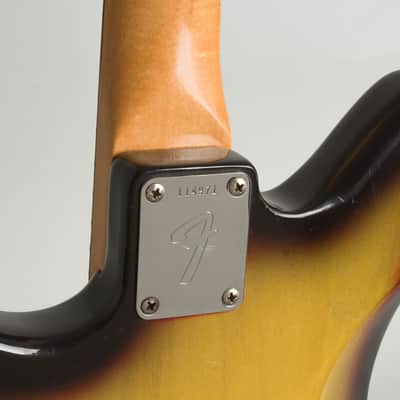
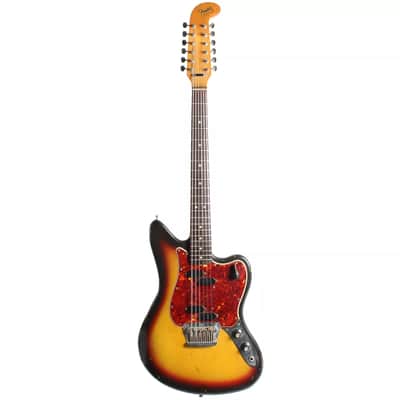
Fender Electric XII 12 String Solid Body Electric Guitar (1965), ser. #114971, black gig bag case.
Fender Electric XII 12 String Solid Body Electric Guitar (1965), ser. #114971, black gig bag case.
El vendedor no ha establecido un costo de envío para Australia. Por favor vendedor mensaje para preguntarle sobre el envío.
PrecioA$10,060.38
+ envío
Publicado:hace 4 meses
Visitas:213
Guardados:23
Ofertas:0

Brooklyn, NY, Estados Unidos
Nuestros usuarios valoran Reverb
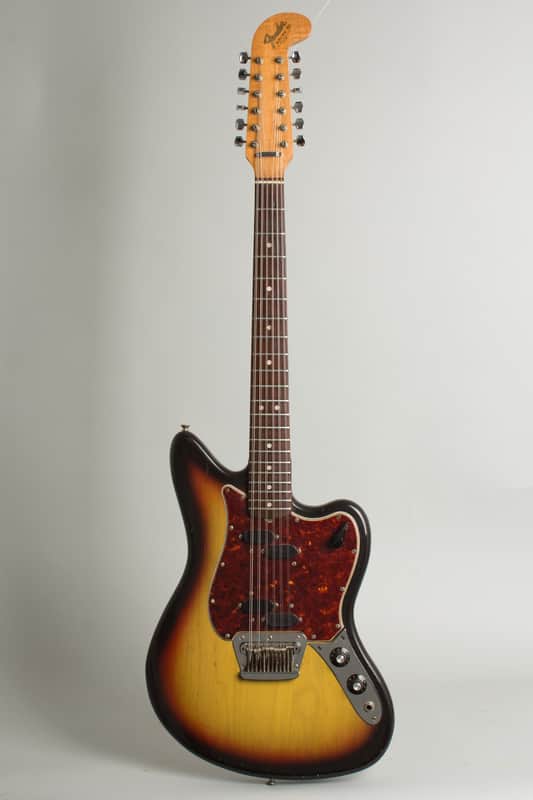
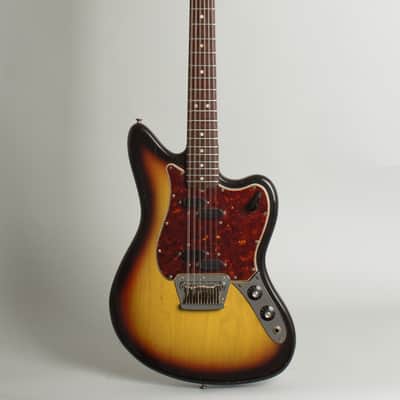
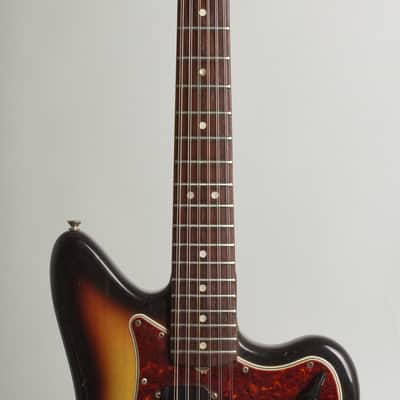
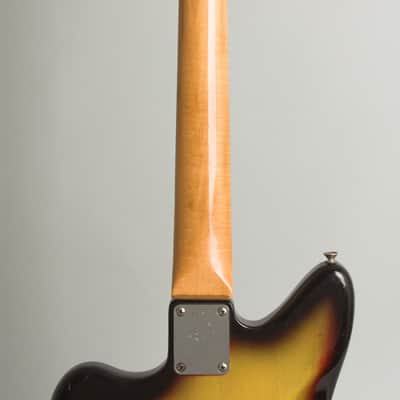
Fender Electric XII Model 12 String Solid Body Electric Guitar (1965), made in Fullerton, California, serial # 114971, sunburst lacquer finish, alder body, maple neck with rosewood fingerboard, black gig bag case.
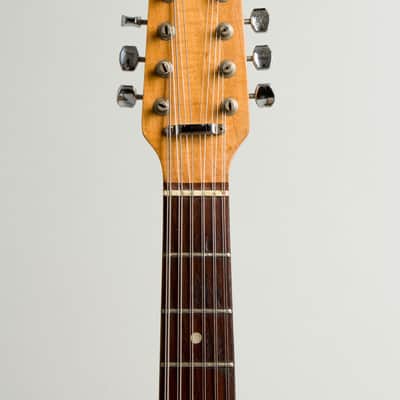
The "Electric XII" is perhaps not one of Fender's best-remembered creations but nonetheless is a superbly engineered, great-sounding and extremely practical guitar. Introduced at the 1965 NAMM Show at the dawn of the CBS/Fender era the Fender 12-string married the popular Jaguar/Jazzmaster style offset body to a new 12-string neck with a distinctive extended "hockey stick" headstock. The neck itself is typically Fender; slim and very comfortable. These are often considered the best-playing electric 12s of the 1960s.
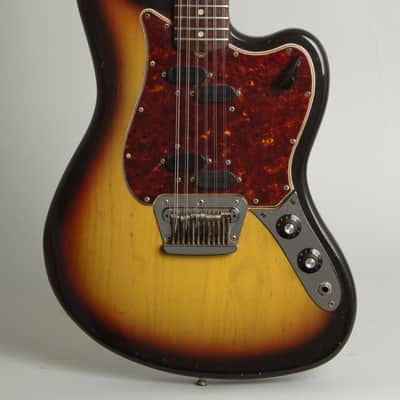
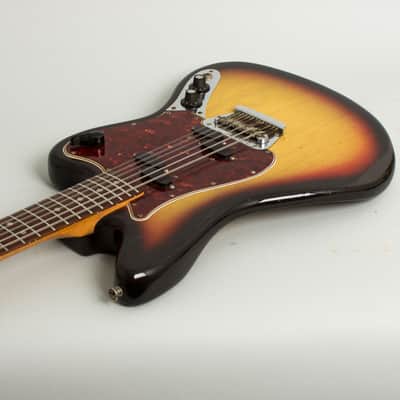
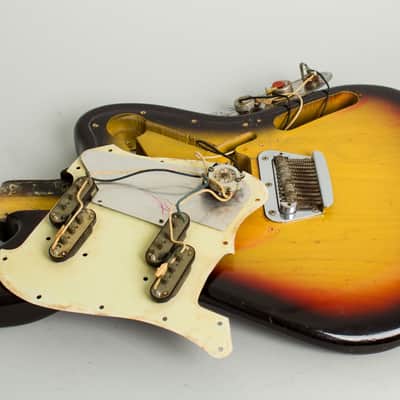
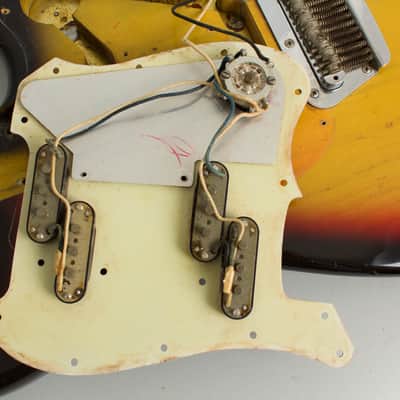
The electronics are unique as well with two pickups each with two separate coil units, as pioneered by the Precision Bass but with smaller Mustang-style coils. These are mated to a 4-way lever switch allowing individual pickup selections or two different phase combinations. The bridge is a marvel of Leo Fender's engineering prowess; it strings through the body with 12 intonation-adjustable saddles and is generally considered the best unit of its kind.
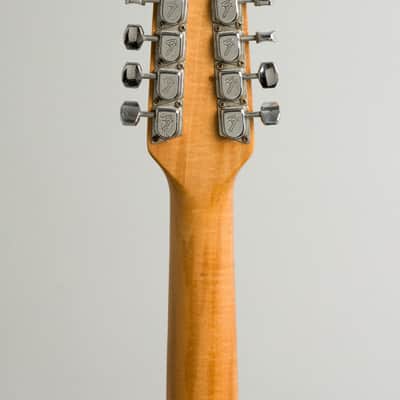
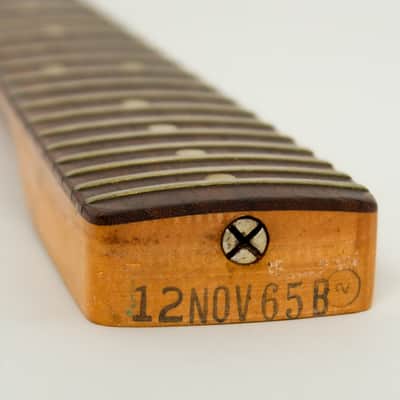
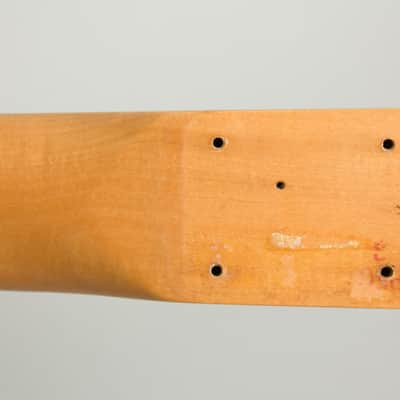
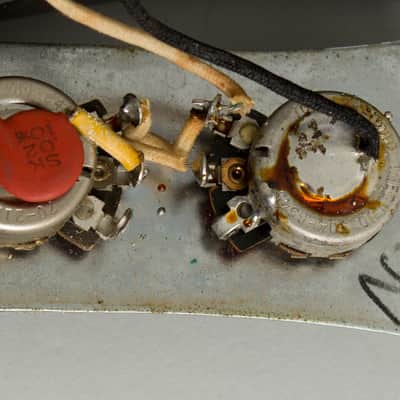
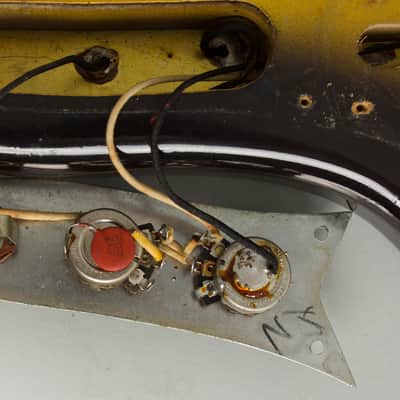
This guitar has all internal dates from 1965 but was probably assembled in early 1966, the year the great majority of Electric XIIs were made. The neck is dated November 1965, the volume pot is coded to the 45th week of 1965 while the tone pot had been sitting in stock for a bit; it is dated the 50th week of 1964. The grey pickup coils do not show any legible dates. This guitar must have been one of the first to receive Fender's new in-house "F" tuners; underneath them the headstock is still drilled with the pilot holes for the Kluson machines used previously.
With all the original engineering involved Fender missed the boat a bit on the electric 12-string fad and by the time the "Electric XII" was marketed in quantity by late 1965 Rickenbacker had already reaped the bulk of benefit of the Byrds' and Beatles' popularization of the sound. For all that, the guitar is a very good design and an excellent-sounding stage or recording instrument, albeit without exactly capturing the Rick's trademark jangle. Led Zeppelin, the Velvet Underground, The Move, The Kinks, Herb Alpert's Tijuana Brass, the Baja Marimba Band, and many others have made classic recordings with this model, and its full potential is perhaps still untapped.
Overall length is 42 7/8 in. (108.9 cm.), 14 in. (35.6 cm.) wide at lower bout, and 1 1/2 in. (3.8 cm.) in depth, measured at side of rim. Scale length is 25 1/2 in. (648 mm.). Width of nut is 1 11/16 in. (43 mm.).
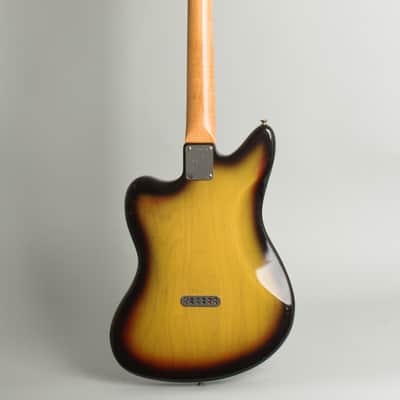
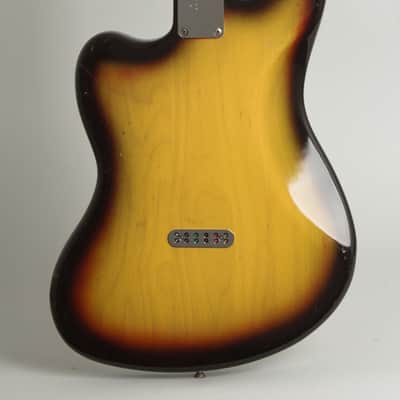
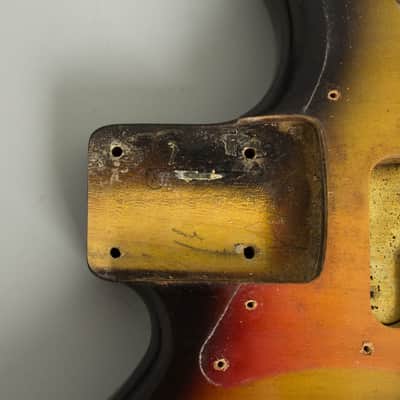
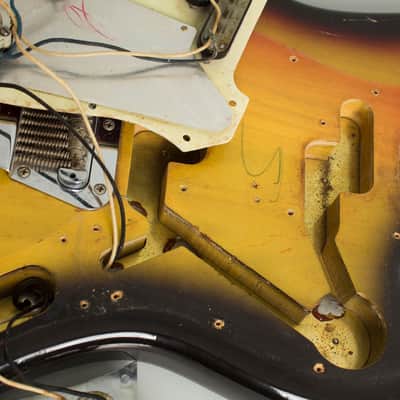
This is a relatively well preserved example of this somewhat unsung Fender gem, remaining all original showing some general wear overall. The all-original finish has very little checking and mostly smaller dings, dents and handling wear. The "target" sunburst finish is heavily faded on the front and even more so on the back, with little red hue remaining. The top has several deeper scratches on the upper front, with some noticeable belt buckle wear into but mostly not through the finish on the back. The back of the neck has only light wear.
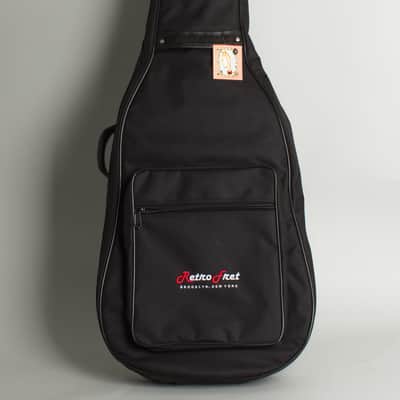
The original frets and fingerboard show some wear in the lower positions but nothing that affects play. The hardware also shows light wear, with pitting to the chrome on the control plate and some loss to the cap of the volume knob. This guitar remains unaltered and looks to have been played but not abused since it shipped out of Fullerton in early 1966. Overall this is a lovely package of timeless 1960s jangle from Fullerton, housed in a modern gig bag. Excellent - Condition.
The "Electric XII" is perhaps not one of Fender's best-remembered creations but nonetheless is a superbly engineered, great-sounding and extremely practical guitar. Introduced at the 1965 NAMM Show at the dawn of the CBS/Fender era the Fender 12-string married the popular Jaguar/Jazzmaster style offset body to a new 12-string neck with a distinctive extended "hockey stick" headstock. The neck itself is typically Fender; slim and very comfortable. These are often considered the best-playing electric 12s of the 1960s.
The electronics are unique as well with two pickups each with two separate coil units, as pioneered by the Precision Bass but with smaller Mustang-style coils. These are mated to a 4-way lever switch allowing individual pickup selections or two different phase combinations. The bridge is a marvel of Leo Fender's engineering prowess; it strings through the body with 12 intonation-adjustable saddles and is generally considered the best unit of its kind.
This guitar has all internal dates from 1965 but was probably assembled in early 1966, the year the great majority of Electric XIIs were made. The neck is dated November 1965, the volume pot is coded to the 45th week of 1965 while the tone pot had been sitting in stock for a bit; it is dated the 50th week of 1964. The grey pickup coils do not show any legible dates. This guitar must have been one of the first to receive Fender's new in-house "F" tuners; underneath them the headstock is still drilled with the pilot holes for the Kluson machines used previously.
With all the original engineering involved Fender missed the boat a bit on the electric 12-string fad and by the time the "Electric XII" was marketed in quantity by late 1965 Rickenbacker had already reaped the bulk of benefit of the Byrds' and Beatles' popularization of the sound. For all that, the guitar is a very good design and an excellent-sounding stage or recording instrument, albeit without exactly capturing the Rick's trademark jangle. Led Zeppelin, the Velvet Underground, The Move, The Kinks, Herb Alpert's Tijuana Brass, the Baja Marimba Band, and many others have made classic recordings with this model, and its full potential is perhaps still untapped.
Overall length is 42 7/8 in. (108.9 cm.), 14 in. (35.6 cm.) wide at lower bout, and 1 1/2 in. (3.8 cm.) in depth, measured at side of rim. Scale length is 25 1/2 in. (648 mm.). Width of nut is 1 11/16 in. (43 mm.).
This is a relatively well preserved example of this somewhat unsung Fender gem, remaining all original showing some general wear overall. The all-original finish has very little checking and mostly smaller dings, dents and handling wear. The "target" sunburst finish is heavily faded on the front and even more so on the back, with little red hue remaining. The top has several deeper scratches on the upper front, with some noticeable belt buckle wear into but mostly not through the finish on the back. The back of the neck has only light wear.
The original frets and fingerboard show some wear in the lower positions but nothing that affects play. The hardware also shows light wear, with pitting to the chrome on the control plate and some loss to the cap of the volume knob. This guitar remains unaltered and looks to have been played but not abused since it shipped out of Fullerton in early 1966. Overall this is a lovely package of timeless 1960s jangle from Fullerton, housed in a modern gig bag. Excellent - Condition.
| Publicado | hace 4 meses |
|---|---|
| Estado | Excelente (segunda mano) Los productos excelentes casi no tienen ninguna imperfección ni defecto visual, y han sido usados con el máximo cuidado posible.Más información |
| Marca | |
| Modelo |
|
| Acabado |
|
| Categorías | |
| Año |
|
| Serie | |
| Material del mástil |
|
| Familia de colores |
|
| Configuración de la pastilla |
|
| Forma del Cuerpo |
|
| Numero de cuerdas |
|
| Familia de Modelo | |
| Para derechos / Para zurdos |
|
| Material del cuello |
|
| Patrón de finalización |
|
| Estilo del terminado |
|
| Tipo De Cuerpo |
|
| Material del cuerpo |
|
| Cuerpo asimétrico |
|
| Tipo de puente/cordal |
|
| Longitud de la escala |
|
| Confección del mástil |
|
| Número de trastes |
|
La información de seguridad del producto se encuentra disponible aquí.

Protección de Reverb
Devoluciones sencillas, transacciones seguras, asistencia personal
Más información