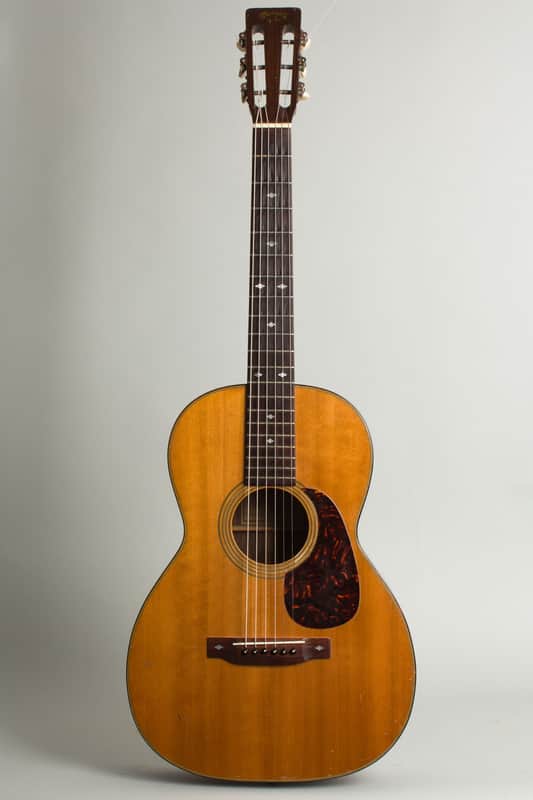
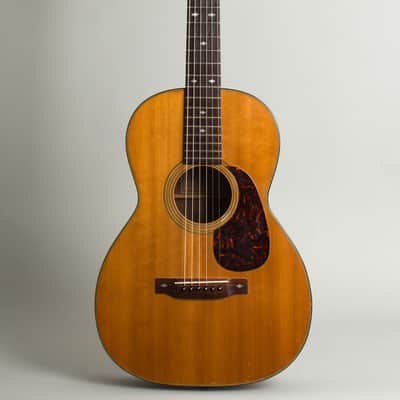
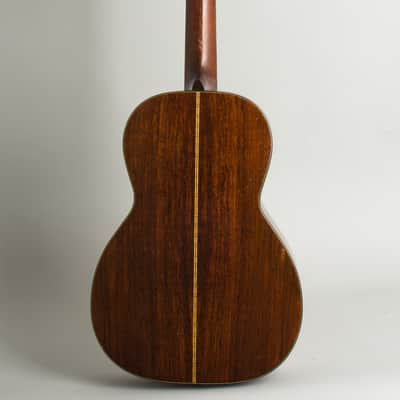
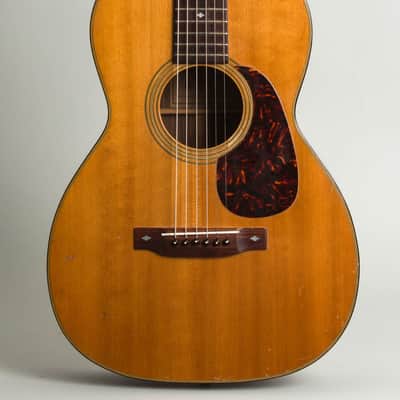
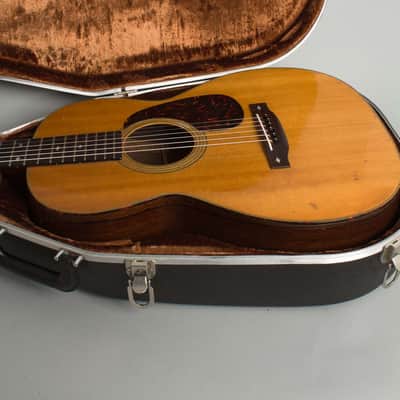
C. F. Martin 00-21 Flat Top Acoustic Guitar (1962), ser. #186104, black hard shell case.
Precio$6,500
+ $200 Envío
Publicado:hace 3 meses
Visitas:692
Guardados:50
Ofertas:0

Brooklyn, NY, Estados Unidos
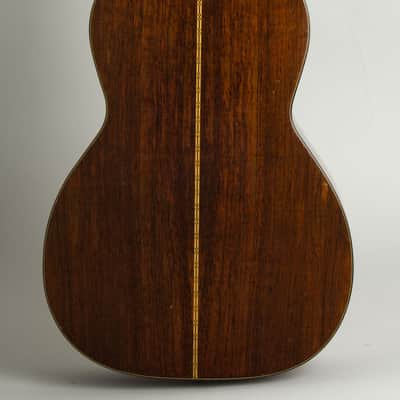
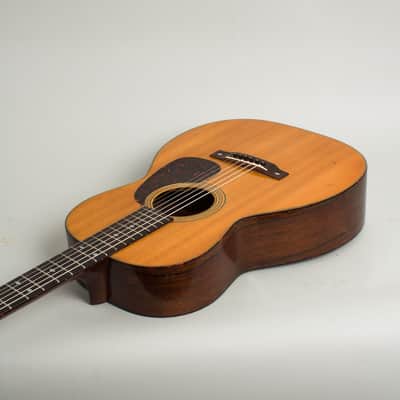
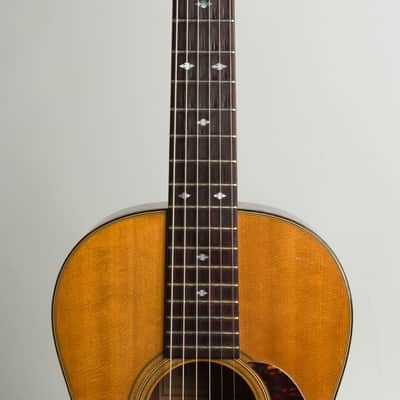
C. F. Martin 00-21 Model Flat Top Acoustic Guitar (1962), made in Nazareth, PA, serial # 186104, natural lacquer finish, Brazillian rosewood back and sides, spruce top, mahogany neck with rosewood fingerboard, black hard shell case.
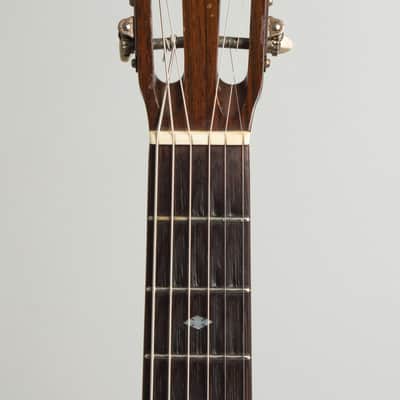
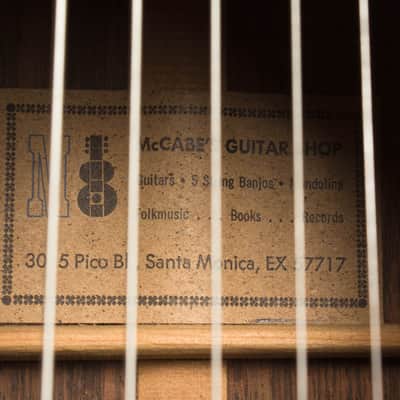
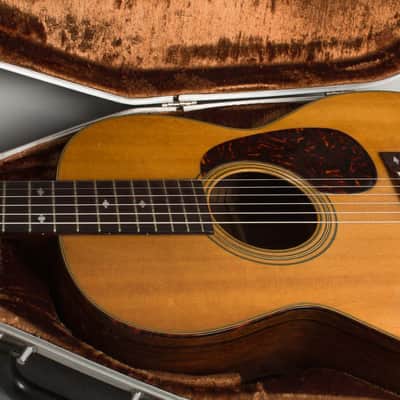
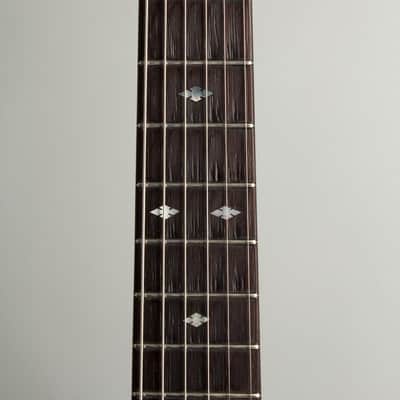
The ghost of the 1960s folk era beckons with this lightly gussied-up Martin 00-21 which has added pearl slotted diamond inlay to the fingerboard and bridge ends. This guitar was built in late 1962, one of only 78 shipped out that year. The charming label under the soundhole indicates it was originally sold out of the genuinely legendary McCabe's guitar shop in Santa Monica bearing the shop's original 3015 Pico Boulevard address from the early 1960s This store was the center of the Folk scene in the Los Angeles area the way Izzy Young's Folklore Center was here in New York. It is quite likely the "upgrade" pearl work was done there in the early 1960s as a custom appointment for a folk player desiring a bit of extra "bling", it is in the Martin style but is almost certainly not factory.
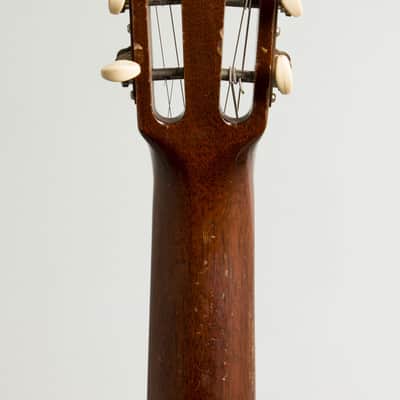
In general this model is an interesting throwback, about as close as the 1960s Martin company got to making a 1920s rosewood guitar. Starting in the late '50s "folk boom" aesthetics made old-style 12-fret Martins fashionable among discerning traditional-minded players, particularly inspired by Joan Baez' 0-45. Several "New York" models were added to the line in 1962 with the older style 12-fret neck, a wide fingerboard and a slotted headstock, but the 00-21 had been there all along. The 21-style 00 was one of the few Martins to retain its 12-fret "standard" model status when the rest of the line went to the 14-fret "Orchestra Model" in the early 1930s.
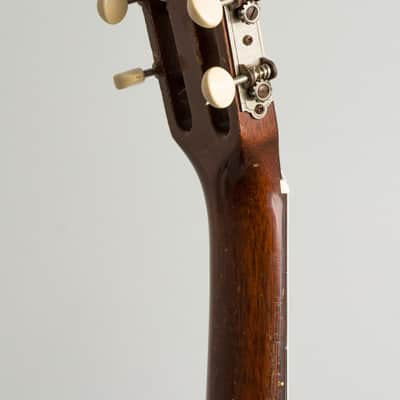
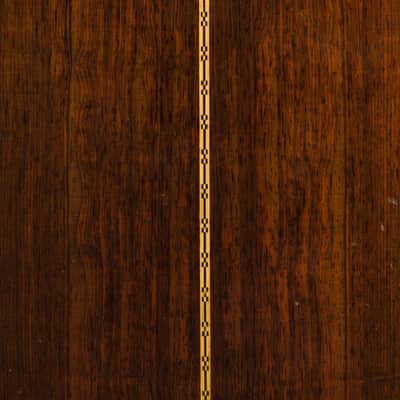
The 00-21 was sold in very small numbers through the '40s and '50s, picking up a bit in the '60s. This one has beautifully grained Brazilian rosewood back and sides and a lovely even grained spruce top. The detail differences from a pre-1930-era guitar are the rosewood fingerboard and bridge, tortoise celluloid pickguard, 1960s Waverly strip tuners, headstock decal, slightly different non-scalloped bracing and tang frets instead of '20's style bar fretwire. In June 1962 the list price of this model was raised from $198 to $215, plus case. We wonder what the original owner of this one paid for the pearl diamond upgrade!
The construction on this guitar is lighter than most '60's Martins; it retains a very small maple bridge plate pattern not much changed since the 1930s. This is a fine playing and sounding guitar, a flashier piece than the norm with its added inlay but still an elegant traditional-styled instrument.
Overall length is 38 1/2 in. (97.8 cm.), 14 1/16 in. (35.7 cm.) wide at lower bout, and 4 in. (10.2 cm.) in depth at side, taken at the end block. Scale length is 24 3/4 in. (629 mm.). Width of nut is 1 13/16 in. (46 mm.).
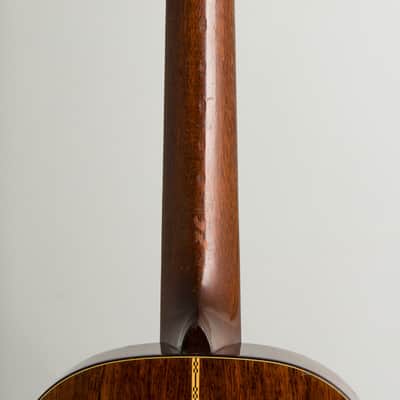
This is a decently well preserved guitar for the most part, showing some general wear and tear but in fine playing condition. The finish overall shows typical checking (mostly on the top) and a collection of dings, dents and scrapes overall. The top has a few case lid dings in the area above the bridge and picking wear just on the lower lip of the soundhole. There are feelable shallow capo dents on the spine of the neck running well up into the 7th fret area and a couple of scrapes closer to the heel. Between these and the isolated pick wear, we know this was a folk player's guitar back in the day!
There are no cracks anywhere on the guitar. The rosewood bridge appears original (with added inlay on the wings) and has possibly been reglued, although there is no notable finish disturbance around the perimeter. It was slightly lowered long ago, and the saddle re-worked. The neck does not look to have been reset. The frets are original, they and the fingerboard show some wear in the lower positions but nothing that affects play. The added pearlwork is neatly done and in character, though the inlay is larger than what Martin used in the 1920s they have a period look.
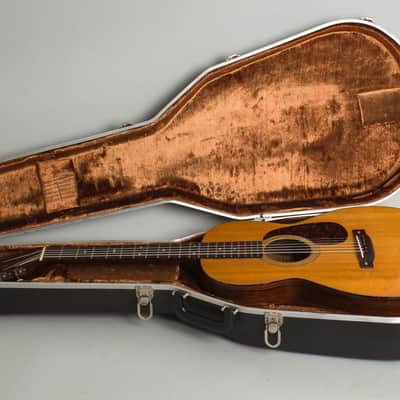
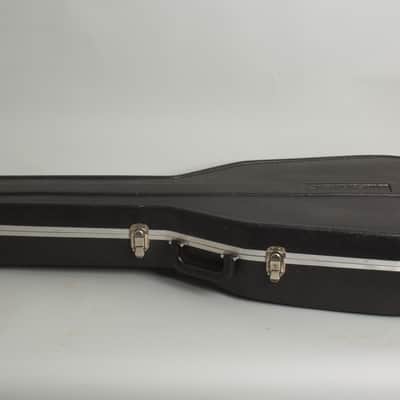
This is a very fine playing and sounding guitar, which seems to particularly like silk & steel strings which give it a mellow but surprisingly powerful tone. This is just a neat and subtly unique guitar with some history to it, a 60+ year old Martin that in both feel and sound is redolent of the early '60s while being surprisingly close to its depression-rea forbearers. It comes in a correct fitting but later (1970s) molded plastic Martin HSC. Overall Excellent - Condition.
The ghost of the 1960s folk era beckons with this lightly gussied-up Martin 00-21 which has added pearl slotted diamond inlay to the fingerboard and bridge ends. This guitar was built in late 1962, one of only 78 shipped out that year. The charming label under the soundhole indicates it was originally sold out of the genuinely legendary McCabe's guitar shop in Santa Monica bearing the shop's original 3015 Pico Boulevard address from the early 1960s This store was the center of the Folk scene in the Los Angeles area the way Izzy Young's Folklore Center was here in New York. It is quite likely the "upgrade" pearl work was done there in the early 1960s as a custom appointment for a folk player desiring a bit of extra "bling", it is in the Martin style but is almost certainly not factory.
In general this model is an interesting throwback, about as close as the 1960s Martin company got to making a 1920s rosewood guitar. Starting in the late '50s "folk boom" aesthetics made old-style 12-fret Martins fashionable among discerning traditional-minded players, particularly inspired by Joan Baez' 0-45. Several "New York" models were added to the line in 1962 with the older style 12-fret neck, a wide fingerboard and a slotted headstock, but the 00-21 had been there all along. The 21-style 00 was one of the few Martins to retain its 12-fret "standard" model status when the rest of the line went to the 14-fret "Orchestra Model" in the early 1930s.
The 00-21 was sold in very small numbers through the '40s and '50s, picking up a bit in the '60s. This one has beautifully grained Brazilian rosewood back and sides and a lovely even grained spruce top. The detail differences from a pre-1930-era guitar are the rosewood fingerboard and bridge, tortoise celluloid pickguard, 1960s Waverly strip tuners, headstock decal, slightly different non-scalloped bracing and tang frets instead of '20's style bar fretwire. In June 1962 the list price of this model was raised from $198 to $215, plus case. We wonder what the original owner of this one paid for the pearl diamond upgrade!
The construction on this guitar is lighter than most '60's Martins; it retains a very small maple bridge plate pattern not much changed since the 1930s. This is a fine playing and sounding guitar, a flashier piece than the norm with its added inlay but still an elegant traditional-styled instrument.
Overall length is 38 1/2 in. (97.8 cm.), 14 1/16 in. (35.7 cm.) wide at lower bout, and 4 in. (10.2 cm.) in depth at side, taken at the end block. Scale length is 24 3/4 in. (629 mm.). Width of nut is 1 13/16 in. (46 mm.).
This is a decently well preserved guitar for the most part, showing some general wear and tear but in fine playing condition. The finish overall shows typical checking (mostly on the top) and a collection of dings, dents and scrapes overall. The top has a few case lid dings in the area above the bridge and picking wear just on the lower lip of the soundhole. There are feelable shallow capo dents on the spine of the neck running well up into the 7th fret area and a couple of scrapes closer to the heel. Between these and the isolated pick wear, we know this was a folk player's guitar back in the day!
There are no cracks anywhere on the guitar. The rosewood bridge appears original (with added inlay on the wings) and has possibly been reglued, although there is no notable finish disturbance around the perimeter. It was slightly lowered long ago, and the saddle re-worked. The neck does not look to have been reset. The frets are original, they and the fingerboard show some wear in the lower positions but nothing that affects play. The added pearlwork is neatly done and in character, though the inlay is larger than what Martin used in the 1920s they have a period look.
This is a very fine playing and sounding guitar, which seems to particularly like silk & steel strings which give it a mellow but surprisingly powerful tone. This is just a neat and subtly unique guitar with some history to it, a 60+ year old Martin that in both feel and sound is redolent of the early '60s while being surprisingly close to its depression-rea forbearers. It comes in a correct fitting but later (1970s) molded plastic Martin HSC. Overall Excellent - Condition.
Protección para compradores de Reverb
Reverb te cubrirá las espaldas si tu producto se extravía, resulta dañado o no se ajusta a la descripción. Lo único que tienes que hacer para que te ayudemos a obtener un reembolso completo es informarnos de cualquier problema que tengas en un plazo de siete días.Obtén más información sobre la Protección para compradores de Reverb.
| Publicado | hace 3 meses |
|---|---|
| Estado | Excelente (segunda mano) Los productos excelentes casi no tienen ninguna imperfección ni defecto visual, y han sido usados con el máximo cuidado posible.Más información |
| Marca | |
| Modelo |
|
| Acabado |
|
| Categorías | |
| Año |
|
| Entrega |
|
| Material del mástil |
|
| Tipo de cuerdas |
|
| Para derechos / Para zurdos |
|
| Numero de cuerdas |
|
| Material del cuello |
|
| Estilo tapa de madera |
|
| Material de parte trasera |
|
| Material de los lados |
|
| Estilo del terminado |
|
| Material del tope |
|
| Serie | |
| Forma del Cuerpo |
|
| Familia de colores |
|
| Familia de Modelo | |
| Preamplificador activo |
|
| Número de trastes |
|
La información de seguridad del producto se encuentra disponible aquí.

Protección de Reverb
Devoluciones sencillas, transacciones seguras, asistencia personal
Más información