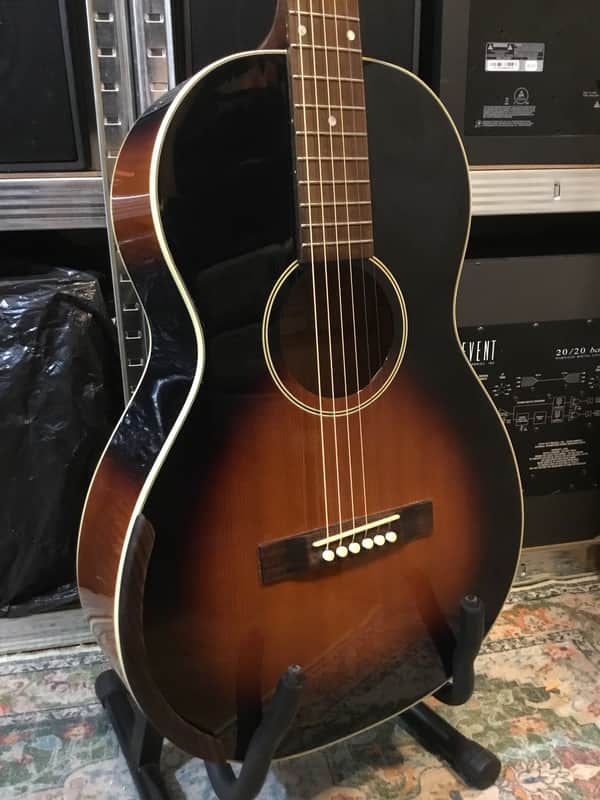
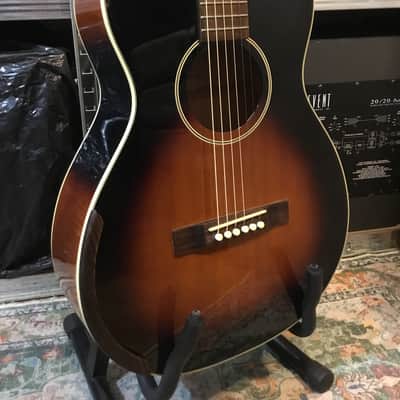
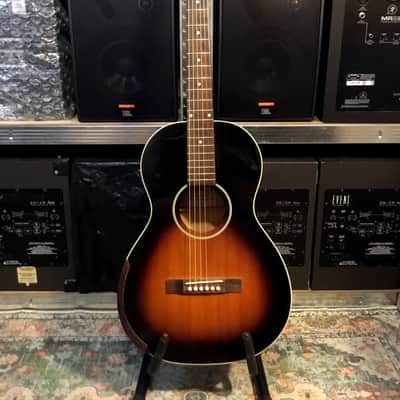
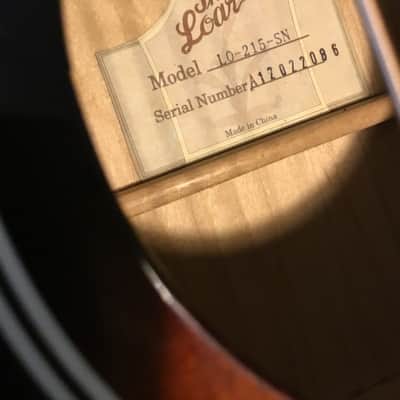
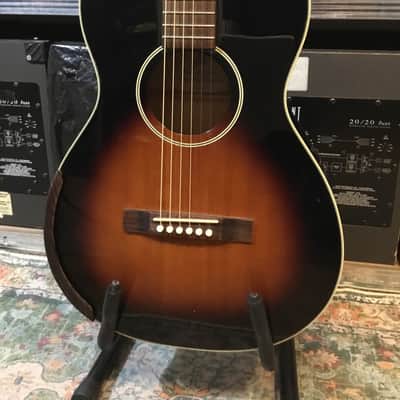
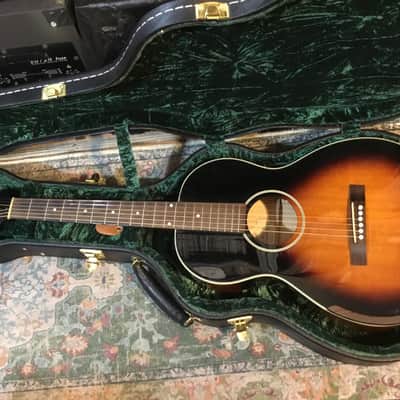
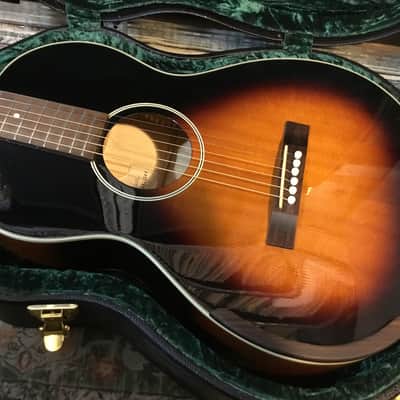
The Loar LO-215 (2012), Small Body, 0-Model Acoustic Guitar
This seller has not set a shipping cost for Luxembourg. Please contact them to ask about shipping.



Rare Find
These don't show up often
Our users rate Reverb
The Loar LO-215 (2012), Small Body, 0-Model Acoustic Guitar
Solid Spruce Top / Flamed Maple laminate back / sides
Greg Rich 0-Model design, Excellent Condition – $565 OBO
Tone Wood Power
Flamed Maple out-punches and out-projects Mahogany
Electronics / Strap Buttons
Active undersaddle pickup (3rd party extra), powered by 9V battery. Endpin Output Jack, also serves as strap button to match heel-installed 3rd party strap button.
Ergonomics
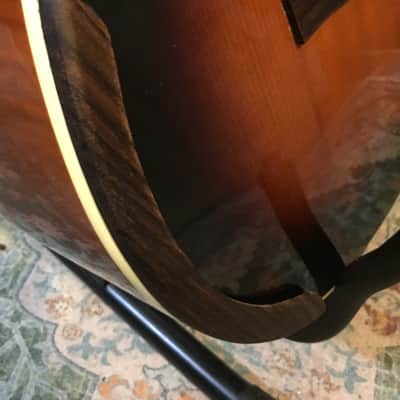
Fitted with a thin, floating rosewood armrest designed to maximize top vibration and player comfort.
Case
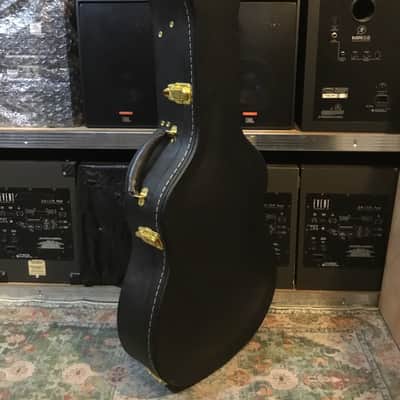
Includes Excellent condition Silvercreek 6-latch Hard Shell
The Loar LO-215
Imagine the punchy, raw blues bark of a pre-war 1930s Gibson L-0, but enhanced by the projection of beautiful Flamed Maple and a gig-ready 6-latch case, which also keeps the guitar protected at home. This discontinued Loar LO-215 delivers that legendary acoustic mythos at a fraction of vintage prices—fully upgraded with inspired contemporary guitar design for the modern player.
History of the 0-model
C.F. Martin launched their first 0-model in 1854. It was a small similarly shaped guitar that was thought large at the time and aimed at concert performance. By 1898 they expanded that model to the familiar Concert-model size with the 0-18, about the same size as this Loar LO-215. Enter Gibson who released their L-Series Concert model, the L-0 in 1926. It was similar in size to Martin’s 0-model, but Gibson transformed the model by adapting X-bracing to their L-0 by the 1930s. In fact most of their L-Series began to adapt this bracing (ironically invented by Martin).
The X-bracing transformed small body guitars into legendary forces capable of increased projection and less boxy/muted tonal response in blues, roots-folk, jazz and more. The influence of these Pre-war Gibsons, as well as Martin’s own continued striving during the same period would transform an enormous segment of popular music as it spread to rock, folk rock and much American/British and global popular, film and TV music post-WWII to today.
So Martin's 0-18 was filtered through Gibson's excellent 1930s work in shaping guitar tonality that fit with blues, folk, jazz, rock styles and more, while Martin established the Dreadnought as the premiere engine for an equally wide array of musical styles. Both Martin and Gibson have been a source of inspiration for generations, and the Loar LO-215 has roots in both brands and traditions.
The small models, like the L-0 or the 0-18 that stuck around, even when the larger models had entered the market, proved that there was and remains a place for smaller, intimate guitars. Martin agreed when they revived the modern 0-18 model and Gibson continues with regular reissues and variations.
The Build – A Master Class in Design Brought to Reality with a Dirt-Cheap Price
The good news is that this Loar uses modern well-developed larger guitar technology as reapplied to a small body guitar. The Loar has a long scale neck, unlike most parlor guitars. This gives more punch, more resonance and a louder sound coming from the higher tension that longer strings require.
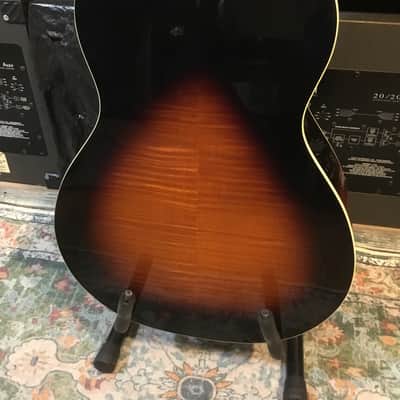
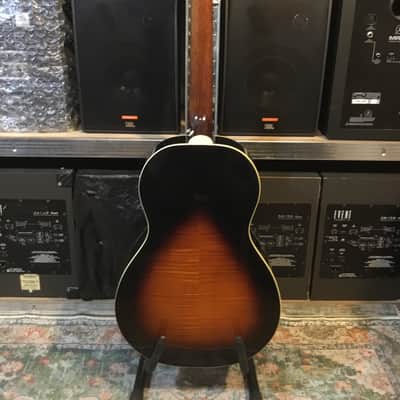
Constructed with a solid, Canadian Sitka Spruce top, the guitar also has laminate Flamed Maple back and sides, and so not the normal mahogany found on so many other parlor guitars including the less expensive LO-216, the sister version of this model. As a harder and denser wood, the Flamed Maple back and sides act as a rigid, highly reflective acoustic mirror. Instead of absorbing the low-mid frequencies like porous mahogany, the maple reflects the energy straight out of the sound hole with instant focus, speed, punch/projection and volume.
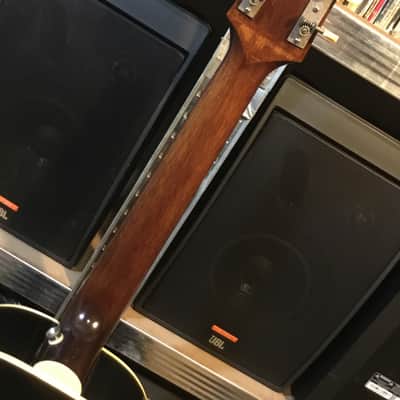
All this makes for a guitar that responds extremely well to finger style play, as well as in light to moderate strumming, which activates the top more easily than on guitars with less dense back and side tone wood and of shorter scale. The neck is a rich mahogany, a standard choice for steel string guitars. Fingerboard and bridge are of rosewood, another traditional and heavily favored tone wood.
But the most compelling and masterful design feature is the linkage of a long scale, 12-fret construction, and forward x-bracing. Each of these techniques opens up more sound board “real estate” below the sound hole. This was purposeful design to create a larger vibrating Sitka plate, which means a more powerful movement of air and resonance inside the body. This is further linked with the Flamed Maple back and sides, which respond faster and with more force than the Mahogany back and sides of the LO-216.
You could call it a “quadruple whammy” approaching perhaps the absolute maximum of increases, which means that this little guitar punches way above its literal weight and size in terms of volume, air movement, bass and projection. It’s a stellar modern design that packs this guitar with a synthesis of known techniques that are rarely, if ever, assembled together elsewhere.
Greg Rich, Master Designer
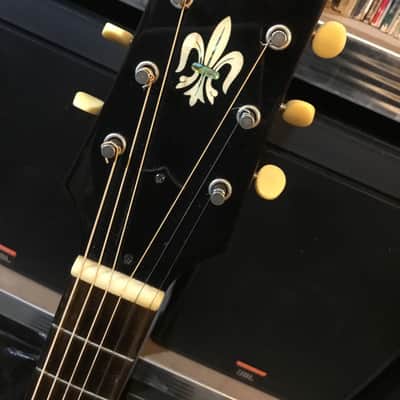
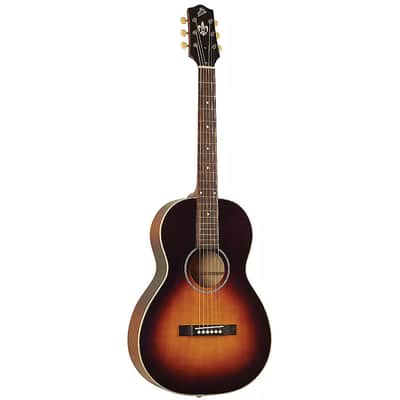
Coming from the heyday of The Loar’s foray into reinventing classic historic models during the mid-2000s into the 2010s, design at The Loar was Greg Rich’s baby. Rich had previously restored Gibson’s Custom Shop in the 1980s and 1990s and later worked with Blueridge and Recording King (a Loar affiliate). So the classic headstock inlay, the excellent, historic sunburst finish style, the feel, the sound, vibe and mojo of this guitar ring with an old school vintage sense while also aligning Martin structural intent as modified by Gibson tonal intent in one very surprising instrument.
Supported by modernization and brilliant design choices, it’s a forward and very compelling play at an excellent price. We are in a Golden Age of guitar design as informed by both historic and modern development and their well-considered integration, if you didn’t know. And this specific model is now a part of design history–and it’s firing-on-all cylinders-brilliant in concept and execution, tone and play.
Playing Styles, Tonality
Other writers have noted the mid-neck growl, the punchy percussive sense available and the excellent support to a range of playing styles. I find it works extremely well for Blues, Rock, Folk-Rock and Roots-Folk music. One writer included Celtic Music, Gypsy Jazz and straight accompaniment to Jazz vocals.
So the depth of the instrument is not just in the compelling tone, the sweet singing soprano and mid-range blues bark if you want it, but also in the application of those features neatly tuckable into different styles.
Condition
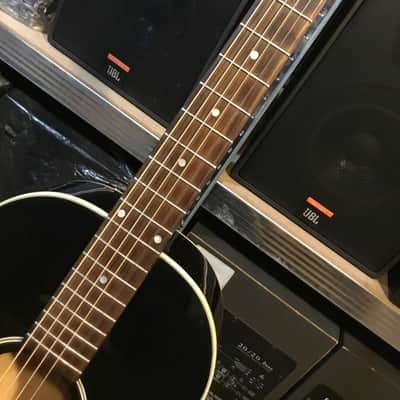
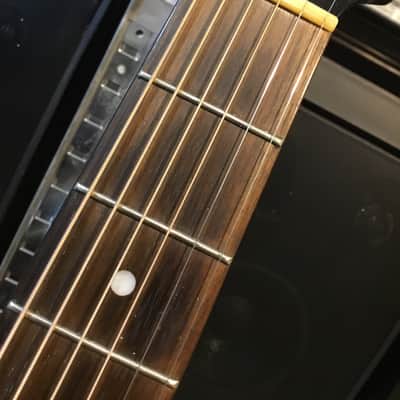
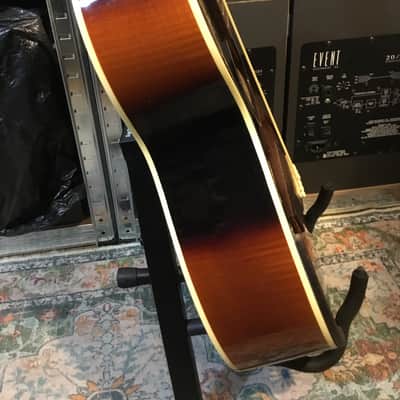
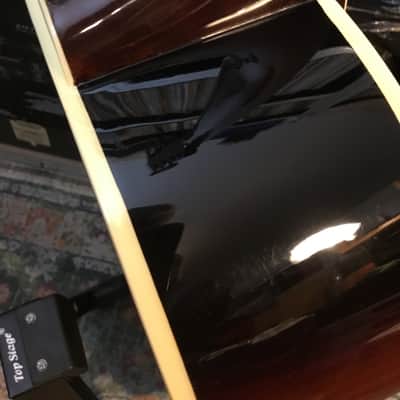
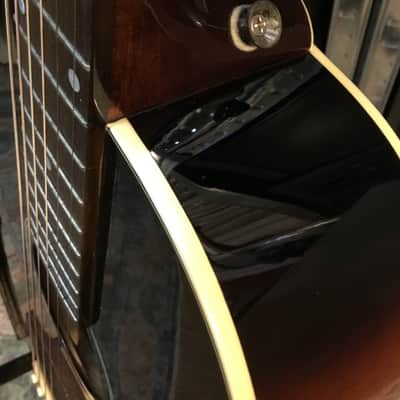
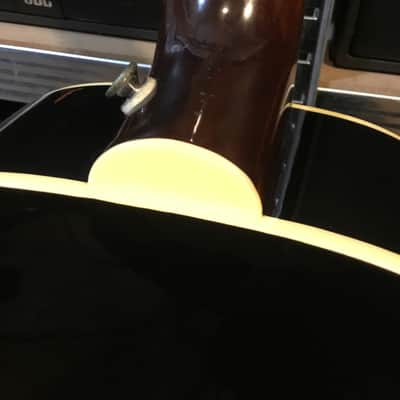
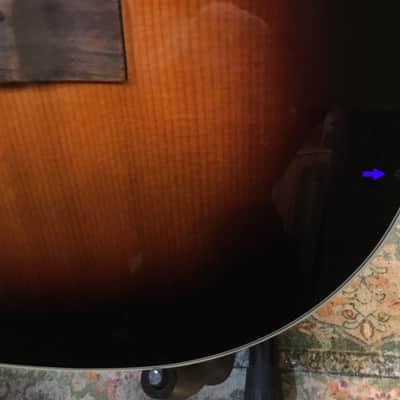
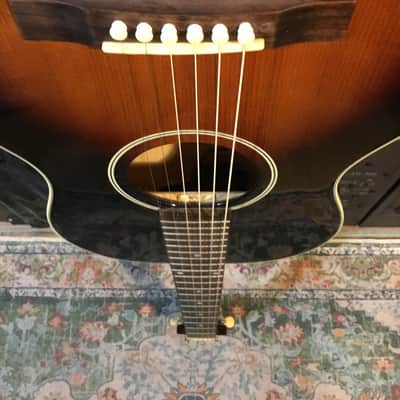
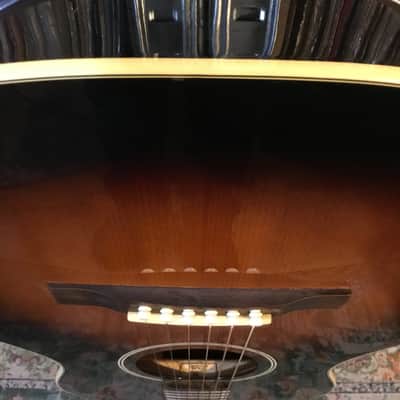
There are zero issues with the guitar. It’s in Excellent shape, has been well-cared for, cased when not in use, kept in a humidified, smoke-free environment. Regularly maintained and set-up. There is only minimal fret wear, more shadow than indentation. Kept clean, orderly and maintained, and wiped down after every use. Everything works. There is light surface evidence of usage, including very light pick marks by a former owner on the top near the bottom of the fretboard, which are nearly invisible, except to close inspection.
There are no major dings, scratches, or flaws, and very little in the way of very slight imperfections. Images are part of the description so please look closely. And ask any questions you may have.
In the Hands
It plays easily and fluidly. It's a players guitar without question. Action is extremely low at just a hair under 1/16” at the 12th fret on low E – and there is no buzzing unless you mistreat it (won’t stand up to Pete Townsend windmill flogging, I mean “strumming”). The truss rod works perfectly. The saddle has good room to be lowered. The neck is identified elsewhere as a full C, as a thick C, but also elusively as a thin C. But it’s a fast neck nut size at 1-11/16”. So the neck is no baseball bat. I’d rate it as moderate C at most. Enough to feel some heft, but no game changing flag pole.
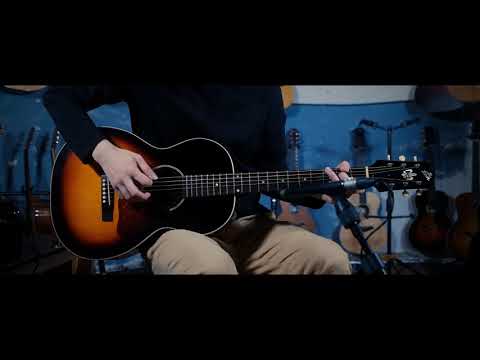
I play many neck types and never had a problem or really thought about it as this Loar’s neck feel was never an impediment at all. It does make thumb wrap-around easy if that’s your style or something to work towards (see the linked video in the images selection for playing that well demonstrates this).
Usage
The “parlor” guitar is often related to owning a couch and noodling. Or as a convenient travel or campfire guitar. Or as a beginner guitar because of ease of handling the small size. The longer scale does make it a tiny bit less suitable for smaller kids – but only by well less than 1/2” of the entire fretboard length. But the guitar is also suitable for recording, performance with amplification or without as per venue, or pure musical enjoyment, or exercises, scales, arpeggios and other training drill, and in very comfortable serious work in songwriting where I used it with good production for awhile. It doesn’t get in the way of ideas and making music.
Ergonomics/Sonic Enhancement/Edge Protection
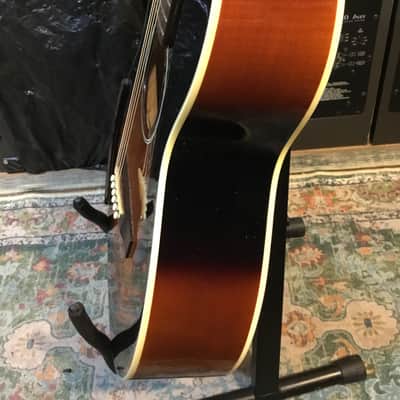
I added a thin, floating rosewood arm rest to the lower bout of the guitar for more comfort during long playing sessions and to enhance resonance by the increase in untouched and so undamped vibrating guitar top tone wood. The rest also guards against edge wear from the constant contact with the friction-inducing and human chemically charged motion of the forearm. Rosewood was selected for the armrest as a visual complement to the rosewood bridge and fingerboard.
Electronics
Electronics (third party) were aboard when I bought the guitar out of Canada. It’s an active under-saddle pickup powered by 9V battery, which is held in a small bag Velcroed to the head block. The pickup works flawlessly, the cabling inside is neat and orderly. The output jack is of the endpin/strap button variety. There are no tonal or volume controls on the guitar. So it’s a very simple but effective onboard preamp solution that will give a more powerful signal than a passive piezo. I do not know the make, as there’s no visible branding evident.
Reason for Selling
I would not sell this guitar were it an Ideal Universe. I’m a Loar fan. But am seeking a much more expensive instrument, also a parlor size, and so the Loar must go. Otherwise, I have two other Loar acoustics with NO intentions of selling those!
________________
A note on these notes
For someone who wants to buy a guitar, it figures that it would better serve their interests to know what they’re buying. So the story on this Loar may help you and others to know if this is a guitar of personal interest.
I’d hope to put any guitars I sell in the hands of people who are informed, so they better understand the instrument from the start, and so there’s less chance for disappointment. And maybe there’s even a possibility for just a touch of inspiration. Guitar players are in a centuries long continuum and inspiration is all over that history.
I’d also recommend reading reviews and listening to video performances. A youtube video is given in images selection that features a skilled player with an LO-215.
Please help out here if you see a mistake. Facts and fiction about guitar models can get spread at the speed of the internet.
_______________
LO-215-SN Features/Specifications
Body
Body Shape: 0-model, Parlor Guitar
Top Material: Solid Canadian Sitka Spruce
Back and Side Material: Laminate Flamed Maple
Bracing: Scalloped, Forward X-Braced
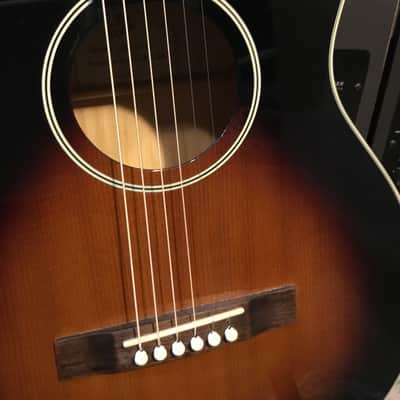
Bridge Material: Rosewood
Bridge Shape: Straight
Bridge Pins: Ivory, plastic
Saddle: Bone, Compensated
Body Binding: Ivory, plastic
Rosette: 3-Ply
Top Purfling: 2-Ply
Neck & Fingerboard
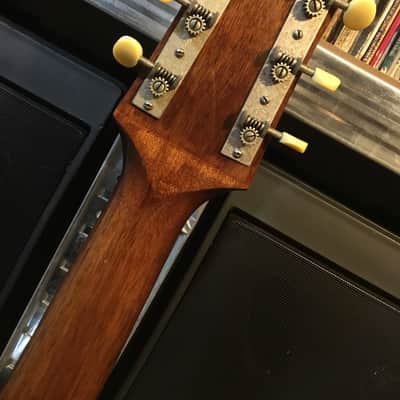
Neck: Mahogany
Neck Profile: Medium C
Neck Joint: Dovetail
Fretboard Material: Rosewood
Heel: Rounded, giving better access to high frets, important on a 12-fretter
Scale Length: 25.4"
Frets Clear: 12
Frets Total: 20
Nut Material: Bone
Nut Width: 1-11/16"
Headstock Overlay: Black
Headstock Inlay: The Loar Script & Fleur De Lys in Pearl and Abalone
Fretboard Inlays: Mother Of Pearl Dots
Hardware, Non-Standard Add-Ons, Finish
Tuning Machines: Golden Age
Strap Button: added to heel (non-standard)
Endpin: Output Jack Endpin/Strap Button (non-standard)+
Electronics: under saddle pickup, (non-standard)+
Floating Armrest Material: Rosewood (non-standard)
Finish: Vintage Sunburst, Gloss
Dimensions
Body Depth: 4-3/16”
Body Length: 19-3/16”“
Upper Bout: 9-3/4”
Lower Bout: 13-11/16”
Case
Silvercreek 6-Latch, Hard Shell, Excellent condition
Factory specs are not always followed by guitar brands. These specs have been modified from factory specs to reflect the actual Loar guitar for sale.
Production of The Loar LO-215 ran from 2012 to 2017.
________________
The guitar and case are sold as described.
Shipment will be well-packed and insured. I ship within 3 days of purchase, most often the next day.
My listings have received 100% positive statements elsewhere. This instrument is cross-listed at other sites, so may be sold on another venue before I can take it down here.
Local pickup available and encouraged.
This item is sold As-Described
This item is sold As-Described and cannot be returned unless it arrives in a condition different from how it was described or photographed. Items must be returned in original, as-shipped condition with all original packaging.Learn More.
| Listed | 2 days ago |
|---|---|
| Condition | Excellent (Used) Excellent items are almost entirely free from blemishes and other visual defects and have been played or used with the utmost care.Learn more |
| Brand | |
| Model |
|
| Finish |
|
| Year |
|
| Made In |
|
| Pickup |
|
| Fretboard Material |
|
| Color Family |
|
| Body Shape |
|
| String Type |
|
| Right / Left Handed |
|
| Number of Strings |
|
| Neck Material |
|
| Finish Pattern |
|
| Sides Material |
|
| Finish Style |
|
| Top Material |
|
| Back Material |
|
| Active Preamp |
|
| Number of Frets |
|
Product safety information may be available here.