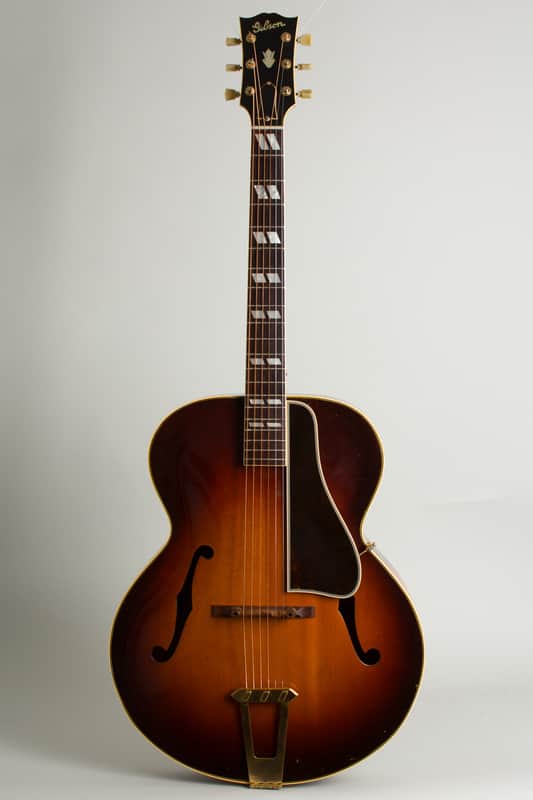
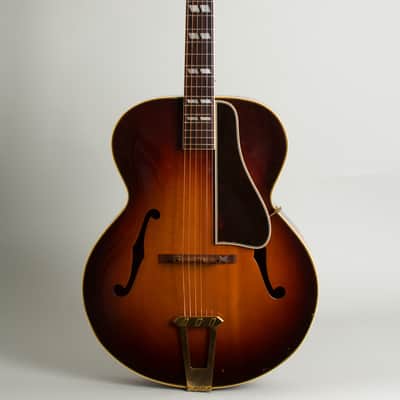
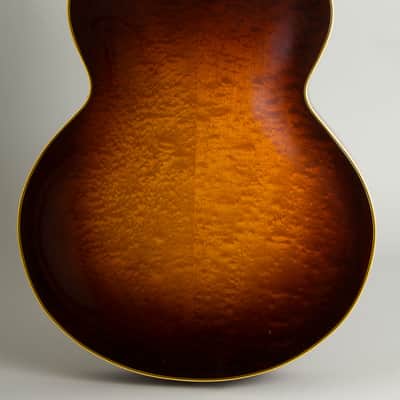
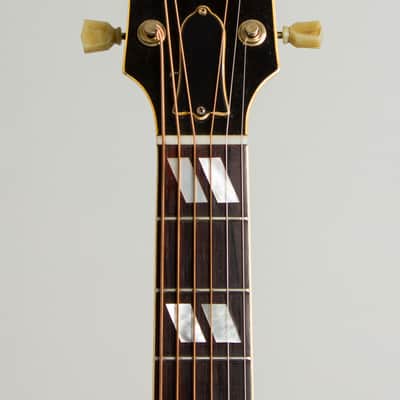
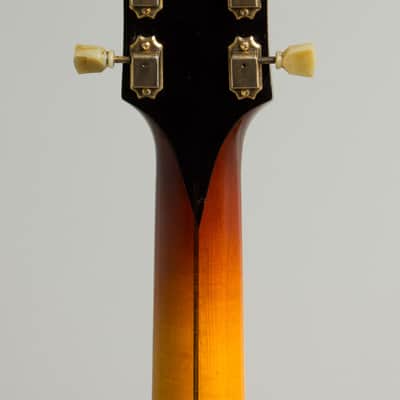
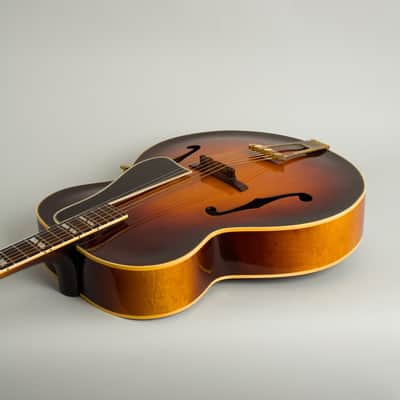
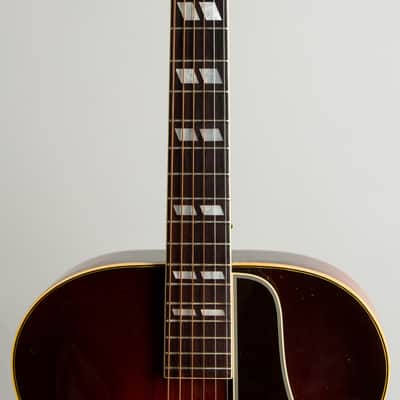
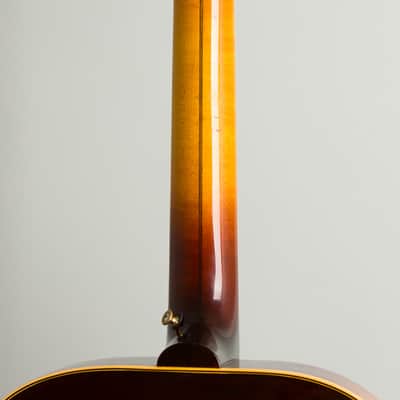
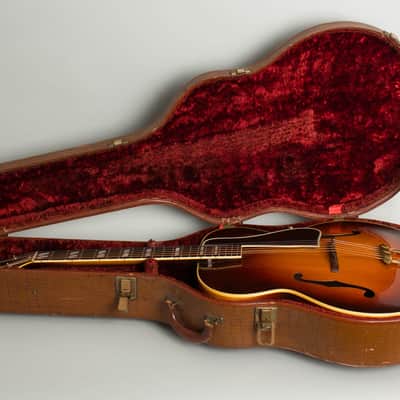
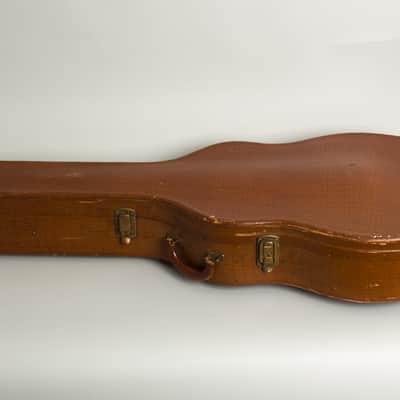
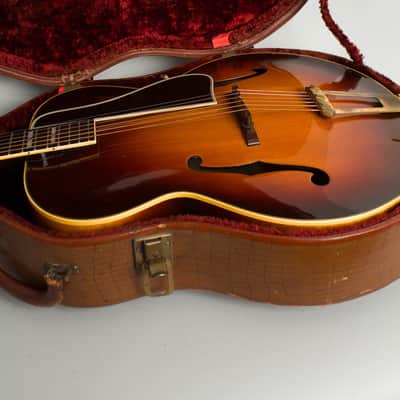
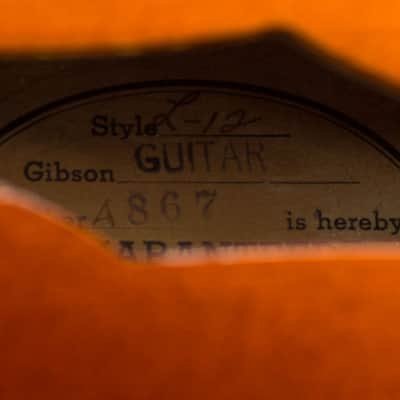
Gibson L-12 Arch Top Acoustic Guitar (1947), ser. #A-867, original brown hard shell case.
This seller has not set a shipping cost for Greece. Please contact them to ask about shipping.
Price€5,930.94
+ Shipping

Listed:9 hours ago
Views:32
Saves:11
Offers:0

Brooklyn, NY, United States
Our users rate Reverb
Gibson L-12 Model Arch Top Acoustic Guitar (1947), made in Kalamazoo, Michigan, serial # A-867, sunburst lacquer finish, maple back and sides, spruce top; laminated maple neck with rosewood fingerboard, original brown hard shell case.
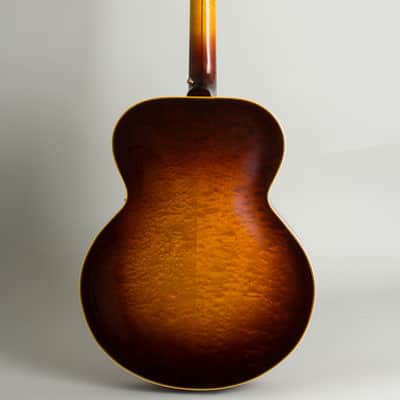
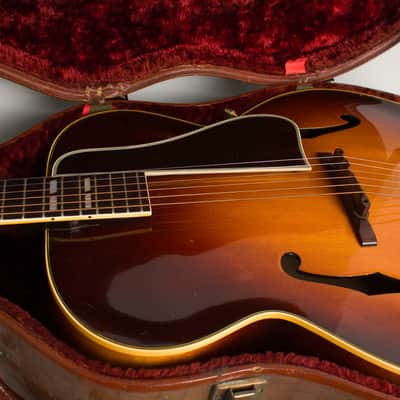
A beautiful and fairly rare Gibson carved-top guitar, this L-12 dates to the just post-WWII era at Gibson, built as the company was getting production up full-time again. This 17" fully-carved non-cutaway guitar sat just under the L-5 in Gibson's line featuring gold-plated hardware on a triple bound sunburst body with a spruce top and maple back and sides. The back has a dramatic burl maple figure, actually fancier than some period L-5s. This one carries a very early 3-digit "A" Artist serial number suggesting it was shipped out around October 1947.
The 3-piece maple neck has a single bound rosewood fingerboard with split parallelogram inlay. The round-backed neck substantial but comfortable, with a medium-deep round profile. The headstock is single-bound with the old pre-war thick script "Gibson" logo over a crown inlay. Early post-war guitars carried this older inlay style for a year or two as stocks of premade headstock veneers were used up; after that the new "modern" boxier Gibson script replaced it. The tuners and truss rod cover on this example are later replacements but basically in the correct style.
The post-war L-12 is a rare guitar with only 76 shipped between 1948 and 1950; this 1947 example is one of a very few earlier ones we have seen. Another 44 were sold up through 1955, by which time Gibson was much more dedicated to electric guitars. This L-12 is a beautiful example of the company's arch-top artistry in the 1940s, when these were still the company's flagship instruments.
Played acoustically the sound of this L-12 is powerful and incisive with more warmth and depth than many. In this period many would have been amplified with a DeArmond pickup, as a couple of small marks on this one suggest this one was as well. This is a very fine playing and sounding guitar, a real Gibson showpiece even if not an absolutely top-line instrument.
Overall length is 42 in. (106.7 cm.), 17 in. (43.2 cm.) wide at lower bout, and 3 3/8 in. (8.6 cm.) in depth, measured at side of rim. Scale length is 25 1/2 in. (648 mm.). Width of nut is 1 11/16 in. (43 mm.).
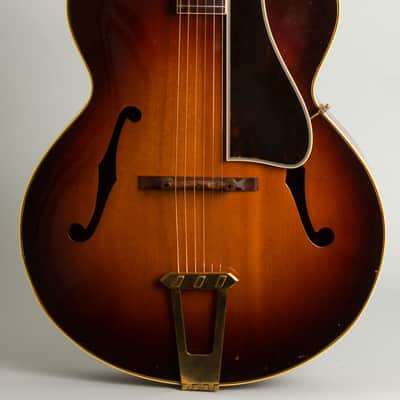
This fairly rare Gibson archtop shows only very light wear and a couple of fairly minor repairs. Overall the original finish still shines like it did when Truman defeated Dewey for the presidency; it has only some small dings, dents and scratches but no major loss. There are some feelable dinks to the back of the neck in the 6-7th fret area. The top has a couple of small scuff marks below the fingerboard indicating a DeArmond pickup once sat there, with another scratch from the control box behind the bridge below the strings.
The back of the headstock shows the only notable repair work to the instrument. It has been finished over in black with a "stinger" as Gibson often used; there is no sign of any cracks or breaks in the neck but a very thin veneer was added in this area at some point. The laminate center seam of the neck has a slight sealed separation visible and there were other tuner holes in the pack of the headstock; either or both could have been reasons for the cosmetic work. There are no other cracks or structural repairs detectable on the instrument besides a slight flexing of the back center seam just below the heelblock.
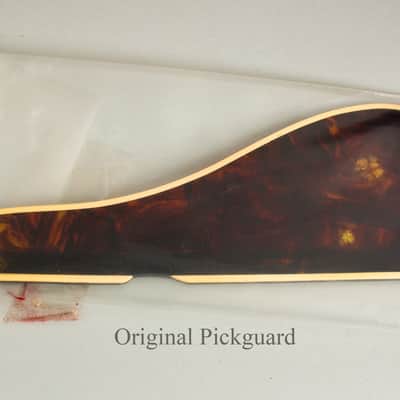
The tortoise celluloid pickguard and gold-plated bracket are replacements, very nicely done if more in the L-5 style than L-12. The original guard is in the case, suffering from early celluloid disintegration. The truss rod cover is a replacement, the tuners are later gold-plated Kluson Deluxe style units with larger bushings on the face. The bridge and tailpiece remain original, the gold plating on the tailpiece has some typical wear. A vintage gold Gibson strap button was added to the heel.
This guitar's neck angle is excellent, the action quite comfortable with room to adjust either way on the full-height original bridge. The bone nut and frets are original with only some light wear, and this is a splendid and very fine playing instrument. It lives in a period brown alligator case that is almost certainly original to the guitar if not the typically thought of Gibson style. Overall Excellent - Condition.
A beautiful and fairly rare Gibson carved-top guitar, this L-12 dates to the just post-WWII era at Gibson, built as the company was getting production up full-time again. This 17" fully-carved non-cutaway guitar sat just under the L-5 in Gibson's line featuring gold-plated hardware on a triple bound sunburst body with a spruce top and maple back and sides. The back has a dramatic burl maple figure, actually fancier than some period L-5s. This one carries a very early 3-digit "A" Artist serial number suggesting it was shipped out around October 1947.
The 3-piece maple neck has a single bound rosewood fingerboard with split parallelogram inlay. The round-backed neck substantial but comfortable, with a medium-deep round profile. The headstock is single-bound with the old pre-war thick script "Gibson" logo over a crown inlay. Early post-war guitars carried this older inlay style for a year or two as stocks of premade headstock veneers were used up; after that the new "modern" boxier Gibson script replaced it. The tuners and truss rod cover on this example are later replacements but basically in the correct style.
The post-war L-12 is a rare guitar with only 76 shipped between 1948 and 1950; this 1947 example is one of a very few earlier ones we have seen. Another 44 were sold up through 1955, by which time Gibson was much more dedicated to electric guitars. This L-12 is a beautiful example of the company's arch-top artistry in the 1940s, when these were still the company's flagship instruments.
Played acoustically the sound of this L-12 is powerful and incisive with more warmth and depth than many. In this period many would have been amplified with a DeArmond pickup, as a couple of small marks on this one suggest this one was as well. This is a very fine playing and sounding guitar, a real Gibson showpiece even if not an absolutely top-line instrument.
Overall length is 42 in. (106.7 cm.), 17 in. (43.2 cm.) wide at lower bout, and 3 3/8 in. (8.6 cm.) in depth, measured at side of rim. Scale length is 25 1/2 in. (648 mm.). Width of nut is 1 11/16 in. (43 mm.).
This fairly rare Gibson archtop shows only very light wear and a couple of fairly minor repairs. Overall the original finish still shines like it did when Truman defeated Dewey for the presidency; it has only some small dings, dents and scratches but no major loss. There are some feelable dinks to the back of the neck in the 6-7th fret area. The top has a couple of small scuff marks below the fingerboard indicating a DeArmond pickup once sat there, with another scratch from the control box behind the bridge below the strings.
The back of the headstock shows the only notable repair work to the instrument. It has been finished over in black with a "stinger" as Gibson often used; there is no sign of any cracks or breaks in the neck but a very thin veneer was added in this area at some point. The laminate center seam of the neck has a slight sealed separation visible and there were other tuner holes in the pack of the headstock; either or both could have been reasons for the cosmetic work. There are no other cracks or structural repairs detectable on the instrument besides a slight flexing of the back center seam just below the heelblock.
The tortoise celluloid pickguard and gold-plated bracket are replacements, very nicely done if more in the L-5 style than L-12. The original guard is in the case, suffering from early celluloid disintegration. The truss rod cover is a replacement, the tuners are later gold-plated Kluson Deluxe style units with larger bushings on the face. The bridge and tailpiece remain original, the gold plating on the tailpiece has some typical wear. A vintage gold Gibson strap button was added to the heel.
This guitar's neck angle is excellent, the action quite comfortable with room to adjust either way on the full-height original bridge. The bone nut and frets are original with only some light wear, and this is a splendid and very fine playing instrument. It lives in a period brown alligator case that is almost certainly original to the guitar if not the typically thought of Gibson style. Overall Excellent - Condition.
| Listed | 9 hours ago |
|---|---|
| Condition | Excellent (Used) Excellent items are almost entirely free from blemishes and other visual defects and have been played or used with the utmost care.Learn more |
| Brand | |
| Model |
|
| Finish |
|
| Categories | |
| Year |
|
| Body Shape |
|
Product safety information may be available here.

