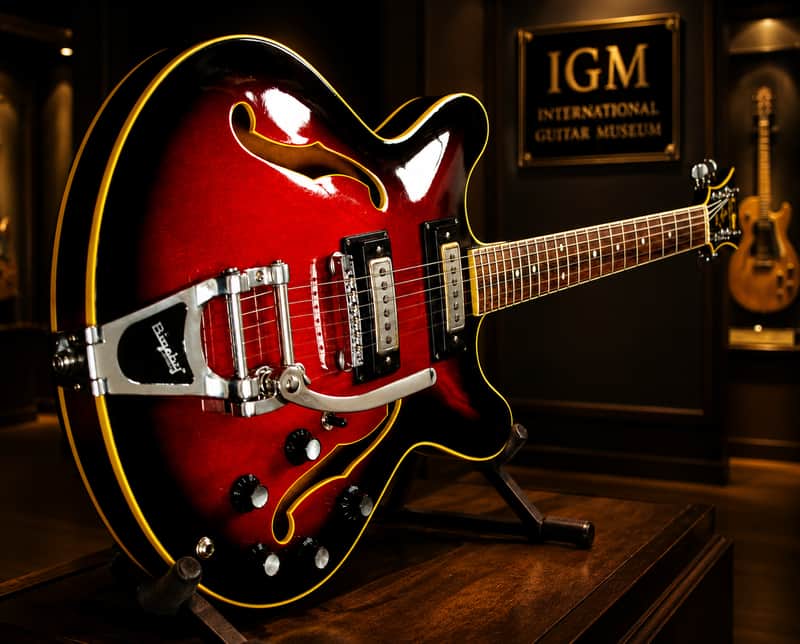
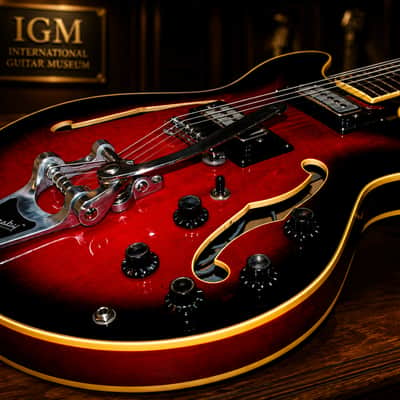
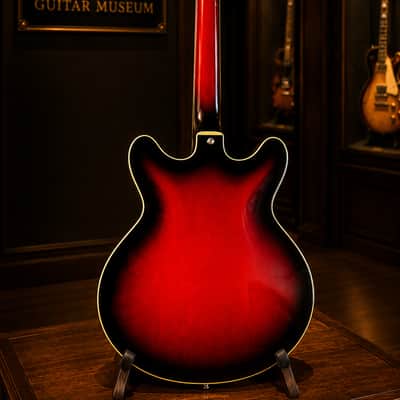
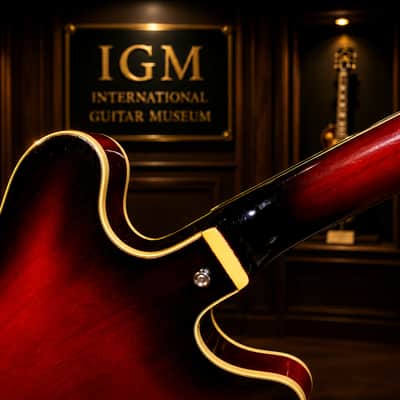
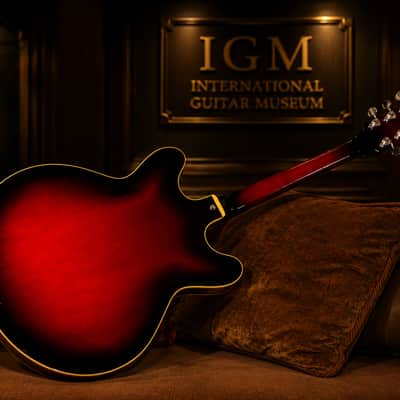
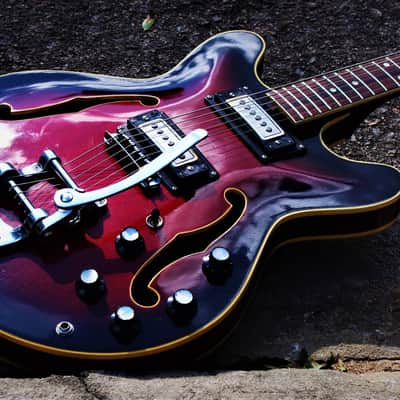
HARPTONE 420-R 1969 - Sam Koontz. Ultra Rare. Collectible. Only built for one year.
This seller has not set a shipping cost for Slovakia. Please contact them to ask about shipping.

Our users rate Reverb
HARPTONE · MODEL 420-R
Koontz-Designed Thinline Hollowbody — Redburst, with Bigsby
1969 · Harptone-Branded (Post-Standel) · Rare
International Guitar Museum · Home of the Richard Davis Collection
This guitar is offered by the International Guitar Museum of Durham, North Carolina, which now houses the Richard Davis Collection — one of the world’s largest and most deeply curated private assemblages of vintage and custom guitars. It is a Sam Koontz–designed thinline hollowbody, Model 420, in a sunburst finish — and it wears the Harptone name rather than Standel, which places it in the rarest and final chapter of the Koontz story: the single year, 1969, in which Harptone sold these electrics under its own brand. It is accompanied by full IMIR provenance documentation and a Certificate of Authenticity.
Museum founder and curator Rich Davis offers his personal assessment:
“I’ve said it for years: Standel guitars are among the most underrated and undervalued instruments in the vintage marketplace. I own the comparable Gibsons, Guilds, and Gretsches in my collection, and I’ll say openly that the Koontz-built guitars sound better acoustically, are made of finer materials, and play better. This one is a thinline that’s light, beautifully balanced, and a genuine pleasure to play sitting or standing. And because it carries the Harptone name from that one 1969 year, it is rarer still than the Standels I prize so highly.”
Why This Guitar Matters — Sam Koontz and the Standel/Harptone Story
Standel was Bob Crooks’s California company, founded in 1953 and legendary for its amplifiers. Over the years Crooks made several attempts to enter guitar production, working at various points with Paul Bigsby and with Semie Moseley of Mosrite. In the late 1960s he turned east, to the Harptone company of Newark, New Jersey — a firm that had built instrument cases since the 1880s, supplying Martin, Gibson, and Gretsch, and that had begun making guitars of its own.
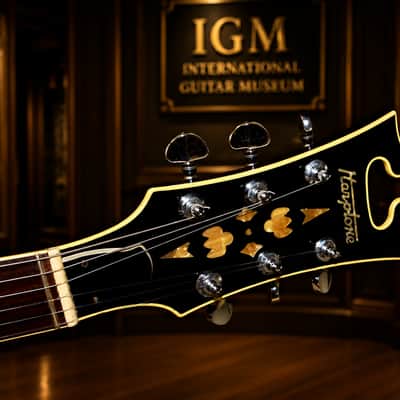
Harptone commissioned the New Jersey luthier Sam Koontz — celebrated for his original archtop creations — to design a line of hollow and semi-hollow instruments and to build the production line itself. Koontz did exactly that, even designing some of the machinery used to make the guitars. Between 1967 and 1969 only about 300 instruments in all were produced at the Newark facility, across roughly eleven models, branded for Standel and distributed out of California. They were built to a standard that anticipated the boutique movement by a generation, and Koontz is today ranked among the great American independent luthiers, spoken of in the company of D’Angelico and D’Aquisto. His unmistakable signature was the headstock, with its distinctive carved center scroll and inlay.
Koontz left Harptone in 1972 and continued building instruments under his own name from his shop in Linden, New Jersey, until his death in 1981. The Harptone name, meanwhile, carried genuine prestige of its own — George Harrison and David Bowie both played Harptone twelve-string acoustics — though the electrics are a separate and far scarcer story.
The Harptone Distinction — Rarer Than the Standel
This instrument is Koontz’s work to the last detail, but the name on its headstock tells a specific and uncommon story. The Standel contract ended in late 1968, when the California company ran into financial trouble. The undelivered, Koontz-built stock that remained at Newark was re-logoed as Harptone and sold through 1969 — and for that single year, Harptone offered these electrics under its own brand. Electric production was discontinued after 1969 entirely.
The practical consequence is simple: a Harptone-branded electric exists only because of that one-year, end-of-the-line window, which makes it rarer than the already-scarce Standel-branded examples. The guitar is identical in build — same Koontz design, same Newark craftsmen, same materials — with only the brand on the headstock changed. In other words, this is one of the last of a line that numbered only a few hundred to begin with.
About This Guitar
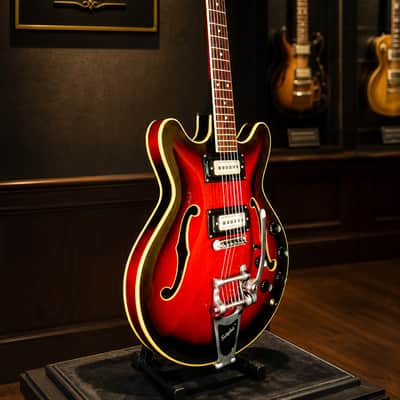
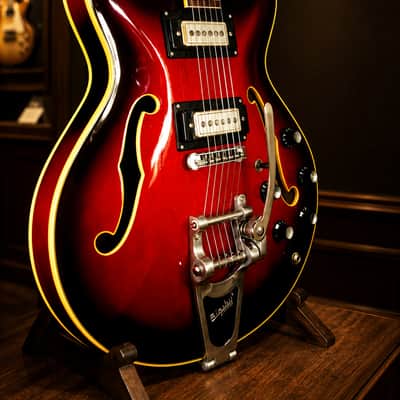
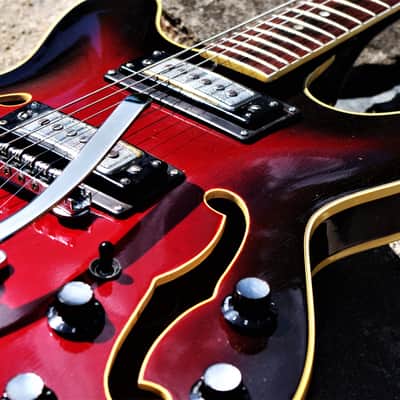
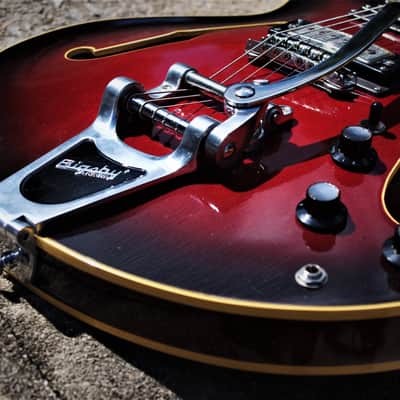
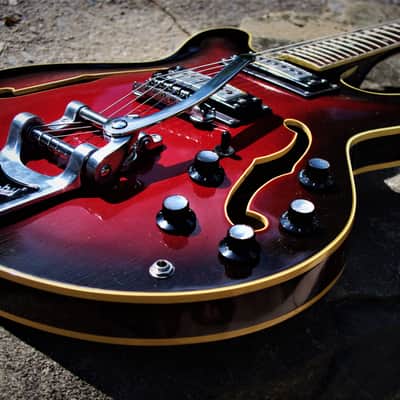
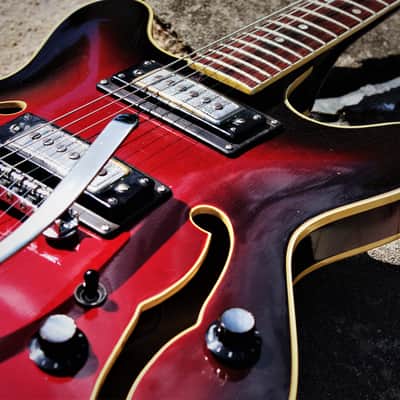
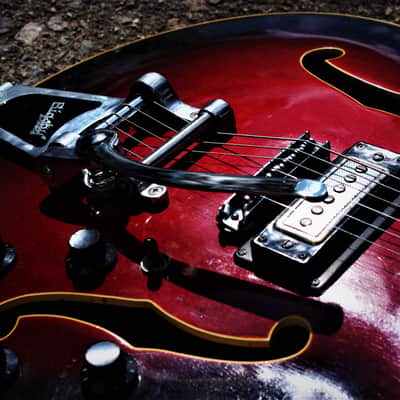
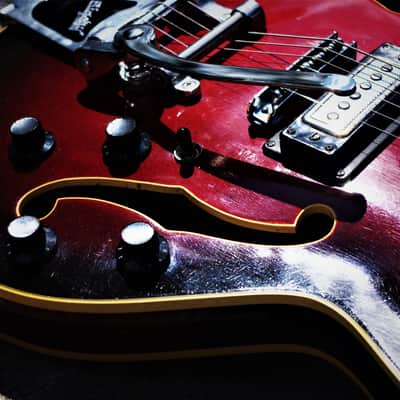
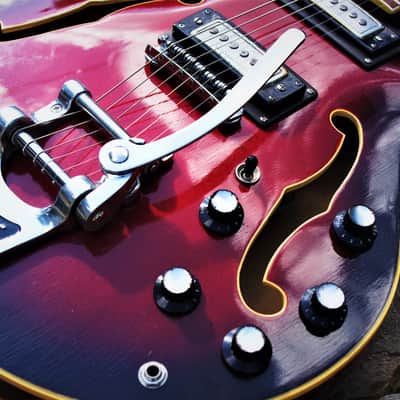
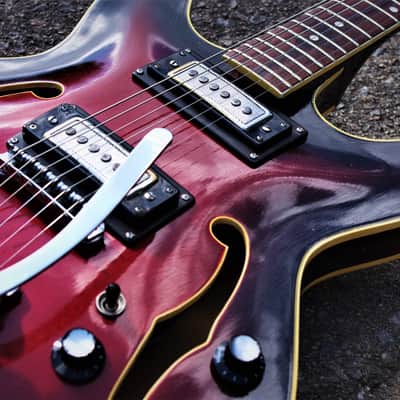
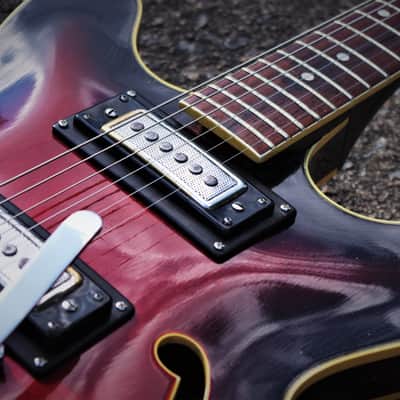
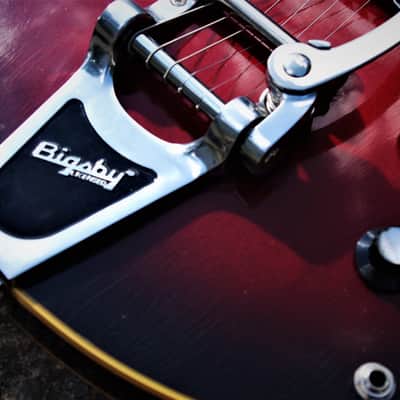
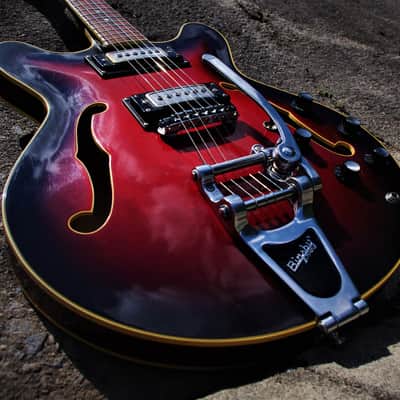
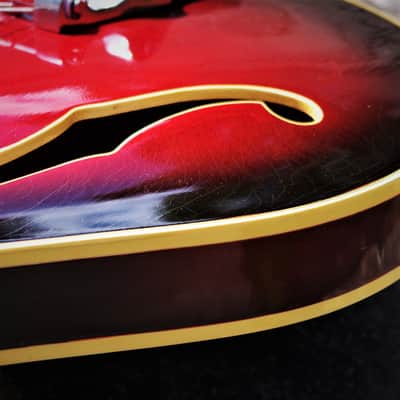
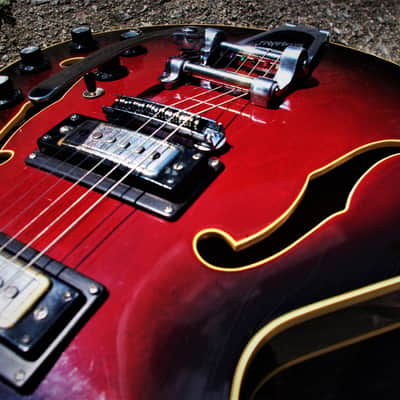
A Koontz-designed thinline hollowbody in the ES-335 idiom, with a double rounded cutaway and a cherry sunburst finish. It carries an arched maple top and sides with a flamed maple back, a slim, fast mahogany neck, a bound rosewood fingerboard with pearl dot inlays, and two Rowe/DeArmond single-coil pickups voiced through a three-way toggle and an adjustable compensating roller bridge. It is light, exceptionally well balanced, and easy to play seated or standing, with the warm, woody acoustic voice that has made these instruments quiet favorites among those who know them. A Bigsby vibrato has been period-style retrofitted to this example. It presents in good, honestly played condition.
Specifications
Brand
Harptone (post-Standel; Koontz-designed)
Model
420-R
Year
1969 — the single year of Harptone-branded electrics
Maker / Origin
Built by Harptone, Newark, New Jersey (Sam Koontz design)
Body
Thinline hollowbody; double rounded cutaway
Top & Sides
Arched maple
Back
Flamed maple
Neck
Mahogany — slim, fast profile
Fingerboard
Rosewood, pearl dot inlays
Pickups
Two Rowe/DeArmond single-coils; three-way toggle
Bridge
Adjustable compensating roller bridge
Vibrato
Bigsby — period-style retrofit (non-original)
Tuners
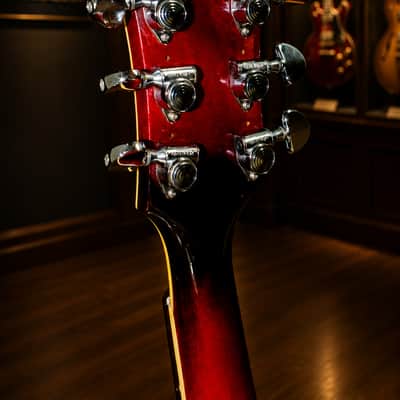
Grover (changed and later returned to Grover)
Binding
3-ply body; 1-ply bound f-holes, neck, and headstock
Finish
Cherry Burst (Rare Color)
Nut width
1–11/16 in.
Lower bout
16 in.
Body depth
1¾ in. at the side
Condition
Good (honest play wear)
Case
Included
Serial
DC1037
Condition
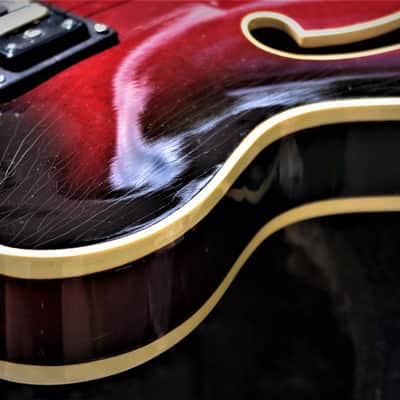
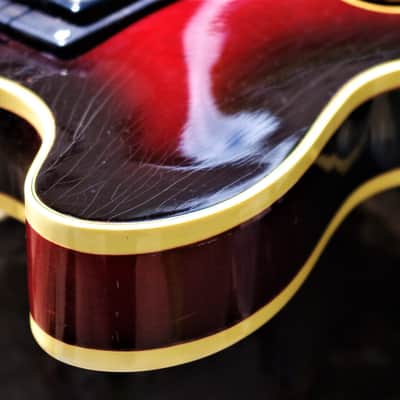
Offered honestly as a good, played example. It shows dings, dents, and scrapes from years of use; the finish carries considerable checking and several faded areas; and the binding has the usual fine line-cracks but is fully intact. The frets are very good. Two points of disclosure for the originality-minded buyer: a Bigsby vibrato has been retrofitted to the guitar (a later addition, not original to it), and the tuners were at one time changed and subsequently returned to Grover. Maintained in climate-controlled, museum-grade conditions. Includes case. [Curator to confirm any further wear notes prior to issuance.]
Provenance Statement
This specimen is offered directly from the exhibit collection of the International Guitar Museum, Durham, North Carolina.
From the Richard Davis Collection. This instrument comes from the Richard Davis Collection — one of the world’s largest and most deeply curated private assemblages of vintage and custom instruments: more than 900 guitars and 200 amplifiers spanning 225+ brands from 12 countries, assembled over 27 years. The collection holds notable depth in the Koontz-built Standel and Harptone instruments, of which the Harptone-branded electrics are the rarest.
Attribution. The instrument is a Sam Koontz–designed Model 420 thinline, built by Harptone of Newark, New Jersey, and sold under the Harptone brand in 1969 — the single year in which these electrics carried the Harptone name. It is offered on that documented basis.
Why provenance matters now. The market has spoken decisively on what documented provenance and genuine rarity are worth. At Christie’s landmark Jim Irsay sale in March 2026, instruments with documented history realized $94.5 million — 136% above estimate. For a scarce instrument from a revered maker, rarity and chain of custody are inseparable from value.
Institutional-grade documentation. This instrument is accompanied by a formal Certificate of Authenticity and a transferable Title of Ownership registered with the International Musical Instrument Registry (IMIR), Luxembourg — providing clear chain of custody from the Richard Davis Collection forward.
When you acquire from the Richard Davis Collection, you acquire the provenance with the instrument. That value transfers with the title — and it does not expire.
Available exclusively from the professionally curated, internationally renowned Richard Davis Collection — accompanied by Certificate of Authenticity and Title of Ownership issued by the International Musical Instrument Registry (IMIR).
| Listed | 2 days ago |
|---|---|
| Condition | Excellent (Used) Excellent items are almost entirely free from blemishes and other visual defects and have been played or used with the utmost care.Learn more |
| Brand | |
| Model |
|
| Finish |
|
| Year |
|
| Made In |
|
| Right / Left Handed |
|
| Body Type |
|
| Number of Strings |
|
Product safety information may be available here.

