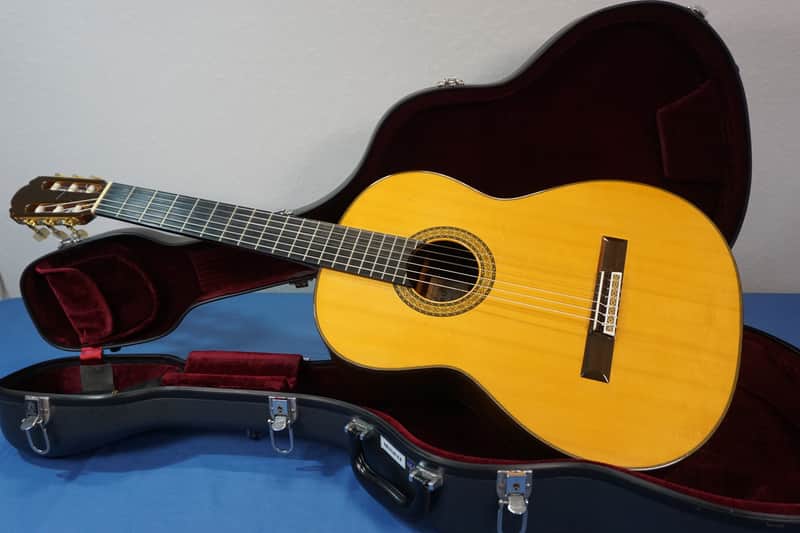
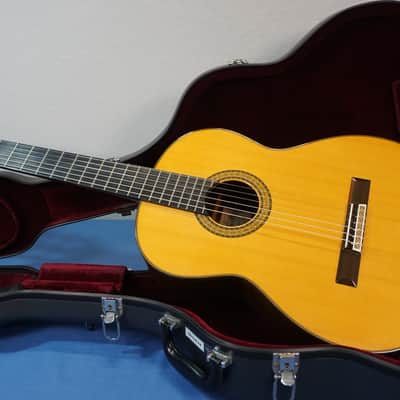
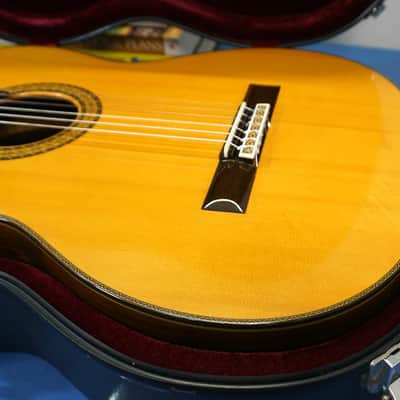
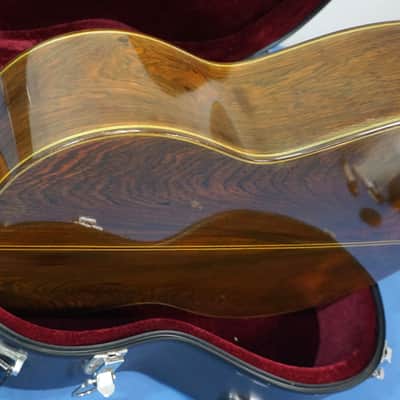
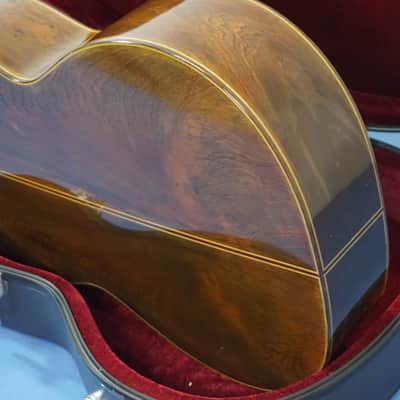
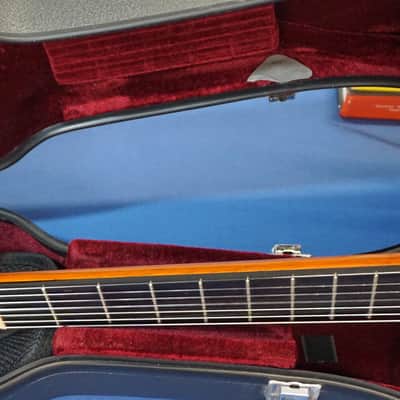
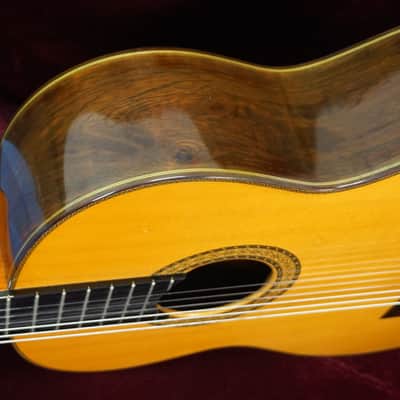
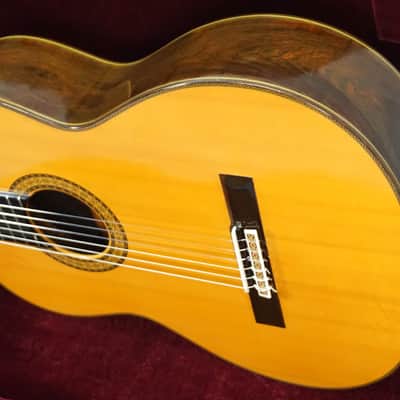
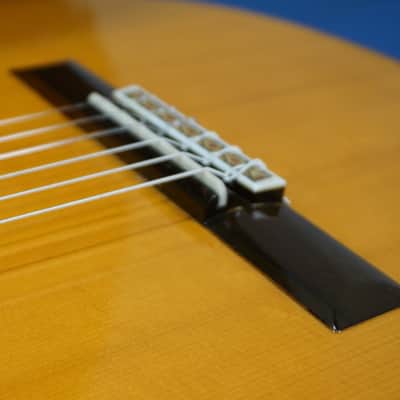
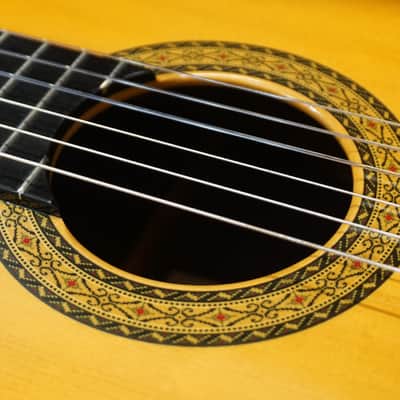
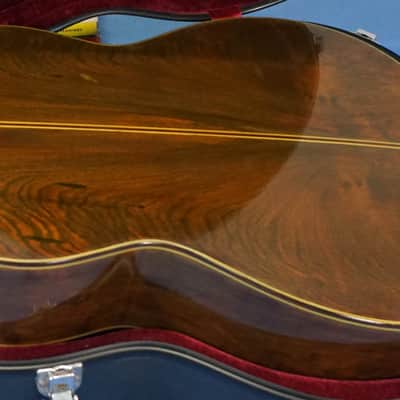
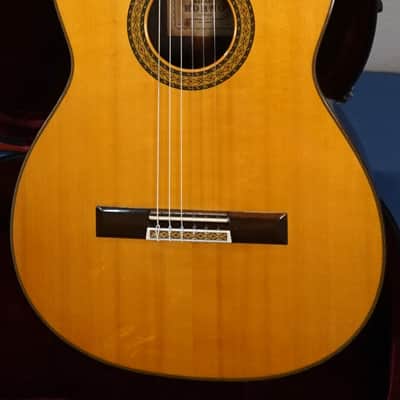
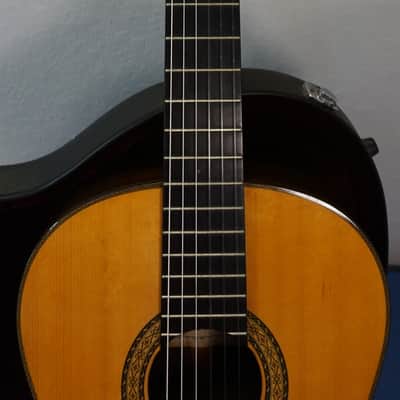
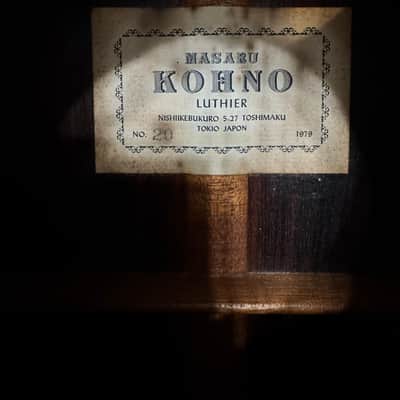
Masaru Kohno no. 20 - Jacaranda - Cashew Lacquer - 1979
This seller has not set a shipping cost for Hungary. Please contact them to ask about shipping.


Our users rate Reverb
Very Good Condition
The Masaru Kohno No. 20 is prized for its premium materials and traditional Spanish-inspired construction, characterized by clear string separation and excellent projection.
Top: High-grade solid Spruce.
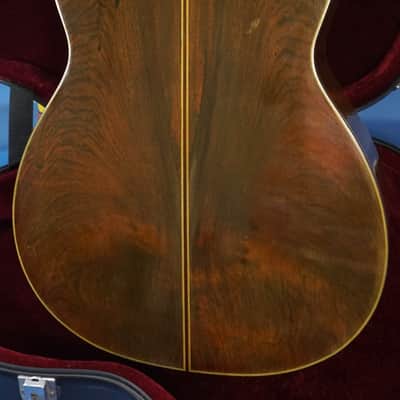
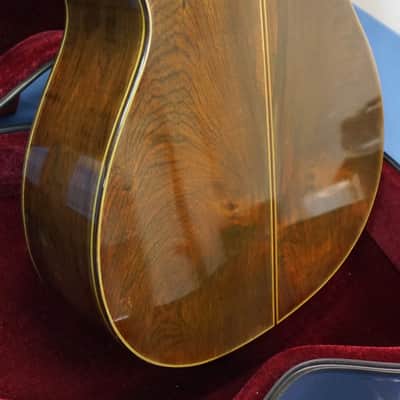
Back & Sides: Solid Brazilian Rosewood (Jacaranda)
Neck: Mahogany
Fingerboard: Ebony.
Scale Length: 660 mm
Nut Width: 52 mm
Finish: Cashew lacquer
Action: at 12th fret as 3.8mm/3.1mm
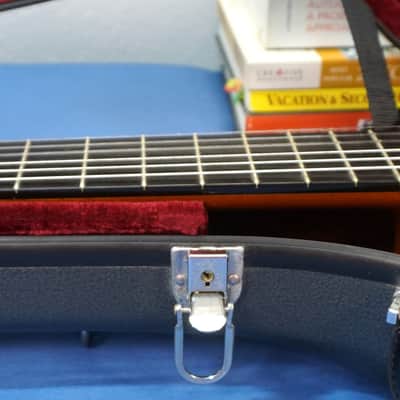
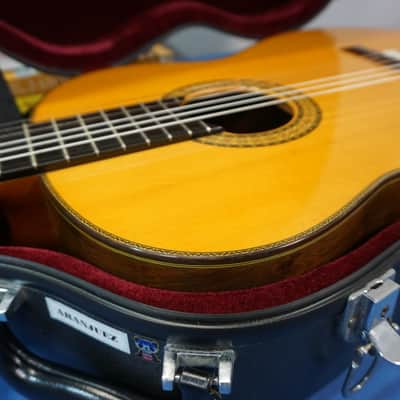
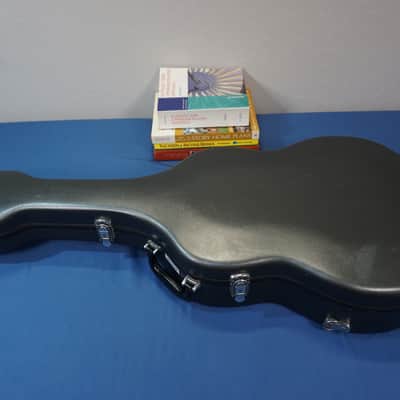
Case: Includes the luxury Fiber Carbone case made in Spain
Masaru Kohno (1926-1998) is an essential figure in Japanese guitar making history and visionary luthier. Born in Mito City, Japan, he started his career as a luthier after graduating from the Tokyo College of Arts and Crafts. In 1959, Masaru Kohno travelled to Arcangel Fernandez’s workshop in Spain, where he stayed six months for an enlightening apprenticeship. A turning point in his career was winning the Gold Medal at the Elizabeth’s Concourse International Guitar Building Competition in Belgium in 1967, which brought him worldwide recognition. The list of players having recorded and performed on Masaru Kohno’s guitar is substantial, and to name a few, Julian Bream, Oscar Gighlia, and Sharon Isbin.
This guitar made by Masaru Kohno from 1979 is a wonderful instrument.
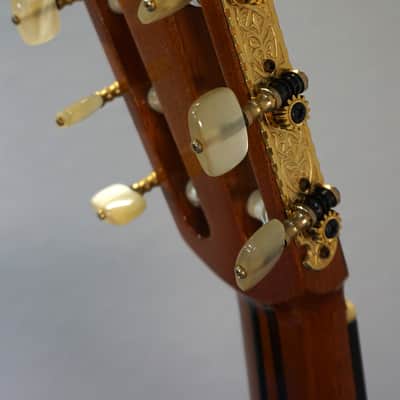
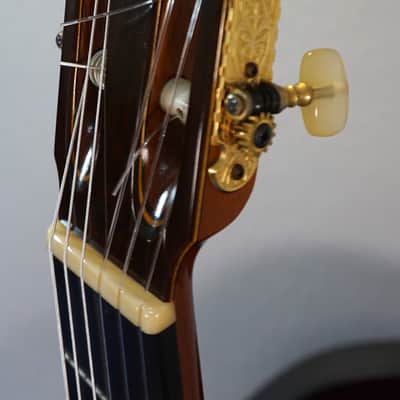
It is the Model 20, the second highest model at the time, whose name is based on the back then list price of 200,000 yen. It features beautiful jacaranda wood, which has a particularly beautiful grain, as well as high-quality Gotoh tuners from the 1970s and a well-aged spruce top. The sound is warm, open, and piano-like with a wonderful vintage touch, a texture-rich quality, and grain that is unmistakably unique to Japanese guitars of this period.
Sound Character
The Kohno 1979 No. 20 is known for a "piano-like" quality with warm, open tones and a vintage touch. While Kohno was inspired by the Spanish school, his instruments are noted for having their own character, specifically superior projection and bright, clear trebles. The No. 20 is generally regarded as one of the finest vintage Japanese concert guitars from the 1970s. It combines the warmth of traditional Spanish guitars with the precision and craftsmanship for which Japanese luthiers became famous.
The basses are deep, powerful, and well-defined, with excellent sustain. The midrange is rich and lyrical, making melodic passages stand out beautifully. The trebles are clear, singing, and capable of producing a wide range of tonal colors. The guitar offers exceptional note separation, allowing complex polyphonic music to remain articulate and balanced. Players often describe vintage Kohno guitars as having a refined, mature voice with strong projection and remarkable responsiveness.
Compared with many Spanish guitars of the same era, the No. 20 tends to deliver slightly greater clarity and focus while retaining the warmth and overtone richness associated with traditional concert instruments.
Current Market Value in the United States (2025–2026)
A Masaru Kohno No. 20 from 1979 typically sells in the following range:
Poor condition or requiring repairs: $1,500–2,000 USD
Good original condition: $2,800–3,500 USD
Excellent condition with original case and no structural issues: $3,500–5,000 USD
Exceptional example with highly figured Brazilian Rosewood and outstanding provenance: $5,000–6,500+ USD
Nowadays, a single set of Brazilian Rosewood for back & sides - alone is valued at $2,000–$3,000; when factoring in all the components and the craftsmanship of the luthier, the instrument is worth at least $10,000.
.......................................................................................................................................................................................
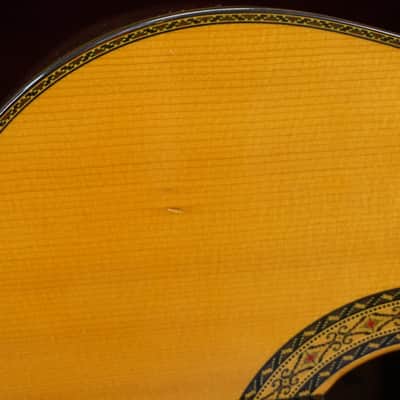
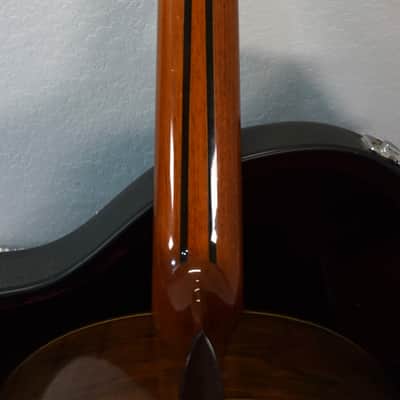
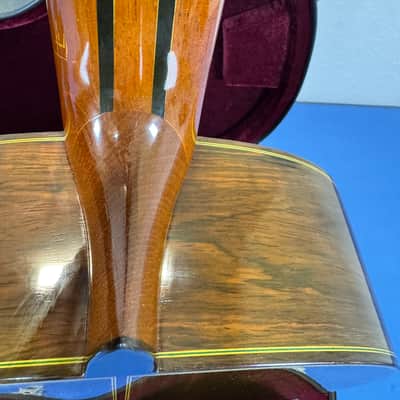
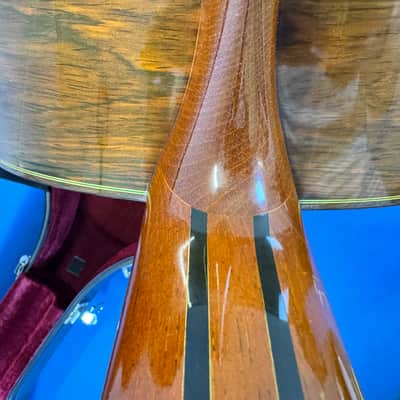
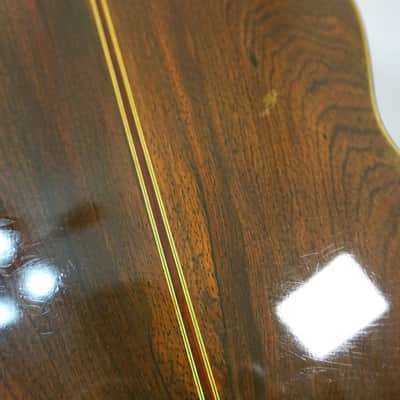
This instrument remains in very good condition. There is a scratch on the instrument's top as shown in the photo, and naturally, the body itself bears the inevitable scuffs and tiny dings accumulated over the years. The joint between the guitar neck and the heel feels slightly uneven to the touch, you have to feel it carefully with your fingertips to notice it; it cannot be detected from a photograph.; upon carefully inspection, I found that the adhesive layer has raised slightly over time, likely due to oxidation caused by exposure to humid air. When I first noticed the irregularity, it appeared as a rough, blackish outline—resembling black mold. After cleaning it off with a cloth and a specialized guitar cleaner, the black mark was removed, though a faint, lighter-colored outline remained visible, as shown in the photo. There is absolutely no impact on the structural integrity of the joint between the neck and the heel; if there were any cracking, the rounded protrusion in the center would be the first place to show it. In reality, the joint is perfectly flush, and the surface feels completely smooth to the touch, with no trace of unevenness. However, this does not affect the guitar's aesthetics or structural integrity. Overall, the guitar presents a very attractive appearance.
Note: This guitar is being sold in the exact condition shown in the images and described in this text above.
This item is sold As-Described
This item is sold As-Described and cannot be returned unless it arrives in a condition different from how it was described or photographed. Items must be returned in original, as-shipped condition with all original packaging.Learn More.
| Listed | 2 days ago |
|---|---|
| Condition | Very Good (Used) Very Good items may show a few slight marks or scratches but are fully functional and in overall great shape.Learn more |
| Brand | |
| Model |
|
| Finish |
|
| Categories | |
| Year |
|
| Made In |
|
| Body Shape |
|
Product safety information may be available here.

