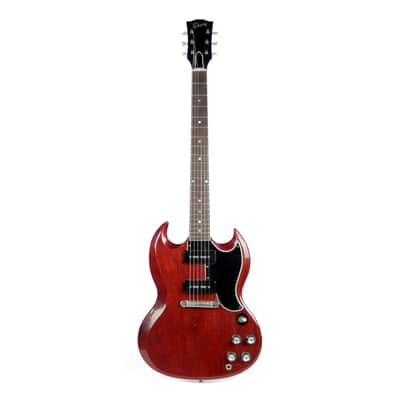
Gibson Les Paul Special 1961 - Walnut
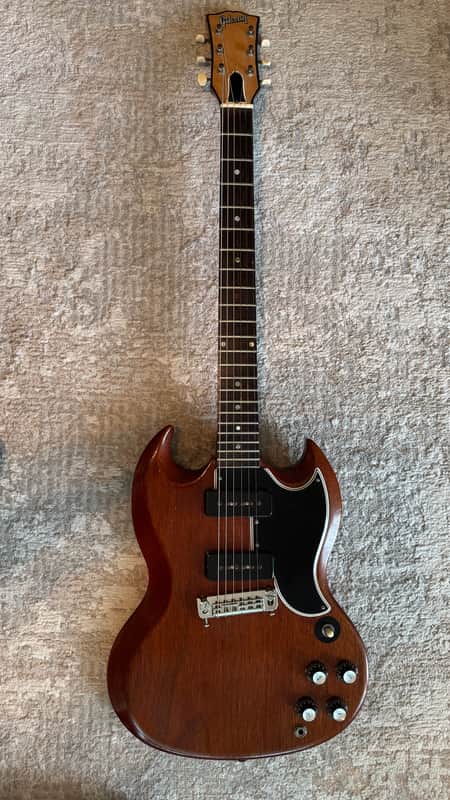
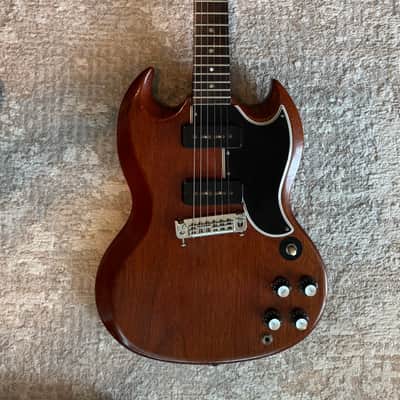
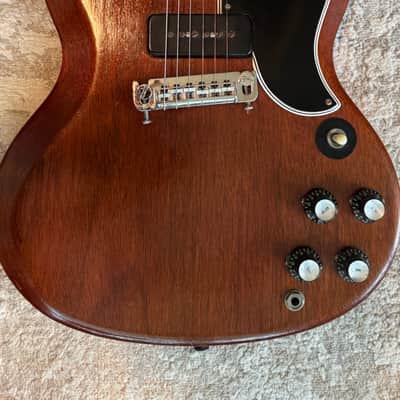
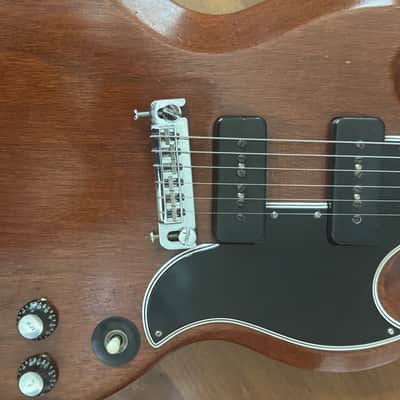
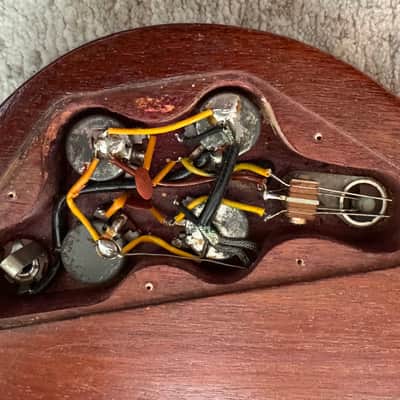
Gibson Les Paul Special 1961 - Walnut
This seller has not set a shipping cost for Finland. Please contact them to ask about shipping.

Our users rate Reverb
How I acquired this early 1961 “Les Paul Special” (pre-SG), wood-stamped serial number 36528, is a story unto itself. In my late teens in 1970 I was working at an FBO at Teterboro Airport in New Jersey fueling planes by day, practicing in an overpowered, undertalented band at night, but always searching for a Gibson electric I could afford while working through my Les Paul “how to play the guitar” books. One of the senior aircraft mechanics in the shop I’d become friend with said, “You’re in luck – I have one!” He brought it in the next day. He explained it was his son’s guitar who was sadly one of the many who did not make it home from the Vietnam war, stating he had “no idea what to do with it – but want it to end up in the hands of someone who would use and really appreciate it.”
He wanted to “learn guitar in retirement” but friends thought an acoustic would be a better place to start. After some good faith negotiation, he traded me the guitar for an Epiphone acoustic. Of course, neither of us had any sense that his son’s very early Les Paul Special would turn out to be a rare surviving vintage 6 decades later. It seemed a fair exchange and win/win to both of us at the time.
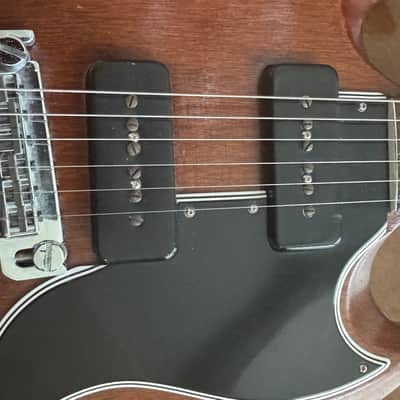
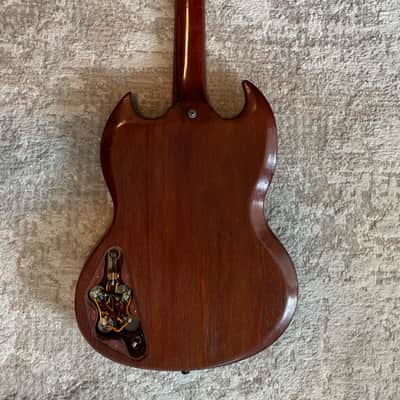
The distinct 5-digit wood-stamped serial number is the numbers system Gibson in the 50’s. They moved to a 6-digit number starting with a zero in late 1960. The Special was essentially a stripped-down version of the Standard, the slightly more affordable “workhorse” version. However, it was often preferred by musicians in the know because of the straightforward “stud bridge tailpiece” and the absence of the notoriously wiggy “Sideways Virola” or “whammy bar” tremolo bar and bridge configuration that “went out of tune just looking at it,” as so many complained in the day. Many who had them converted to a Bigbsy, and loosing original value along the way. The Special also weighed in about two pounds lighter at 8 lbs. vs 11 lbs.
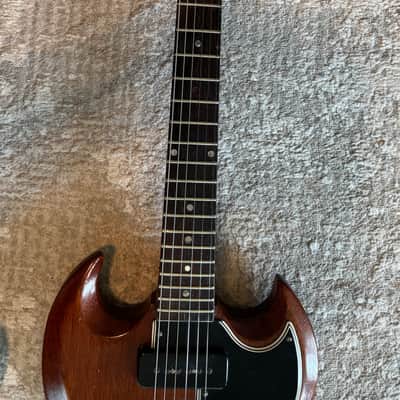
There are several distinctions that set the Special apart from later SG’s like the Standard:
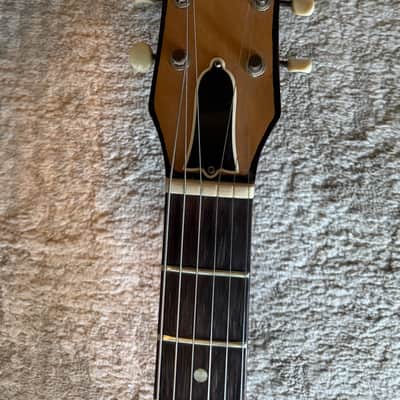
· Unbound fingerboard
· Stud bridge tailpiece
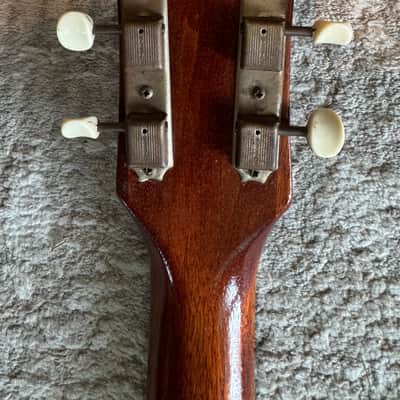
· All mahogany body and neck
· Rosewood fingerboard
· Dot inlays
· Black double layered pickguard
· 2 Gibson P-90 Soap Bar pickups
It’s this last key distinction that gives the Special a preferred edge with many, the single-coil P90 Soap Bar pickups designed by Walt Fuller for Gibson in the late 40’s. While the eventual two-coil Humbuckers reduced hum at volume (although negligible in my experience unless standing too close to an amp), the P90’s are brighter, with more open clarity and upper-mid emphasis, articulating attack with a raspy, gritty bite and a wider frequency response. In other words, P90’s are less compressed making the sound more rock and roll “raw” (think Jimmy Page’s early tones).
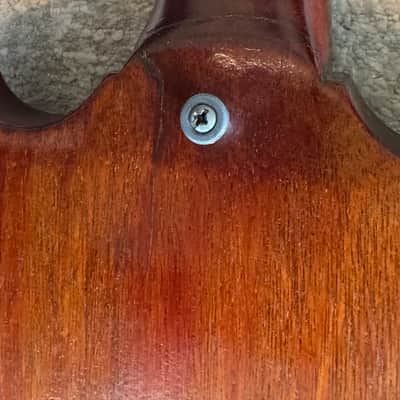
I have only two regrets under my lengthy stewardship of the guitar: First, while playing with that original band, I attempted to get a bit of string bend in a soaring “China Grove” chord by holding the top horn and slightly bending the neck forward which resulted in the dreaded heel crack – something that appears to be characteristic in Gibson’s vintage thin neck design in the hands of an amateur. I sought out the best professional repair shop I could find in NYC, so it didn’t worsen. The shop kept it longer than I’d hoped but did an excellent job, the factory trained technician insisting it was now “better than new.” I would argue that assessment with any such crack, although the neck is perfectly straight and true as of its last visit to a guitar shop for a tune up in Durango, CO a few years ago, not a single fret buzz and exceptionally low action. My other regret is getting rid of the worn original case for a new, sturdier case and losing the paperwork that was in it.
Vastly preferring the sound and action over my maple neck Telecaster, I regularly used the Les Paul Special on weekends until our band broke up in 1971 and largely stopped playing as life moved on, flying planes I once fueled and hangered, and then moving into a different business. It sat in its case in dens or closets decade after decade with short starts and long stops at playing preserving its condition. I too started playing an acoustic, but the close action on this guitar is delightful by comparison and easy on the fingers, not to mention the rich sound of the P90 pickups.
This item is sold As-Described
This item is sold As-Described and cannot be returned unless it arrives in a condition different from how it was described or photographed. Items must be returned in original, as-shipped condition with all original packaging.Learn More.
| Listed | 4 months ago |
|---|---|
| Condition | Good (Used) Good condition items function properly but may exhibit some wear and tear.Learn more |
| Brand | |
| Model |
|
| Finish |
|
| Categories | |
| Year |
|
| Made In |
|
| Fretboard Material |
|
| Pickup Configuration |
|
| Body Material |
|
| Neck Construction |
|
| Body Shape |
|
| Right / Left Handed |
|
| Number of Strings |
|
| Neck Material |
|
| Bridge/Tailpiece Type |
|
| Color Family |
|
| Model Sub-Family | |
| Body Type |
|
| Scale Length |
|
| Model Family | |
| Number of Frets |
|
Product safety information may be available here.