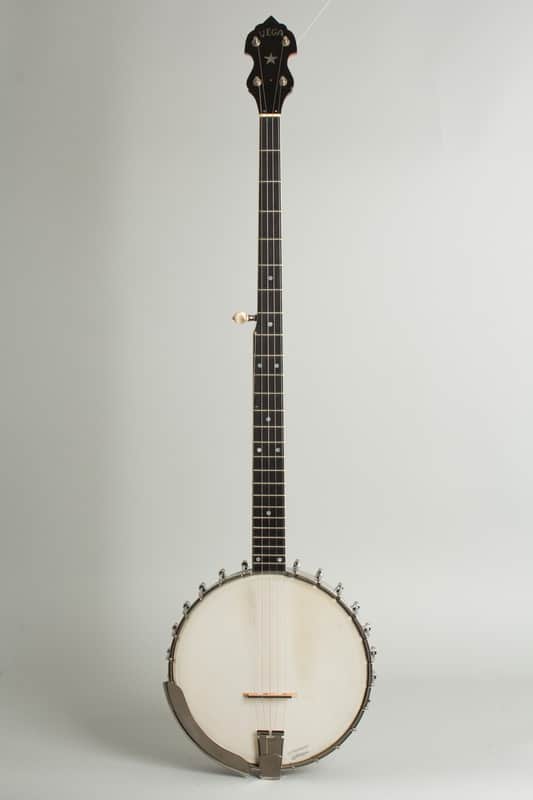
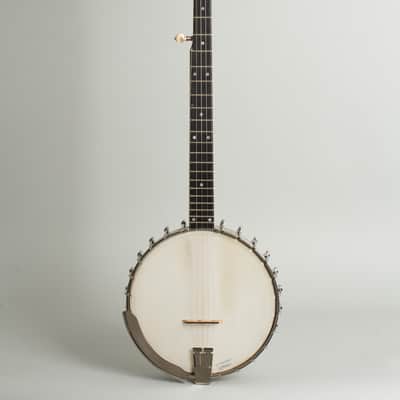
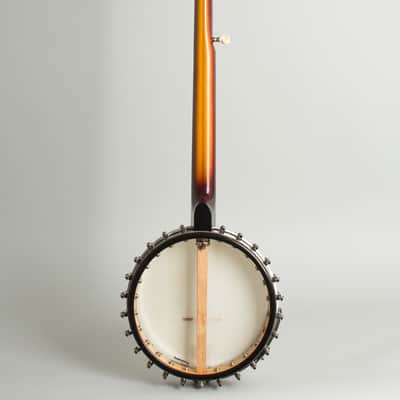
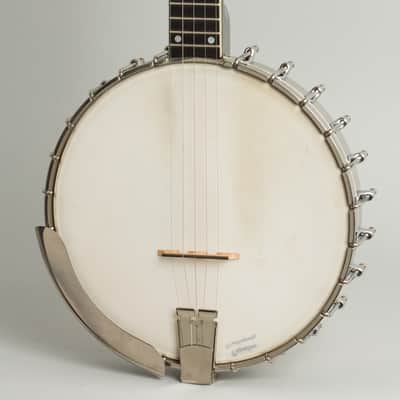
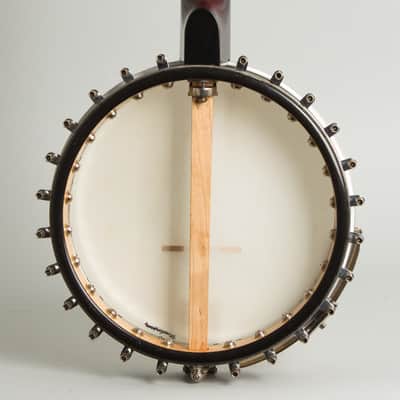
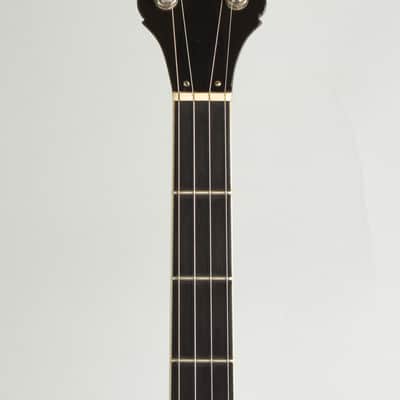
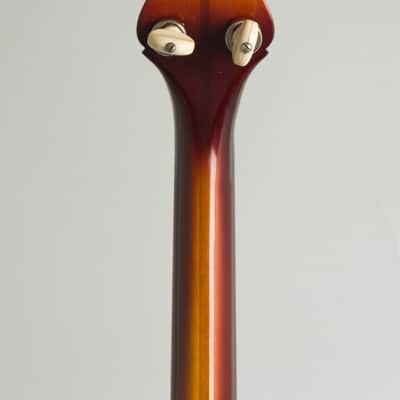
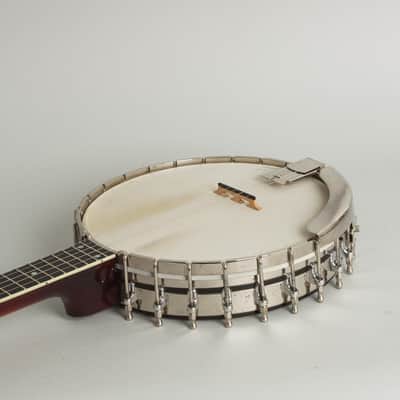
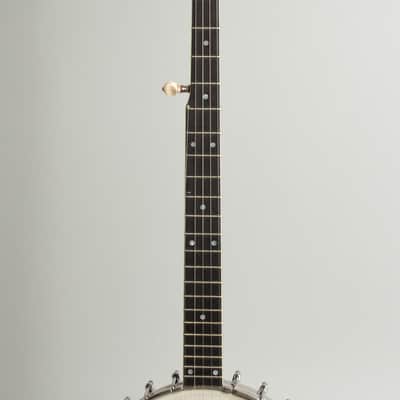
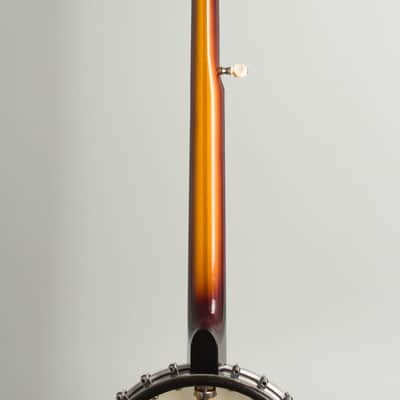
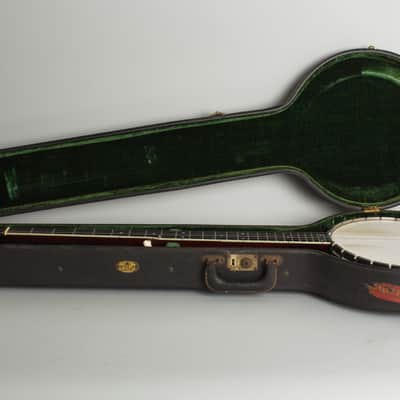
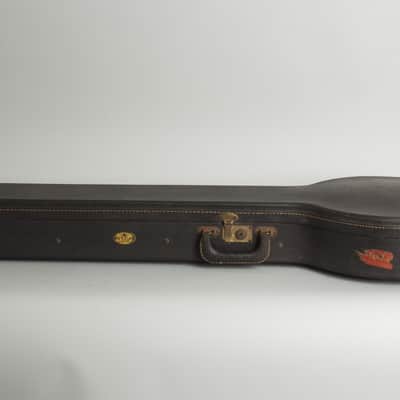
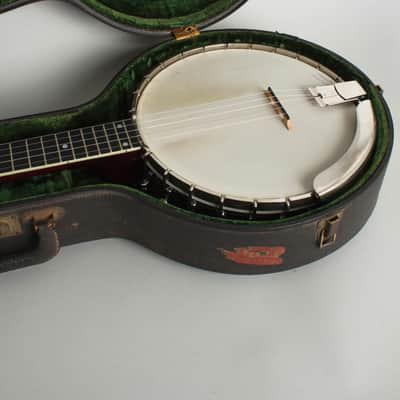
Vega Pete Seeger PS-5 Model Longneck 5 String Banjo (1962), ser. #101510, original black hard shell case.
This seller has not set a shipping cost for Latvia. Please contact them to ask about shipping.
Price€2,953.82
+ Shipping
Listed:3 months ago
Views:119
Saves:8
Offers:0

Brooklyn, NY, United States
Our users rate Reverb
Vega Pete Seeger PS-5 Model Longneck Model 5 String Banjo (1962), made in Boston, Mass., serial # 101510, shaded maple finish, laminated maple neck and rim, ebony fingerboard, original black hard shell case.
This is a very nice and fairly early example of the classic Vega longneck "folk" banjo from 1962, originally designed as a custom instrument for Pete Seeger then put into production late in 1958. This is the original style model with a traditional wooden dowel stick, replaced later this year with Gibson-like co-ordinator rods later which added quite a bit of weight to the rim.
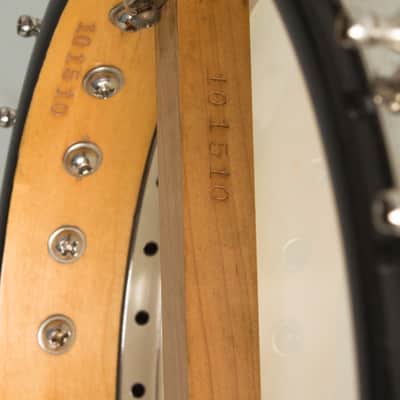
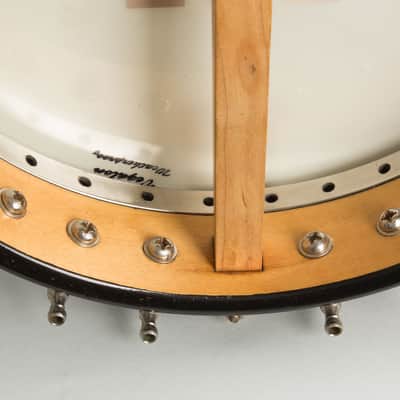
The rim itself is the old Tu-Ba-Phone pattern, still with round holes instead of rectangular cut-outs found on later PS-5 and Vegavox models. The shoes are mounted through the rim from the inside (instead of just through the bracket band), but otherwise it is built to the same high standard as Vega's older prewar instruments with typically excellent workmanship. The neck is laminated maple, finished in sunburst with a dot-inlaid bound ebony fingerboard. The headstock face has a pearl inlaid Vega logo and star emblem, with geared Elton "pancake" banjo tuners; these were later replaced with heavier Grover Rotomatic guitar tuners with considerably less aesthetic appeal.
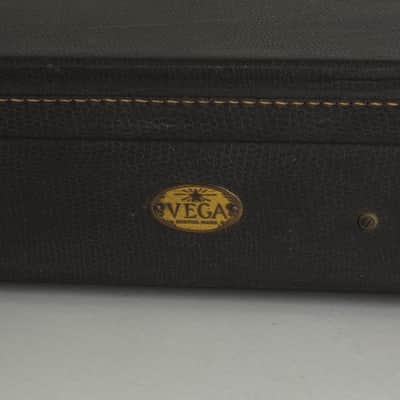
Unfortunately the yellow label Vega with the Pete Seeger name is gone from the inside of the rim; there is actually no sign it was ever there. The serial number remains stamped on the rim and dowel stick dating this one the beginning of 1962, when the folk boom was in full swing. The original Vega-branded green-lined case is still with the banjo and in very nice shape.
These banjos were designed primarily to be tuned down to "E" using standard 5-string "G" tuning intervals. The development was the result of Pete Seeger's need for a banjo that could comfortably accommodate different vocal keys, especially the typical blues guitarist's penchant for playing in E! He also sometimes used it in a low Bb version of "C" tuning. Most players kept a capo handy to easily switch to G or other keys; the position dots are actually designed to be in the familiar layout when the banjo is capo'd in the 3rd fret "G" position, and look odd when it is not.
This style banjo was an essential piece of equipment for late 1950s and early '60s folk groups, starting with the Kingston Trio. This actual Seeger signature model longneck was very sought after at the time and considered rather expensive; they are actually rather rare today. Vega offered a less expensive version without the Tu-Ba-Phone tone ring and other makers soon copied the instrument, but the genuine Seeger model -- especially this early version -- remains the finest and most desired of all these long necks. While not too often seen today, this is an interesting and versatile instrument just waiting for revival!
Overall length is 43 1/2 in. (110.5 cm.), 11 in. (27.9 cm.) diameter head, and 2 3/4 in. (7 cm.) deep. Scale length is 32 in. (813 mm.). Width of nut is 1 1/8 in. (29 mm.).
This banjo remains in truly excellent original condition with only some very light wear, really about the nicest we have ever had. There are only very light scuffs and dings; the neck finish appears very little used. The only really notable finish wear is some dings and dents to the wood on the bottom edge of the rim. The yellow Vega label looks to have fallen off long ago, if indeed it was ever there.
The hardware is original and complete. The plating on the rim and hooks is very clean as well, with some clouding and spotting on the rim surfaces but no major corrosion or loss. The head is the original Vega-branded "Vegalon" plastic (which was a very recent development at the time) and is in good playing condition with some wear on the top surface. The bridge is an old maple piece with an ebony cap.
The banjo plays excellent with a big ringing sound, just as it did in 1962. The original Vega-branded case has some external wear but is nicely preserved as well. This is one of those instruments that just does not turn up much anymore, and we are especially glad to find such a nice one! Overall Excellent Condition.
This is a very nice and fairly early example of the classic Vega longneck "folk" banjo from 1962, originally designed as a custom instrument for Pete Seeger then put into production late in 1958. This is the original style model with a traditional wooden dowel stick, replaced later this year with Gibson-like co-ordinator rods later which added quite a bit of weight to the rim.
The rim itself is the old Tu-Ba-Phone pattern, still with round holes instead of rectangular cut-outs found on later PS-5 and Vegavox models. The shoes are mounted through the rim from the inside (instead of just through the bracket band), but otherwise it is built to the same high standard as Vega's older prewar instruments with typically excellent workmanship. The neck is laminated maple, finished in sunburst with a dot-inlaid bound ebony fingerboard. The headstock face has a pearl inlaid Vega logo and star emblem, with geared Elton "pancake" banjo tuners; these were later replaced with heavier Grover Rotomatic guitar tuners with considerably less aesthetic appeal.
Unfortunately the yellow label Vega with the Pete Seeger name is gone from the inside of the rim; there is actually no sign it was ever there. The serial number remains stamped on the rim and dowel stick dating this one the beginning of 1962, when the folk boom was in full swing. The original Vega-branded green-lined case is still with the banjo and in very nice shape.
These banjos were designed primarily to be tuned down to "E" using standard 5-string "G" tuning intervals. The development was the result of Pete Seeger's need for a banjo that could comfortably accommodate different vocal keys, especially the typical blues guitarist's penchant for playing in E! He also sometimes used it in a low Bb version of "C" tuning. Most players kept a capo handy to easily switch to G or other keys; the position dots are actually designed to be in the familiar layout when the banjo is capo'd in the 3rd fret "G" position, and look odd when it is not.
This style banjo was an essential piece of equipment for late 1950s and early '60s folk groups, starting with the Kingston Trio. This actual Seeger signature model longneck was very sought after at the time and considered rather expensive; they are actually rather rare today. Vega offered a less expensive version without the Tu-Ba-Phone tone ring and other makers soon copied the instrument, but the genuine Seeger model -- especially this early version -- remains the finest and most desired of all these long necks. While not too often seen today, this is an interesting and versatile instrument just waiting for revival!
Overall length is 43 1/2 in. (110.5 cm.), 11 in. (27.9 cm.) diameter head, and 2 3/4 in. (7 cm.) deep. Scale length is 32 in. (813 mm.). Width of nut is 1 1/8 in. (29 mm.).
This banjo remains in truly excellent original condition with only some very light wear, really about the nicest we have ever had. There are only very light scuffs and dings; the neck finish appears very little used. The only really notable finish wear is some dings and dents to the wood on the bottom edge of the rim. The yellow Vega label looks to have fallen off long ago, if indeed it was ever there.
The hardware is original and complete. The plating on the rim and hooks is very clean as well, with some clouding and spotting on the rim surfaces but no major corrosion or loss. The head is the original Vega-branded "Vegalon" plastic (which was a very recent development at the time) and is in good playing condition with some wear on the top surface. The bridge is an old maple piece with an ebony cap.
The banjo plays excellent with a big ringing sound, just as it did in 1962. The original Vega-branded case has some external wear but is nicely preserved as well. This is one of those instruments that just does not turn up much anymore, and we are especially glad to find such a nice one! Overall Excellent Condition.
| Listed | 3 months ago |
|---|---|
| Condition | Excellent (Used) Excellent items are almost entirely free from blemishes and other visual defects and have been played or used with the utmost care.Learn more |
| Brand | |
| Model |
|
| Finish |
|
| Categories | |
| Year |
|
Product safety information may be available here.

