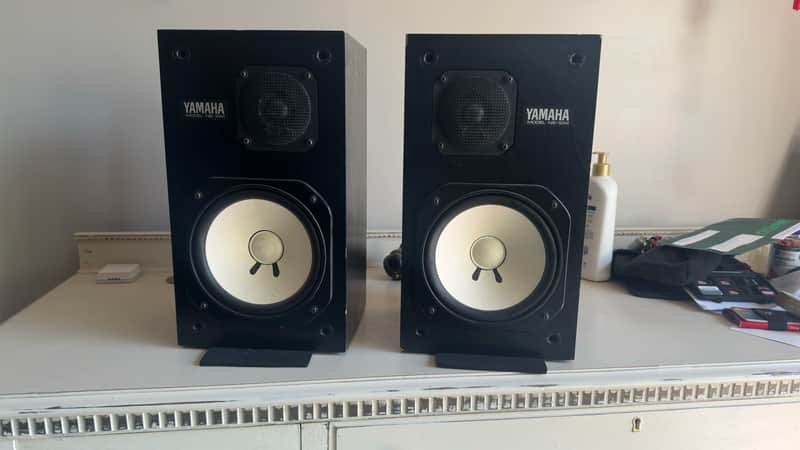
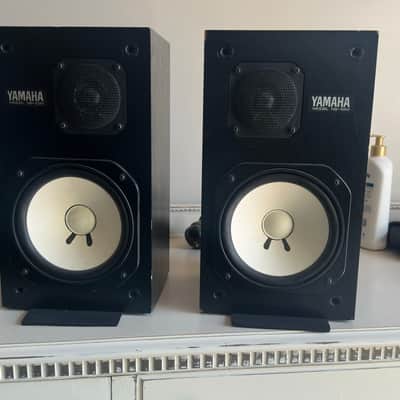
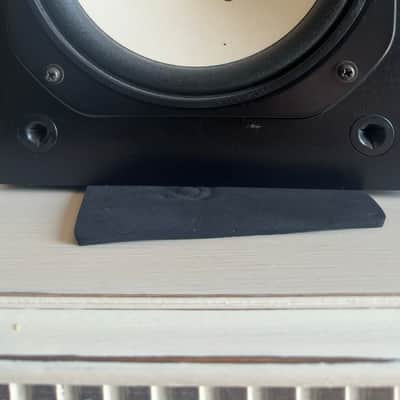
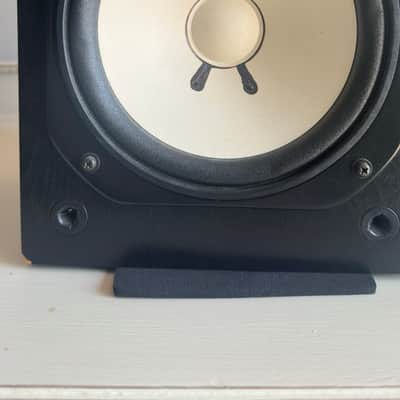
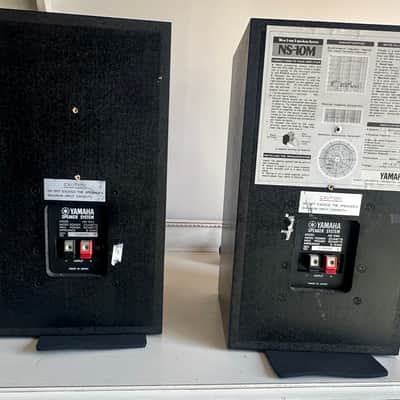
Yamaha NS-10M (Pair) 1980s - Black
This seller has not set a shipping cost for Romania. Please contact them to ask about shipping.

Our users rate Reverb
Vintage. Late 80’a-early 90’s. Matched pair.
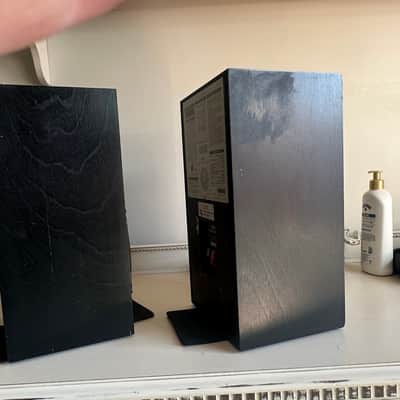
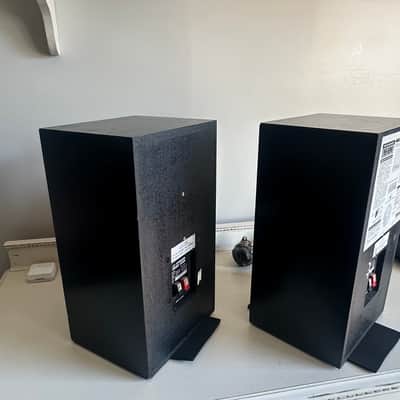
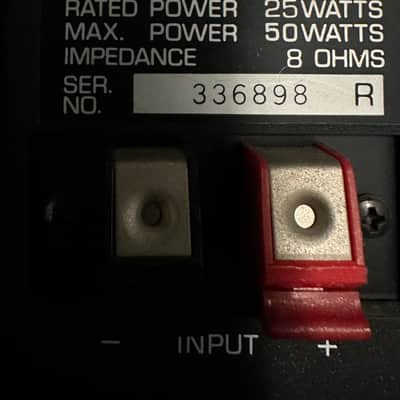
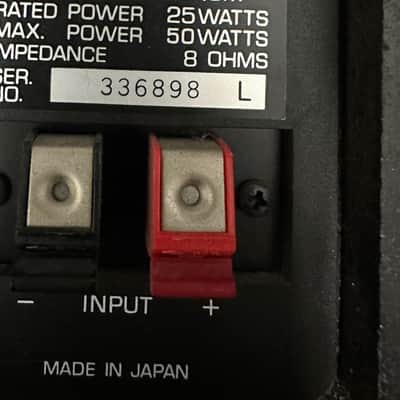
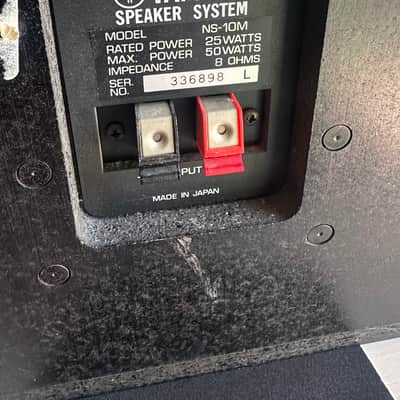
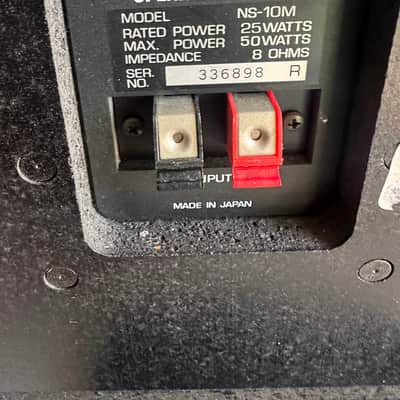
Serial #336898L/R
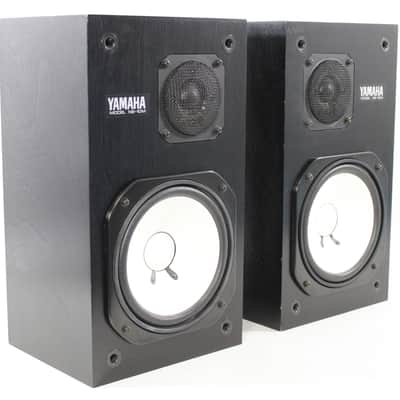
The Yamaha NS-10M is one of the most iconic passive nearfield studio monitors in recording history. Renowned for their sealed cabinets, quick transient response, and distinctive white paper woofers, they act as an unforgiving "truth teller" for audio engineers. If a mix sounds good on NS-10Ms, it typically translates well to any playback system. [1, 2, 3, 4, 5, 6]Quick Facts & Specifications
- Type: Passive 2-way bookshelf loudspeaker (requires an external power amplifier)
- Drivers: 180 mm (7") white pulp paper cone woofer & 35 mm soft-dome tweeter
- Frequency Response: 60 Hz – 20 kHz
- Power Handling: 25W nominal, 50W program, 120W max
- Cabinet: Sealed (acoustic suspension), approx. 10.4 liters [1, 2, 3, 4, 5]
Why They Are LegendaryDespite starting as a poorly received home hi-fi speaker in 1978, the NS-10M was enthusiastically adopted by top producers like Bob Clearmountain in the 1980s. The secret to their success lies in their lack of sub-bass and highly focused mid-range. Because the woofer stops and starts so quickly (due to the lightweight, stiff paper), they reveal critical details about transient responses and mid-range balance. [1, 2, 3, 4, 5]Variations in the NS-10 Family
- Original NS-10M (1978): Designed for vertical home-audio placement.
- NS-10M Studio (circa 1987): Re-engineered for horizontal placement (with horizontal lettering). It featured an upgraded crossover, more robust cabinet construction, and a less aggressive high-frequency response.
- NS-10M Pro: Identical to the Studio version but magnetically shielded for use near CRT monitors.
Key Response Characteristics - Frequency Range: Quoted as 60 Hz to 20,000 Hz, though the actual useful response begins rolling off long before that. [1, 2, 3, 4]
- Low-Frequency Rolloff: The sealed 10.4-liter cabinet causes a progressive rolloff starting around 200 Hz, with practically no usable sub-bass below 60 Hz. [1, 2, 3]
- Mid-Range Boost: There is a well-documented \(\approx 5 \text{ dB}\) to \(7 \text{ dB}\) elevation in the presence region around 1.5 kHz to 2 kHz, which pushes vocals and snares aggressively forward. [1, 2]
- High Frequencies: The early consumer variants were notoriously bright, leading producers to tape tissue paper over the tweeters. Later "Studio" revisions smoothed out the top end, but the overall sonic signature remains highly focused on the upper-mids.
This item is sold As-Described
This item is sold As-Described and cannot be returned unless it arrives in a condition different from how it was described or photographed. Items must be returned in original, as-shipped condition with all original packaging.Learn More.
| Listed | 12 days ago |
|---|---|
| Condition | Excellent (Used) Excellent items are almost entirely free from blemishes and other visual defects and have been played or used with the utmost care.Learn more |
| Brand | |
| Model |
|
| Finish |
|
| Categories | |
| Year |
|
| Made In |
|
| Amplification |
|
Product safety information may be available here.