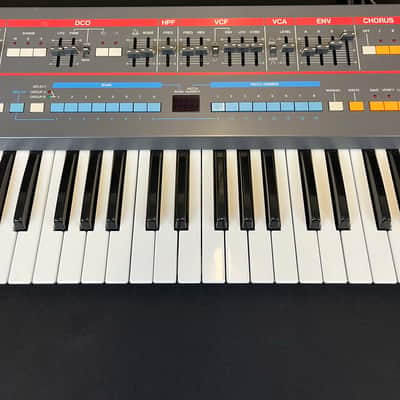
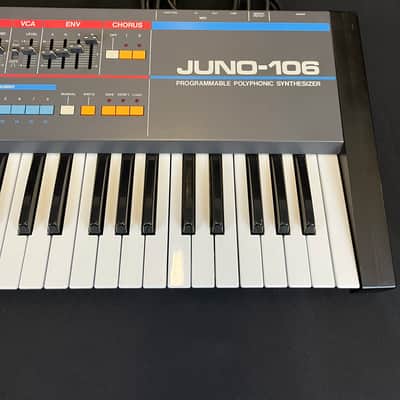
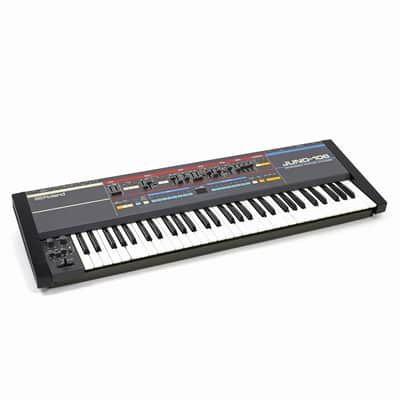
Roland Juno-106 61-Key Programmable Polyphonic Synthesizer 1984 - 1985 - Black
This seller has not set a shipping cost for Luxembourg. Please contact them to ask about shipping.

Our users rate Reverb
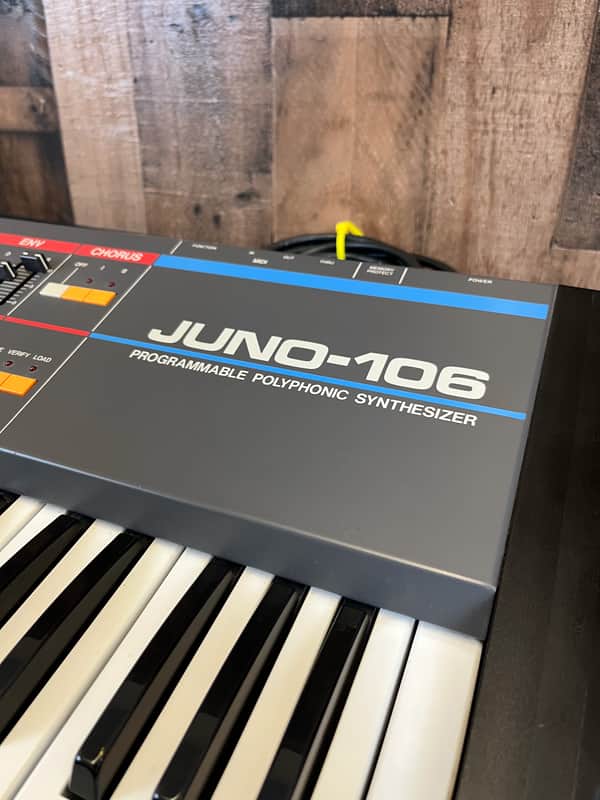
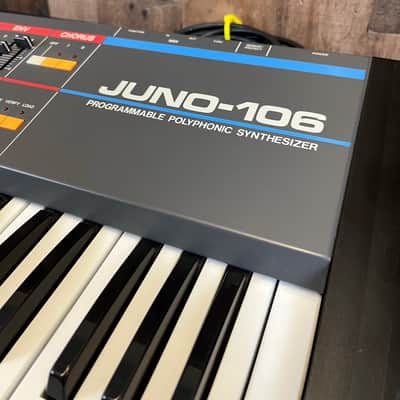
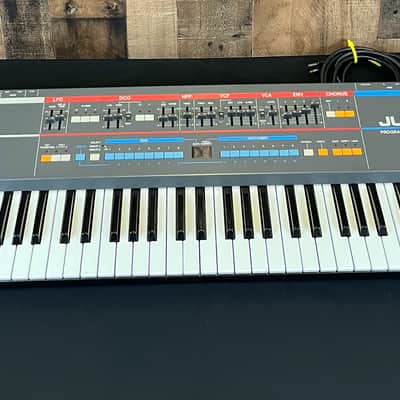
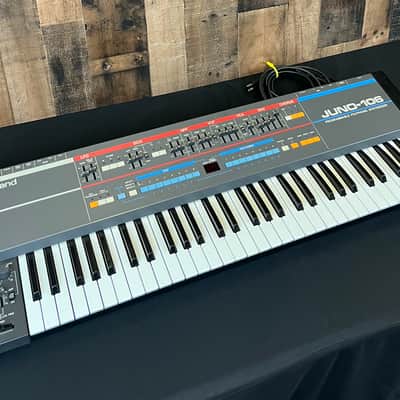
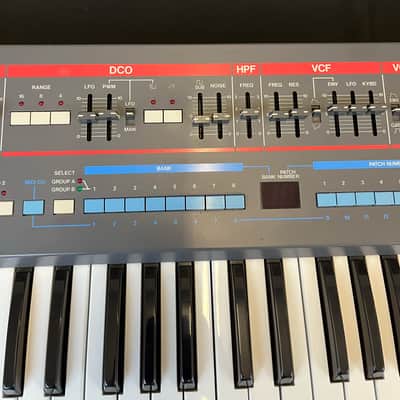
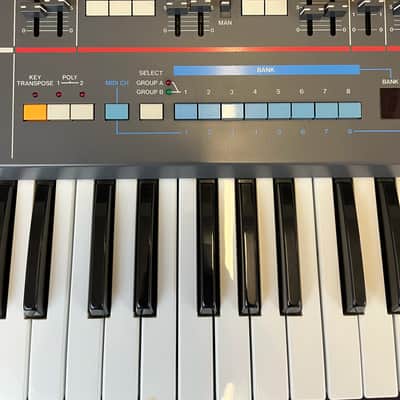
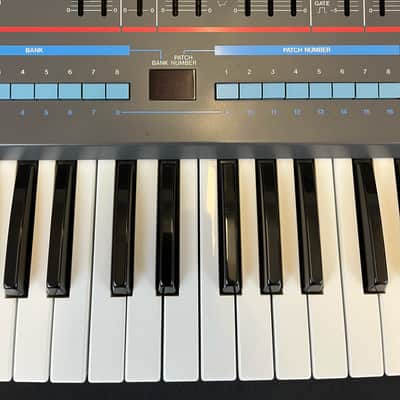
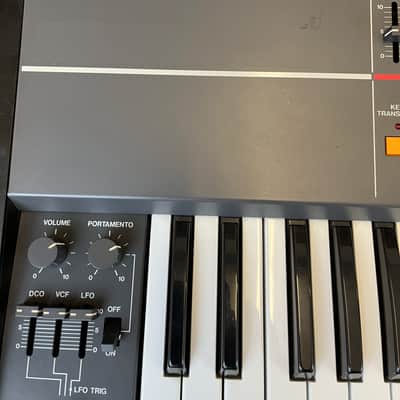
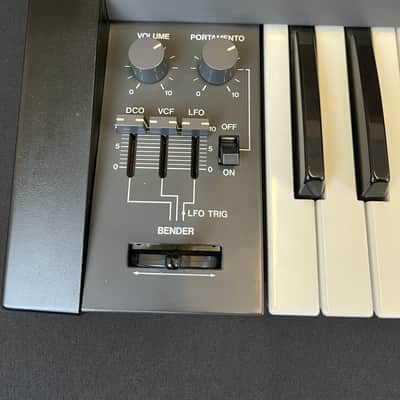
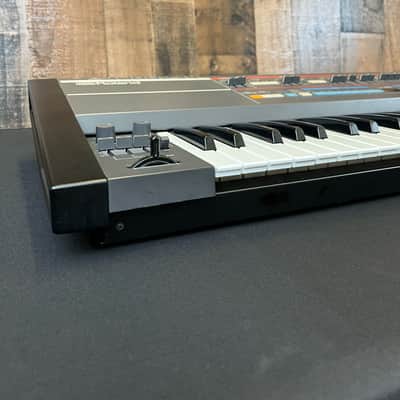
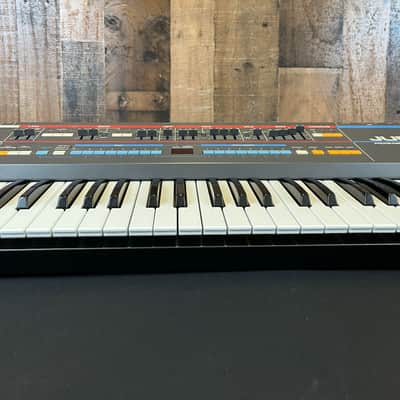
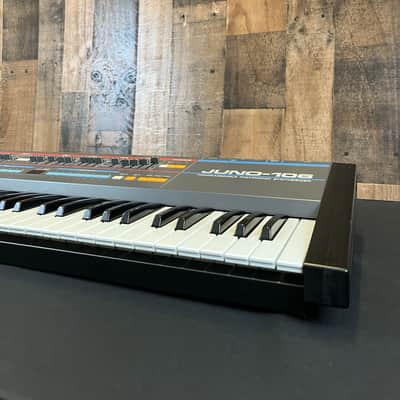
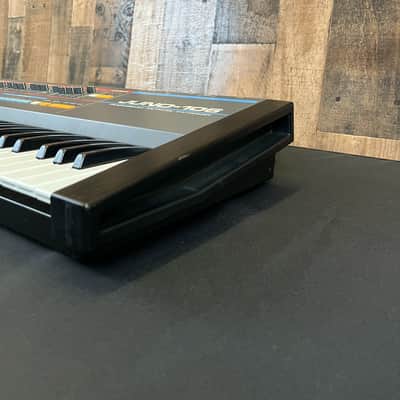
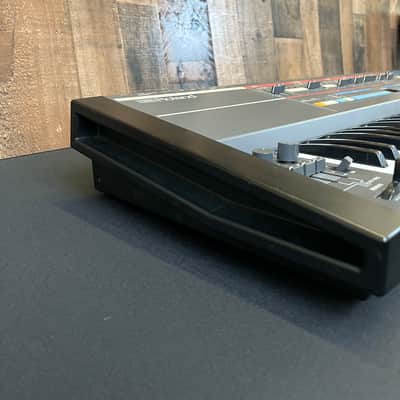
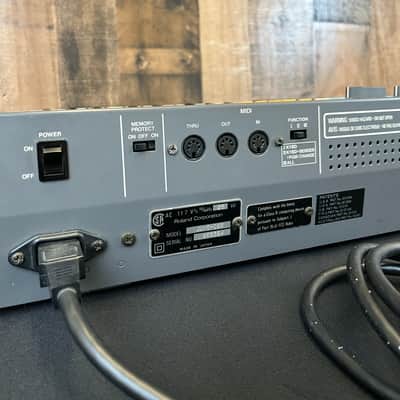
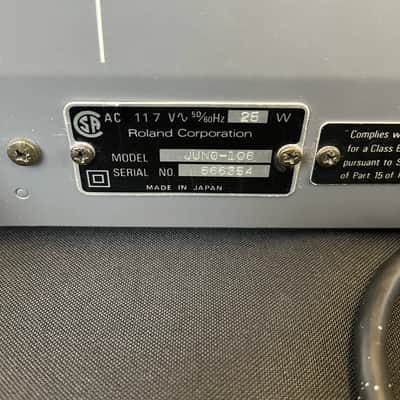
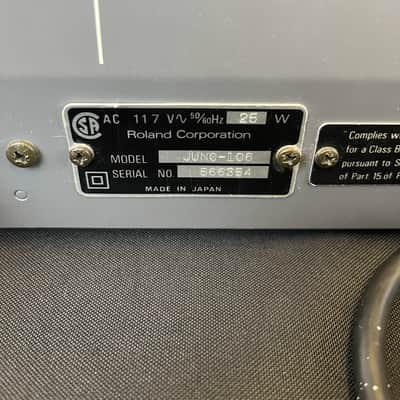
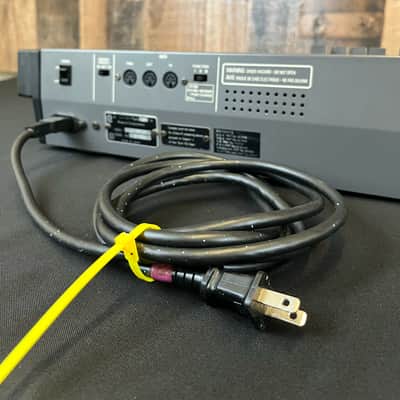
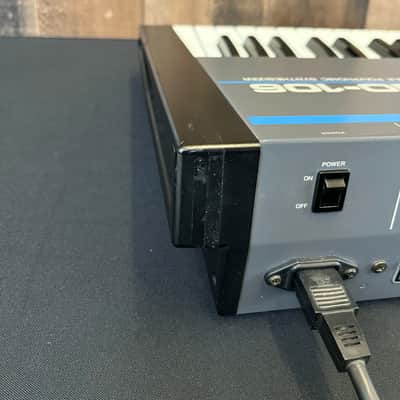
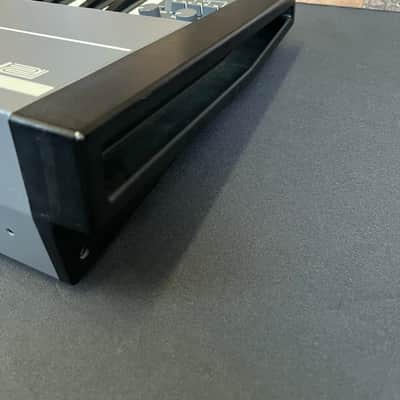
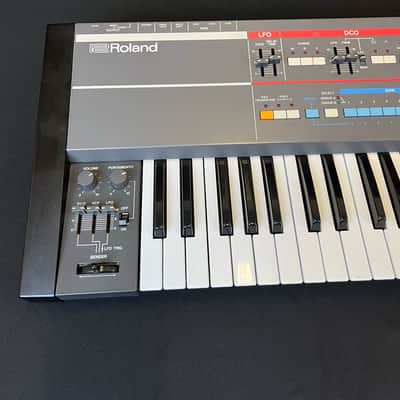
Up for sale we have a 1985 Roland Juno-106. This synthesizer is in amazing condition for its age with only a few scuffs and scratches around it(please see pictures attached). It will need the Portamento pot repaired. Electronics have been fully tested. Does come with original power cable and owners manual. Serial number 566354.
Product History
February 1984 saw the release of the Juno-106, a direct descendant of the Juno-60 synthesizer. MIDI was introduced and patch memory was improved from 56 patches to 128, allowing for more expansive control. The simple up/down arpeggiator included on the earlier Juno models was replaced by a portamento feature. The Juno-106 offered the best of both the analog and digital worlds, and was one of the last great synthesizers to include a dedicated control for every parameter on the faceplate, for immediate access to all programming. Its ease of workflow and tactile interface made it popular with recording artists and live performers.
Oscillators
The Juno-106 uses six digitally controlled oscillators, capable of producing a sawtooth, pulse and sub-octave square waveforms. DCOs were introduced into Roland synth design during the 1980s, as a means of eliminating inaccuracies such as pitch drift, which arose from the use of the completely analog VCOs in earlier synthesizers. DCOs provided a cheaper and more stable alternative to VCOs, without compromising the overall sonic character of the instrument’s analog sound. These were the same kind of control oscillators that were used in Roland’s famed JX-3P synthesizer.
Assign modes
The Juno-106 offers two Assign modes – Poly 1 and Poly 2. Poly 1 turns the Juno-106 into a six-voice polyphonic synthesizer, assigning one synth voice to each key that is pressed. This particular setting is generally suited to sounds with envelopes similar to a piano or a guitar and is recommended for standard use. Poly 2 mode is similar to Poly 1, the key advantage being that only the last note or notes played receive natural release length.
Filters
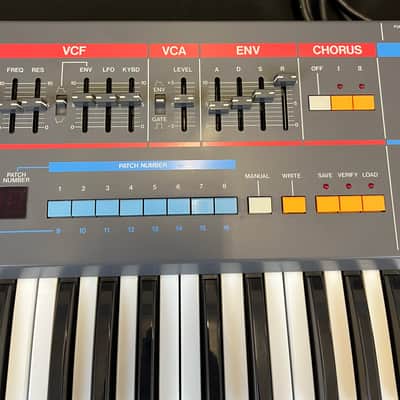
Perhaps one of the most revered features of the Juno-106 is its 24dB/octave analog low-pass filter, which provides the instrument with much of its distinctively smooth texture and deep sonic power. The voltage controlled filter (VCF) features adjustable sliders for frequency and resonance level and can be modulated by one of the envelopes, the LFO, and keyboard tracking. Individual sliders for ENV, LFO and KYBD control the modulation level of the three sources. Using the KYBD control, the filter cutoff can track the keyboard, allowing for higher harmonics to be heard on notes with higher pitches.
Control
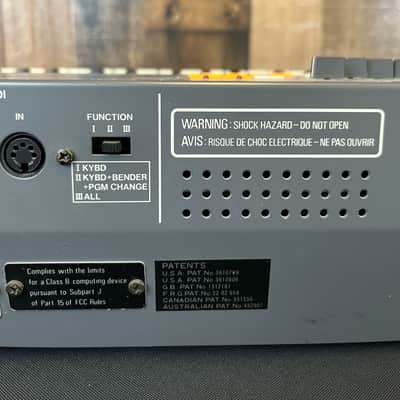
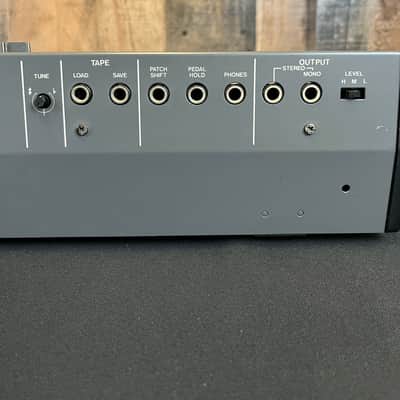
The 106 was the first of the Juno series to offer MIDI capabilities, a feature which helped to elevate the Juno-106 from its predecessors at the time of its release. The back panel also features one set of 1/4” audio outputs, a stereo headphone jack output, a tune knob, patch shift and pedal hold jacks, a level switch, power ON/OFF, a memory protect switch and a MIDI function selector switch.
5. PATCH MEMORY STORAGE
The Juno-106 can store 128 memory patches. Patch memory allows for keyboard and front-panel control changes, patch storage, and other display information. Patch presets store portamento and modulation settings, as well as slider settings.
The Juno-106 also features a battery backup circuit, to retain the programs even when the synthesizer is switched off. Patch editing can be used as a real time performance control. Patches can be stored to, or loaded from a standard cassette tape.
4. PORTAMENTO
The Juno-106 features a portamento function, the first synthesizer in its price range to do so. Portamento allows for sliding from one pitch to another. This function allows the Juno-106 to produce polyphonic portamento, and is a useful tool for both live performance and studio work. It was a relatively rare feature at the time of release and gave the Juno-106 a distinct edge that set it apart from its competitors. The portamento knob of the Juno-106 determines the time required to change pitches.
3. DIGITAL CONTROL, ANALOG SOUND
The DCOs used throughout the Juno series had a vast impact on the sound and usability of the Juno-106. A digitally controlled oscillator derives its pitch directly from the main microprocessor in the form of digital pulses. These pulses are electronically shaped to provide the character waveforms.
2. CHORUS
The Juno-106 features an onboard, stereo, two way, analog chorus unit, which produces its distinct character sound. The chorus effect provides a rich, spatial quality and is extremely effective in thickening sound sources. Few could predict that this chorus effect would go on to become a defining feature of the Juno sound, with legions of admirers worldwide. The Juno-106 offers two depths of chorus, with Chorus II creating a stronger effect than Chorus I.
1. MIDI
16 MIDI channels are available on the Juno-106 and MIDI SysEx Data is both transmittable and receivable from all sliders and buttons on the instrument. MIDI IN/OUT/THRU ports are located on the back panel. This allows for complete remote control and external sequencing capabilities. The Juno-106 offers three different types of MIDI modes, which can be changed via the MIDI Function switch on the back panel. These modes are:
- I – KYBD (Keyboard and Hold data only)
- II – KYBD + BENDER + PGM CHANGE (Keyboard, Hold, Bender, Patch selection data)
- III – ALL (All data, which includes SysEx). This allows for more advanced settings to be saved and changes to be made.
This item is sold As-Described
This item is sold As-Described and cannot be returned unless it arrives in a condition different from how it was described or photographed. Items must be returned in original, as-shipped condition with all original packaging.Learn More.
| Listed | 15 days ago |
|---|---|
| Condition | Very Good (Used) Very Good items may show a few slight marks or scratches but are fully functional and in overall great shape.Learn more |
| Brand | |
| Model |
|
| Finish |
|
| Categories | |
| Year |
|
| Made In |
|
| Number of Keys |
|
| Keyboard Action |
|
| Analog / Digital |
|
| MIDI I/O |
|
| Key Size |
|
| Polyphony |
|
Product safety information may be available here.

