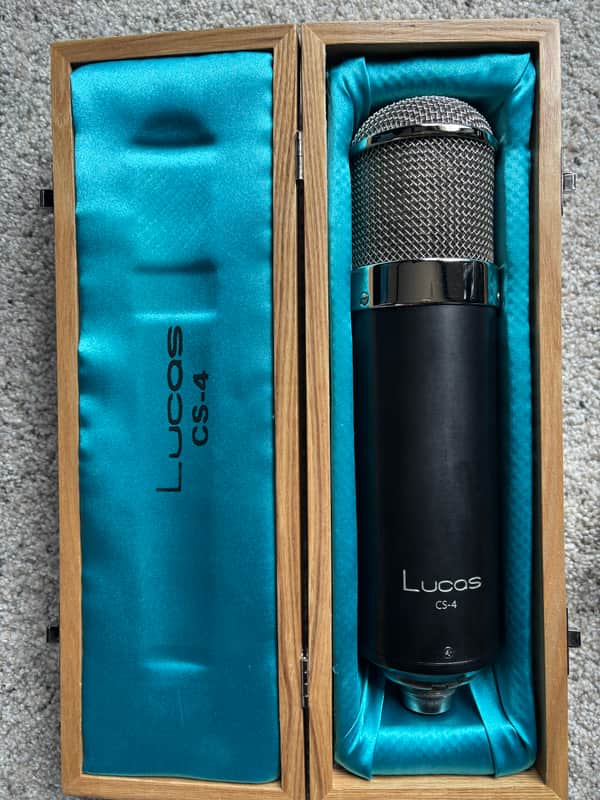
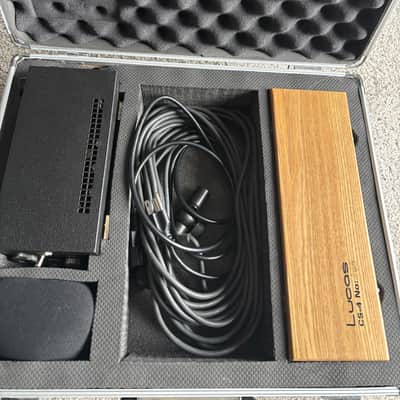
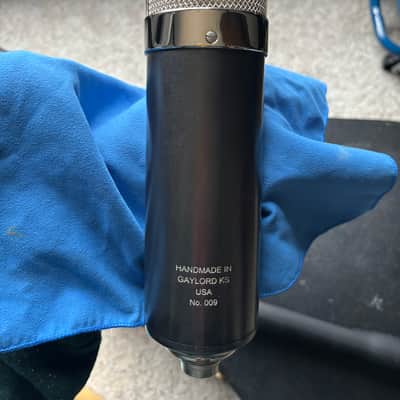
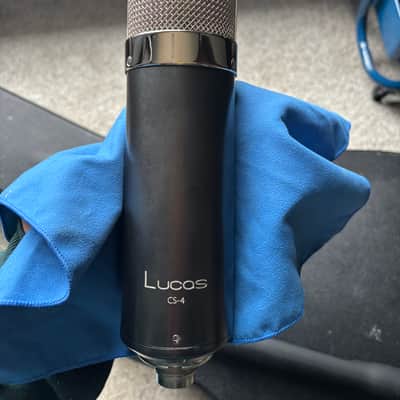
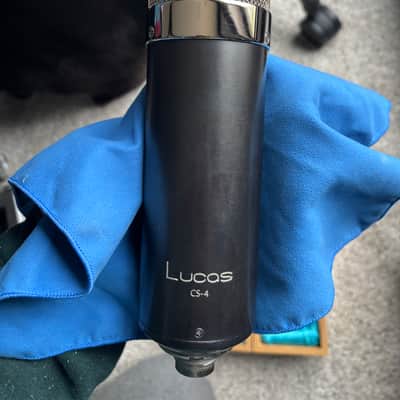
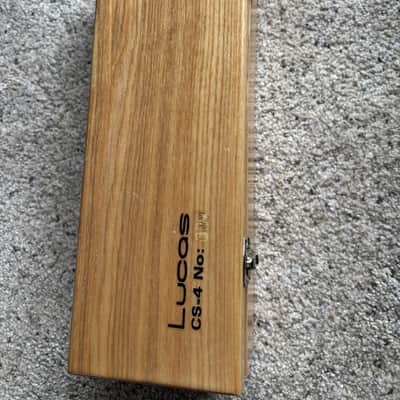
Lucas CS-4 Tube Condenser Microphone 2010s -Serial 09
This seller has not set a shipping cost for Estonia. Please contact them to ask about shipping.


Rare Find
These don't show up often
I'm a huge fan of the Lucas CS-4. If you're reading this, then you likely know a bit about it already. It's easily the best and most useful mic I've ever used. I've got all the info from the manufacturer below as well.
I also own serial #40 as well (this listing is for serial #09), and it's been a mainstay of all my recordings for many years. Totally in love with it, and everything you read about it is true. So then, why am I selling #09?
I bought #09 in November 2025 because I was starting to do some drum recordings and wanted to work with a pair of these. That said - I never even got to use it on drums! And now, it's just sitting in a closet, so I want to sell it.
When I received this mic, it was lacking a little bit of the top end sparkle. The previous owner was not aware of this, likely because he didn't have anything to compare it to. I however, did have another CS-4 to compare it to, and the difference was obvious to me. I swapped the tubes on the mic, and quickly discovered that this was the issue. It needed a new tube.
Although there are a few tubes that can work on this mic, the correct tube, and the tube that they shipped with originally is the Telefunken ef802. VERY expensive! I bought 2 of these on reverb for $618, and paid a painful import duty of $335. But now, the mic has the correct tube in it.
UPDATE: The swivel mount previously had some issues with the threads, but I have sent it to AMI/Tab Funkenwerk and had the threads replaced. No more issues!
From the manufacturer:
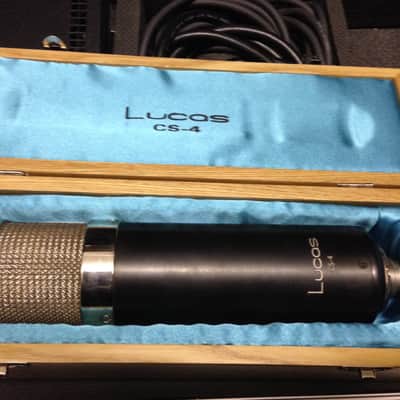
The CS-4 is a multipattern tube condenser designed by Oliver Archut and Terry Manning as a contemporary reinterpretation of the “sonically colored” family of microphones descended from the Neumann U-47. The mic is emphatically not presented as a U-47 clone, soundalike, or replacement, but rather as a high-end tube mic that the original Neumann engineers might build today.
The capsule is a PVC-membrane M7, designed and manufactured to match the original Neumann blueprints by former Neumann capsule technician Sigfried Thiersch. Although Thiersch supplies both PVC and Mylar-skinned M7s to numerous manufacturers, the CS-4 capsules are unique in two respects:
- The diaphragms are treated with a moisture repellent to improve performance when close-miking vocals.
- The PVC diaphragm material is aged to meet the NWDR (Nordwestdeutscher Rundfunk) specifications for the Neumann M 49, to ensure the most consistent front-to-back response.
The Thiersch M7, aka the STW7, has a 32mm (OD) backplate. The membranes are made of ~6-micron PVC; the active area of the diaphragm is 25mm.
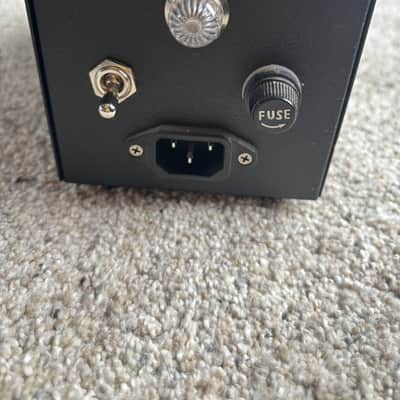
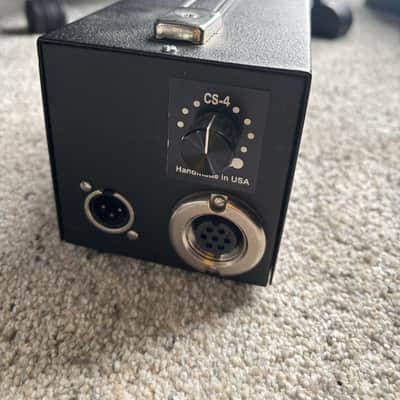
A rotary switch on the power supply provides 11 discrete polar patterns: figure-of-8, Cardioid, and Omni, with four intermediate (hypercardioid-ish) patterns between Cardioid and Fig-8, and four intermediate (subcardioid-ish) patterns between Cardioid and Omni.
Like the CS-1, U-47, and the Bock Audio 251, the capsule’s rear diaphragm is disconnected from the circuit when the mic is set to Cardioid. This “true Cardioid” mode is said to have a higher signal-to-noise ratio than if both diaphragms were active. It also has higher sensitivity, by about 3dB, than do other patterns. (This was also true of the U-47.)
The mic’s tube is a vintage glass pentode manufactured in Germany by Telefunken. Lucas describes it as “technically identical to, and … very similar in sonic character to, the [U 47’s] VF-14.”
Through Oliver Archut’s connections with former microphone and tube engineers in Germany, Lucas has been successful at locating “forgotten” caches of audio tubes — first the 7000 Mullard 6072a-like dual-triodes used in the CS1, and more recently, several thousand of the glass VF14-like Telefunken tubes used in the CS4.
Lucas Engineering expects to maintain a supply of replacement tubes for registered CS-4 owners for the forseeable future.
The transformer in the CS-4 is manufactured by AMI/Tab-Funkenwerk. It is a version of the company’s BV8, fine-tuned for this specific microphone.
The prototype mic’s headbasket was fabricated by hand from three layers of brass mesh by Oliver Archut, then plated for display at the AES-NYC show in late 2009.
As with the CS-1, the body of the CS-4 is a steel tube finished in the “Lucazite™” process by Jeff Roberts at Latch Lake Products. The physical dimensions of the mic, roughly 63mm x 240mm, match the “long body” style of the U-47.
| Listed | 6 months ago |
|---|---|
| Condition | Very Good (Used) Very Good items may show a few slight marks or scratches but are fully functional and in overall great shape.Learn more |
| Brand | |
| Model |
|
| Finish |
|
| Categories | |
| Year |
|
Product safety information may be available here.