Gretsch Filtertron Set Gold 1960s
This seller has not set a shipping cost for Malta. Please contact them to ask about shipping.
Our users rate Reverb
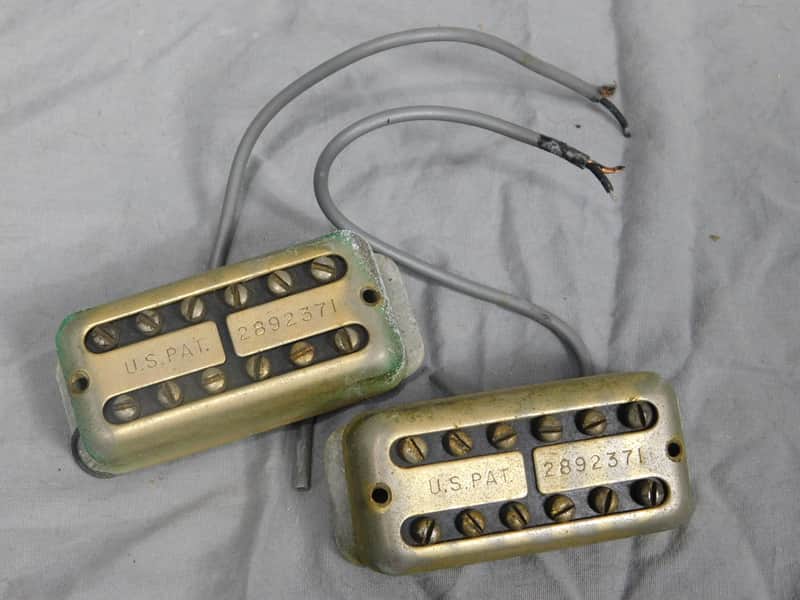
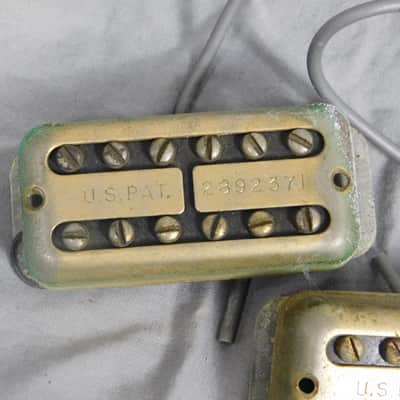
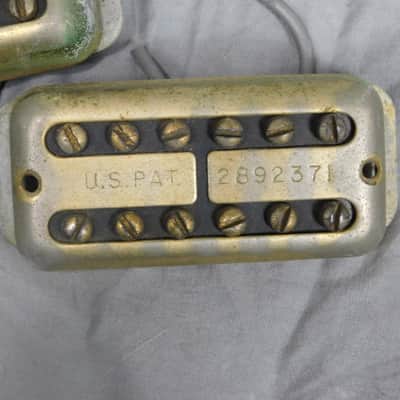
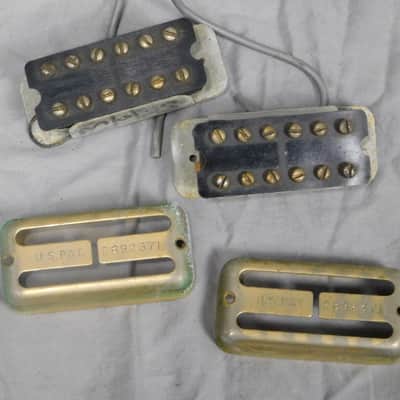
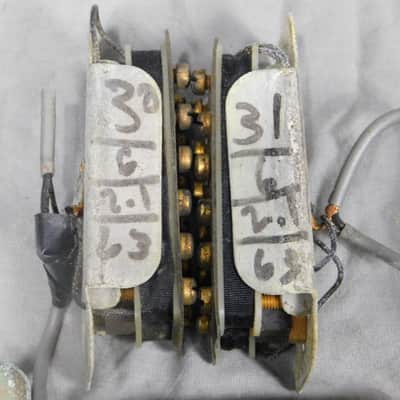
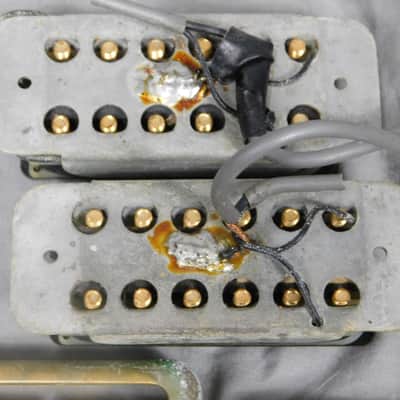
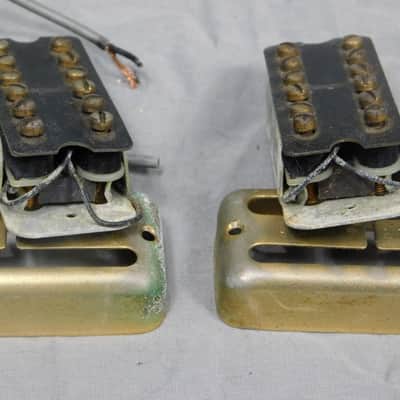
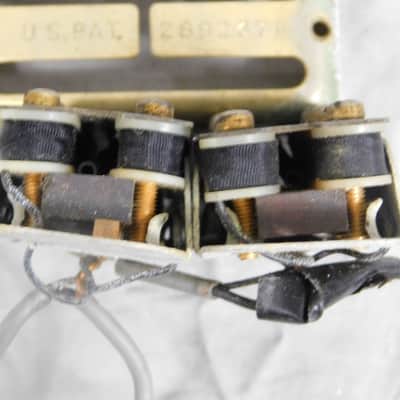
Two U.S. PAT 2892371(Gretsch HS Fideli'trons) extracted from a broken 1963 Gretsch Jet Firebird Double Cutaway Red.
Mounting – Standard “Gretsch” Filter’Tron Specs
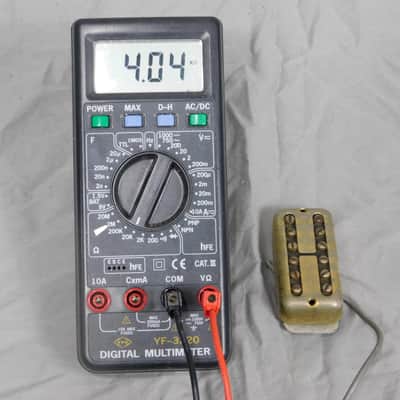
• Neck: 4.04k ohms
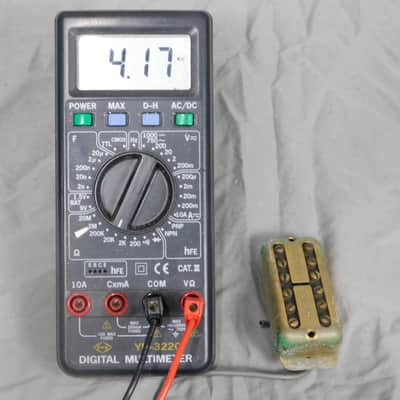
• Bridge: 4.17k ohms
History:
The Filter'Tron (often written as Filtertron) is an early model of the humbucker guitar pickup invented by Ray Butts.Butts built the prototype Filter'Tron in 1954 for guitarist Chet Atkins and it was manufactured by Gretsch and installed in almost all of the brand's guitars beginning in 1957. Gretsch guitars and the "growl" and "twang" of their Filter'Trons were a major part of the sound of early rock and roll, with adopters like Bo Diddley, Duane Eddy, George Harrison, and Neil Young.[2] After a sharp decline in popularity in the 1970s and early 1980s, the Gretsch brand and Filter'Tron sound experienced a revival when Gretsch aficionado Brian Setzer renewed public interest in the rockabilly genre. Gretsch guitars have since been adopted by new generations of guitarists, especially in rock music, and many manufacturers now offer Filter'Tron-style pickups.
Filter'Tron pickups are often described as bridging the gap between Fender single coils and Gibson humbuckers. Guitar World wrote that their sound is "warm and round, but also edgy and commanding. Gretsches twang like nothing else on earth."
Guitar.com observed that Filter'Trons are not as powerful as humbuckers or P-90s, but not as bright as Fender's single coil pickups; instead, they "fuse hazy clarity, twang and midrange growl" in their own unique and pleasing way.
Butts was not the only one working on a humbucker pickup design at the time, learning of Seth Lover's P.A.F. in 1956. Butts wrote to Gibson to inform them of his own work.Gibson president Ted McCarty was initially cautious about potential similarities in their humbucking designs in his response, while noting the company had filed the patent for the P.A.F. the prior year. However, McCarty wrote Butts a second time upon learning that Chet Atkins was already publicly performing with Filter'Trons. Atkins was first photographed doing so that year with a black 6120 on the Grand Ole Opry. With the P.A.F. a year away from being available, McCarty suggested to Butts he could take legal action against him if he did not cease production or obtain a license from Gibson. In response, Butts asserted that he had already built working prototypes that he believed predated Lover's design, and further stated that his lawyers strongly believed Gibson was the actual infringer. It is not known if McCarty responded.
Gretsch debuted the Filter'Tron pickup at the 1957 NAMM Convention, the same show Gibson introduced the P.A.F. While there was tension between the two companies, Gibson and Gretsch eventually agreed that Lover and Butts had independently invented their pickups and the timing was coincidence.
Butts would go on to receive the patent for the Filter'Tron design on June 30, 1959, a month before Lover would receive his patent for the P.A.F., although Lover had filed first. Even after receiving the patent, Gretsch continued using front pickup covers pre-stamped with "PAT. APPLIED FOR" text into 1960, when the company finally ran out of them. Gretsch then began stamping the covers with "U.S. PAT 2892371."
Gretsch began fitting their guitars with Filter'Trons in 1957, and the brand would eventually use them in almost all of their models.
Following the Baldwin Piano Company's purchase of Gretsch in 1967 and its subsequent decline in quality, the design of the Filter'Tron was altered multiple times, changing to ceramic magnets and different pole pieces and covers, before the Filter'Tron was replaced completely. New variants produced included the Blacktop Filter’Tron, HiLo’Tron, Mega'Tron, and Super'Tron. During this time, TV Jones earned a reputation for producing the most vintage-accurate Filter'Tron-style pickups.
Fender acquired Gretsch in 2003, returning the pickup design to its original specs, and installed them in not just Gretsch guitars, but Fender models as well, such as the Cabronita Telecaster.
This item is sold As-Described
This item is sold As-Described and cannot be returned unless it arrives in a condition different from how it was described or photographed. Items must be returned in original, as-shipped condition with all original packaging.Learn More.
| Listed | 3 months ago |
|---|---|
| Condition | Good (Used) Good condition items function properly but may exhibit some wear and tear.Learn more |
| Brand | |
| Model |
|
| Categories | |
| Year |
|
Product safety information may be available here.

