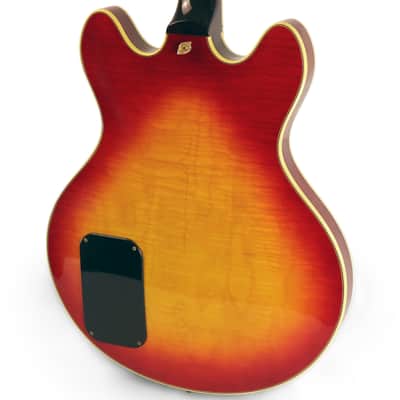
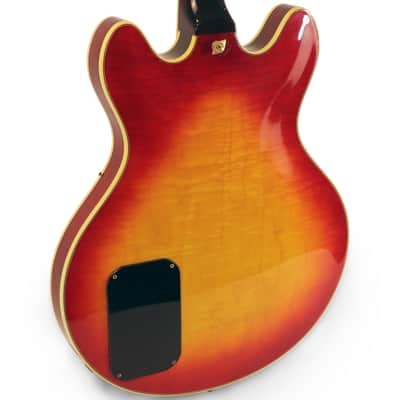
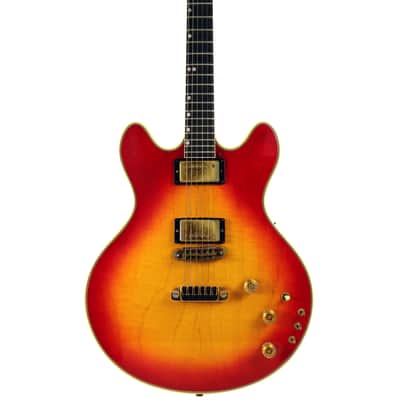
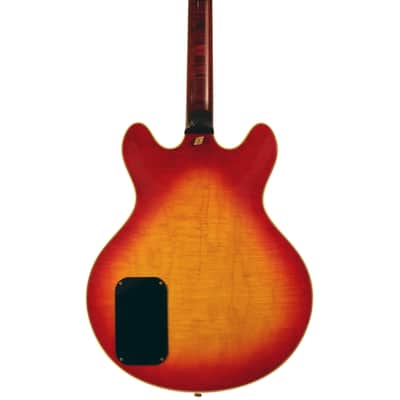

1980 Gibson ES-Artist Moog Active Circuit - Cherry Burst
This seller has not set a shipping cost for Austria. Please contact them to ask about shipping.

Our users rate Reverb
1980 Gibson ES-Artist Moog Active Circuit - Cherry Burst
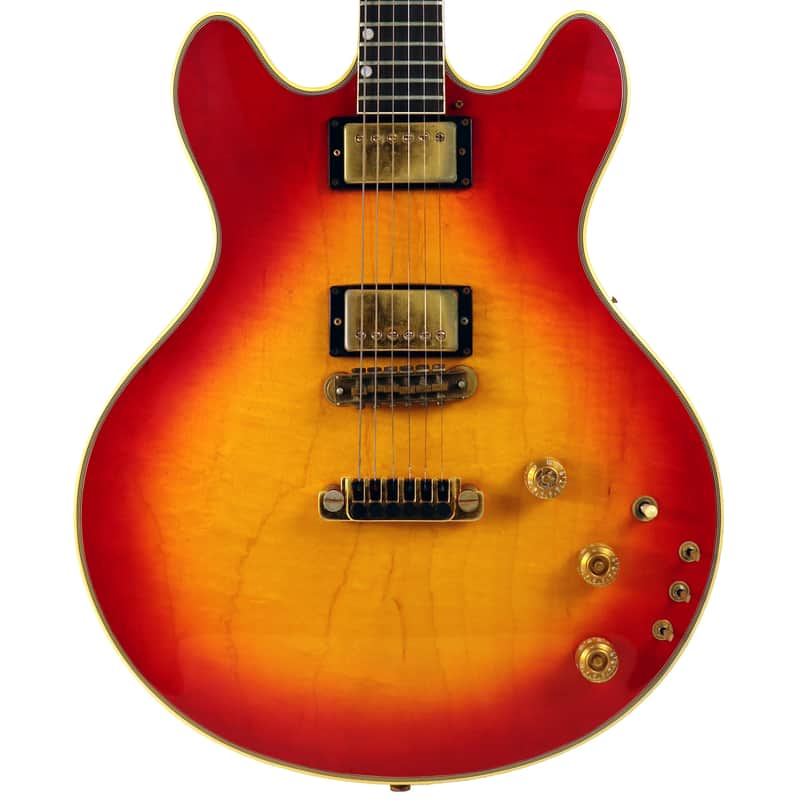
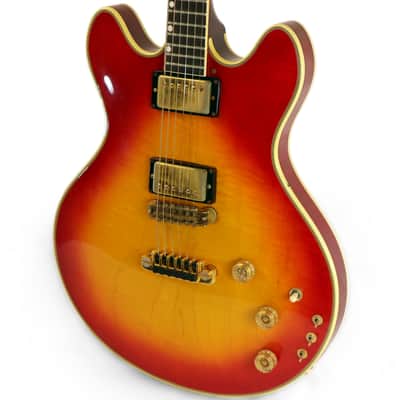
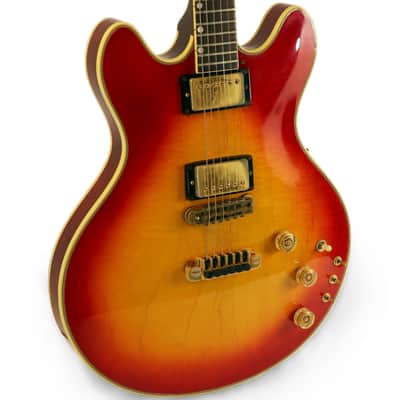
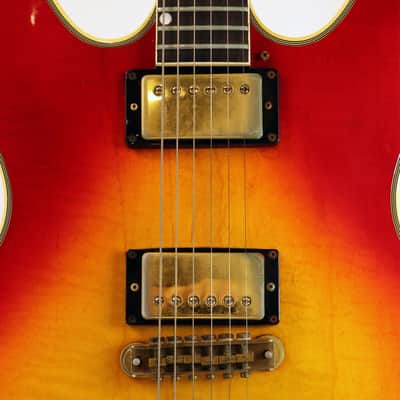
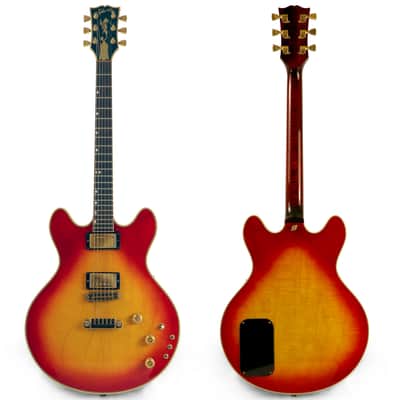
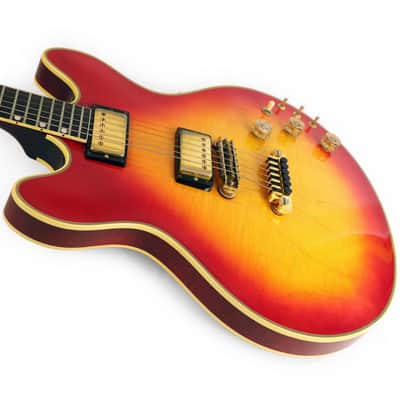
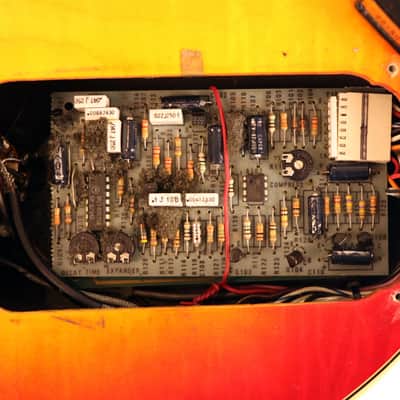
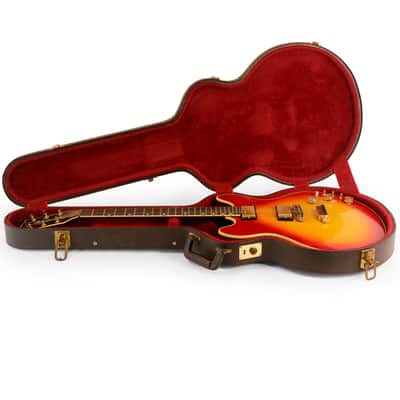
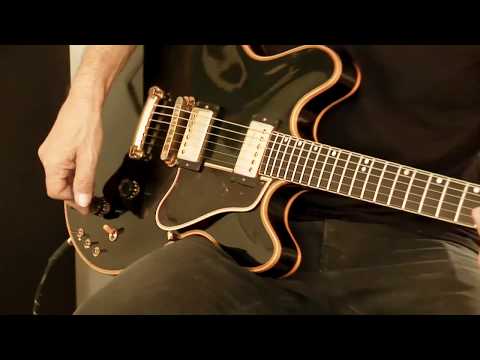
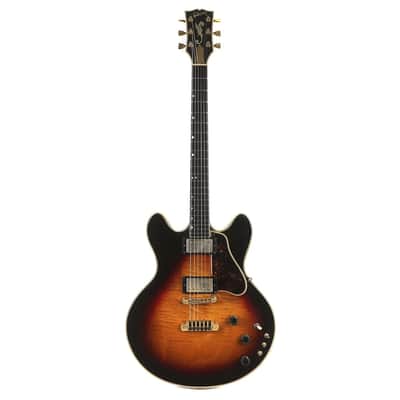
An extremely RARE instrument for multiple reasons. The 1980 Gibson ES Artist was a high-end semi-hollow electric guitar from the Norlin era (1979–1985) featuring innovative, advanced—though polarizing—active electronics designed by Robert Moog, (compressor, expander, bright mode). Part of Gibson's "Artist" series, it features a body shape similar to the Gibson ES-335 but is distinct for its lack of f-holes and its complex control layout, an ebony fretboard, brass nut, and TP-6 bridge. While marketed as one of the most versatile guitars of its time, the Moog electronics were not a commercial success and are frequently removed or bypassed by owners to achieve a more traditional humbucker sound. Steve Howe is the best-known user; he toured with several ES-Artists in the early ’80s with Yes and Asia,
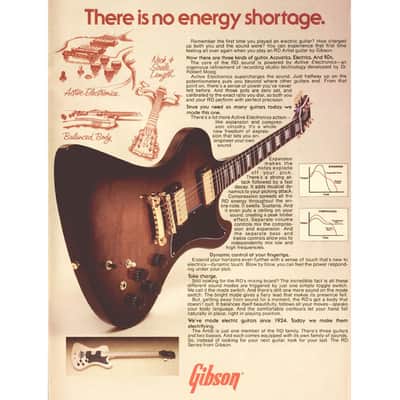
The Gibson ES Artist was developed by the same R&D team that produced the RD Atrist. The RD series had been highly acclaimed, and it is no surprise that the circuitry was expanded to popular existing models: the Les Paul and ES. From the promotional material of the time: “Since it's introduction in 1958, the Gibson ES series has been the "workhorse" for countless live, road and studio performance minded musicians. The ES 335, ES 345 and ES 355 (more recently the ES 335Pro and ES 347) have become familiar and strongly associated with entertainment giants such as blues guitarist B.B. King. Most everyone knows of B.B.'s ES 355 affectionately referred to as "Lucille". The time tested and studio proven credentials of the ES series add up to the most versatile guitar series in existence today. We are pleased to present Gibson's new "Active" ES Artist model...”
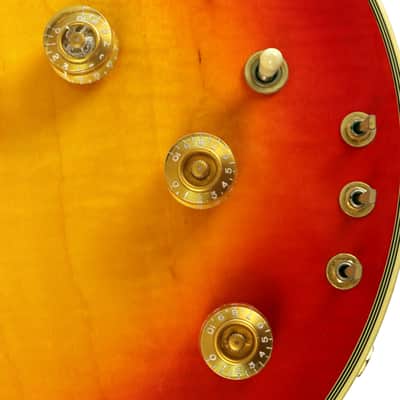
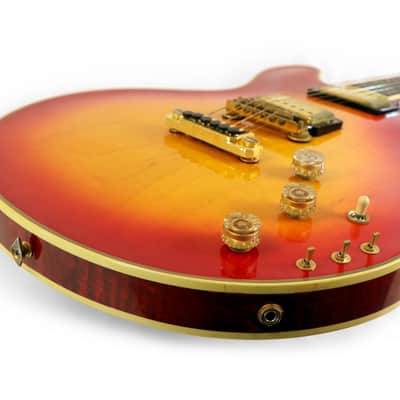
The ES Artist used the same Moog bright mode/expansion/compression circuitry, as the RD, though with somewhat simplified controls - rather than volume controls for each pickup, there was just one master volume, with the mini-toggle effects working independently of each other, like the later RD79 version of the RD Artist. With the high output possible from this guitar, the chance to produce feedback was greatly increased; consequently the traditional f-holes of other Electric Spanish models were replaced with a solid top. The guitar was of course semi-hollow inside with the standard maple block running along the centre, into which the bridge and tailpiece studs were mounted. In fact the propensity for feedback was such, that Gibson advised reducing the guitars volume under certain situations... from the Active Artist Series brochure: “When using the Compression, Expansion and Bright Mode switches in combination, it is advisable to lower the output level by means of the Master Volume Control... Collectively the Compression, Expansion and Bright Modes produce a very powerful output signal, particularly in the 4K (400HZ) range. The best results will be experienced when using all three switches with the treble control in the center (0) position. If the treble control is boosted when all three modes are activated, high frequency feedback may be experienced.”
Furthermore, the pickups had to be epoxy sealed to reduce problems with them becoming microphonic at high volume levls..“The pickup covers are not removable. They are also fully shielded to reduce hum and RF noise. Since the ES Artist circuitry has been carefully matched to these pickups, use of any other pickup in this guitar is nor recommended.”
The ES artist was not a significant commercial success, perhaps in part due to the problems mentioned above, but perhaps more because of the step away from Gibson tradition. Generally players associated ES series guitars for their woodier tones.. with jazz and with blues.. but many also desired the look of an f-hole semi. It is no surprise then, that Gibson soon released the hugely more traditional ES Dot with passive wiring, f-holes and a mahogany neck.
The ES Artist did outlive the other active Artist series guitars though, first appearing in Gibson US price lists in June 1979, and remaining right through to February 1985. Other Artists series guitars were last listed in 1980! The ES was the most expensive of these guitars - compare the recommended retail prices in the table below. Shipping figures for the 1980s are not available, but to some extent sales can be inferred from the listed prices; i.e. rising up until 1982, and then dropping off somewhat beyond this time.
Key Specifications and Features
The Gibson ES Artist was built as a premium instrument, priced higher than standard solid-body models during its original production run.
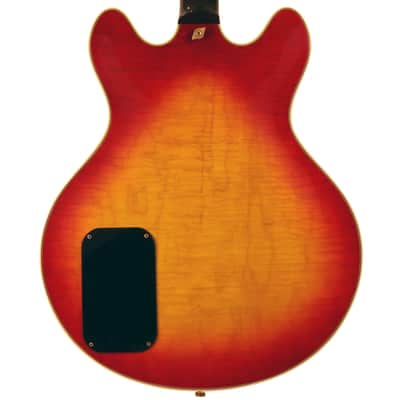
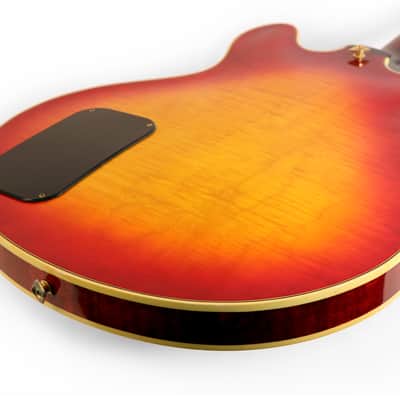
- Body and Construction: Highly figured arched maple top and back, maple sides. Gibson no "f" hole design with full maple center block for additional sustain and brilliant high frequency response.
- Design: Unlike the standard Gibson ES-335, it has no f-holes, which helps reduce feedback. Featuring multi-ply binding similar to an ES-355, The 1980 ES Artist is considered the predecessor to the B.B. King Lucille model.
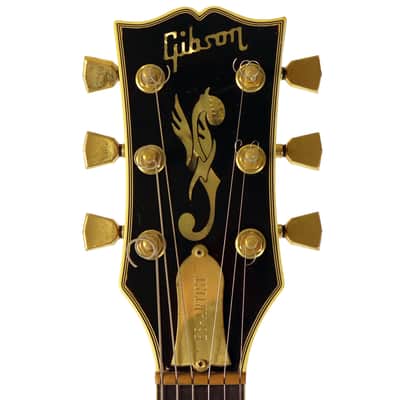
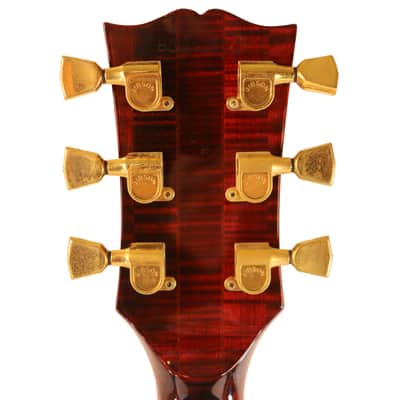
- Headstock: A "flying F-hole" headstock inlay, Gold Gibson tuners, Repaired headstock crack beneath volute.
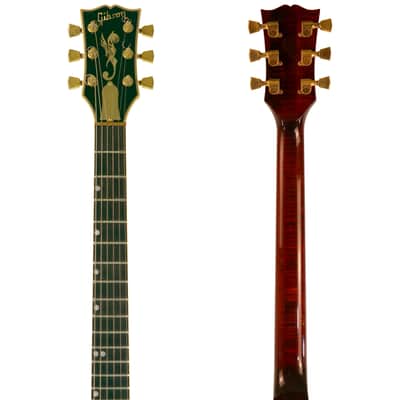
- Neck and Fingerboard: Five piece solid maple neck, with a high-grade ebony fingerboard, a brass nut and unique offset Pearl dot style inlays, shell side dots, bound peghead and fingerboard.
- Pickups: Two epoxy potted gold-plated Gibson Humbucking pickups.
- Hardware: Standard gold-plated hardware includes a Gibson TP-6 fine-tuning tailpiece and Gibson machine heads.
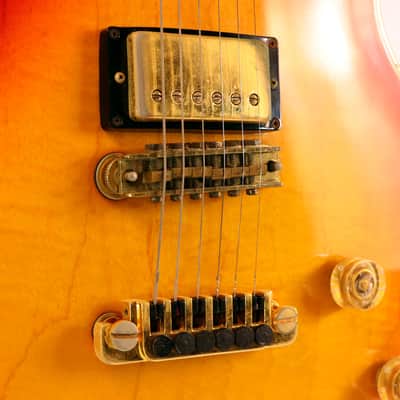
- Bridge: Upgraded RARE Vintage Stars Guitars Brass bridge, mounted to two individual 5/8" brass studs ("Sustain Sisters") for added sustain. Stars Guitars was a legendary 1970s San Francisco-based hardware company that pioneered high-mass solid brass components for electric guitars. Their bridges are highly sought after by collectors and enthusiasts for their association with Alembic, Jerry Garcia's "Alligator" Strat, and Kirk Hammett's '79 Flying V. Stars Guitars produced several distinct brass bridge designs, marketed for their heavy-duty construction and ability to increase sustain:
- Material: Solid heavy-duty brass, unplated to develop a natural patina for a classic look.
- Sustain: Increased sustain provided by the high-mass brass construction compared to standard zinc or steel bridges.
- Moog Active Electronics: The hallmark of this model is its active circuit board, which requires a 9V battery. Controls include a master volume, master active bass, and master active treble, along with three mini-toggle switches for tone shaping:
- Bright mode (on/off)
- Compression
- Expansion
- Finish: Cherry Burst (1979-81)
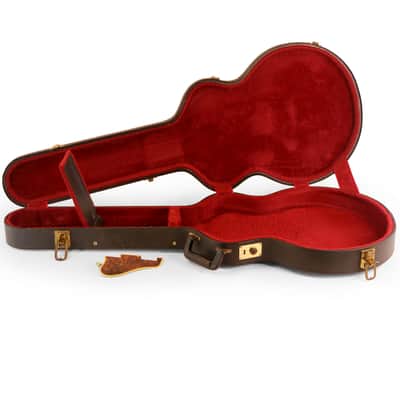
- Pickguard: Tortoise shell fingerrest with white revealed edge has been removed because of “gassing”, it is included in the original Gibson Hardshell case
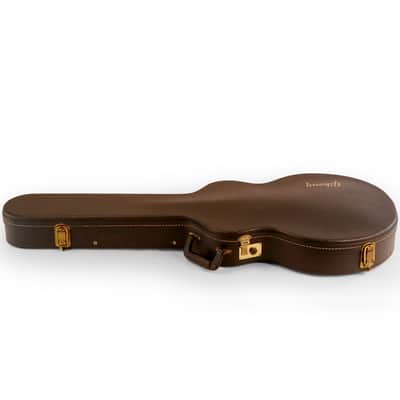
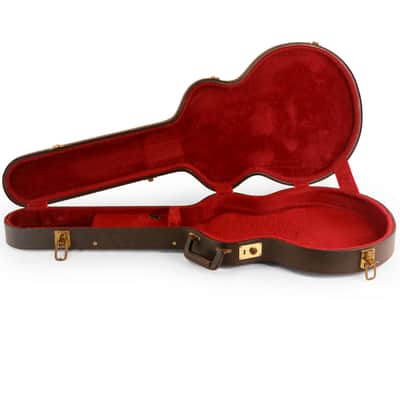
- Premium Case: Original Gibson Hardshell 519 Faultless plush lined case.
Reverb Article “When Gibson put Moog Preamps in Guitars: Les Paul Artists, ES Artists and RD’s”: reverb.com/news/when-gibson-put-moog-preamps-in-guitars
Gibson ES-Artist - A Thought-umentary. Very entertaining walk through history: youtube.com/watch?v=C6kByzEimrk&t=10s
Used – Very Good
Price $5,500
+ $300 Shipping
This item is sold As-Described
This item is sold As-Described and cannot be returned unless it arrives in a condition different from how it was described or photographed. Items must be returned in original, as-shipped condition with all original packaging.Learn More.
| Listed | 3 months ago |
|---|---|
| Condition | Very Good (Used) Very Good items may show a few slight marks or scratches but are fully functional and in overall great shape.Learn more |
| Brand | |
| Model |
|
| Finish |
|
| Categories | |
| Year |
|
| Made In |
|
| Color Family |
|
| Body Material |
|
| Neck Construction |
|
| Body Shape |
|
| Right / Left Handed |
|
| Body Type |
|
| Number of Strings |
|
| Neck Material |
|
| Wood Top Style |
|
| Finish Pattern |
|
| Finish Style |
|
| Series | |
| Bridge/Tailpiece Type |
|
| Pickup Configuration |
|
| Model Family | |
| Scale Length |
|
| Fretboard Material |
|
| Number of Frets |
|
Product safety information may be available here.