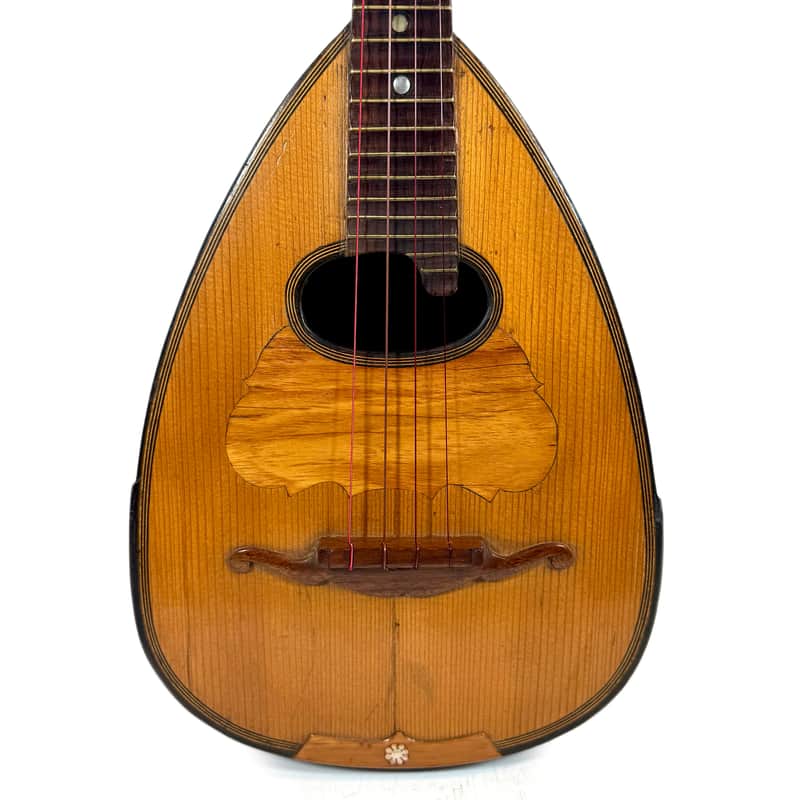
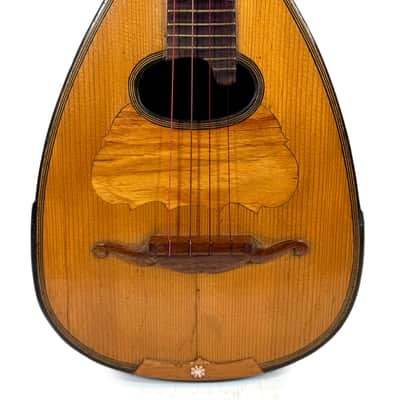
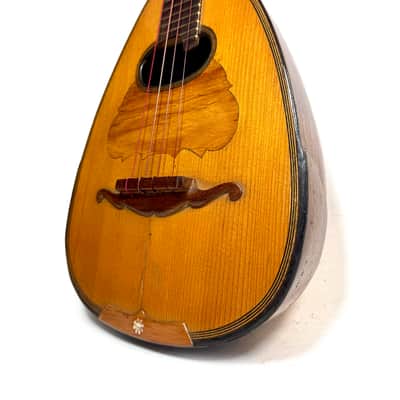
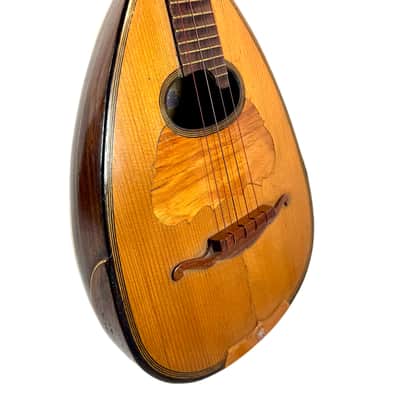
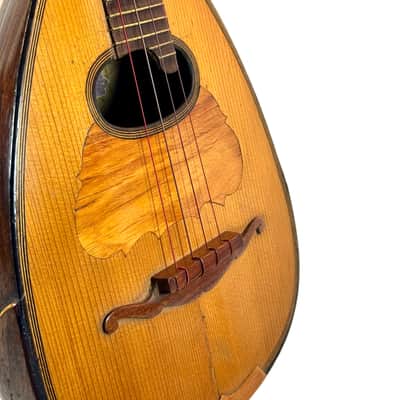
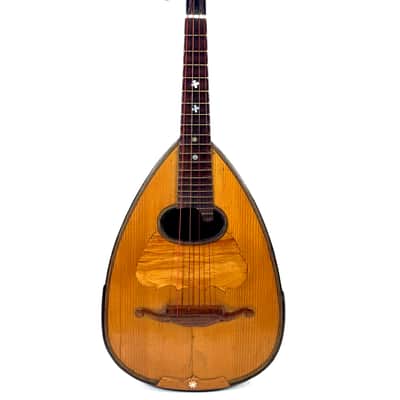
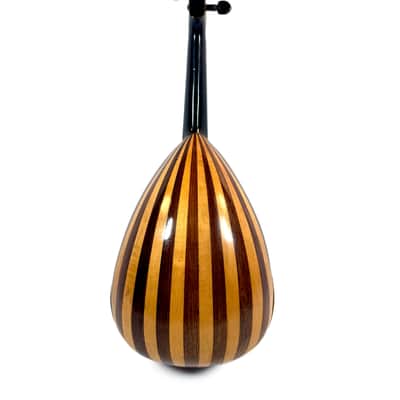
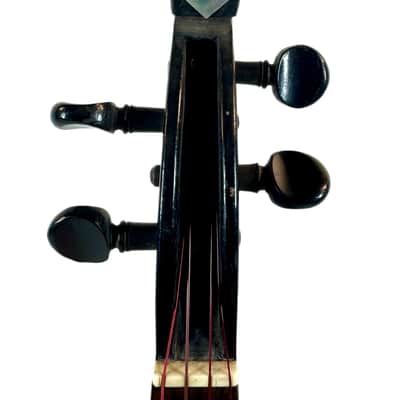
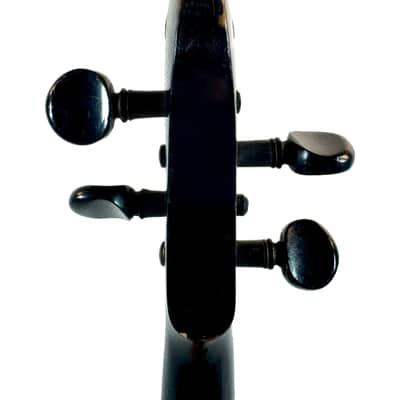
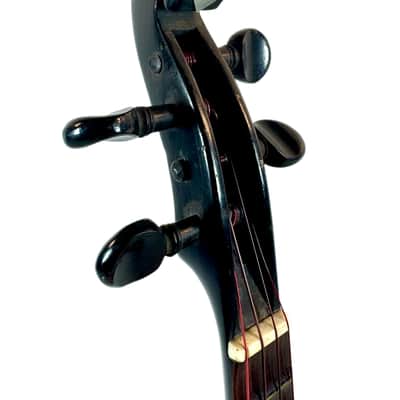
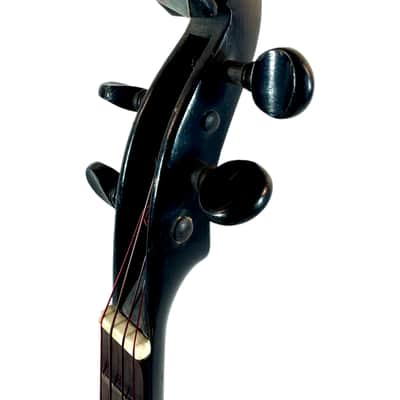
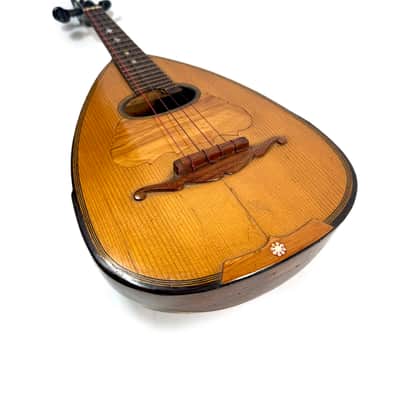
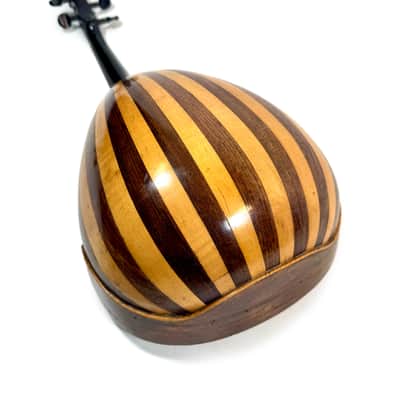


Brescia Mandolin “Estudiantina G. Colombo” Label 1890s / 1900s


14-Day Return Policy
Enjoy peace of mind with your new gear
Our users rate Reverb
The Brescia mandolin belongs to the great Lombard tradition of plucked string instruments, within an Italian lutherie center whose influence extended far beyond the city of Brescia from the early modern period onward.
In European public collections, several instruments attributed to 18th-century Brescian makers, such as Carlo Sauli in 1761 or Giuseppe Tovia, are now classified within the family of Milanese mandolins, showing that Brescia did indeed play a part in the history of this school of making in northern Italy.
This lineage is important, as it connects the Brescia mandolin to a distinct construction aesthetic, born of a remarkable craft environment in which balance of proportions and quality of acoustic response were central concerns.
At the end of the 19th century, the mandolin then experienced a spectacular revival in Europe.
And this boom was largely driven by the vogue for so-called “Estudiantina” ensembles, a name popularized after the impact made by groups of Spanish student-musicians at the Paris Universal Exposition of 1878, a phenomenon that helped to revive the practice of the mandolin on a lasting basis in salons, amateur circles, plectrum orchestras, and the bourgeois repertoire of the Belle Époque.
In this context, this Brescia mandolin bearing an “Estudiantina G. Colombo” label and datable to the 1890s / 1900s belongs fully to this golden age of the instrument, at a time when the mandolin became at once a concert instrument, a chamber music instrument, and a source of domestic musical enjoyment.
It thus evokes an early Italian production particularly appealing to lovers of historical instruments, collectors of European mandolins, and musicians sensitive to the charm of late 19th-century craftsmanship.
By its very designation, this mandolin therefore brings together two particularly sought-after legacies: that of the Brescian tradition, rooted in the musical history of northern Italy, and that of the estudiantina movement, emblematic of the mandolin revival that marked the decades from 1880 to 1920.
Technical specifications:
- Top: Spruce
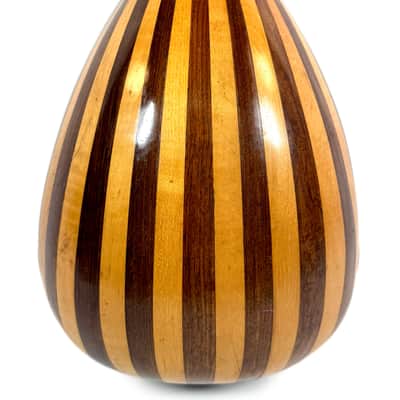
- Back: Rosewood / Maple, 19 ribs
- Neck: Black-varnished maple
- Fingerboard: Rosewood (scalloped fingerboard)
- Nut width: 26 mm
- Radius: Flat
- Frets: 20 frets
- Scale length: 338 mm
- Neck profile: C / V
- Country of manufacture: Italy, Brescia
- Year: 1890s / 1900s
- Finish: Natural (black-varnished neck)
- Appointments: Binding around the top and soundhole / White mother-of-pearl fingerboard markers / White mother-of-pearl inlay at the tip of the headstock
- Details: Light signs of wear and normal use in keeping with its age / Top seams and a small crack professionally repaired / Supplied with gig bag
Like all our instruments, this mandolin has been set up with the greatest care.
As such, it offers very comfortable playability, smooth and supple, and is fitted with a supple Aquila Nylgut string set.
Its voice suggests an old-world timbre, delicately woody, with beautiful projection, lyrical and remarkably expressive, with that elegant color that captivates through its character.
It promises a lively, subtle, bright, and well-articulated response, carried by a warm, nuanced, and authentic resonance that gives the instrument a magnificent musical presence sure to delight musicians and enthusiasts alike.
| Listed | 21 days ago |
|---|---|
| Condition | Very Good (Used) Very Good items may show a few slight marks or scratches but are fully functional and in overall great shape.Learn more |
| Brand |
|
| Model |
|
| Finish |
|
| Categories | |
| Year |
|
| Made In |
|
Product safety information may be available here.

