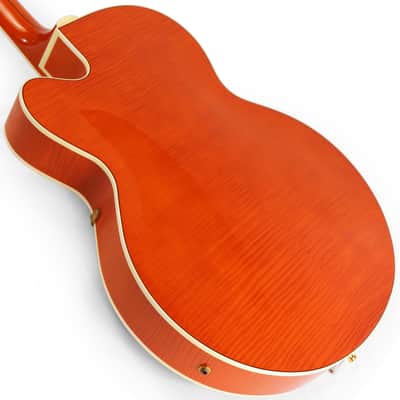
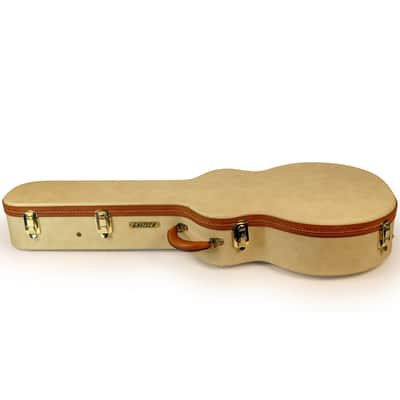
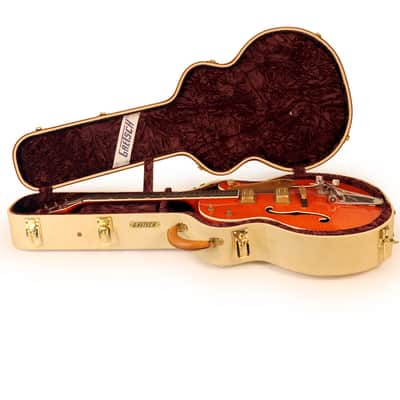
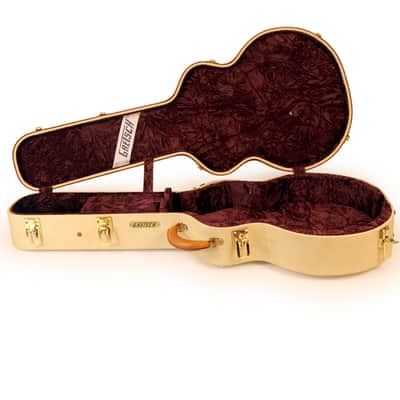

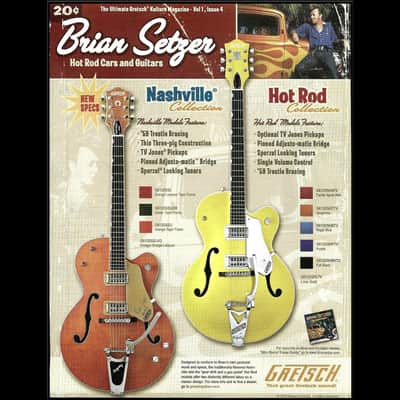
2001 Gretsch Brian Setzer Signature 6120SSU Nashville, Orange Tiger Flame
This seller has not set a shipping cost for Portugal. Please contact them to ask about shipping.

Our users rate Reverb
2001 Gretsch Brian Setzer Signature 6120SSU Nashville, Orange Tiger Flame
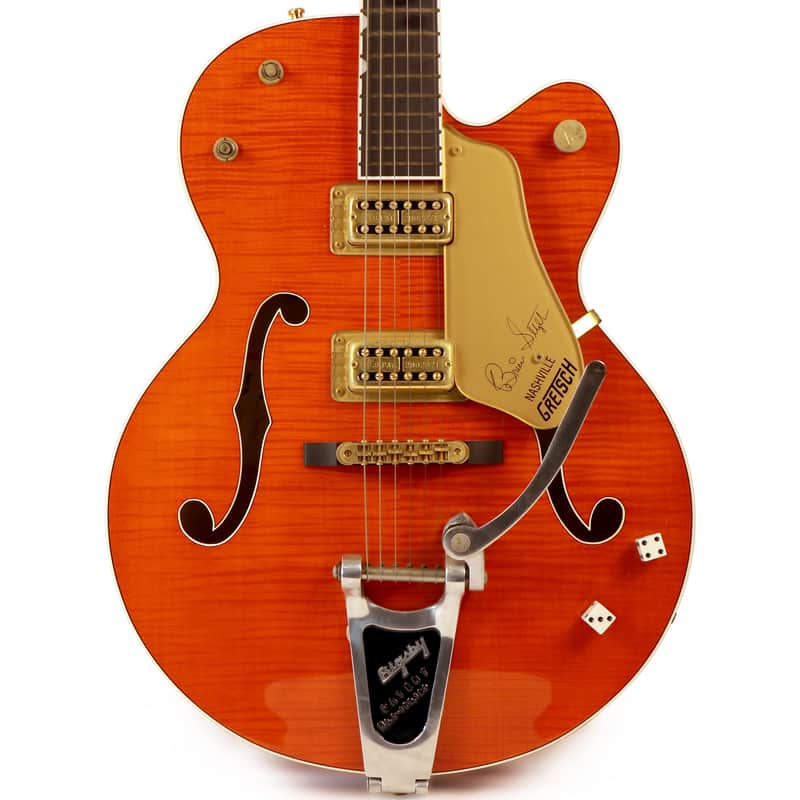
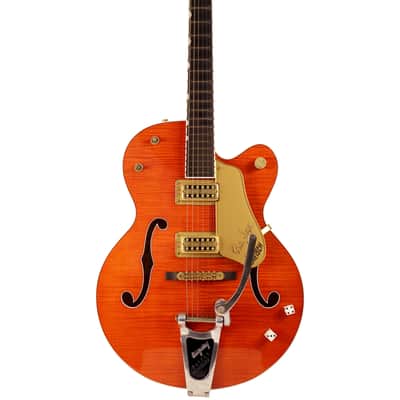
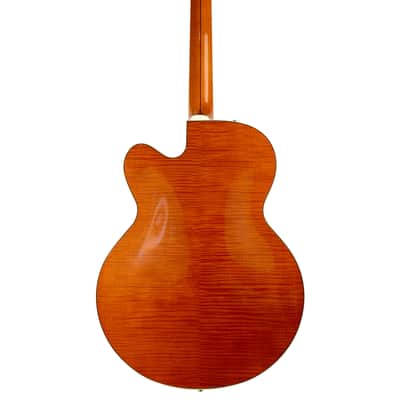
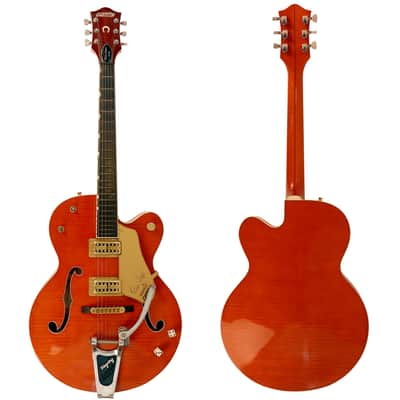
The Gretsch Brian Setzer 6120SSU, built from 1993 to 2014, was one of the earlier of the Setzer Signature models based on the 1959 6120 used in the Stray Cats, Brian Setzer Orchestra and various solo projects.The 2001 Gretsch G6120SSU Brian Setzer Signature Nashville is a Japanese-made hollow-body electric guitar from the Terada factory, designed to replicate the specifications of Setzer's favorite 1959 Gretsch 6120. This era of the SSU (Setzer Signature Urethane) is highly regarded for its build quality and flame maple aesthetics.
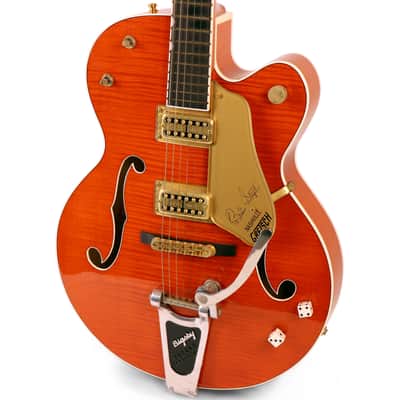
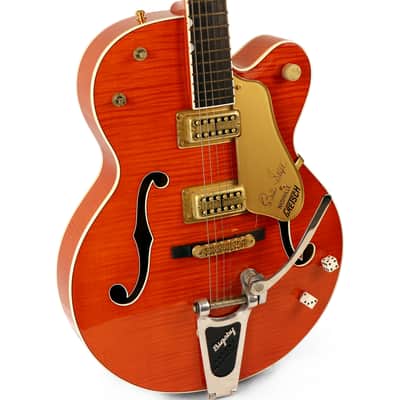
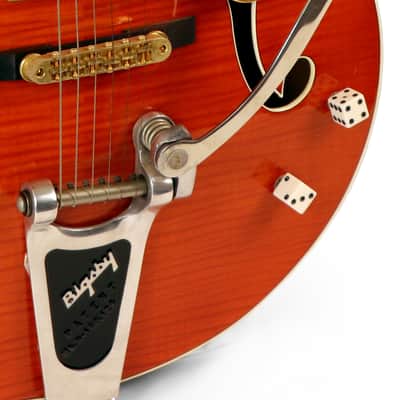
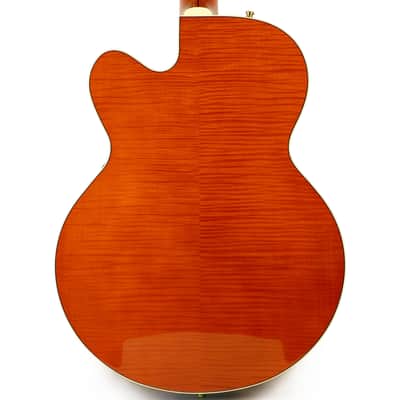
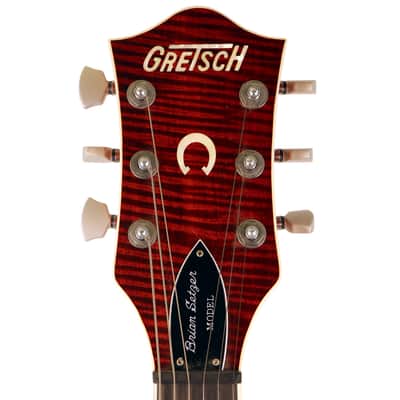
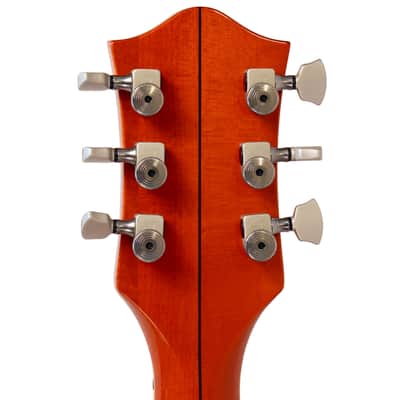
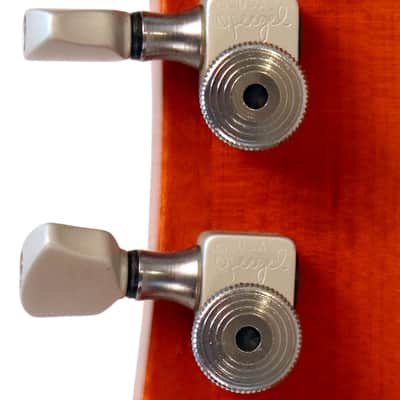
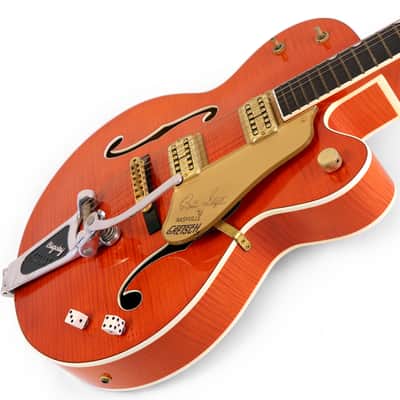
It has a number of features specific to this model, in particular the use of Sperzel locking tuners, intonation-adjustable bridge, and ‘Dice’ knobs for the pickup volumes. The body is of highly flamed Maple laminate. Later models add a ‘pinned’ bridge base, which Gretsch does in a particular way. Under the bridge base, a pair of headless allen screws are inserted into the top above the braces. The bridge base is routed to fit onto these screws or pins. This allows the bridge base to move forward or back for significant intonation adjustments, while preventing the player from accidentally pushing the bridge to the side. This spectacular guitar is in excellent condition. Includes Original Gretsch deluxe "cowboy" hardshell case.
Key Specifications and Features
The "SSU" designation refers to the model's urethane finish, which distinguishes it from the lacquer-finished "SSLVO" variant.
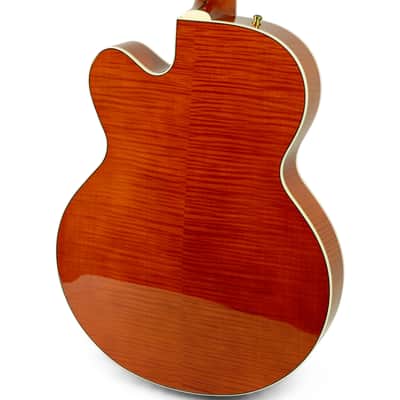
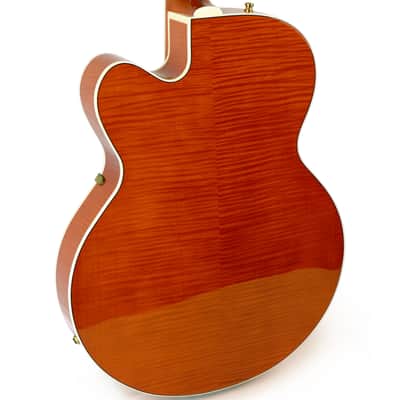
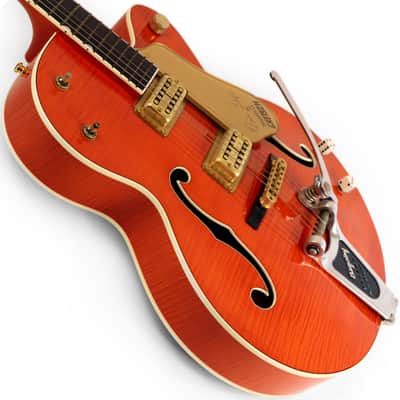
- Aesthetics: 2001 models are noted for having highly figured "tiger flame" maple on the front, back, and sides.
- Body & Construction: It features a 16-inch wide laminated flame maple body with a single cutaway. The 2001 models typically use 1959-style trestle bracing, which provides better sustain and feedback resistance compared to standard tone posts.
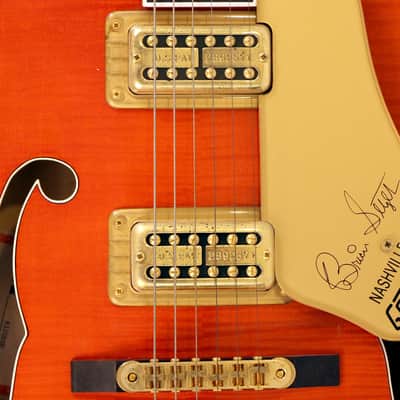
- Pickups: Standard 2001 models were equipped with Gretsch High Sensitivity Filter'Tron pickups.
- Tuning Stability: The inclusion of Sperzel locking tuners is a standard feature for this model year, helping it stay in tune despite frequent use of the Bigsby.
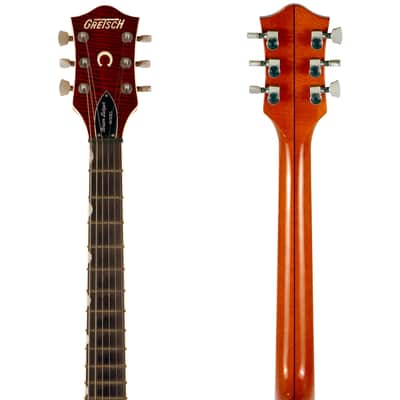
- Neck: A rock maple neck with a 24.6-inch scale length and a bound ebony fretboard. It features Neo-Classic "thumbnail" inlays and 22 medium-jumbo frets.
- Hardware: Includes a Bigsby B6C vibrato tailpiece and an Adjusto-Matic bridge, often with a pinned ebony or rosewood base to prevent the bridge from shifting during heavy tremolo use.
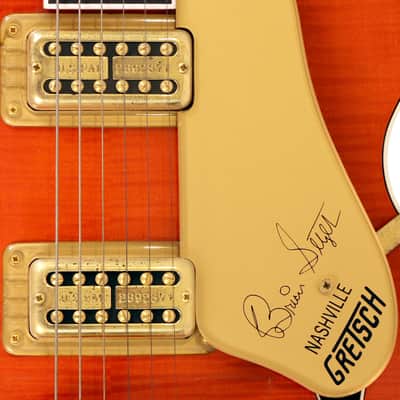
- Signature Details: The guitar comes with a gold plexi pickguard featuring Setzer’s signature, a signature truss rod cover, and a set of dice control knobs.
- Case: Original Gretsch deluxe "cowboy" hardshell case.
Gretsch Revival Era (1989–2002) Serial Numbers
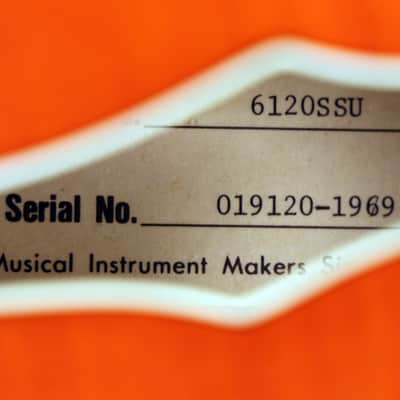
During this period, serial numbers were typically nine digits with a hyphen, such as 019120-1969.
- Year (First 2 digits): The year (e.g., “01” for 2001).
- Month (Next 1-2 digits): The month (e.g., “9” for September).
- Model (Next 3 digits): The model number without the leading '6' (e.g., "120" for a G6120).
- Production Number (Final digits): The sequential number for that factory that year.
Performance and Collectibility
According to players on Reverb and other forums, the 2001 SSU is praised for its "punchy tone" and reliable Japanese craftsmanship.
Introduced in 1954 as a Chet Atkins model, the Gretsch 6120 featured a fully hollow, 16 inch wide and 2 7/8 inch deep Maple Laminate body with bound F holes, tone bar / sound post bracing and a Maple neck with Rosewood or Ebony fingerboard and bridge base. The body, neck, headstock and F-holes are all bound. Most versions used a Bigsby B6 tailpiece. As was the practice at the time, the Bigsby is not gold plated, though the pickups and bridge are. At the time this guitar was built, Gretsch did not have the rights to the Chet Atkins name; that was lost in 1980 and renewed in 2007, so the term ‘Nashville’ was used instead. The pickguard bears the Brian Setzer signature and the Gretsch Nashville logo.
Until the 1958 introduction of the new Ray Butts-designed Filter ‘Tron humbucking pickup, the 6120 used a pair of DeArmond Dynasonic single-coil pickups. The controls include a Master Volume, individual pickup volume controls, and two three-position switches. The forward switch is the pickup selector, and the rear is at tone switch with the center position being ‘off’. Models with the DeArmond pickups typically had only the pickup selector, and a third rotary tone control.
This item is sold As-Described
This item is sold As-Described and cannot be returned unless it arrives in a condition different from how it was described or photographed. Items must be returned in original, as-shipped condition with all original packaging.Learn More.
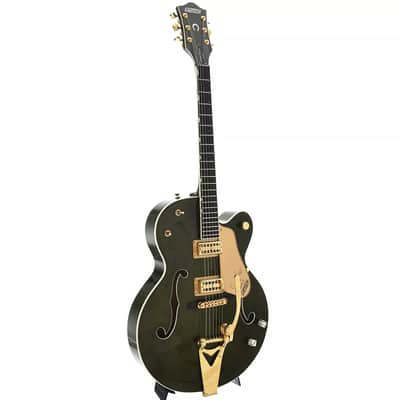
| Listed | 3 months ago |
|---|---|
| Condition | Excellent (Used) Excellent items are almost entirely free from blemishes and other visual defects and have been played or used with the utmost care.Learn more |
| Brand | |
| Model |
|
| Finish |
|
| Categories | |
| Year |
|
| Made In |
|
| Body Material |
|
| Neck Construction |
|
| Body Type |
|
| Right / Left Handed |
|
| Number of Strings |
|
| Body Shape |
|
| Artist |
|
| Model Family |
|
| Series |
|
| Pickup Configuration |
|
| Color Family |
|
| Bridge/Tailpiece Type |
|
| Fretboard Material |
|
| Number of Frets |
|
Product safety information may be available here.