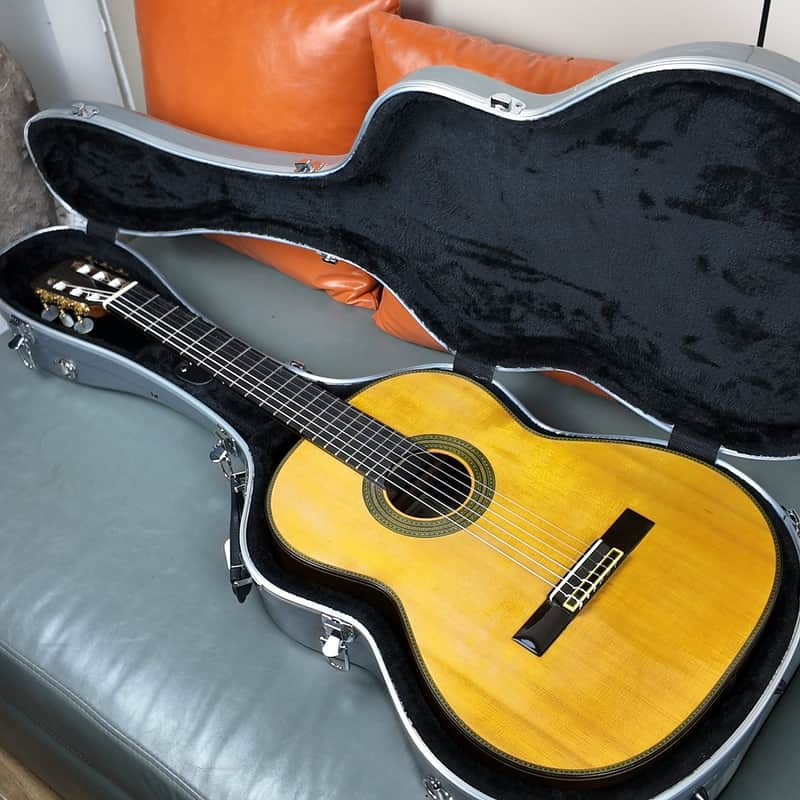
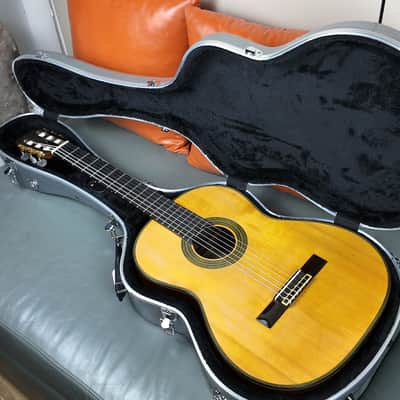
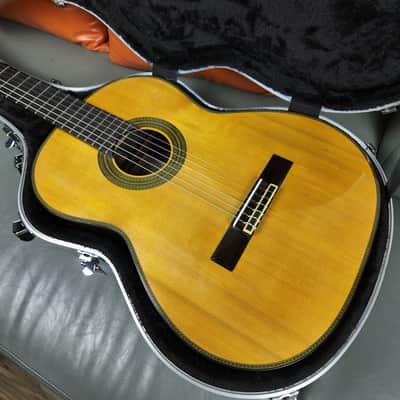
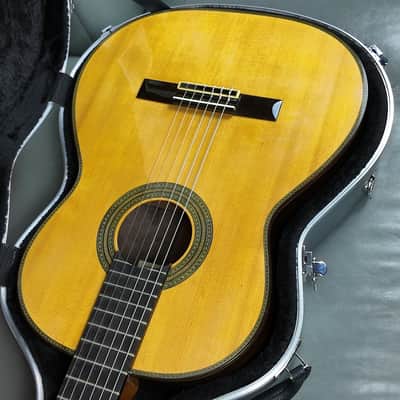
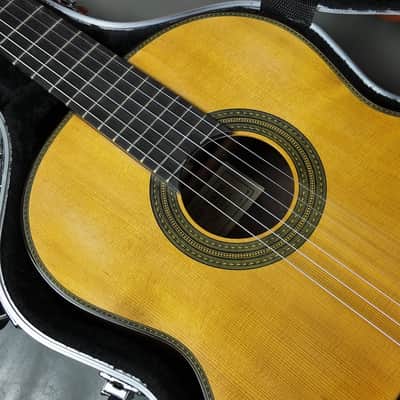
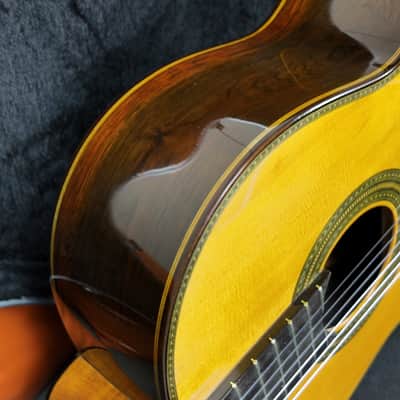
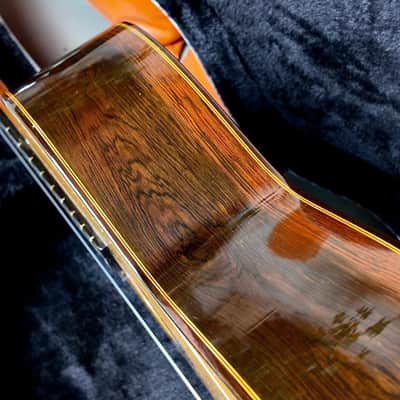
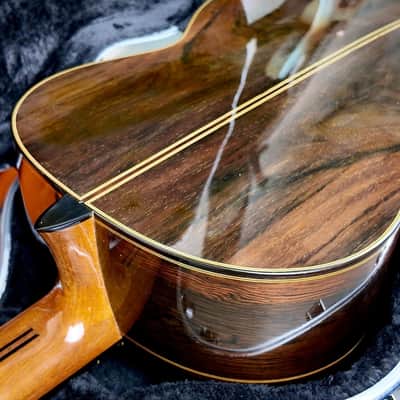
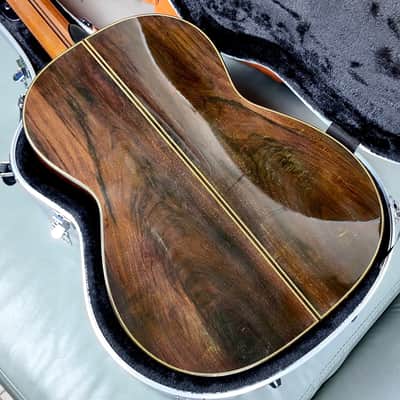
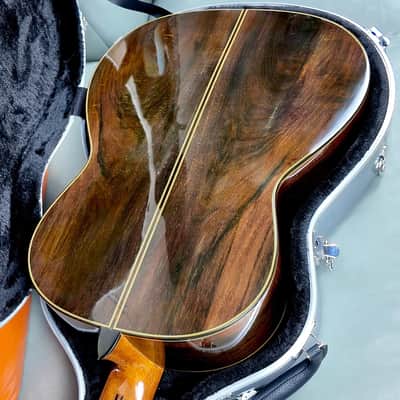
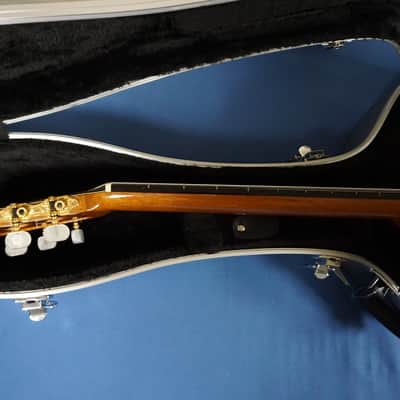
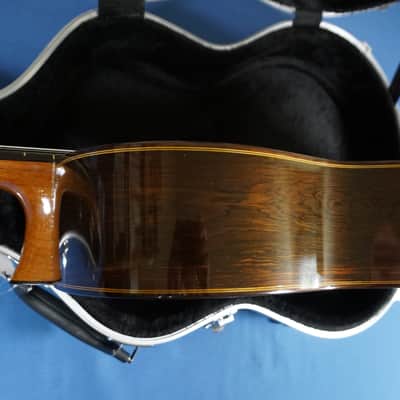
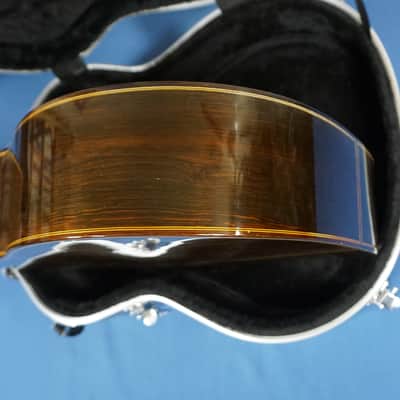
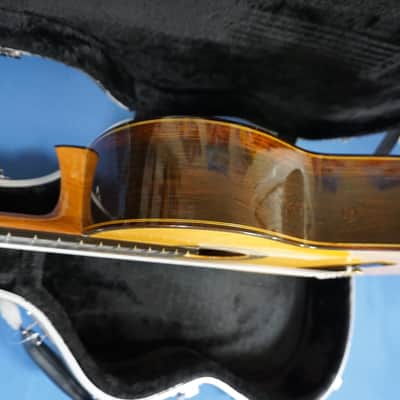
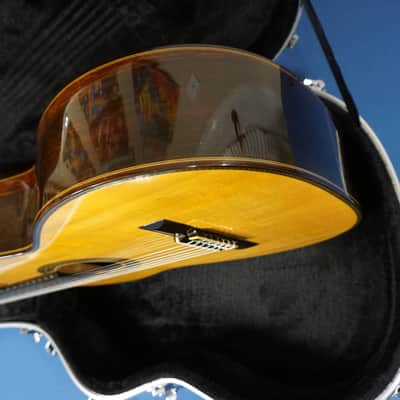
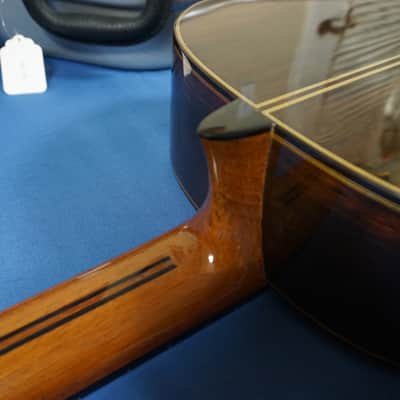
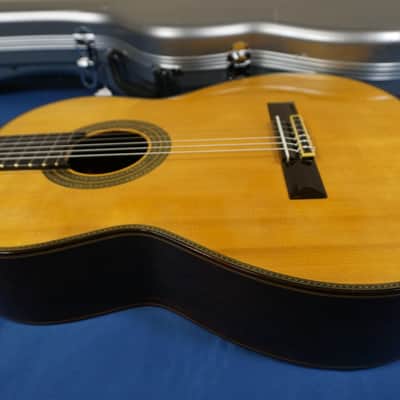
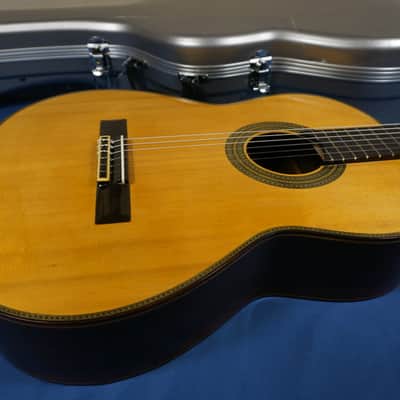
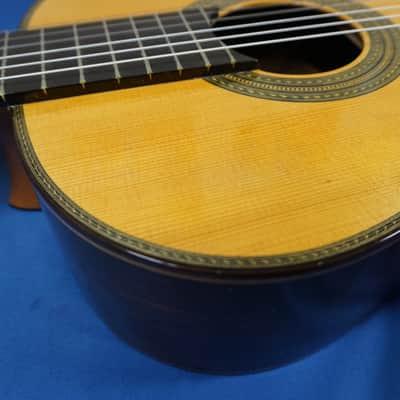
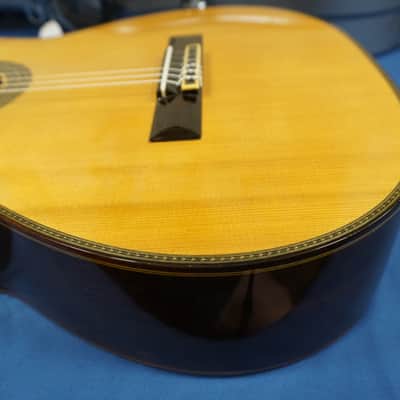
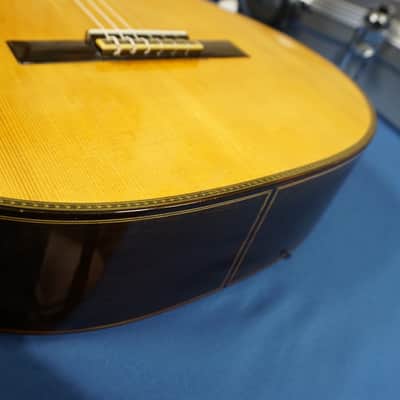
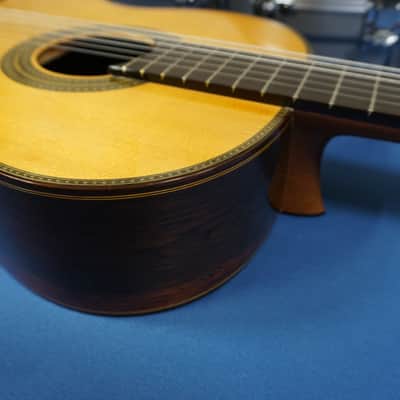
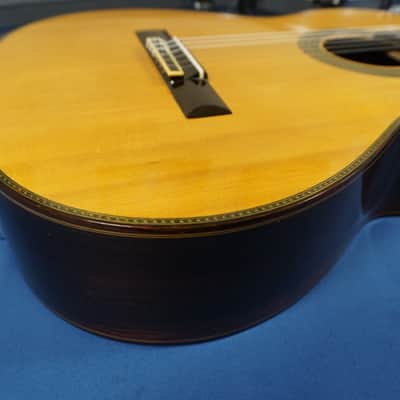
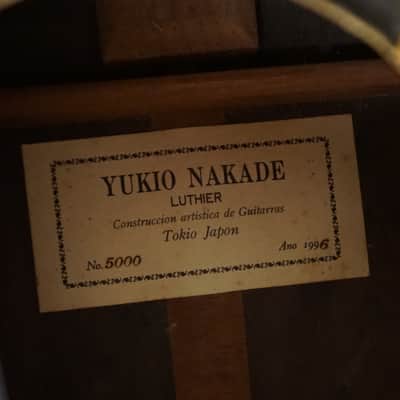
Yukio Nakade No.5000 1996 - Brazilian Rosewood - Shellac
This seller has not set a shipping cost for Malta. Please contact them to ask about shipping.

Our users rate Reverb
Luthier: Yukio Nakade
Origin: Japan
Top: Solid Master Spruce
Back & Side: Solid Brazilian Rosewood - Jacaranda
Scale Length: 650mm
Nut Width: 51.8mm
Fingerboard: Ebony
Finish: All Shellac
Strings: Included New Set of Savarez Normal Tension
About Yukio Nakade
Yukio Nakade was one of the sons of Sakazo Nakade, a figure often described as one of the fathers of modern Japanese classical guitar making. The Nakade family became famous for bringing authentic Spanish guitar-making traditions to Japan during the 1950s.
The Nakade family history is extremely important in the world of Japanese classical guitars:
- Sakazo Nakade and his brother Rokutaro originally trained under violin maker Kinpachi Miyamoto.
- The Nakade brothers later traveled to Spain to study traditional Spanish luthiery techniques associated with masters such as José Ramírez, Hernández y Aguado, and other renowned builders.
- Their work helped establish Japan as one of the world’s leading centers for handcrafted classical guitars.
Yukio Nakade belonged to the second generation of this dynasty. His brothers, especially Toshihiko Nakade, also became respected master builders. Although Toshihiko gained greater international fame, many collectors consider Yukio’s best instruments to be equal in craftsmanship and musical quality.
Yukio Nakade guitars are known for:
- Refined Spanish construction methods
- Elegant Japanese precision craftsmanship
- Warm, lyrical tonal character
- Excellent balance and projection
- High responsiveness for classical repertoire
His higher models, including the No.5000, were handmade concert instruments intended for advanced players and professionals.
Detailed Specifications of the Yukio Nakade No.5000 (1996)
Based on the label in your image and documented examples of the same model from 1996, the specifications are believed to be:
- Model: Yukio Nakade No.5000
- Year: 1996
- Origin: Tokyo, Japan
- Type: Handmade concert classical guitar
- Top: Solid master-grade spruce
- Back and Sides: Solid Brazilian rosewood (Jacaranda)
- Neck: Spanish cedar or mahogany
- Fingerboard: Ebony
- Bridge: Brazilian rosewood
- Scale Length: 650 mm
- Nut Width: Approximately 51.5–52 mm
- Bracing Pattern: Traditional Spanish fan bracing
- Finish: Thin shellac/French polish style finish
- Construction Style: Spanish heel construction
- Frets: 19
- Strings: Nylon classical strings
Construction and Craftsmanship
The No.5000 was one of Yukio Nakade’s premium models. The number “5000” originally referred to the Japanese yen price category used during that era of Japanese guitar production, but by the 1990s it had become a designation for a top-tier concert instrument.
Top Wood
The guitar most likely uses very fine-grain European or German spruce. High-grade spruce tops are valued for:
- Fast response
- Excellent projection
- Strong note separation
- Long tonal development over decades
Spruce-top Nakade guitars typically become richer and more resonant with age.
Brazilian Rosewood Body
One of the most important features of this model is the use of solid Brazilian rosewood, also called Jacaranda. This wood is among the most prized tonewoods ever used in classical guitar making.
Characteristics include:
- Deep overtone complexity
- Rich bass response
- Bell-like trebles
- Strong sustain
- Exceptional harmonic depth
Brazilian rosewood was already becoming rare by the 1990s, making these guitars especially collectible today.
Shellac Finish
Many Yukio Nakade concert guitars used thin shellac or French polish finishes. Unlike thick polyurethane coatings, shellac allows the soundboard to vibrate more freely.
Advantages:
- Greater tonal openness
- Faster response
- More nuanced dynamics
- Better resonance
This is one reason Nakade guitars often sound very “alive” and expressive.
Sound Characteristics
The Yukio Nakade No.5000 is generally described as having a refined Spanish-Japanese tonal character.
Typical sound qualities include:
Bass Response
Deep, warm, and rounded without becoming muddy. Brazilian rosewood gives the basses excellent harmonic richness.
Midrange
Clear and vocal-like. Notes in the middle register sing beautifully, making romantic and Spanish repertoire especially expressive.
Trebles
Sweet, elegant, and bell-like with excellent sustain. High notes tend to remain smooth rather than harsh.
Projection
Strong concert-level projection with impressive clarity across the fingerboard.
Balance
One of the strengths of Nakade guitars is balance. Bass, mids, and trebles integrate naturally without any register overpowering another.
Responsiveness
The guitar reacts quickly to right-hand articulation, making it suitable for advanced classical techniques and expressive dynamics.
Overall, the sound is often compared to traditional Spanish concert guitars but with the precision and consistency associated with top Japanese luthiers.
Collectability and Reputation
The Yukio Nakade No.5000 was originally priced at approximately ¥500,000 Japanese Yen when it was sold in Japan during the 1990s, including around the year 1996.
In the Nakade family’s naming system, the model number “5000” generally corresponded to the original retail price class in yen. Therefore:
- No.1000 ≈ ¥100,000
- No.2000 ≈ ¥200,000
- No.5000 ≈ ¥500,000
For a handcrafted Japanese concert classical guitar in 1996, ¥500,000 was considered a very high price level and placed the instrument in the professional concert category.
Using historical exchange rates from the mid-1990s, ¥500,000 was roughly equivalent to:
- Approximately $4,500–$5,000 USD in 1996 value
This was comparable to many high-end European handmade concert guitars of the same era.
Today, high-end Yukio Nakade guitars are increasingly respected among collectors of vintage Japanese classical guitars.
The No.5000 from the 1990s is especially desirable because:
- It represents mature Nakade craftsmanship
- It often features Brazilian rosewood
- Production numbers were relatively limited
- Handmade Japanese concert guitars from this era are becoming harder to find
Well-preserved examples are appreciated both as professional musical instruments and collectible luthier guitars.
For many players, a Yukio Nakade No.5000 offers a level of craftsmanship and tonal sophistication comparable to much more expensive European concert guitars.
Note: Nowadays, a single set of Brazilian Rosewood alone is valued at $2,000–$3,000; when factoring in all the components and the craftsmanship of the luthier, the instrument is worth at least $10,000. Given this, the asking price for this masterpiece is remarkably low.
The guitar's sound is soaring and profound, with a very powerful midrange, bass that makes the entire surroundings vibrate, and a bright, resonant treble.
In short, it can only be described as a masterpiece; it's arguably very difficult to find a second one like it.
* The guitar will be sold in the same condition as shown in the photos above.
This item is sold As-Described
This item is sold As-Described and cannot be returned unless it arrives in a condition different from how it was described or photographed. Items must be returned in original, as-shipped condition with all original packaging.Learn More.
| Listed | 4 months ago |
|---|---|
| Condition | Excellent (Used) Excellent items are almost entirely free from blemishes and other visual defects and have been played or used with the utmost care.Learn more |
| Brand | |
| Model |
|
| Finish |
|
| Categories | |
| Year |
|
| Made In |
|
| Right / Left Handed |
|
| Number of Strings |
|
| Body Shape |
|
Product safety information may be available here.

